


 Top Rated Course


We may not have the course you’re looking for. If you enquire or give us a call on +1 6474932992 and speak to our training experts, we may still be able to help with your training requirements.
What is Information Technology: Everything You Should Know
The Knowledge Academy 25 February 2026Information Technology (IT) uses computers, networks, and software to process, store, and share data, forming the digital backbone of modern life and business. It is a broad field that includes hardware, software, cloud services, and cybersecurity. As technology advances, it continues to transform how people work, learn, and connect.

Training Outcomes Within Your Budget!
We ensure quality, budget-alignment, and timely delivery by our expert instructors.
Table of Contents

Technology touches every part of your daily life, yet many people still wonder What is Information Technology (IT). From managing data and securing networks to powering apps, websites, and global communication, IT is the backbone of today’s digital world.
Understanding how IT works can help you make smarter career choices, improve how you work, and stay ahead in an increasingly tech-driven environment. Dive into this blog to discover what is Information Technology, how it works, and why it matters more than ever.
Table of Contents
1) What is Information Technology?
2) Main Components of Information Technology
3) Why is Information Technology Important?
4) Types of Information Technology
5) Information Technology: Real-world Examples
6) Challenges in Information Technology
7) Future of Information Technology (IT)
8) Conclusion
What is Information Technology?
Information Technology (IT) refers to the use, development, and maintenance of computer systems, software, networks, and data to store, retrieve, transmit, and securely manage information. It ensures that information flows efficiently, securely, and reliably across different platforms and environments.
It plays a central role in how individuals and organisations operate, enabling everything from basic computing tasks to advanced capabilities like cloud services, Cyber Security, Artificial Intelligence (AI), and Data Analytics.
Main Components of Information Technology
Information Technology is built on several core components that enable digital operations, communication, and secure Data Management. It includes:

1) Hardware: Physical computing devices like desktops, laptops, servers, storage units, and peripherals.
2) Software: Operating Systems, applications, and programmes that run on hardware and support business tasks.
3) Networks: Systems such as Local Area Network (LAN), Wide Area Network (WAN), and the internet that connect devices and enable data sharing.
4) Data: Digital information in various forms, processed and analysed by IT systems for decision-making.
5) Databases: Structured data storage systems managed through a Database Management System (DBMS) for efficient retrieval and organisation.
6) Internet Technologies: Protocols and platforms that support global connectivity, cloud services, and web applications.
7) Cyber Security: Tools and practices that protect information, systems, and networks from threats and unauthorised access.
Why is Information Technology Important?
IT is important for so many reasons in this digital world. Due to its high dependency, it is often viewed as the world itself operates with IT. Let’s detaily check its importance:

1) Facilitates Communication and Collaboration
1) Enables instant communication through email, chat apps, and messaging tools
2) Supports virtual meetings and teamwork via video conferencing platforms
3) Connects global teams in real time, removing geographical barriers
4) Provides shared workspaces for collaborative editing and project management
5) Improves coordination and decision-making through faster information exchange
2) Advances in Pervasive Computing
1) Integrates technology through smartphones, Internet of Things (IoT) devices, etc.
2) Offers continuous access to apps, information, and services on the go
3) Enhances convenience with smart home devices and automation systems
4) Supports hands-free and voice-based interactions through digital assistants
5) Makes computing seamless and available across multiple interconnected devices
Organise, store, and process data efficiently with our Data Structure and Algorithm Training – Register today!
3) Boosts Efficiency and Productivity
1) Automates repetitive tasks to reduce manual effort and human error
2) Speeds up workflows with software tools and digital systems
3) Enhances accuracy and output using data-driven applications
4) Saves time by streamlining operations and reducing delays
5) Allows employees to focus on strategic, high-value work
4) Supports Critical Business Operations
1) Manages essential functions like finance, HR, and supply chain systems
2) Powers customer relationship management (CRM) tools for better service
3) Keeps business processes running smoothly with a reliable IT infrastructure
4) Ensures operational continuity through backup and recovery systems
5) Provides analytical tools to support informed business decisions
5) Enables Access to Information
1) Allows quick access to digital data from anywhere with an internet connection
2) Supports online research, e-learning, and digital resource libraries
3) Helps professionals work remotely using cloud-based platforms
4) Makes information searchable, organised, and easy to retrieve
5) Empowers users with real-time data for personal and professional use
Types of Information Technology
Information Technology has different areas that work together to create a smooth digital environment. These technologies help users communicate, manage data, stay secure, automate tasks, and make better decisions. Here are some of its types:

1) Internet and Web Technologies
Internet and web technologies include browsers, web development languages (HTML, HTTP, CSS, JavaScript), and protocols that allow users to access and interact with online content. They form the foundation of most digital experiences we use every day.
1) Help businesses create websites, apps, and online services
2) Support fast information sharing across the world
3) Allow users to collaborate and communicate through social platforms and web tools
2) Cloud Computing
Cloud computing delivers IT services such as storage, software, and processing power over the internet through platforms like Amazon Web Services (AWS), Azure, and Google Cloud. It allows organisations to access powerful technology without owning physical infrastructure.
1) Reduces the need for physical hardware and maintenance
2) Offers on-demand resources that scale with business needs
3) Supports remote work by allowing access from any location
3) Database
Databases store and organise data for fast retrieval and secure management, with popular systems including MySQL, PostgreSQL, and MongoDB. They ensure that all information stays structured and accessible whenever needed.
1) Keep data consistent and easy to update
2) Allow businesses to analyse information and discover trends
3) Improve accuracy by reducing manual data entry and errors
4) Cyber Security
Cyber Security protects systems, networks, and data from unauthorised access, cyberattacks, and breaches. It involves tools like firewalls, encryption, and monitoring systems. It is essential for keeping digital operations safe and decreasing the risk of costly security incidents.
1) Prevents cyberattacks and protects sensitive information
2) Ensures businesses meet security rules and compliance standards
3) Builds customer trust by keeping information safe
5) Artificial Intelligence and Machine Learning
AI and ML help machines learn from data, recognise patterns, and make decisions. They power chatbots, recommendation engines, automation systems, and smart devices. These technologies help organisations work faster and make more accurate, data-driven choices.
1) Automate repetitive tasks to save time and effort
2) Improve customer service through chatbots and virtual assistants
3) Help businesses predict trends and make better decisions
6) Data Analytics and Business Intelligence
These tools analyse data trends using platforms like Power BI and Tableau to help organisations make informed decisions. Businesses use them to understand customer habits, predict trends, and improve performance.
1) Turn raw data into easy-to-understand charts and reports
2) Help businesses spot problems early and find solutions
3) Improve customer experiences by understanding preferences and behaviour
Gain hands-on experience in writing code and creating applications with our Coding Course – Join now!
Information Technology: Real-world Examples
When you know What is Information Technology, you will know that it is used in many parts of daily life and business. Here are some simple examples that show how different IT components work together:
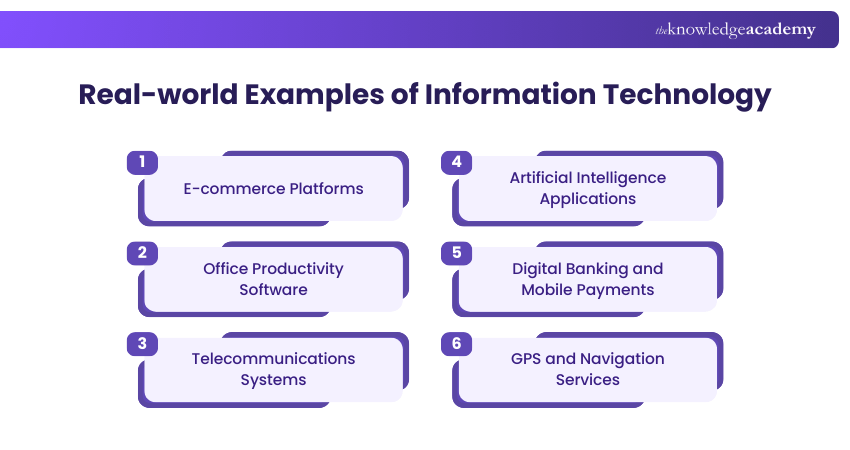
1) E-commerce Platforms:
Online shopping websites and mobile apps use IT to process payments, manage products, and handle customer data. They use secure systems to protect customer information during online transactions.
2) Office Productivity Software:
Applications like word processors, spreadsheets, and presentation tools help people create documents and work more efficiently. Cloud-based versions allow teams to edit and share files in real time.
3) Telecommunications Systems:
Systems that support voice calls, video meetings, and data transfer over long distances rely heavily on IT. These tools enable remote work and global communication without physical travel.
4) Artificial Intelligence Applications:
AI powers tools such as voice assistants, chatbots, facial recognition, and Data Analytics. AI helps automate complex tasks, save time, and improve accuracy.
5) Digital Banking and Mobile Payments:
Online banking systems and payment apps allow users to transfer money, check balances, and make purchases securely from devices. They use encryption and authentication to ensure safe financial transactions.
6) GPS and Navigation Services:
Navigation apps provide real-time directions, traffic updates, and location tracking using satellite data. These services help users plan faster routes and avoid delays.
Gain practical coding power with our Object Oriented Programming (OOPs) Course – Join Now!
Challenges in Information Technology
Modern IT landscapes face several challenges and here are some of them:
1) Cybersecurity Risks: Cyberattacks are becoming more advanced, making it difficult to protect sensitive information and maintain user trust.
2) Fast-changing Technology: New tools and technologies appear quickly, requiring constant learning, upgrades, and investment.
3) Data Privacy and Management Issues: Organisations must handle large amounts of data responsibly while following strict regulations like GDPR.
4) High Costs of IT Infrastructure: Setting up, maintaining, and upgrading hardware, networks, and data centres can be expensive.
5) Regulatory Compliance: Businesses must meet various industry standards and legal requirements to ensure their IT practices remain compliant.
Future of Information Technology (IT)
The future of IT is set to bring major shifts and exciting possibilities across many fronts:
1) More Powerful AI and ML: AI systems will become smarter, offering improved automation, personalised services, and better decision-making support.
2) Growth in Cloud and Edge Computing: Cloud technology will continue expanding, while edge computing will help process data closer to devices for faster performance.
3) High Usage of IoT: More everyday devices will be connected through technologies like 5G, creating huge amounts of data for analysis and automation.
4) Rise of Quantum Computing: Although still developing, quantum computing will eventually solve complex problems that traditional computers cannot handle.
5) Greater Use of AR and VR: Augmented Reality (AR) and Virtual Reality (VR) will play bigger roles in education, training, communication, and virtual experiences.
6) Focus on Sustainable Technology: IT will move toward energy-saving systems, eco-friendly data centres, and better electronic Waste Management.
Conclusion
Information Technology is at the heart of today’s digital world, shaping how we live, work, communicate, and solve problems. As we embrace digital tools and smarter systems, IT’s role will only grow stronger. Understanding What is Information Technology, its components, and its benefits helps individuals and organisations make better decisions and stay prepared for future changes.
Acquire the practical skills needed to create apps, websites, and software with our Programming Courses– Start your journey today!
Frequently Asked Questions
What Skills are Required for a Career in IT?

Key skills for an IT career include Programming, Network Management, Cyber Security, Data Analysis, problem-solving, and strong communication abilities. Familiarity with Cloud Computing, Database Management, and technical support is also essential for success in the IT field.
What is the Difference Between Information Technology and Information Systems?
Information Technology focuses on the hardware, software, networks, and tools used to manage and process data. Information Systems cover the broader framework of people, processes, and technology working together to collect, store, and use information to support organisational goals and decision-making.
What are the Other Resources and Offers Provided by The Knowledge Academy?
The Knowledge Academy takes global learning to new heights, offering over 3,000+ online courses across 490+ locations in 190+ countries. This expansive reach ensures accessibility and convenience for learners worldwide.
Alongside our diverse Online Course Catalogue, encompassing 17 major categories, we go the extra mile by providing a plethora of free educational Online Resources like Blogs, eBooks, Interview Questions and Videos. Tailoring learning experiences further, professionals can unlock greater value through a wide range of special discounts, seasonal deals, and Exclusive Offers.
What is The Knowledge Pass, and How Does it Work?
The Knowledge Academy’s Knowledge Pass, a prepaid voucher, adds another layer of flexibility, allowing course bookings over a 12-month period. Join us on a journey where education knows no bounds.
What are the Related Courses and Blogs Provided by The Knowledge Academy?
The Knowledge Academy offers various Programming Courses, including IT Course, Python Course and Visual Basic Course. These courses cater to different skill levels, providing comprehensive insights into IT Management.
Our Programming & DevOps Blogs cover a range of topics related to Information Technology, offering valuable resources, best practices, and industry insights. Whether you are a beginner or looking to advance your Information Technology skills, The Knowledge Academy's diverse courses and informative blogs have got you covered.

The Knowledge Academy


Global Training Provider
The Knowledge Academy is a world-leading provider of professional training courses, offering globally recognised qualifications across a wide range of subjects. With expert trainers, up-to-date course material, and flexible learning options, we aim to empower professionals and organisations to achieve their goals through continuous learning.


 If you wish to make any changes to your course, please


