


 Top Rated Course

We may not have the course you’re looking for. If you enquire or give us a call on +1 6474932992 and speak to our training experts, we may still be able to help with your training requirements.
The 4 Core Kanban Principles Explained
The Knowledge Academy 16 July 2026Kanban Principles help teams improve workflows by visualising work, limiting WIP, managing flow, using feedback, and driving continuous improvement. It is a visual and flexible way to deliver value smoothly. It encourages teams to improve workflows by starting with what already exists and making small, meaningful changes over time.

Training Outcomes Within Your Budget!
We ensure quality, budget-alignment, and timely delivery by our expert instructors.
Table of Contents

Kanban is widely used by teams that want to manage work more clearly and deliver results with less stress. It focuses on improving how work flows through a system. Following Kanban Principles increases visibility, reduces bottlenecks and makes steady improvements instead of trying to fix everything at once.
It is widely trusted in the workplace, and it's no surprise, as reports show 56% of Agile teams worldwide currently use Kanban. In this blog, you will explore the Kanban Principles, how they are applied, along with examples, and more. Keep reading to support continuous improvement, better collaboration, and long-term success for your teams.
Table of Contents
1) What is Kanban?
2) 4 Kanban Principles
3) How is Kanban Applied to Software Development?
4) Are Kanban Principles Easy to Implement?
5) What are Some Examples of Kanban?
6) Conclusion
What is Kanban?
Kanban is a highly visual Work Management method developed by Toyota in Japan during the late 1940s, and it translates to "visual card" in Japanese. It is particularly valuable for managing projects that require frequent deliverables and is widely used by software development teams. By displaying cards on a board, teams can easily visualise their workflow.
This method allows for quick identification of disruptions, enabling team members to collaborate and address issues before they escalate. One of the commendable features of Kanban is its focus on limiting work-in-progress (WIP), which helps minimise task build-up and reduce wasted time and resources.

4 Kanban Principles
Here are the four Principles of Kanban that would help you transform your Project Management approach.
1) Start with What you do Know
Kanban begins by understanding existing processes instead of replacing them. Firstly, teams identify what is working well and the areas where improvements are needed. This helps Project Managers focus on problem areas. Improving what already exists helps organisations to reduce disruptions and scale Return on Investments accurately.
2) Agree to Pursue Incremental, Evolutionary Change
Kanban promotes small and gradual changes. Since big changes can potentially overwhelm teams and increase the risk of errors, incremental adjustments allow teams to adapt swiftly. These small improvements deliver visible results and help build trust and support from senior management.
3) Respect the Current Process, Roles, Responsibilities, and Titles
Kanban does not require organisations to change job titles or restructure teams. Instead, it works within the existing set-ups. Respecting current roles and responsibilities helps to reduce resistance to change and allows teams to utilise it instantly. This makes the adoption process faster and more practical across different departments.
4) Encourage Acts of Leadership at all Levels in Your Company
Kanban encourages leadership from everyone. Team members are empowered to take ownership of their work and suggest improvements. This fosters a culture of accountability, engagement, and continuous improvement. This approach increases collaboration and engagement to help teams adapt and improve together.
Strengthen delivery flow in real projects with Certified Kanban Practitioner Training – Join today!
How is Kanban Applied to Software Development?
Kanban methodology is developed to enhance manufacturing efficiency. It has been adapted for Software Development to optimise workflows and reduce inefficiencies. Kanban emphasises task visualisation, limitation in work-in-progress and a smoother flow of tasks from start to finish. The various applications of Kanban in Software Development are mentioned below:
1) Kanban Board
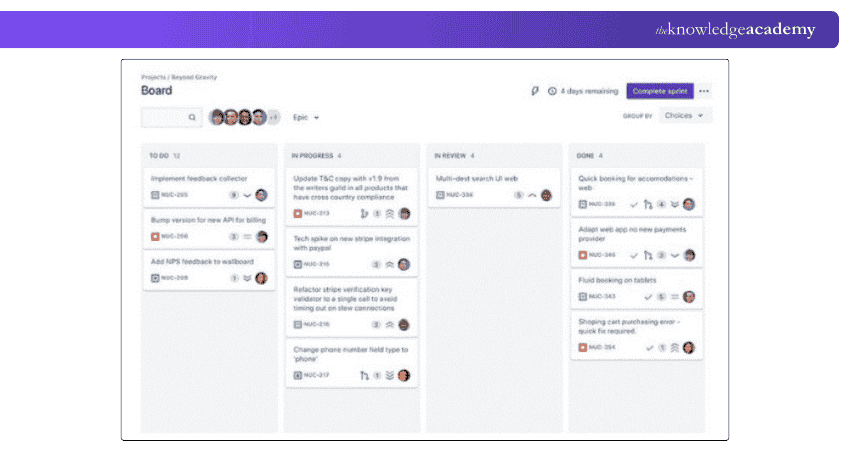
A key component of Kanban is the Kanban board, a visual tool that assists teams in tracking task progress. This board serves as a single source of truth, enabling teams to see the status of tasks at a glance. Also, it improves communication by making work progress, reducing bottlenecks, and setting clear priorities for everyone.
2) Agile Project Management
Kanban aligns well with Agile Project Management, the preferred approach for DevOps software development teams seeking flexibility and iterative progress. Agile methodology is developed to adapt to change and deliver small, incremental improvements, making it ideal for managing the constant changes inherent in software development.
3) Tools for Implementation
Jira offers a ready-to-use Kanban board template that simplifies the process for software teams. This tool helps prioritise, visualise, and manage a continuous delivery of work, facilitating efficient Project Management. Integrating Kanban helps teams to improve workflow efficiency, reduce waste, and manage projects seamlessly.
Learn core principles of Kanban and familiarise yourself with its fundamentals with Certified Kanban Foundation Training – Register today!
Are Kanban Principles Easy to Implement?
Now, let’s investigate how easy and efficient the Kanban Principles are to implement in your projects.
1) Ease of implementing Kanban Principles
Kanban Principles are designed to be simple and non-disruptive. It focuses on incremental improvements instead of major process changes. For implementing Kanban, teams can begin with a basic board and task cards, including virtual boards for remote collaboration. Also, a Kanban Cheat Sheet offers useful tips to improve Workflow Management effectively. This makes Kanban easy to adopt and practical for teams of any size.
2) Tools for implementation
Jira offers robust Project Management tools that support Agile methodologies, including Kanban. With ready-to-use templates, it helps teams move work efficiently. It supports business teams, such as marketing, HR, and finance, by applying Kanban Principles across projects, with a board, calendar, and timelines for clear visualisation. This makes it easier for teams to track progress, manage priorities, and collaborate effectively.
3) Collaborative platform
Jira serves as a shared collaboration platform across an organisation, allowing Software Developers and their non-technical counterparts to stay connected. The platform is tailored to various use cases, enabling teams to connect projects, documents, and tasks. This integration streamlines collaboration and communication, breaks down silos, and helps prevent project delays.
What are Some Examples of Kanban?
Kanban can be seen in everyday work situations. For example, one basic form of Kanban is if you have used sticky notes to label “to do,” “doing,” and “done” tasks and move them as you complete the work. At work, Kanban boards use cards and columns to represent real tasks and process steps to help visualise workflow from start to finish.
Conclusion
Kanban Principles provide a practical and flexible way to improve workflow. Focusing on visualisation, incremental change, respect for current roles, and leadership helps to bring efficiency during change. Whether used by software teams or business functions, these principles bring clarity, reduce delays, and support continuous improvement. Ultimately, this helps to build smoother workflows and deliver value consistently.
Build a solid foundation of Kanban for smoother workflows and improve team efficiency with Kanban Training – Register now!
Frequently Asked Questions
Why is Visualising Workflow Important in Kanban?

Visualising workflow in Kanban is crucial as it provides a clear visual representation of task progress. This visibility allows teams to quickly identify bottlenecks, manage workloads, and ensure smooth transitions between task stages, ultimately enhancing collaboration and efficiency.
Is Kanban Agile or Scrum?
Both Kanban and Scrum are Agile approaches, but they are not the same. Agile is a broad philosophy for delivering value iteratively and responding to change. Kanban and Scrum fall under this Agile umbrella because they help teams improve transparency, adapt to change and deliver value.

The Knowledge Academy


Global Training Provider
The Knowledge Academy is a world-leading provider of professional training courses, offering globally recognised qualifications across a wide range of subjects. With expert trainers, up-to-date course material, and flexible learning options, we aim to empower professionals and organisations to achieve their goals through continuous learning.


 If you wish to make any changes to your course, please


