


 Top Rated Course

We may not have the course you’re looking for. If you enquire or give us a call on +32 35001305 and speak to our training experts, we may still be able to help with your training requirements.
Top 25 Web Development Trends Every Developer Should Know
The Knowledge Academy 21 April 2026Web Development Trends focus on speed, user experience, scalability, and smart integrations for seamless and efficient digital solutions. From modern UI/UX approaches like PWAs to Backend innovations such as Serverless architecture, developers are actively adopting tools and technologies to drive peak performance and user satisfaction.

Training Outcomes Within Your Budget!
We ensure quality, budget-alignment, and timely delivery by our expert instructors.
Table of Contents
Web Development is no longer just about writing lines of code; it’s about creating seamless, fast, and accessible experiences across different devices and platforms. Therefore, staying updated with these Web Development Trends is necessary in the changing technological ecosystem. In this blog, we'll share spotlights on the top 25 Web Development Trends set to define modern innovation, pushing the boundaries of digital experiences.
Table of Contents
1) Top Web Development Trends
a) User Experience & Interface Trends
b) Development Approaches & Architectures
c) Emerging Technologies & Integrations
d) Frameworks, Tools & Platforms
2) Conclusion
Top Web Development Trends
Web Development is entering a transformative era driven by user expectations, rapid innovation, and evolving business needs. Below is a breakdown of those top trends defining the modern digital experience:
User Experience & Interface Trends
User expectations are constantly rising with the advancing technologies. Today, the key focus remains on speed, simplicity, and interactivity. Here are the top user experience & interface trends to keep an eye on:

1) Accelerated Mobile Pages
AMP technology ensures lightning-fast load times on mobile devices. It streamlines user retention by delivering lightweight, streamlined pages for upscaling mobile SEO and reducing bounce rates.
2) Single-page Applications
Single-page Applications (SPAs) load content in a dynamic manner without needing to reload the page concurrently for a fast, app-like experience. Popular and emerging frameworks like React and Angular play a key role in navigating through this trend.
3) Optimised Voice Search
As voice assistants become more predominant, modern-day websites are optimised for voice search queries. This includes natural language keywords and structuring content based on a conversational tone.
4) Motion UI
Motion UI enhances user engagement by adding animated transitions, micro-interactions, and scroll effects. This makes interfaces more alive and intuitive without consistently overwhelming the user.
5) Dark Mode Standardisation
Dark mode is slowly gaining traction with time. It reduces eye strain, saves battery life, and gives websites a modern, aesthetic, dynamic, and improved accessibility. This feature is more commonly seen in smartphones and other devices.
6) VUI and Voice Search
Voice User Interfaces (VUI) allow users to interact with the system using spoken commands. This trend is now being integrated into apps and sites for hands-free navigation, improving accessibility and convenience.
7) Progressive Web Apps (PWAs)
PWAs combine the finest features of websites and mobile apps. Using this, users can easily work offline, load websites quickly, and offer push notifications for delivering expect app-like performance.
8) Utility-first CSS Frameworks
Frameworks like Tailwind CSS are leading the shift toward utility-first design. They promote consistency and development speed by using pre-defined utility classes to provide more efficient and effortless styling.
Build lightning-fast, scalable Web Apps with MongoDB, Express, Angular & Node.js- Sign up for our MEAN Stack Web Development Training today!
Development Approaches & Architectures
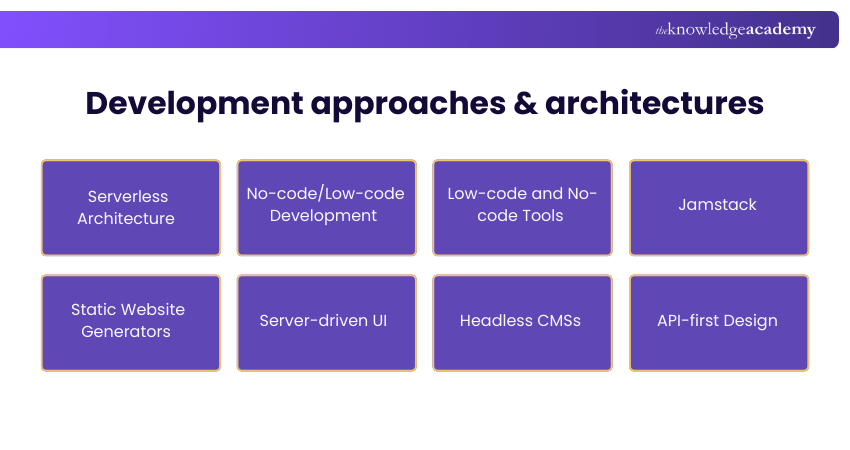
Web Development is evolving rapidly with architectures that aim to drive speed, scalability, and flexibility. Developers and businesses are actively adopting modern approaches to simplify workflows, reduce server reliance, and boost performance. Here's a look at some of the key architectural trends that may reshape the modern business ecosystem:
9) Serverless Architecture
Serverless Computing allows developers to use effective application deployment without requiring them to continuously manage the servers. This approach can scale automatically, lower costs, and improve efficiency by handling backend functions through Cloud providers, including AWS Lambda or Azure Functions.
10) No-code/Low-code Development
These platforms enable novice users to easily build functional websites and apps. These website-building approaches reduce development time, which is ideal for startups and small teams.
11) Low-code and No-code Tools
Tools like Webflow, Bubble, and OutSystems streamline development through visual interfaces. They allow rapid prototyping, which makes it easier for users to test and launch MVPs without requiring deep coding knowledge.
12) Jamstack
Jamstack (JavaScript, APIs, Markup) splits the front end from the back end for better performance and security. This further enables static site generation, fast load times, and easier integration with APIs and headless services.
13) Static Website Generators
Generators like Hugo, Gatsby, and Jekyll pre-render pages at build time, improving speed and security. They are ideal for blogs, documentation, and content-focused websites needing minimal backend logic.
14) Server-driven UI
Server-driven UI separates logic from layout, which allows the server to dictate how the UI is structured. This is especially useful for delivering content dynamically in mobile and multi-platform apps.
15) Headless CMSs
Headless CMSs like Strapi or Contentful allow content to be independently managed by front-end developers. This gives them full control over how and where content is delivered - across websites, apps, or IoT devices.
16) API-first Design
With API-first design, backend services are built as APIs from the start. This approach ensures greater flexibility, faster integrations, and easier cross-platform functionality - ideal for modern, scalable applications.
Upgrade your Front-end skills like a PRO- Kickstart your Angular Training today!
Emerging Technologies & Integrations
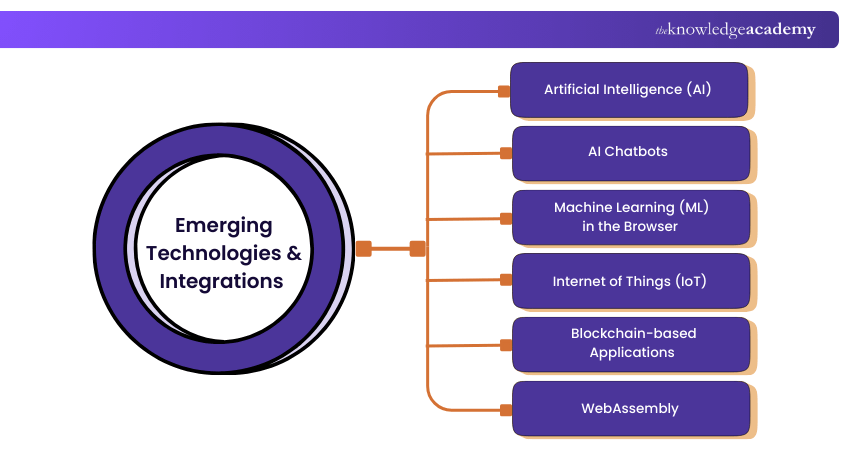
As the web continues to evolve, cutting-edge technologies are being seamlessly integrated to boost functionality, intelligence, and interconnectivity. Below are the emerging tech trends that are pushing the web ecosystem forward:
17) Artificial Intelligence (AI)
AI is transforming Web Development by enabling smarter user interactions, content personalisation, and automation. From intelligent search results to tailored product recommendations, AI continues to enhance overall digital experiences.
18) AI Chatbots
AI-powered chatbots are becoming a staple for modern websites today. They offer 24/7 customer support, lead generation, and personalised assistance. These chatbots reduce the workload on support teams while improving response time and engagement.
19) Machine Learning (ML) in the Browser
Machine Learning (ML) models are now running directly in the browser using tools like TensorFlow.js. This enables faster data processing, offline capabilities, and real-time predictions without requiring extensive server-side execution.
20) Internet of Things (IoT)
Web-connected devices are becoming mainstream today. Websites integrated with IoT can easily collect and display data from smart devices.
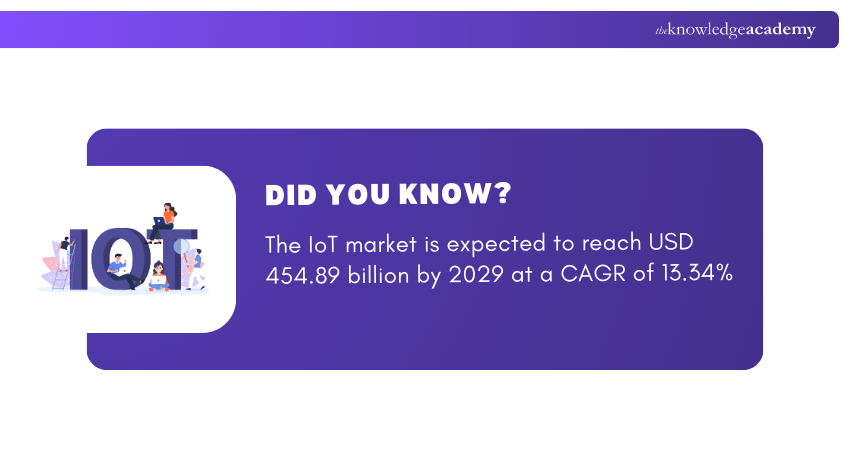
These platforms aim to streamline home automation, health tech, and industrial monitoring.
21) Blockchain-based Applications
Blockchain is gaining traction in Web Development for decentralised apps (dApps), secure transactions, and data transparency. It is widely used in sectors like finance, supply chain, and identity management.
22) WebAssembly
WebAssembly (Wasm) boosts web performance by allowing code written in languages like C++ or Rust to run in the browser. It opens the door for building fast, complex applications like games, editors, and simulations.
Build beautiful, performant UIs with Tailwind CSS Training - Join today!
Frameworks, Tools & Platforms
Choosing the appropriate development tools and frameworks can significantly impact how fast, scalable, and maintainable your web projects become. With evolving developer needs and industry standards, the following platforms and technologies can gradually take up the Web Development market:
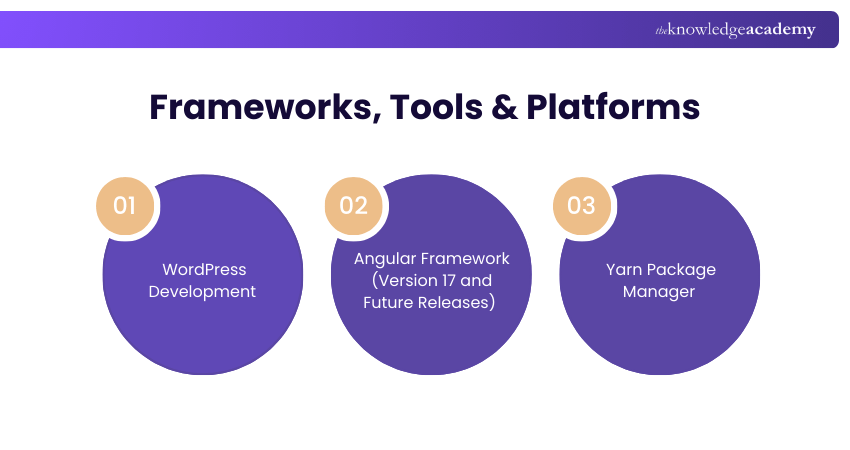
23) WordPress Development
WordPress remains the most popular Web Development platform, powering roughly over 40% of websites today. It’s evolving with improved block editors, full-site editing, and headless CMS capabilities - making it a go-to choice for flexible and SEO-friendly website development.
24) Angular Framework (Version 17 and Future Releases)
Angular 17 introduces performance improvements, simplified component creation, and enhanced hydration support for server-side rendering. The framework continues to be a reliable choice for building scalable, enterprise-grade web applications.
25) Yarn Package Manager
Yarn remains a developer-favourite package manager due to its speed, security, and deterministic dependency resolution. In line with modern Software Development Trends, its Plug-and-Play feature and workspace management make it ideal for large-scale JavaScript projects containing multiple modules.
Learn C Programming for ultimate system-level control – Sign up for our C# Programming (C Sharp) Training today!
Conclusion
As technology slowly regains shape, so does the way how websites are built and experienced. From intelligent AI integrations to lightweight Serverless designs, these Web Development Trends pave the path for smarter, faster, and more personalised digital interactions. Moreover, staying current with these changes ensures the competitiveness of developers and other web professionals in delivering cutting-edge web solutions.
Already Know Coding? Take the Leap into C and Write Performance-Driven Applications with our C++ Programming (C Plus Plus) Course.
Frequently Asked Questions
Which Technology is Best for Web Development?

The best technology for Web Development depends on what you are building. React and Angular are among the prominent frontrunners in creating user-friendly Frontends. In addition, Node.js and Django work well in Backend development. Besides, WordPress is also a popular choice for building content-focused websites.
How Much Demand is There for Web Development?
Web Development is in high demand due to rising business digitisation. Based on several reports, job opportunities for web developers are growing steadily, with strong prospects in areas like e-commerce, mobile-first design, and web application development.
What are the Other Resources and Offers Provided by The Knowledge Academy?
The Knowledge Academy takes global learning to new heights, offering over 3,000 online courses across 490+ locations in 190+ countries. This expansive reach ensures accessibility and convenience for learners worldwide.
Alongside our diverse Online Course Catalogue, encompassing 19 major categories, we go the extra mile by providing a plethora of free educational Online Resources like Blogs, eBooks, Interview Questions and Videos. Tailoring learning experiences further, professionals can unlock greater value through a wide range of special discounts, seasonal deals, and Exclusive Offers.
What is The Knowledge Pass, and How Does it Work?
The Knowledge Academy’s Knowledge Pass, a prepaid voucher, adds another layer of flexibility, allowing course bookings over a 12-month period. Join us on a journey where education knows no bounds.
What are the Related Courses and Blogs Provided by The Knowledge Academy?
The Knowledge Academy offers various App & Web Development Training, including MEAN Stack Web Development Training, Angular Training, and React Native Training. These courses cater to different skill levels, providing comprehensive insights into Git Repository.
Our Programming & DevOps Blogs cover a range of topics related to Web Development Trends, offering valuable resources, best practices, and industry insights. Whether you are a beginner or looking to advance your Web Development skills, The Knowledge Academy's diverse courses and informative blogs have got you covered.

The Knowledge Academy


Global Training Provider
The Knowledge Academy is a world-leading provider of professional training courses, offering globally recognised qualifications across a wide range of subjects. With expert trainers, up-to-date course material, and flexible learning options, we aim to empower professionals and organisations to achieve their goals through continuous learning.

Upcoming Programming & DevOps Resources Batches & Dates
Date
 Web Development Training
Web Development Training
Fri 17th Jul 2026
Web Development Training
Fri 16th Oct 2026

 If you wish to make any changes to your course, please


