


 Top Rated Course

We may not have the course you’re looking for. If you enquire or give us a call on +971 8000311193 and speak to our training experts, we may still be able to help with your training requirements.
Types of Sales Tools: Best and Most Popular for Your Team
Charlotte Wilson 16 January 2026Types of Sales Tools include software and platforms that help sales teams manage leads, automate tasks, track performance, and close deals efficiently. These tools range from CRM systems and email automation to sales analytics, prospecting platforms, and pipeline management, enhancing productivity and improving conversion rates.

Training Outcomes Within Your Budget!
We ensure quality, budget-alignment, and timely delivery by our expert instructors.
Table of Contents

Different Types of Sales Tools can elevate your sales process across multiple dimensions. For instance, familiarising yourself with popular platforms can significantly boost operational efficiency. Choosing intuitive platforms like Slack or Microsoft Teams can facilitate real-time communication, making teamwork seamless.
Cloud-based CRM systems are excellent examples, as they can assistin accommodating an increasing number of users without sacrificing performance. Further, tools with features like automated invoicing eliminate manual tasks, optimising the sales cycle. In this blog, we will discuss different Types of Sales Tools. Each serves a specific purpose and increases efficiency in their respective areas.
Table of Contents
1) What are Sales Tools?
2) Types of Sales Tools Every Sales Team Should Know
a) Best CRM Software for Sales Teams
b) Analytics Tools for data-driven decision-making
c) Email marketing software
d) Communication Tools for sales
e) Lead Generation Tools
f) Proposal and Contract Management Tools
3) Virtual Meeting Tools
4) Conclusion
What are Sales Tools?
Sale Tools are specialised software or applications designed to streamline the sales process. They come in many forms and serve a variety of functions. They help sales reps organise their day-to-day activities. This includes scheduling appointments, keeping track of client interactions, and managing leads. This organisation is crucial for sales teams to operate efficiently.
Sale Tools assist in automating routine tasks. Automation reduces manual work, freeing up time for more strategic activities. Think of email marketing campaigns or lead sorting these can be automated to some extent with the best Sales Tools. Sales Tools offer valuable data insights. They help gather and analyse data to measure performance and make informed decisions. For instance, analytics tools can tell you which of your sales strategies are most effective.
Some Sales Tools focus on customer relationship management or CRM. These tools help you manage interactions with current and future customers. They play an important role in customer retention and lead nurturing.

Types of Sales Tools Every Sales Team Should Know
Sales tools are essential for streamlining processes, improving productivity, and closing deals efficiently. From CRM software and email marketing tools to analytics platforms and automation systems, each tool serves a unique purpose in enhancing sales performance. Knowing the right tools to use at each stage of the sales cycle can significantly impact your team's success and customer satisfaction.
Best CRM Software for Sales Teams
Customer Relationship Management (CRM) software is important for managing interactions with current and potential customers. It helps in organising, automating, and synchronising sales, marketing, and customer service. Here are some of the best CRM software options for sales teams:
1) Salesforce
Salesforce is a popular CRM software that supports efficient sales management. It offers many different features that cater to all aspects of sales, from lead and contact management to opportunity management and workflow automation, Salesforce has it all. It also comes with many customisation options.
Businesses can use the software for their specific needs. Furthermore, Salesforce offers numerous integrations with other popular Types of Sales Tools. This makes it easy to incorporate Salesforce into your existing toolset.
2) HubSpot CRM
HubSpot CRM is designed to be user-friendly. It is especially well-suited for small to medium-sized businesses. The software provides all the essential CRM features without overwhelming the user.
This includes contact and deal tracking, company insights, and pipeline management. One of the main advantages of HubSpot is its free plan. It provides basic features at no cost, making it a great option for startups or small businesses with a tight budget. By understanding the HubSpot Lifecycle Stages, businesses can better customise their CRM strategy and enhance customer relationships.
3) Zoho CRM
Zoho CRM strikes a good balance between functionality and cost. It offers many different features that cater to the needs of small and medium-sized businesses. This includes lead and contact management, deal tracking, and workflow automation.
Zoho CRM also comes with built-in telephony features. This allows sales teams to make calls directly from the CRM. Moreover, Zoho offers integration with popular tools like Microsoft 365 and Google Workspace.
Elevate your sales game with our Sales Bootcamp — Sign up now for expert-led training!
4) Microsoft Dynamics 365
Microsoft Dynamics 365 is a comprehensive CRM solution. It offers many features and integrates seamlessly with other Microsoft products. This includes Outlook, SharePoint, and Power BI.
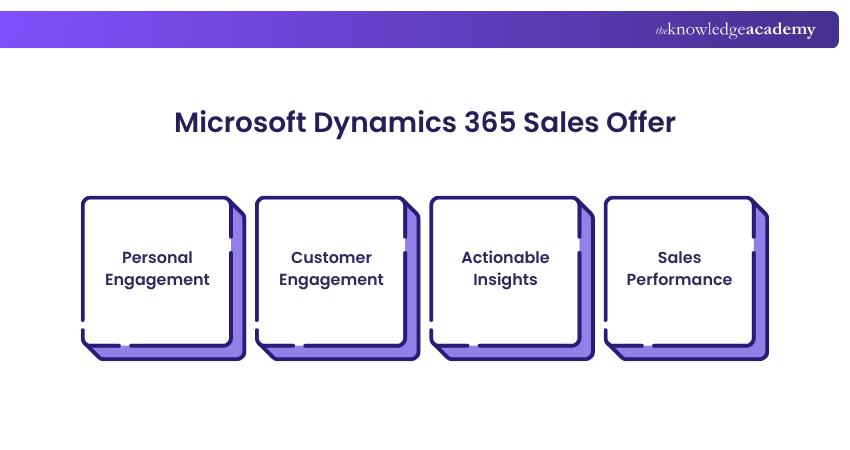
Dynamics 365 also offers robust analytics capabilities. Sales teams can easily analyse data and gain actionable insights. Moreover, the software provides advanced AI capabilities. This helps in predicting customer needs and guiding sales teams accordingly. Here is an image to clarify Microsoft Dynamics 365 sales offer:
5) Pipedrive
Pipedrive is designed with salespeople in mind. It focuses on pipeline management and usability. The interface is built-in, making it easy to navigate and manage deals. Pipedrive also offers a variety of customisation options. Sales teams can tailor the software to their specific needs. Furthermore, Pipedrive provides insightful analytics. Sales teams can track their performance and identify areas for improvement.
Learn how to create winning bids and handle tenders like a pro with Bid And Tender Management Training. Start your training today.
Analytics Tools for Data-driven Decision Making
Analytics tools can empower sales teams to make data-driven decisions. Sales Performance Management plays a key role here by using these tools to track team performance and drive continuous improvement. Let's dive deeper into some of the top analytics tools designed to offer actionable insights for sales.
1) Google Analytics
Google Analytics is often the go-to tool for digital insights. It helps sales teams understand customer interaction with their website. Features like audience segmentation are invaluable for targeted marketing. This tool also helps measure the effectiveness of online advertising. You can identify which campaigns lead to higher conversions and sales. Real-time data features allow you to make immediate decisions based on current user behaviour.
2) Tableau
Tableau is a powerful tool known for turning data into insightful visualisations. This tool helps sales teams interpret complex data effortlessly. It’s especially useful for making complex data understandable to those without a technical background. With Tableau, sales teams can easily track important metrics. It offers customisable options to create specific KPI dashboards. Team members can share these visual dashboards for collaborative decision-making.
3) Looker
Looker goes beyond just providing data; it helps you understand it. The platform supports multiple data sources, making it versatile. Looker is prticularly strong in customisable reporting. Create reports that focus on the most important aspects of your Sales Process. It also integrates well with other Types of Sales Tools, offering a comprehensive view of your sales data. It offers SQL-based querying for deeper data dives, which is useful for advanced analysts.
4) Power BI
Power BI is a Microsoft product that excels in integration and compatibility. If you're already using Microsoft's suite of office tools, Power BI fits right in. The tool provides diverse visualisation options, from charts to maps. Advanced filtering options allow sales teams to zero in on specific data points. Power BI can also automate reports, sending scheduled insights straight to your inbox. This saves time and ensures that teams are always up to date.
5) Domo
Domo offers real-time data updates, a crucial feature for fast-paced sales environments. It integrates with multiple data sources, offering a 360-degree view of your sales operations. The tool is mobile-friendly, allowing sales teams to access data on the go. Its drag-and-drop interface simplifies the process of building custom reports. This is useful for sales teams that need quick, straightforward insights.
6) Mixpanel
Mixpanel is tailored for analysing user behaviour. This tool can break down user actions into sequences or funnels. This helps sales teams understand the customer journey. Mixpanel’s retention analytics can track how often users return after their initial visit or purchase. These insights are beneficial for long-term customer engagement strategies. If your business is app-centric, Mixpanel offers specific metrics to understand app engagement and usage.
Master the art of sealing the deal with closing the sale training. Learn techniques that help you turn leads into loyal customers.
7) Adobe Analytics
Adobe Analytics offers a wide array of features for advanced analytics. It can capture data from a multitude of channels, including IoT devices and mobile apps. One unique feature is its ability to track voice interactions from smart speakers. It's particularly useful for businesses focusing on multi-channel sales. Predictive analytics capabilities help forecast future customer behaviour. This enables proactive adjustments to sales strategies.
8) Sisense
Sisense specialises in simplifying complex data sets. Its Elasticube technology allows for handling large data from multiple sources. The tool provides an option to embed analytics directly into your product. This enables customers to see analytics, which can be a strong selling point. Sisense offers interactive dashboards that enable sales teams to explore data intuitively. It has strong community support, offering a variety of plug-ins and extensions for further customisation.
Email Marketing Software
Email marketing is a crucial component in a sales team's toolkit. It's a cost-effective way to reach your audience and nurture leads. Here’s a look at some leading email marketing software options that can supercharge your sales efforts.
1) Mailchimp
Mailchimp is the perfect platform for small businesses and startups. It offers user-friendly templates for quick email creation. The software also includes built-in analytics tools. These allow you to track open rates, click-through rates, and overall engagement. A/B testing features let you experiment with different email content. This helps you understand what resonates with the audience.
2) Constant Contact
Constant Contact is renowned for its intuitive interface and customer support. It offers a range of customisable templates. Its unique feature is an event management tool. This is useful for businesses that hold webinars or other events. You can manage invites, registrations, and reminders all in one place. Constant Contact also offers built-in social sharing and other Types of Sales Tools.
3) SendinBlue
SendinBlue offers more than just email marketing. It also includes SMS campaigns. This makes it a comprehensive communication platform. It offers a drag-and-drop email editor. This is great for creating customised campaigns without coding. SendinBlue’s strong suit is its transactional email features. This helps businesses that require real-time, automated, transactional emails.
4) GetResponse
Get Response offers additional features like landing pages and webinars. Autofunnel is one of its unique features. This allows for creating a sales funnel for products, webinars, or opt-ins. The tool also provides analytics for tracking performance metrics. This helps you evaluate the ROI of your email campaigns.
5) ActiveCampaign
ActiveCampaign focuses on customer experience automation. This combines email marketing, automation, automation of sales automation, and messaging. It offers features like site tracking and event tracking. These help you understand how your audience interacts with your website. Customer segmentation is another strong point. You can send targeted emails based on user behaviour.
6) AWeber
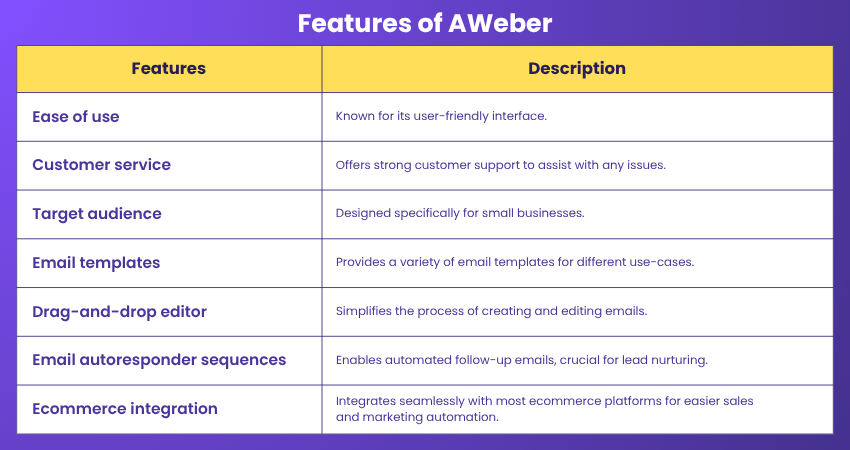
AWeber is known for its ease of use and customer service. It offers a suite of the best Sale tools designed for small businesses. This includes email templates and a drag-and-drop editor. One standout feature is its email autoresponder sequences. This allows for automated follow-up emails, which is crucial for lead nurturing. AWeber also integrates well with most e-commerce platforms.
8) ConvertKit
ConvertKit is designed for content creators and small businesses. It offers simple but powerful automation. Its visual automation builder helps in easily creating automated email funnels. ConvertKit focuses on sending plain-text emails to give a personal touch. This software also offers tagging based on user behaviour. This helps in segmenting your email list more effectively.
9) Drip
Drip focuses on ecommerce and is designed to integrate seamlessly with your online store. It offers features like customer intent tracking. This helps in understanding what products the customers are interested in. Drip’s automation features are particularly strong. Send automated emails based on triggers like cart abandonment.
Reach more prospects with confidence through outbound sales training. Learn outreach techniques that actually work.
Communication Tools for Sales
Effective communication is crucial in sales, both within the team and with clients. Here are some top communication tools to keep everyone in sync and drive sales performance.
1) Slack
Slack is a collaboration hub. You can create different channels for various projects or teams. The tool offers integrations with a multitude of other platforms. This ensures that all resources are just a click away. Slack also supports voice and video calls, making it a versatile communication tool.
2) Zoom
Zoom has become synonymous with video conferencing. Its user-friendly interface is good for team meetings and client calls alike. The tool offers features like breakout rooms and webinar capabilities. It’s also compatible with various devices, facilitating mobile participation. With high-quality video and audio, Zoom ensures that communication is crystal clear.
3) Microsoft Teams
Microsoft Teams is the go-to tool for businesses already in the Microsoft ecosystem. It integrates seamlessly with Microsoft 365, making file sharing easy. The tool supports chats, calls, and video meetings. Teams also offers file storage and collaboration on Microsoft documents. Advanced features include task assignment and workflow automation.
4) Skype for Business
Skype for Business offers robust video conferencing options. Features like screen sharing are particularly useful for sales demos. It's widely used and doesn't require users to download any software. Its chat function allows for quick communication. Skype for Business also offers integration with other Microsoft Office tools.
5) Asana
Asana is a type of project management tool that also functions well for communication. It allows you to assign tasks and comment on task updates. Asana helps in keeping team members accountable for their responsibilities. The tool offers various views like lists, boards, and timelines. This makes tracking the progress of sales projects easier.
6) Trello
Trello uses boards, lists, and cards to organise tasks and projects. It’s an intuitive tool for visual thinkers. Communication happens in real-time as team members can comment directly on Trello cards. Trello is highly customisable, with various plugins and integrations available. This ensures that it fits perfectly into your existing workflow.
Turn customer doubts into deals with Objection Handling Training. Learn how to respond with confidence and clarity.
7) RingCentral
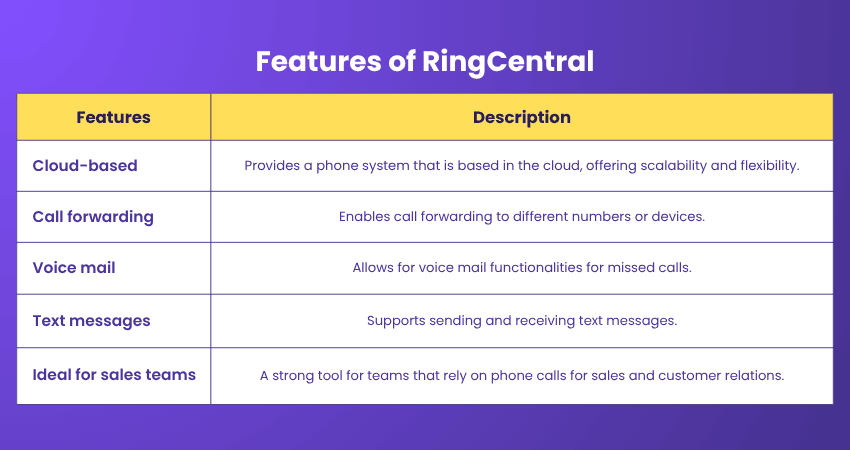
RingCentral provides a cloud-based phone system for businesses. It offers features like call forwarding, voice mail, and text messages. It’s a strong tool for sales teams that rely on phone calls. RingCentral also supports video conferencing and team messaging. The tool is mobile-friendly, facilitating communication on the go.
8) Intercom
Intercom specialises in customer communication. It offers chatbots, customer segmentation, and automated messaging. The tool is excellent for managing customer inquiries and support tickets. It also provides data analytics, giving insights into customer interactions. Intercom helps in automating repetitive tasks, freeing sales reps to focus on complex issues.
Lead Generation Tools
Lead generation is the lifeblood of sales. The right Types of Sales Tools can help you identify, capture, and nurture potential customers. Here's a breakdown of some popular lead generation tools designed to help you fill your sales funnel.
1) LinkedIn Sales Navigator
LinkedIn Sales Navigator find the right prospects on LinkedIn. It offers advanced search filters for targeted lead generation. You can save leads and even receive automated lead recommendations. Its InMail feature allows you to reach out directly to potential leads. It's particularly useful for B2B sales.
2) HubSpot
HubSpot offers a complete CRM and lead management system. It provides lead capture features like forms and landing pages. HubSpot scores leads based on their engagement, aiding in prioritisation. It also integrates well with email marketing tools for streamlined communication. Automated workflows help nurture leads through the sales funnel.
3) Clearbit
Clearbit specialises in real-time lead data. It can append and update lead information automatically in your CRM. The tool integrates with many other sales and marketing platforms. It helps in segmenting and scoring leads based on data accuracy. Clearbit can be a valuable addition to data-driven sales teams.
4) OptinMonster
OptinMonster focuses on converting website visitors into leads. It offers features like pop-up forms and exit-intent technology. You can target visitors based on behaviour or source. OptinMonster integrates well with email marketing software for easy lead nurturing. A/B testing helps in optimising conversion strategies.
Looking to improve your sales skills? Our Sales Training Courses offer hands-on learning and real-world strategies. Register now to take your career to the next level!
5) Mailshake
Mailshake is designed for cold email outreach. It offers templates and automated follow-ups. The tool also tracks email performance metrics like open and click rates. You can personalise emails at scale, making cold outreach more effective. Mailshake simplifies the outreach process, saving valuable time.
6) Hunter.io
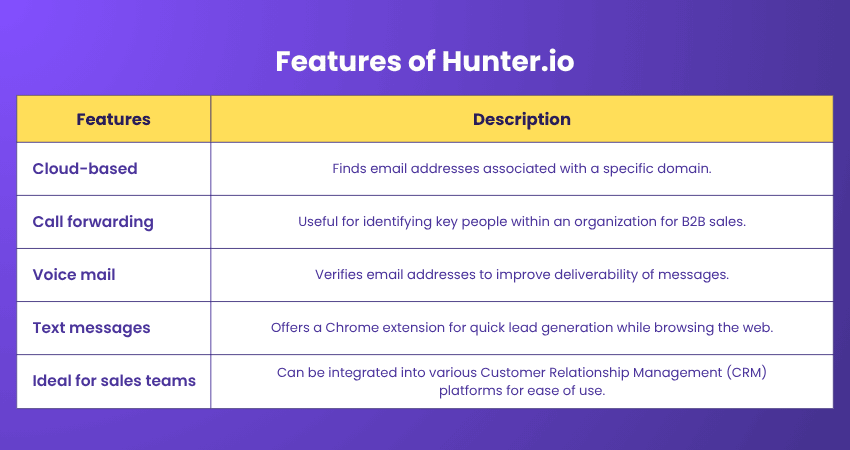
Hunter.io finds email addresses associated with a particular domain. It's useful for B2B sales to identify key people within an organisation. The tool also verifies email addresses to improve deliverability. It offers a Chrome extension for quick lead generation while browsing. Hunter.io can be integrated into various CRM platforms.
7) Calendly
Calendly simplifies the appointment-setting process. It syncs with your calendar to show real-time availability. Potential leads can easily book meetings without back-and-forth emails. Automated reminders help reduce no-shows. Calendly can integrate with other Sales Tools for a seamless lead management process.
8) Quora Ads
Quora Ads allow you to place your product in front of a targeted audience. It's useful for niche markets or specific industries. The platform offers various ad formats to suit different campaign goals. Detailed analytics help you understand ad performance. This helps in refining your lead generation strategy.
Run better meetings that drive results with this effective meeting skills training. Learn to plan, lead, and follow up effectively.
Proposal and Contract Management Tools
Closing a sale often involves presenting proposals and signing contracts. These Types of Sales Tools simplify these crucial final steps, thereby accelerating the sales process.
1) PandaDoc
PandaDoc offers pre-designed proposal templates for various industries. It allows for e-signatures, streamlining the approval process. You can integrate PandaDoc with your CRM to auto-populate proposals. Analytics help you track how clients interact with your documents. It even offers options for payment processing.
2) DocuSign
DocuSign specialises in electronic signatures. It ensures the legality of your e-signatures, providing peace of mind. Integration with various CRM systems is a strong point. It supports multiple document formats and complies with global e-signature laws. It's a must-have tool for global operations.
3) Proposify
Proposify offers dynamic proposals that can include videos and interactive pricing. It gives real-time notifications when a client interacts with your proposal. Automated follow-ups ensure that your proposal remains top-of-mind. Proposify also offers analytics to gauge client engagement.
4) Adobe Sign
Adobe Sign is Adobe's e-signature solution. It integrates well with Microsoft and other Adobe products. The tool provides robust security and compliance measures. It offers mobile options for contract signing on-the-go. You can even save templates for frequently used documents.
5) HelloSign
HelloSign offers a user-friendly interface for e-signatures. It provides templates for various document types. Email notifications alert you when a document is signed or needs attention. HelloSign offers API integrations for a tailored user experience.It's a straight forward optionfor small to midsize businesses.
6) Concord
Concord focuses on contract lifecycle management. It provides features like version tracking and auto-renewal. You can set approval workflows for internal reviews. It offers real-time editing, ensuring that everyone is looking at the most recent version. Concord’s analytics provide insights into contract performance.
7) Contract Safe
Contract Safe is designed for contract storage and management. It offers advanced search options to easily find documents. You can set reminders for critical contract dates. Role-based permissions ensure secure access. Contract Safe is ideal for businesses with a large volume of contracts.
8) Qwilr
Qwilr combines proposal and contract creation in a web-based format. It offers features like interactive quotes and mobile-responsive designs. The tool integrates with your CRM and other best Sales Tools. Analytics are offered to track client engagement. Qwilr aims to create proposals that feel like interactive web pages.
Level up fast with this hands-on sales bootcamp training. Learn proven selling techniques that you can apply right away.
Virtual Meeting Tools
Virtual meeting tools have become essential for modern communication, allowing teams to connect seamlessly regardless of location. These tools offer features like video conferencing, screen sharing, chat functionalities, and collaborative workspaces, making them invaluable for remote teams and businesses.
Popular platforms like Zoom, Microsoft Teams, and Google Meet help facilitate productive discussions, presentations, and workshops. They enhance teamwork, foster real-time collaboration, and improve communication efficiency.
With the rise of remote work, choosing the right virtual meeting tool can greatly impact the effectiveness of your meetings and overall team performance.
Lead your team to success with sales management training. Learn how to motivate, coach, and drive better results.
Conclusion
Managing leads effectively is crucial for sales success. Specialised Types of Sales Tools can help automate lead scoring. They segregate warm leads from cold ones. Automatic nurturing campaigns can move leads down the sales funnel. This focused approach increases the likelihood of conversion. When preparing for HubSpot Interview Questions, it’s crucial to understand how this strategy ties into the overall efficiency of the sales pipeline. With a well-managed lead pipeline, revenue often follows.
Get started in the retail world with retail basics training. Learn key customer service and selling skills for retail success.
Frequently Asked Questions
What are the Four Types of Sales?

The four main types of sales are B2B (Business to Business), B2C (Business to Consumer), direct sales, and inside sales. Each type focuses on different customer relationships and methods, ranging from personal interactions to digital communication, catering to unique business needs.
Is Salesforce a Sales Tool?
Yes, Salesforce is a leading sales tool that provides CRM (Customer Relationship Management) services. It helps sales teams manage customer data, track interactions, automate tasks, and enhance overall sales efficiency, ultimately helping to close more deals and build better customer relationships.
What are the Other Resources and Offers Provided by The Knowledge Academy?
The Knowledge Academy takes global learning to new heights, offering over 3,000 online courses across 490+ locations in 190+ countries. This expansive reach ensures accessibility and convenience for learners worldwide.
Alongside our diverse Online Course Catalogue, encompassing 19 major categories, we go the extra mile by providing a plethora of free educational Online Resources like News updates, Blogs, videos, webinars, and interview questions. Tailoring learning experiences further, professionals can maximise value with customisable Course Bundles of TKA.
What is The Knowledge Pass, and How Does it Work?
The Knowledge Academy’s Knowledge Pass, a prepaid voucher, adds another layer of flexibility, allowing course bookings over a 12-month period. Join us on a journey where education knows no bounds.
What are the Related Courses and Blogs Provided by The Knowledge Academy?
The Knowledge Academy offers various Sales Courses, including Sales Negotiation Training and the Value Based Selling Course. These courses cater to different skill levels, providing comprehensive insights into What is Sales Performance Management.
Our Business Skills Blogs cover a range of topics related to sales, offering valuable resources, best practices, and industry insights. Whether you are a beginner or looking to advance your sales skills, The Knowledge Academy's diverse courses and informative blogs have got you covered.

Charlotte Wilson


Soft Skills and Business Training Manager
Charlotte Wilson is an expert in soft skills development, with over 14 years of experience helping individuals and teams improve communication, productivity and emotional intelligence in the workplace. Her training content is focused on enhancing interpersonal effectiveness and fostering positive, collaborative environments across all levels of an organisation.
View Detail
Upcoming Business Skills Resources Batches & Dates
Date
 Online Sales Training
Online Sales Training
Fri 10th Jul 2026
Online Sales Training
Fri 2nd Oct 2026

 If you wish to make any changes to your course, please


