





 To help and support our clients we are providing a limited number of 250 daily discount codes. Hurry, first come, first served!



Lean Six Sigma Certification Training FAQs
Lean Six Sigma Training is a comprehensive program designed to equip professionals with the skills and methodologies to enhance organizational efficiency and drive continuous improvement. It combines the principles of Lean and Six Sigma, emphasizing waste reduction and process optimization.
There are no formal prerequisites to attend this Online Lean Six Sigma Training.
Lean Six Sigma Training offers numerous benefits, including improved problem-solving abilities, enhanced decision-making through data analysis, increased efficiency, and a globally recognized credential that enhances career prospects across industries.
Yes, we provide 24/7 support for our Lean Six Sigma Certification Course, ensuring that participants receive assistance and guidance whenever needed, creating a seamless learning experience.
The duration of these Lean Six Sigma Courses spans across 1 to 15 days.
Yes, self-paced Lean Six Sigma Training Courses are available, allowing participants to study at their own convenience and progress through the material at a pace that suits their individual learning preferences.
A Lean Six Sigma Certification opens doors to a range of roles, including Process Improvement Specialist, Project Manager, Quality Manager, Operations Manager, and more. It is highly valued in industries striving for operational excellence.
Yes, we offer corporate training for Lean Six Sigma, tailored to meet the specific needs of organizations aiming to enhance efficiency, reduce waste, and foster a culture of continuous improvement.
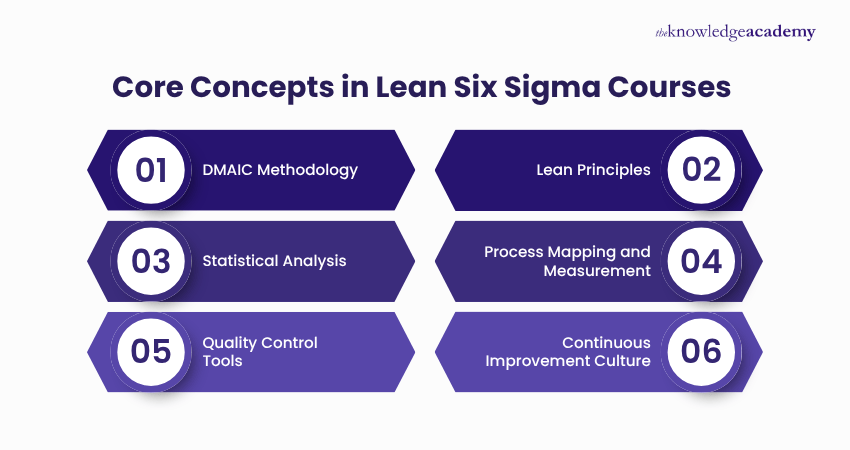
In a Lean Six Sigma Course, participants will learn advanced problem-solving techniques, statistical analysis, process improvement methodologies, and leadership strategies crucial for driving organizational excellence.
Professionals from various backgrounds, including project managers, quality professionals, business analysts, and those involved in process improvement initiatives, will benefit from attending this Lean Six Sigma Course.
For any issues accessing Lean Six Sigma Courses, please reach out to our dedicated support team via email for prompt assistance and resolution.
Please see our Lean Six Sigma Certification Training available in the United States
The Knowledge Academy is one of the Leading global training provider for Lean Six Sigma Certification Training.
The training fees for Lean Six Sigma Certification Training in the United States starts from $3195

Why we're the go to training provider for you

Best price in the industry
You won't find better value in the marketplace. If you do find a lower price, we will beat it.
Trusted & Approved
Recognised by leading certification bodies, we deliver training you can trust.

Many delivery methods
Flexible delivery methods are available depending on your learning style.
High quality resources
Resources are included for a comprehensive learning experience.





"Really good course and well organised. Trainer was great with a sense of humour - his experience allowed a free flowing course, structured to help you gain as much information & relevant experience whilst helping prepare you for the exam"
Joshua Davies, Thames Water





 If you wish to make any changes to your course, please


