


 Top Rated Course

We may not have the course you’re looking for. If you enquire or give us a call on +1 7204454674 and speak to our training experts, we may still be able to help with your training requirements.
Conflict Management Skills: A Complete Guide
William Brown 19 June 2026Conflict Management Skills help resolve disputes through communication, empathy, and problem-solving while maintaining relationships at work. They help individuals understand different views, reduce tension, and find solutions. These skills improve teamwork, strengthen collaboration, and create a positive and productive work environment.

Training Outcomes Within Your Budget!
We ensure quality, budget-alignment, and timely delivery by our expert instructors.
Table of Contents
Disagreements at work are unavoidable, whether they come from different opinions, deadlines, or ways of working. What truly matters is how you respond in those moments. This is where Conflict Management Skills play a key role, helping you stay composed, understand different viewpoints, and handle situations with clarity.
When used effectively, it can do more than just resolve issues. They strengthen relationships, improve teamwork, and create a more supportive work environment. In this blog, you will learn about Conflict Management Skills, their key examples, how to improve them, and more. Let’s begin!
Table of Contents
1) What are Conflict Management Skills?
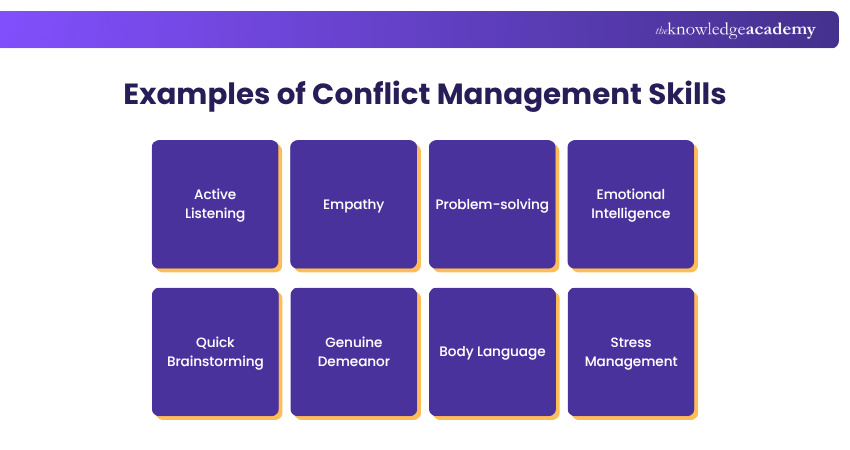
2) Eight Examples of Conflict Management Skills
3) Improving Conflict Management Skills
4) What are the Five C's of Conflict Management?
5) What are the Five Steps of Conflict Management?
6) Conclusion
What are Conflict Management Skills?
Conflict Management Skills are the abilities that help you handle and control how conflict affects you, your colleagues, and the workplace. Since disagreements are a natural part of any professional environment, these skills focus on managing conflict in a calm and constructive way.
By developing Conflict Management Skills, you can turn conflict into a positive force at work. It can lead you to better ideas, improved communication, and stronger relationships. When handled well, it becomes a productive part of the workplace, helping teams grow, collaborate, and achieve better outcomes.
Eight Examples of Conflict Management Skills
Conflict Management Skills are essential for maintaining harmony in personal and professional relationships. Here are the key skills that can help you resolve conflicts effectively.
1) Active Listening
Active Listening is one of the key Conflict Management Skill that focuses on fully understanding the speaker before responding. It helps reduce misunderstandings and builds trust during difficult conversations.
Core Elements of Active Listening:
a) Active listening involves giving the speaker your full attention without interruption.
b) It includes recognising their feelings and viewpoints to show respect and empathy.
c) This approach ensures you understand the details clearly and prevents confusion.
d) It also strengthens trust and plays a key role in resolving conflicts.
2) Empathy
Empathy enables you to understand and relate to other people’s emotions during conflict. It is useful for creating a supportive environment where individuals feel heard and respected.
Core Elements of Empathy:
a) Empathy is about recognising and understanding other people’s emotions.
b) It involves seeing a situation from their perspective.
c) This allows you to respond with care and sensitivity.
d) Empathy goes a long way to ease tension and encourages a more collaborative environment.
3) Problem-solving
Problem-solving is one of the core Conflict Management Skills that is crucial for identifying the underlying cause of a conflict and finding practical solutions. It transitions the focus from blame to resolution, ensuring constructive outcomes.
Core Elements of Problem-solving:
a) This skill is about recognising the root cause of a conflict and working towards practical solutions.
b) It calls for creativity and critical thinking to consider different approaches.
c) By focusing on solutions instead of blame, conflicts can be resolved more effectively.
d) This skill ensures that conflicts are resolved in a constructive manner, utilising Conflict Management Measures to guide the process effectively.
4) Emotional Intelligence
Emotional Intelligence effectively helps you manage your own emotions while understanding others during conflicts. It supports calm responses and leads to more effective and mutually beneficial resolutions.
Core Elements of Emotional Intelligence:
a) It is the ability to recognise and manage your own emotions, as well as understand others' emotions.
b) This skill helps in staying calm and composed during conflicts.
c) It helps you respond calmly rather than react impulsively.
d) High Emotional Intelligence leads to better conflict resolution outcomes.
Resolve workplace conflicts with clarity and confidence by joining the Employee Dispute Resolution Course now!
5) Quick Brainstorming
Quick Brainstorming helps to resolve conflict by encouraging open discussion and shared solutions. It shifts focus from problems to collaboration, allowing teams to find effective outcomes together.
Core Elements of Quick Brainstorming:
a) Setting clear goals to keep discussions focused and aligned.
b) Encouraging open participation where everyone can share ideas freely.
c) Exploring practical and creative solutions that address all concerns.
d) Ensuring balanced contribution so every voice is heard equally.
6) Genuine Demeanour
A Genuine Demeanour builds trust during conflict by showing honesty and sincerity. It helps to create a safe space where everyone feels respected and is willing to find solutions that are beneficial for everyone involved.
Core Elements of Genuine Demeanour:
a) Always communicating with honesty and transparency.
b) Showing a sincere commitment to resolving the issue fairly.
c) Maintaining a balanced and unbiased approach towards all parties.
d) Demonstrating empathy and respect for different perspectives.
7) Body Language
Body Language is another key Conflict Management Skill that plays a key role in the conflict resolution process. Nonverbal cues influence how messages are received. So, it is suitable to use calm and open gestures to reduce tension and build trust.
Core Elements of Body Language:
a) Maintaining an open and relaxed posture to appear approachable.
b) Using positive facial expressions and steady eye contact to show engagement.
c) Keeping gestures controlled to avoid appearing aggressive or defensive.
d) Observing others nonverbal signals to better understand their concerns.
8) Stress Management
Stress Management helps keep emotions in check during conflicts. This is key to allowing clearer thinking and better communication. Also, it supports a calm and solution-focused approach for everyone involved in the conflict.
Core Elements of Stress Management:
a) Maintaining a calm and neutral tone during discussions.
b) Taking short breaks to prevent escalation during intense moments.
c) Recognising and addressing the root causes of stress early.
d) Encouraging a positive, solution-focused mindset among all parties.
Learn to apply critical thinking skills to tackle obstacles with our Problem Solving Course – Join today!
Improving Conflict Management Skills
Improving Conflict Management Skills takes practice and a willingness to learn from real situations. Let’s look at some practical ways to improve your skills below:
a) Attend Workshops and Training: Learn practical techniques and strategies from experts to handle workplace conflicts effectively.
b) Practice Role-playing Exercises: Understand different perspectives by putting yourself in other situations.
c) Seek Feedback Regularly: Ask managers or colleagues for input on how you handle conflicts and for areas where you can improve.
d) Build Collaboration Skills: Work closely with others to develop trust and improve your ability to find shared solutions.
What are the Five C's of Conflict Management?
Here are the five C’s of Conflict Management:
1) Clarity: Clearly define the issue and roles to avoid misunderstandings.
2) Communication: Encourage open, respectful dialogue and active listening.
3) Collaboration: Work together to uncover mutually beneficial solutions.
4) Compromise: Seek the middle ground when parties hold firm positions.
5) Control: Stay calm, manage emotions, and guide discussions constructively.
Lead with confidence and turn challenges into opportunities with Management Courses – Join now!
What are the Five Steps of Conflict Management?
The five steps of Conflict Management are as follows:
1) Gather Information: Collect all relevant details and listen to each perspective calmly and fairly.
2) Identify Root Issues: Look for hidden concerns or emotions that may be preventing resolution.
3) Define Outcomes: Clarify the desired results while keeping business goals and trust in mind.
4) Explore Solutions: Consider alternatives, compromises, and opportunities for shared learning.
5) Finalise Resolution: Agree on a solution, highlight the benefits, and reflect on lessons learned.
Hone the skills that shape great leaders. Sign up for our comprehensive Management Courses now!
Conclusion
Conflict is a natural part of any workplace, but how you manage them shapes your professional relationships and success. Developing strong Conflict Management Skills helps you to turn challenges into opportunities for better understanding, teamwork, and growth. When approached correctly, conflict becomes more about finding solutions that benefit everyone.
From clash to collaboration, unlock the skills to lead through conflict with our Conflict Resolution and Negotiation for Change Training - Sign up now!
Frequently Asked Questions
What are Some Common Sources of Conflict in the Workplace?

Some of the common sources of conflict in the workplace include:
1) Miscommunication
2) Differing values or goals
3) Personality clashes
4) Resource allocation
5) Workload distribution
Addressing these issues early can help prevent larger conflicts.
What Should I do if I Have a Conflict with a Colleague or Supervisor?
If you're in a conflict with a colleague or supervisor, try to address the issue directly and in a calm manner. Use active listening and clear communication to understand their perspective. If needed, seek help from a mediator or HR professional to resolve the conflict effectively.
What are the Other Resources and Offers Provided by The Knowledge Academy?
The Knowledge Academy takes global learning to new heights, offering over 3,000 online courses across 490+ locations in 190+ countries. This expansive reach ensures accessibility and convenience for learners worldwide.
Alongside our diverse Online Course Catalogue, encompassing 17 major categories, we go the extra mile by providing a plethora of free educational Online Resources like Blogs, eBooks, Interview Questions and Videos. Tailoring learning experiences further, professionals can unlock greater value through a wide range of special discounts, seasonal deals, and Exclusive Offers.
What is the Knowledge Pass, and How Does it Work?
The Knowledge Academy’s Knowledge Pass, a prepaid voucher, adds another layer of flexibility, allowing course bookings over a 12-month period. Join us on a journey where education knows no bounds.
What are Related Courses and Blogs Provided by The Knowledge Academy?
The Knowledge Academy offers various Management Courses, including the Conflict Management Course, Consulting Skills Course, and Problem Solving Course. These courses cater to different skill levels, providing comprehensive insights into Why is Teamwork Important.
Our Business Skills Blogs cover a range of topics related to Conflict Management, offering valuable resources, best practices, and industry insights. Whether you are a beginner or looking to advance your Conflict Management Skills, The Knowledge Academy's diverse courses and informative blogs have got you covered.

William Brown


Senior Business Analyst and Strategic Advisor
William Brown is a senior business analyst with over 15 years of experience driving process improvement and strategic transformation in complex business environments. He specialises in analysing operations, gathering requirements and delivering insights that support effective decision making. William’s practical approach helps bridge the gap between business goals and technical solutions.
View Detail
Upcoming Business Skills Resources Batches & Dates
Date
 Management Training for New Managers
Management Training for New Managers
Fri 4th Sep 2026
Management Training for New Managers
Fri 16th Oct 2026

 If you wish to make any changes to your course, please


