


 Top Rated Course

We may not have the course you’re looking for. If you enquire or give us a call on +47 80010068 and speak to our training experts, we may still be able to help with your training requirements.
Program Management Professional Exam Study Guide
David Evans 04 May 2026Preparing for the PgMP Exam: This comprehensive study guide covers everything you need to know about the PgMP exam, from understanding its format to creating an effective study plan, mastering essential study topics, and receiving valuable tips for a successful exam preparation journey. Read more to know more about this!

Training Outcomes Within Your Budget!
We ensure quality, budget-alignment, and timely delivery by our expert instructors.
Table of Contents
The Program Management Professional (PgMP) Certification is globally recognised and a testament to your Program Management expertise. However, passing the PgMP Exam demands meticulous preparation and a carefully crafted study plan. So having a comprehensive Program Management Professional Exam Study Guide is crucial for passing this exam.
According to Talent.com, the average salary for a Program Manager in the UK is 57,500 GBP per year. In this blog, you will learn the Program Management Professional Exam Study Guide, including the exam format, study plan, key topics, and some tips to pass the exam.
Table of Contents
1) What is the PgMP Exam?
2) Understanding the Exam Format
3) How to Create an Effective Study Plan?
4) Essential Study Topics
5) Tips for Effective Exam Preparation
6) Conclusion
What is the PgMP Exam?
The PgMP Exam, or the Program Management Professional Exam, is a highly esteemed certification administered by the Project Management Institute (PMI). It aims to assess the Program Management Skills, knowledge, and abilities.
To earn the prestigious Program Management Professional certification, individuals must pass the PgMP Exam, which evaluates their competency in managing and overseeing complex programs. The exam tests the application of Program Management concepts, principles, and best practices in real-world scenarios.
Understanding the Exam Format
The PgMP Exam is a computer-based test comprising multiple-choice questions. It is conducted in a proctored environment only at authorised testing centres globally. The exam has 170 questions, and candidates have four hours to complete it. These questions cover various Program Management domains, tasks, and activities.
Question Types
The PgMP Application Process includes an exam that incorporates different question types to assess candidates' understanding and application of Program Management principles. The question types may include:
a) Multiple-choice Questions: Candidates must select the most appropriate answer from a list of options.
b) Scenario-based Questions: Candidates are presented with program-related scenarios and must analyse the situation to determine the best course of action.
c) Knowledge-based Questions: Candidates are tested on their theoretical knowledge of Program Management concepts, terms, and definitions.
Eligibility Criteria
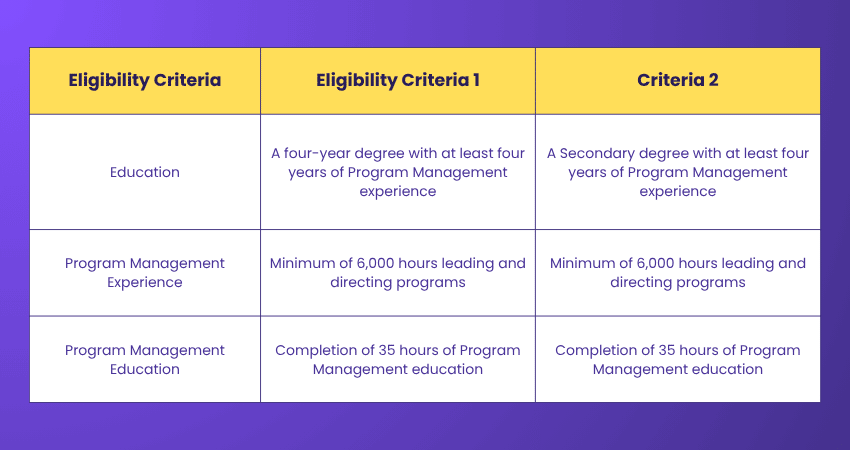
Before aspiring professionals can take the PgMP Exam, they must meet specific eligibility criteria set by the PMI. These criteria are based on educational qualifications and professional experience in Program Management. The candidates should meet either one of the following criteria.
Accelerate your Project Management career with the PMP® Certification Training Course! Join now to gain the essential knowledge, skills, and strategies to ace the PMP exam and become a certified Project Management Professional.
Passing Score
The passing score for the PgMP Exam is not predetermined and can vary based on the question difficulty level. The PMI employs a psychometric analysis process to establish a passing score, considering the question's complexity and other statistical factors.
Upon completion of the exam, candidates receive immediate results indicating whether they have passed or failed. However, the exact score or percentage is not disclosed. Preparing effectively for the PgMP Exam necessitates a comprehensive understanding of the exam structure, question types, and passing requirements.
Learn about the different roles of stakeholders and how to communicate effectively. Join the PMI-RMP® Certification now!
How to Create an Effective Study Plan?
Developing a well-structured study plan is essential for effective preparation for the PgMP Exam. Here are the key steps to create a study plan that maximises your chances of success:
a) Assessing Knowledge Gaps: Evaluate current understanding of PgMP Exam topics. Identify areas needing improvement to prioritise study efforts.
b) Selecting Study Materials: Choose reliable resources covering relevant PgMP Exam topics, including textbooks, PMP Study Guide, courses, and practice exams.
c) Structuring Study Schedule: Divide study time into manageable periods. Create a schedule aligning with availability and learning style. Allocate dedicated time for each topic.
d) Setting Achievable Goals: Break down the study plan into smaller goals and milestones. Track progress, stay motivated, and celebrate accomplishments.
e) Practising Regularly: Engage in consistent practice sessions, solve sample questions, take mock exams, and participate in study groups.
f) Reviewing and Revising: Regularly review studied topics, reinforce understanding, and consolidate knowledge. Use different revision techniques to aid retention.
By implementing these steps, you can Create an Effective Study Plan for the PgMP Exam, enhancing your chances of success.
Essential Study Topics
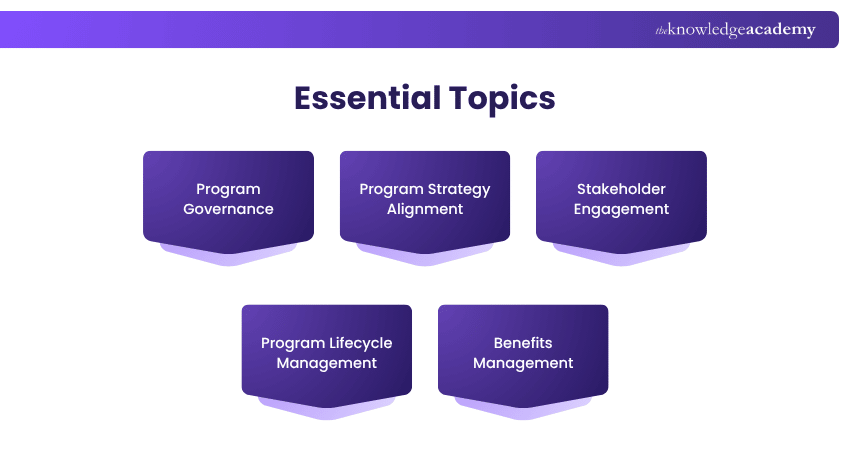
In order to excel in the PgMP Exam, it is crucial to cover a range of essential study topics that align with the domains and tasks of Program Management. Here are some key areas to focus on during your exam preparation:
In order to excel in the PgMP Exam, it is crucial to cover a range of essential study topics that align with the domains and tasks of Program Management. Here are some key areas to focus on during your exam preparation:
a) Program Governance: Understand the principles, practices, and frameworks of program governance. Learn about establishing program governance structures, defining roles and responsibilities, and implementing effective decision-making processes.
b) Program Strategy Alignment: Explore how Program Management aligns with organisational strategy. Study topics such as strategic planning, business case development, benefits management, and program portfolio management.
c) Stakeholder Engagement: Gain insights into stakeholder identification, analysis, and engagement strategies. Understand how to effectively communicate with stakeholders, manage their expectations, and build strong relationships throughout the program lifecycle.
d) Program Lifecycle Management: Familiarise yourself with the stages of the Program Lifecycle, including initiation, planning, execution, monitoring, and closure. Study the processes, techniques, and best practices associated with each stage.
e) Benefits Management: Learn about benefits identification, definition, measurement, and realisation within a program. Understand the techniques for tracking and maximising program benefits, including the use of key performance indicators (KPIs) and benefits realisation plans.
f) Program Risk Management: Gain knowledge of program risk identification, analysis, response planning, and monitoring. Study techniques for assessing and mitigating risks within a program, as well as strategies for addressing issues and ensuring program success.
g) Program Quality Management: Explore the principles and practices of program quality management. Understand how to define quality standards, establish quality assurance processes, and conduct program audits to ensure compliance and continuous improvement.
h) Program Communication Management: Learn effective communication strategies for Program Management. Understand how to develop communication plans, disseminate program-related information, and engage stakeholders through various communication channels.
i) Program Financial Management: Gain insights into the financial aspects of Program Management, including budgeting, cost estimation, cost control, and financial reporting. Understand how to track program expenses, monitor financial performance, and make informed financial decisions.
j) Program Resource Management: Study techniques for identifying, acquiring, and managing program resources, including human resources, facilities, equipment, and technology. Learn about resource allocation, capacity planning, and optimising resource utilisation within a program.
By thoroughly covering these essential study topics, you will develop a strong foundation of knowledge and increase your readiness for the PgMP Exam. Remember to refer to the official PgMP Exam content outline and study resources for a comprehensive understanding of the exam requirements. Following these tips will help you learn How to Become a Program Manager.
Equip yourself with the right skills and knowledge needed to excel in Project Management with our PMI Project Management Ready Training - Join Now!
Tips for Effective Exam Preparation
Preparing for the PgMP Exam requires a strategic approach and effective study techniques. Here are some tips to help you maximise your exam preparation:
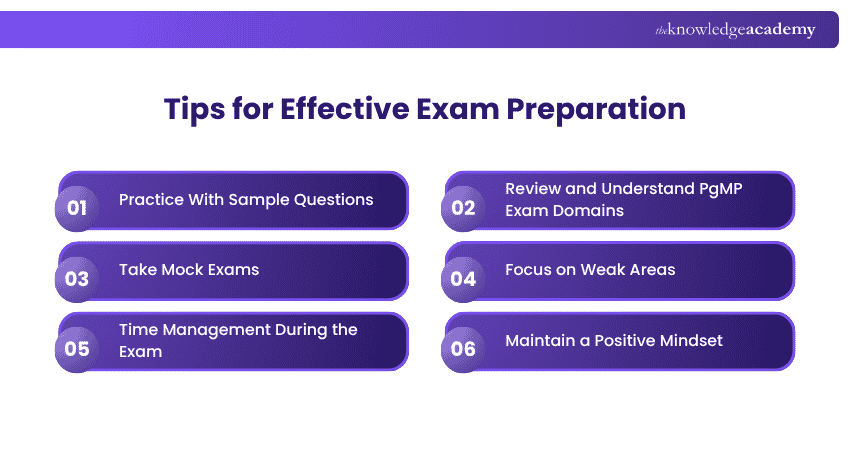
Preparing for the PgMP Exam requires a strategic approach and effective study techniques. Here are some tips to help you maximise your exam preparation:
a) Practice With Sample Questions: Obtain sample PgMP Exam questions and practice answering them. This will familiarise you with the question format, enhance your understanding of key concepts, and improve your Time Management Skills. Make sure to review the explanations for both correct and incorrect answers to deepen your understanding.
b) Review and Understand PgMP Exam Domains: Thoroughly review the different domains covered in the PgMP Exam, such as project integration, scope, schedule, cost, quality, resource, communication, risk, procurement, and stakeholder management. Understand the processes, inputs, tools, techniques, and outputs associated with each domain.
c) Take Mock Exams: Simulate the PgMP Exam experience by taking mock exams. This will help you assess your readiness and identify areas that require further improvement. Time yourself and aim to complete the mock exams within the designated time limit. Analyse your performance and focus on strengthening weak areas.
d) Focus on Weak Areas: Identify your areas of weakness based on your mock exam performance and dedicate additional study time to those topics. Use targeted resources such as textbooks, online courses, or study guides to gain a deeper understanding of the concepts and practice-related questions.
e) Time Management During the Exam: During the actual exam, time management is crucial. Practice effective time allocation while answering sample questions and mock exams to develop a sense of pacing. Pace yourself throughout the exam, ensuring you have enough time to answer all the questions and review your answers if time allows.
f) Maintain a Positive Mindset: Maintaining a positive mindset throughout your exam preparation is essential. Believe in your abilities and stay motivated. Break down your preparation into manageable chunks, reward yourself for completing milestones, and maintain a healthy work-life balance to avoid burnout.
Remember, the PgMP Exam is challenging, but with diligent preparation and a positive mindset, you can increase your chances of success. Stay focused, practice consistently, and approach the exam with confidence in your knowledge and abilities.
Supercharge your Agile Project Management skills with the PMI-ACP® Certification Training course! Join now to master the Agile Certified Practitioner (PMI-ACP) exam and unlock a world of agile opportunities.
Conclusion
We hope you read and understood everything about Program Management Professional Exam Study Guide. The PgMP Exam is a globally recognised certification that assesses professionals in Program Management. It is essential to comprehend the exam format and prioritise essential study topics. By following effective preparation strategies, individuals can increase their chances of passing the PgMP exam and obtaining the prestigious certification.
Unlock your potential as a PMP professional and pave the way to Project Management success with expert PMP Training – Sign up now!
Frequently Asked Questions
Can I Prepare for the PgMP Exam Without Formal Training?

Yes, it is possible to prepare independently using the PMI Standard for Program Management and disciplined self study. However, formal training can help clarify complex topics, align preparation with the exam framework, and improve exam readiness.
What are the Best Books for PgMP Exam Preparation?
The primary reference is The Standard for Program Management published by PMI, as it forms the basis of the exam. Supplementing this with PgMP® exam preparation guides and practice question books can further strengthen understanding and confidence.
What are the Other Resources and Offers Provided by The Knowledge Academy?
The Knowledge Academy takes global learning to new heights, offering over 3,000+ online courses across 490+ locations in 190+ countries. This expansive reach ensures accessibility and convenience for learners worldwide.
Alongside our diverse Online Course Catalogue, encompassing 17 major categories, we go the extra mile by providing a plethora of free educational Online Resources like Blogs, eBooks, Interview Questions and Videos. Tailoring learning experiences further, professionals can unlock greater value through a wide range of special discounts, seasonal deals, and Exclusive Offers.
What is The Knowledge Pass, and How Does it Work?
The Knowledge Academy’s Knowledge Pass, a prepaid voucher, adds another layer of flexibility, allowing course bookings over a 12-month period. Join us on a journey where education knows no bounds.
What are the Related Courses and Blogs Provided by The Knowledge Academy?
The Knowledge Academy offers various PMP® Training, including the PMP® Certification Training, PMI-ACP ® Certification Training, and PMI Project Management Ready Training. These courses cater to different skill levels, providing comprehensive insights into Resource Forecasting.
Our Project Management Blogs cover a range of topics related to Program Management, offering valuable resources, best practices, and industry insights. Whether you are a beginner or looking to advance your Compliance skills, The Knowledge Academy's diverse courses and informative blogs have got you covered.

David Evans


Certified Project Trainer and Agile Delivery Expert
David Evans brings over a decade of hands-on experience in project delivery, Agile transformation, and team leadership. With a background in technology and business consulting, David has led cross-functional teams through Agile and Waterfall projects in both public and private sectors. He combines technical knowledge with practical insights to help readers navigate the challenges of modern project environments.

Upcoming Project Management Resources Batches & Dates
Date
 PMP® Certification Training Course
PMP® Certification Training Course
Mon 22nd Jun 2026
PMP® Certification Training Course
Mon 29th Jun 2026
PMP® Certification Training Course
Sat 4th Jul 2026, Sun 5th Jul 2026
PMP® Certification Training Course
Mon 6th Jul 2026
PMP® Certification Training Course
Mon 13th Jul 2026
PMP® Certification Training Course
Sat 18th Jul 2026, Sun 19th Jul 2026
PMP® Certification Training Course
Mon 20th Jul 2026
PMP® Certification Training Course
Mon 27th Jul 2026
PMP® Certification Training Course
Sat 1st Aug 2026, Sun 2nd Aug 2026
PMP® Certification Training Course
Mon 3rd Aug 2026
PMP® Certification Training Course
Mon 10th Aug 2026
PMP® Certification Training Course
Mon 17th Aug 2026
PMP® Certification Training Course
Sat 22nd Aug 2026, Sun 23rd Aug 2026
PMP® Certification Training Course
Mon 24th Aug 2026
PMP® Certification Training Course
Tue 1st Sep 2026
PMP® Certification Training Course
Sat 5th Sep 2026, Sun 6th Sep 2026
PMP® Certification Training Course
Mon 7th Sep 2026
PMP® Certification Training Course
Mon 14th Sep 2026
PMP® Certification Training Course
Sat 19th Sep 2026, Sun 20th Sep 2026
PMP® Certification Training Course
Mon 21st Sep 2026
PMP® Certification Training Course
Mon 28th Sep 2026
PMP® Certification Training Course
Sat 3rd Oct 2026, Sun 4th Oct 2026
PMP® Certification Training Course
Mon 5th Oct 2026
PMP® Certification Training Course
Mon 12th Oct 2026
PMP® Certification Training Course
Sat 17th Oct 2026, Sun 18th Oct 2026
PMP® Certification Training Course
Mon 19th Oct 2026
PMP® Certification Training Course
Mon 26th Oct 2026
PMP® Certification Training Course
Mon 2nd Nov 2026
PMP® Certification Training Course
Sat 7th Nov 2026, Sun 8th Nov 2026
PMP® Certification Training Course
Mon 9th Nov 2026
PMP® Certification Training Course
Mon 16th Nov 2026
PMP® Certification Training Course
Sat 21st Nov 2026, Sun 22nd Nov 2026
PMP® Certification Training Course
Mon 23rd Nov 2026
PMP® Certification Training Course
Mon 30th Nov 2026
PMP® Certification Training Course
Mon 7th Dec 2026
PMP® Certification Training Course
Sat 12th Dec 2026, Sun 13th Dec 2026
PMP® Certification Training Course
Mon 14th Dec 2026
PMP® Certification Training Course
Mon 21st Dec 2026

 If you wish to make any changes to your course, please


