


 Top Rated Course

We may not have the course you’re looking for. If you enquire or give us a call on +31 208081674 and speak to our training experts, we may still be able to help with your training requirements.
What is Business Portfolio Analysis: An Ultimate Guide
William Brown 20 June 2026Want to unlock strategic insights on What Business Analysis Portfolio is? From risk assessment to value maximisation, this comprehensive blog will illuminate key components and techniques related to it. This blog will talk about how Business Portfolio Analysis can evaluate and assess a company's portfolio of businesses or products.

Training Outcomes Within Your Budget!
We ensure quality, budget-alignment, and timely delivery by our expert instructors.
Table of Contents

Business Portfolio Analysis unveils a strategic compass and guides organisations through the intricate landscape of product and service management. From mitigating risks to maximising value, this helps in strategic management. In addition, it comes up with a systematic approach to evaluating, prioritising and aligning business portfolios with overarching objectives.
Given this context, this blog delves into the essence of Business Portfolio Analysis, illuminating its significance in shaping strategic decisions. Let’s dive in to unravel its intricacies and unlock the keys to strategic portfolio optimisation.
Table of Contents
1) What is Business Portfolio Analysis?
2) Business Portfolio Purpose
3) Examples of Business Portfolios
4) Business Portfolio Analysis Techniques
5) Components of Business Portfolio Analysis
6) Conclusion
What is Business Portfolio Analysis?
Business Portfolio Analysis is a strategic management tool used to measure what product or service of the company excels or fails in its portfolio. This helps a manager to appraise the market shares within the industry. This business analysis portfolio allows organisations to learn their strength and weaknesses. By doing so, they enable customers to make rightful decisions regarding resource allocations.

Business Portfolio Purpose
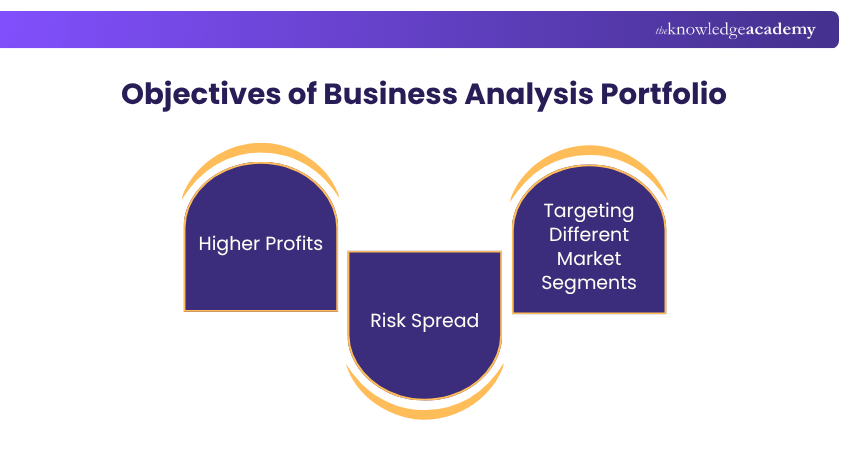
In the realm of strategic management, the purpose of Business Portfolio Analysis extends beyond mere assessment,it serves as a compass guiding organisations toward sustainable growth and profitability. Here's how:
Higher Profits
A cornerstone objective of Business Portfolio Analysis is maximising profits through strategic resource allocation. By identifying and nurturing high-performing products or services while divesting from underperformers, companies can amplify their overall profitability. This targeted approach ensures that resources are channelled into ventures with the highest potential for returns, thereby enhancing the bottom line.
Risk Spread
Business Portfolio Analysis empowers companies to diversify risk across a spectrum of products or services. By maintaining a well-balanced portfolio comprising offerings in different stages of the Product Lifecycle, organisations can buffer themselves against market volatility. This diversified approach minimises the adverse impacts of unforeseen fluctuations, fostering resilience and stability in the face of uncertainty.
Take the next step in advancing your career with the BCS Certificate in Business Analysis Practice Training – Register today!
Targeting Different Market Segments
A pivotal aspect of Business Portfolio Analysis lies in its capacity to facilitate tailored market targeting. By meticulously examining the distinct needs and preferences of various customer segments, companies can craft offerings that resonate deeply with their intended audiences. Through astute segmentation and positioning strategies, organisations can seize opportunities to capture market share and fuel revenue growth, thereby solidifying their competitive standing.
Get ready for your interview with our top Business Analyst Interview Questions.
Examples of Business Portfolios
Understanding the diverse archetypes within a business portfolio is crucial for strategic decision-making and resource allocation. Here are four prominent categories:

1) Stars
When it comes to Business Portfolios, Stars are the driving force of enterprises that lead the market in terms of the incremental product. They also hold a rich potential to deliver outstanding performance. This sometimes sparks the question of keeping up the momentum and building up a superior position over time. Companies rest tabs on these pioneers to unlock promising clienteles and climb the ladder into prominent markets.
Deepen your comprehension of business dynamics with our BCS Foundation Certificate in Organisational Behaviour Course!
2) Cash Cows
As Cash cows, the products highlight the organisation’s stability and reliability. Even if the cash cows won’t bring you the kind of excitement like Stars, they have proven to generate steady cash flow. Through the intake of the profit, which is consistent with the cash cows, companies can make the innovation even more accessible, pick-up new opportunities. They can also beat the competitions without being affected by financial security.
3) Question Marks
Question marks, often dubbed as "problem children," represent intriguing enigmas within a business portfolio. Such commodities or services, which show marginal share in the top growth markets, suggest the potential of virgin opportunities. Although the question marks cross out doubts, it opens growth strategies and market conquests to the businesses at the same time. By allocating resources strategically and nurturing question marks with tailored strategies, companies can unlock their latent potential and transform them.
4) Dogs
At the opposite end of the spectrum lie dogs, products or services languishing with low-growth markets. Despite minimal revenue generation, dogs consume resources and undermine overall portfolio performance. Recognising the futility of sustaining these underperformers, companies often opt for divestment or restructuring measures. By shedding deadweight and focusing on high-potential opportunities, companies can streamline their portfolios.
Dive into the Detailed Case Study of Business Analysis.
Business Portfolio Analysis Techniques
Navigating the complexities of Business Portfolio Analysis demands adept utilisation of various strategic tools. Here are two prominent techniques:
1) BCG Matrix
The BCG (Boston Consulting Group) Matrix is an old but extensively used evaluation tool. It segments the product or service into four quadrants depending on their market growth rate and their market share. Managers can utilise this to determine what needs priority and where business should concentrate on.
2) GE or McKinsey Matrix
The GE or McKinsey Matrix is many times used as another prominent Business Portfolio Analysis tool as well. It performs the task through various measures, such as segmenting the markets and evaluating the competitive position. Essentially, it sets the priorities and resource allocation.
Components of Business Portfolio Analysis
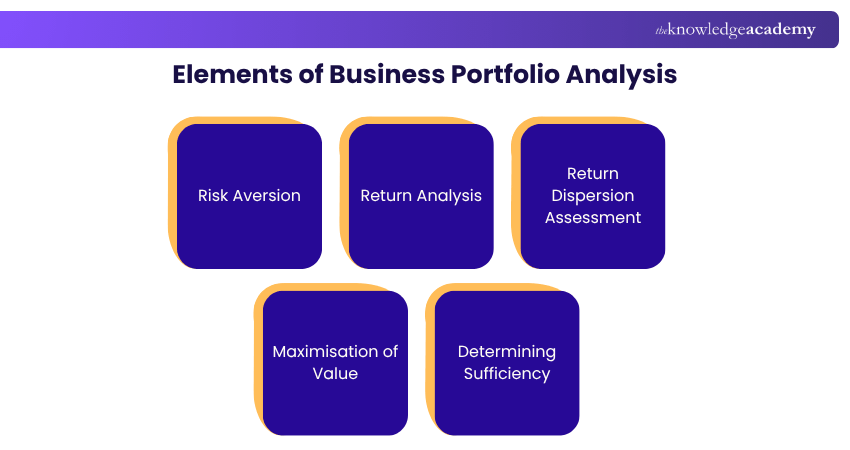
Effective Business Portfolio Analysis relies on a thorough examination of various components to guide strategic decision-making. Here are key elements integral to the process:
Risk Aversion
Business Portfolio Analysis entails a quantitative evaluation of the downside risk accompanying every product and service. Organisations have to be aware of and respond to such types of adverse events. Such events can include market fluctuations, rivalry, and legal framework amendments to mitigate the risks.
Return Analysis
Return Analysis is carried out in order to gauge their financial performance. This is applicable to both products and services within the portfolio. Businesses look at metrics like turnover, profits, and investment productivity. This helps them to find out what key strengths there are in processes, and which needs improvement.
Return Dispersion Assessment
This scrutinises the variation of sales returns among the items of the portfolio. It requires firms to look at factors like revenue volatility, adaptation of production, cost breakdown, profitability and product distribution. Essentially, this element helps in identifying their roadmap and finalising on the most profitable areas.
Maximisation of Value
Business Portfolio Analysis aims to maximise the overall value of the portfolio by optimising resource allocation and strategic focus. Companies seek to enhance shareholder value by investing in high-potential opportunities and divesting from underperforming assets.
Determining Sufficiency
Determining Sufficiency involves evaluating whether the current portfolio adequately meets the company's strategic objectives and targets. Companies assess factors such as market share, revenue growth, and profitability to ensure alignment with long-term goals.
Explore the Key Roles and Responsibilities of a Business Analyst Today!
Conclusion
In conclusion, Business Portfolio Analysis enable companies to evaluate and optimise their product for maximum profitability and growth. By leveraging certain business analysis techniques, companies can gain valuable insights into their portfolio dynamics and make informed decisions.Through this, organisations can navigate the complexities of the business landscape with confidence and clarity.
Fast-track your career trajectory with the BCS Foundation Certificate in Business Analysis Course– Join us now!
Frequently Asked Questions
Why create a Business Portfolio?

A Business Portfolio facilitates the allocation of investment, reduces risks and enables the company to excel in achieving its objectives. In addition, it shows the complete perspective of an organisation, as well as aid with decision-making and organisational growth.
What are the Tools of Business Portfolio Analysis?
SWOT analysis, BCG matrix, and alike are the serving tools of the business vessels. These instruments measure both the product line performance and the companies’ strategic positioning.
What are the Other Resources and Offers Provided by The Knowledge Academy?
The Knowledge Academy takes global learning to new heights, offering over 3,000+ online courses across 490+ locations in 190+ countries. This expansive reach ensures accessibility and convenience for learners worldwide.
Alongside our diverse Online Course Catalogue, encompassing 17 major categories, we go the extra mile by providing a plethora of free educational Online Resources like Blogs, eBooks, Interview Questions and Videos. Tailoring learning experiences further, professionals can unlock greater value through a wide range of special discounts, seasonal deals, and Exclusive Offers.
What is the Knowledge Pass, and How Does it Work?
The Knowledge Academy’s Knowledge Pass, a prepaid voucher, adds another layer of flexibility, allowing course bookings over a 12-month period. Join us on a journey where education knows no bounds.
What are the Related Courses and Blogs Provided by The Knowledge Academy?
The Knowledge Academy offers various Business Analysis Courses, including the BCS Certificate in Business Analysis Practice, BCS Foundation Certificate in Agile, and BCS Foundation Certificate in Organisational Behaviour. These courses cater to different skill levels, providing comprehensive insights into Data Architecture.
Our Business Analysis Blogs cover a range of topics related to Business Portfolio Analysis, offering valuable resources, best practices, and industry insights. Whether you are a beginner or looking to advance your Business Analysis skills, The Knowledge Academy's diverse courses and informative blogs have got you covered.

William Brown


Senior Business Analyst and Strategic Advisor
William Brown is a senior business analyst with over 15 years of experience driving process improvement and strategic transformation in complex business environments. He specialises in analysing operations, gathering requirements and delivering insights that support effective decision making. William’s practical approach helps bridge the gap between business goals and technical solutions.
View Detail
Upcoming Business Analysis Resources Batches & Dates
Date
 BCS Business Analysis Diploma Oral Preparation Workshop
BCS Business Analysis Diploma Oral Preparation Workshop
Thu 6th Aug 2026
BCS Business Analysis Diploma Oral Preparation Workshop
Thu 8th Oct 2026
BCS Business Analysis Diploma Oral Preparation Workshop
Thu 10th Dec 2026

 If you wish to make any changes to your course, please


