


 Top Rated Course

We may not have the course you’re looking for. If you enquire or give us a call on +918037244591 and speak to our training experts, we may still be able to help with your training requirements.
What is Customer Experience? Importance, Benefits and Challenges
The Knowledge Academy 20 March 2026Customer Experience (CX) is the overall emotional and functional impression customers form about a brand through every interaction and touchpoint. It shapes how customers perceive service quality and brand value. A strong CX strategy helps organisations build loyalty, improve satisfaction, and strengthen long-term customer relationships.

Training Outcomes Within Your Budget!
We ensure quality, budget-alignment, and timely delivery by our expert instructors.
Table of Contents
Customer Experience encompasses all the actions a business, or brand takes to provide outstanding Experiences, value, and growth for its Customers. In today’s world, the way a business or brand serves its Customers is just as crucial as the Products and Services it offers.
Table of Contents
1) What is Customer Experience?
2) Importance of Customer Experience
3) How to Measure Customer Experience?
4) How to Improve Customer Experience?
5) Common Customer Experience Mistakes to Avoid
6) Benefits of Customer Experience
7) What is the Difference Between Customer Experience and Customer Service?
8) Conclusion
What is Customer Experience?
Customer Experience (CX) is the overall Experience of the Customer with the business or brand after interaction. It is the total number of interactions the Customer has with the business or brand from the point they have found the brand to the date of purchase.
Customer Experience is essential because it gives an overview of the business or brand from the Customer's point of perception. It is sometimes difficult for the brand to control because different Customers react in different unpredictable ways. They can access and optimise the interaction with the Customer to improve the things they are lagging in.

Importance of Customer Experience
Customer Experience (CX) is important because it gives reality checks to the business or brand from the interactions with Customers. No matter how small business has been made between the Customer and brand, it has the power to build a good or damage the relationship with the Customer.
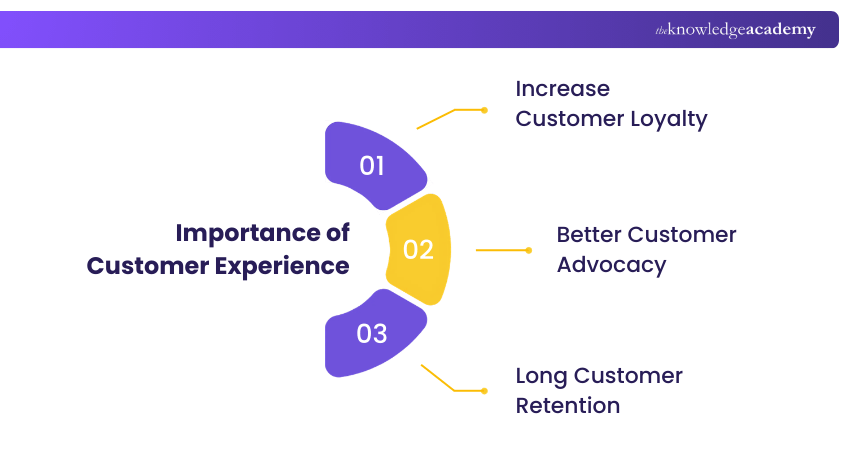
1) Increase Customer Loyalty
When good trust is built with the Customer there is a much more possibility of them returning for the purchase.
2) Better Customer Advocacy
The Customers that are loyal to the brand are more likely to become brand advocates. They will share their good Experiences with friends, family and colleagues which will help in growing the brand or business faster.
3) Long Customer Retention
When the Customer has a good Experience with a brand, then the brand or business will be the topmost priority for them when they plan to buy new things.
How to Measure Customer Experience?
Different metrics are necessary for measuring the Customer Experience. Some of the points to take in mind while thinking of measuring Customer Experience are as follows:
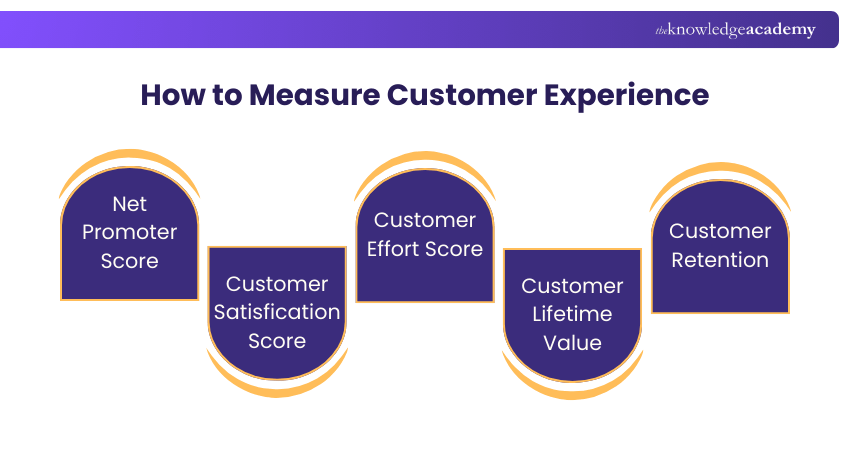
1) Net Promoter Score
Net Promoter Score (NPS) is the extent to which customers would recommend a company, product, or service to others. The probability of their customers is commonly rated out of 0 to 10. Greater scores denote greater loyalty, and lesser scores denote dissatisfaction. This measure assists organisations to know the general customer attitude and brand recommendation.
2) Customer Satisfaction Score
Customer Satisfaction Score (CSAT) measures how satisfied customers feel after a specific interaction, such as a purchase or customer support experience. Feedback is usually communicated by short surveys by the customers. High satisfaction scores indicate that the organisation is meeting customer expectations and delivering positive experience.
3) Customer Effort Score
Customer Effort Score (CES) evaluates how easy it is for customers to complete a task, such as resolving an issue, finding information, or completing a purchase. Customers tend to be satisfied and stick with a service when the processes are not complex and involve minimal work.
4) Customer Lifetime Value
Customer Lifetime Value (CLV) approximates the total worth a customer presents to a company over the course of the relationship. It takes into account the frequency of purchase and length of stay with the organisation by the customers. Knowledge of CLV assists companies in concentrating on the benefit of retaining valuable customers and maximisation of long-term profitability.
5) Customer Retention
Customer retention is the measure of how well the organisation retains customers. Retention rates are high, which means that the customers are satisfied and keep working with the brand. The retention tracking assists the business in determining whether their products, services and support are satisfying the customers.
How to Improve Customer Experience?
Enhancing Customer Experience involves organisations having insight into what the customers expect and streamline interactions in all touchpoints. Below are some strategies to enhance the Customer Experience (CX):
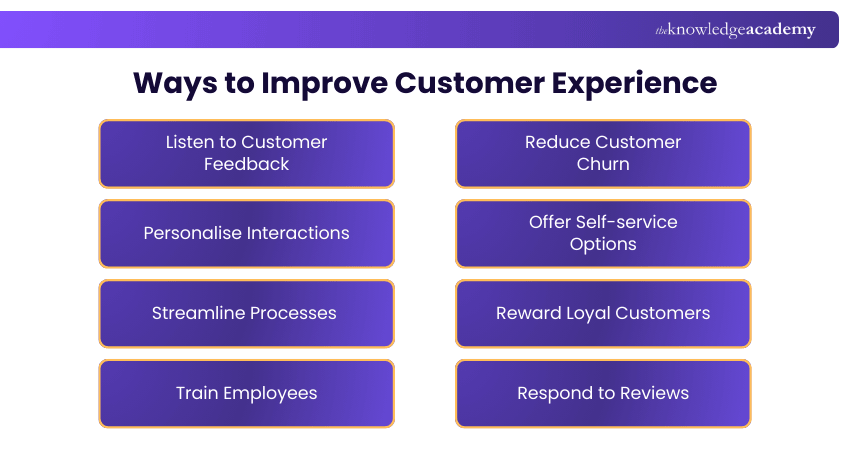
1) Listen to Customer Feedback
Customer feedback enables organisations to know what customers appreciate and what they need to improve. Surveys, reviews, or social media insights on the matter can be used to gather feedback. By analysing this information, businesses are able to diagnose problems and enhance the total experience.
2) Personalise Interactions
Customers feel recognised and valued through personalised interactions. Recommendations, communication, and services can be customised to align with customer preferences and behaviour. This method will contribute to building deeper experiences and enhance relationships with customers.
3) Streamline Processes
Straightforward and streamlined procedures ensure customers can engage more easily with a brand. Convenience and satisfaction is enhanced by reducing the redundancy in the purchasing, onboarding, or support request. There are also smooth processes that decrease customer journey frustration through clarity.
4) Train Employees
Employees contribute significantly to Customer Experience. Training employees assists them to know what customers expect, be able to communicate, and solve problems effectively. Employees who are well trained are more equipped to provide steady and helpful service.
5) Reduce Customer Churn
Reducing customer churn entails finding out why customers leave and fixing those flaws promptly. Through feedback, behavioural insights and service improvements, organisations can solve problems early. This assists in sustaining good relationships and the customers to stay loyal.
6) Offer Self-service Options
Some customers want fast fixes without having to call customer service. Self-service features like knowledge base, customers should be given the opportunity to identify their own answers to questions through the use of FAQs or online portals. These tools conserve time and enhance convenience throughout customer journey.
7) Reward Loyal Customers
A reward policy to loyal customers promotes repeat business. Loyalty programmemes, special offers, and exclusive benefits demonstrate how much repeat customers are valued. These rewards are useful in enhancing long-term relations and boosting retention among customers.
8) Respond to Reviews
Replying to customer reviews demonstrates that an organisation appreciates customer feedback. Positive and negative feedback must be handled to earn trust, and shows responsibility. The timely response also creates a chance to address the issues and enhance the brand reputation.
Enhance your performance with our expert-led Time Management Training – Join today!
Common Customer Experience Mistakes to Avoid
Errors in handling customers may kill trust and satisfaction. The following are some of the most frequent problems that organisations need to be aware of and tackle at their initial stages to ensure that Customer Experience remains positive and consistent.
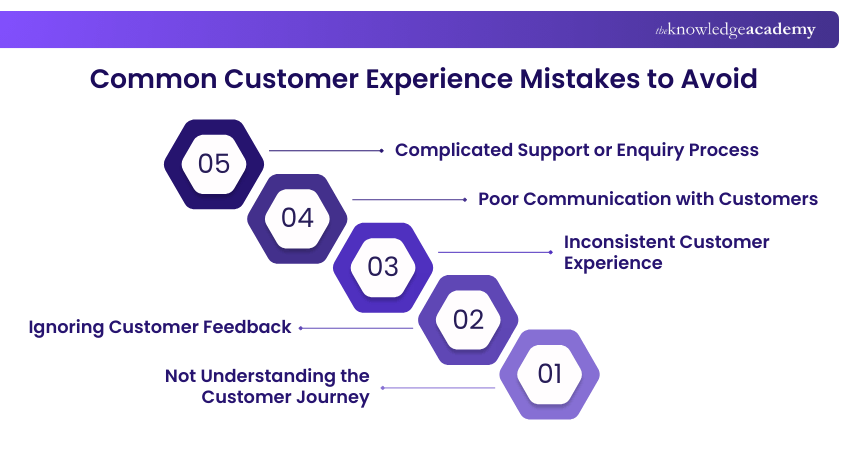
1) Not Understanding the Customer Journey: Not analysing the entire customer journey may result in service gap. Organisations might fail to identify issues that influence customer satisfaction without awareness of every stage of interaction.
2) Ignoring Customer Feedback: Customer feedback is a good source of understanding expectations and issues. When organisations receive feedback and do not act on it, the customers would feel that their feedback has not been taken seriously.
3) Inconsistent Customer Experience: Offering various service standards between channels or departments is confusing. Customers seek a uniform experience when they communicate with someone online, face-to-face, or via support teams.
4) Poor Communication with Customers: Customers can be irritated by unclear information, slow replies, or absence of updates. Communication is essential in establishing trust and makes customers feel knowledgeable and supported.
5) Complicated Support or Enquiry Process: When customers struggle to reach a business or solve problems, customer satisfaction decreases. Customers can access support easily because processes are simple and can be accessed.
Benefits of Customer Experience
Below are some important benefits of Customer Experience for organisations:
Improves Customer Loyalty: Positive experiences encourage customers to continue choosing the same brand and remain loyal over time.
Grows Customer Retention: Customers who get satisfied with their dealings tend to come back and have long-term relationships with the business.
Builds Brand Reputation: Providing positive experiences on a regular basis aids organisations in building trust and brand image.
Encourages Word-of-Mouth Referrals: Satisfied customers often recommend the brand to others, helping attract new customers.
Supports Business Growth: Better customer experiences can lead to higher sales, repeat purchases, and long-term business success.
Join our Personal Development Courses today and unlock your full potential!
What is the Difference Between Customer Experience and Customer Service?
Customer Experience denotes the impression a customer has of the brand in the whole customer journey, which encompasses all the interactions with the customer prior to, in the process of, and after a purchase. Customer Service, on one hand, addresses the particular support given to customers, typically when the customer requires assistance with a product or service.
Customer Experience in general terms is a more comprehensive strategy that encompasses all touchpoints, whereas Customer Service is a subset of Customer Experience that includes primarily addressing customer problems or requests.
Conclusion
Customer Experience is an essential aspect of modern business strategy. It consists of every interaction a customer has with a brand, shaping their overall insight and satisfaction. By prioritising exceptional Customer Experiences, businesses can sustain loyalty, boost growth, and differentiate themselves in a competitive market. Eventually, delivering outstanding Customer Experiences is not just beneficial but essential for long-term success. Understanding the Difference between CX and UX allows businesses to focus on both holistic experiences and detailed user interfaces, ensuring they cater to every touchpoint effectively.
Build skills for conflict resolution with our Dealing With Difficult People Course – Join now!
Frequently Asked Questions
What Skill is Customer Experience?

There are some skills that are required by the Customer Experience professional to create a positive CX, which includes:
1) Empathy
2) Communication
3) Adaptability
4) Problem-solving
5) Data Analysis
How do You Professionally Describe Customer Service Experience?
In simple terms, professional Customer Service Experience means understanding people, understanding what they need, and delivering it quickly. Customers expect to feel welcomed and valued, so greet them with a smile and pleasant behaviour, whether you're speaking to them in person or otherwise.
What are the Other Resources and Offers Provided by The Knowledge Academy?
The Knowledge Academy takes global learning to new heights, offering over 3,000+ online courses across 490+ locations in 190+ countries. This expansive reach ensures accessibility and convenience for learners worldwide.
Alongside our diverse Online Course Catalogue, encompassing 17 major categories, we go the extra mile by providing a plethora of free educational Online Resources like Blogs, eBooks, Interview Questions and Videos. Tailoring learning experiences further, professionals can unlock greater value through a wide range of special discounts, seasonal deals, and Exclusive Offers.
What is The Knowledge Pass, and How Does it Work?
The Knowledge Academy’s Knowledge Pass, a prepaid voucher, adds another layer of flexibility, allowing course bookings over a 12-month period. Join us on a journey where education knows no bounds.
What are the Related Courses and Blogs Provided by The Knowledge Academy?
The Knowledge Academy offers various Personal Development Courses, including the Customer Experience Training and Practitioner Course, and the Exceptional Customer Service Training. These courses cater to different skill levels, providing comprehensive insights into How to Motivate Yourself.
Our Business Skills Blogs cover a range of topics related to Customer Experience Management offering valuable resources, best practices, and industry insights. Whether you are a beginner or looking to advance your Communication and Customer Relation skills, The Knowledge Academy's diverse courses and informative blogs have got you covered.

The Knowledge Academy


Global Training Provider
The Knowledge Academy is a world-leading provider of professional training courses, offering globally recognised qualifications across a wide range of subjects. With expert trainers, up-to-date course material, and flexible learning options, we aim to empower professionals and organisations to achieve their goals through continuous learning.

Upcoming Business Skills Resources Batches & Dates
Date
 Customer Experience Training
Customer Experience Training
Fri 24th Jul 2026
Customer Experience Training
Fri 16th Oct 2026

 If you wish to make any changes to your course, please


