


 Top Rated Course

We may not have the course you’re looking for. If you enquire or give us a call on +41 315281584 and speak to our training experts, we may still be able to help with your training requirements.
What is a Chief Information Security Officer (CISO)? Explained
Sienna Roberts 03 April 2026A Chief Information Security Officer (CIO) is a senior professional who oversees the security of an organisation's digital data and systems. The CISO develops strong security strategies to prevent Cyber Attacks, Manages Risk, and focuses on keeping the entire organisation Cyber-safe. This role is very important for every business.
Home
 Resources
IT Security & Data Protection
What is a Chief Information Security Officer (CISO)? Explained
Resources
IT Security & Data Protection
What is a Chief Information Security Officer (CISO)? Explained
Resources
IT Security & Data Protection
What is a Chief Information Security Officer (CISO)? Explained

Training Outcomes Within Your Budget!
We ensure quality, budget-alignment, and timely delivery by our expert instructors.
Table of Contents
Cyber Attacks, Hacking, and Data Leaks have become a common problem for companies these days. Every organisation wants their data to be secure and no system to be compromised. That is why they need a strong cyber security leader who can handle everything.
CISO, or the Chief Information Security Officer, is a senior expert who makes Security Rules for the company, Manages Risks, and leads the team. This role is not just related to IT but is also important in business decisions. In this blog, we will uncover who is a Chief Information Security Officer, their multifaceted responsibilities, the path to becoming a CISO.
Table of Contents
1) What is a Chief Information Security Officer?
2) What Does a Chief Information Security Officer do?
3) Core duties of a Chief Information Security Officer
4) Skills for Chief Information Security Officer
5) Chief Information Security officer job description
6) CISO salary
7) How to become a Chief Information Security Officer?
8) Is IT hard to become a CISO?
9) Is CISO considered C-level?
10) Conclusion
What is a Chief Information Security Officer?
Chief Information Security Officer or CISO is a senior-level officer who is responsible for keeping the company's important data and systems safe. This person makes security rules and also implements them properly in the company so that the data remains secure.
Usually, the role of CISO is in big companies where there is a lot of customer data, payments, or confidential files. This role is very important in places like banks, government offices, and tech companies. In small companies, this work is combined with some other officers.
What Does a Chief Information Security Officer do?
CISO is an expert who makes security rules for the company, implements them, and keeps proper solutions for cyber risks ready. His goal is to keep data safe, follow legal rules, and keep an emergency plan ready for any attack.
In his daily work, CISO works with the CEO, CFO, and security teams to plan new cyber threats. They run training programs, check risks, and also work with vendors. When needed, he also contacts legal teams and external experts so that the company remains secure from every angle.
Core duties of a Chief Information Security Officer
As the guardian of digital assets, CISO shoulders numerous responsibilities. Here, we delve into the pivotal tasks that define the role and significance of a CISO within an organisation.

1) Comprehensive oversight of IT Security Operations
The CISO is the captain of the ship when it comes to ensuring the security of an organisation's IT infrastructure. They oversee the day-to-day operations of the IT Security team, ensuring that systems, networks, and data are protected from potential threats. This involves implementing security measures, monitoring for vulnerabilities, and responding swiftly to any security incidents that may arise.
2) Ensuring regulatory compliance
In a world where rules and standards keep changing, the CISO is like a guide, ensuring the organisation follows all necessary requirements. This involves staying abreast of relevant laws and regulations. When considering CSO vs CISO, the CISO typically takes a more direct role in overseeing compliance, implementing policies and procedures to ensure adherence, and regularly auditing and assessing the organisation's compliance with these standards.
3) Management of Human Resources in the security context
The CISO is responsible for the technical aspects of security and managing the Human Resources department dedicated to safeguarding the organisation. This includes hiring and training security personnel and defining roles and responsibilities within the security team. They also foster a culture of security awareness throughout the company.
4) Planning for disaster recovery and business continuity
Disasters can strike at any moment, whether it be a cyber-attack, natural disaster, or unforeseen technical failure. The CISO is tasked with developing and maintaining comprehensive plans for disaster recovery and business continuity. It ensures that the organisation can swiftly recover and resume regular operations in the event of a disruption.
5) Documentation management
Documentation is important in Cyber Security. The CISO oversees the creation, maintenance, and enforcement of policies, procedures, and documentation related to Information Security. This includes incident response plans, security protocols, and compliance documentation. It serves as a crucial resource for guiding security practices and demonstrating regulatory compliance.
Manage the Information Security of your company with our Information Systems Security Management Training - sign up now!
6) Facilitating stakeholder onboarding
Effective security extends beyond the IT department. It involves the participation and cooperation of stakeholders throughout the company. The CISO plays a key role in facilitating the onboarding of stakeholders, including employees, partners, and vendors. They ensure that the stakeholders understand their roles and responsibilities in maintaining the company’s security posture. This involves providing training, resources, and assistance to ensure that all stakeholders are equipped to contribute to a secure environment.
Skills for Chief Information Security Officer
Achieving success as a Chief Information Security Officer (CISO) demands a distinctive mix of technical prowess, strategic acumen, and strong leadership skills. Here are the key skills essential for excelling in this crucial role:
1) Strategic Cyber Security Planning
You can:
1) Decide the perfect balance of security with business goals
2) Decide in which areas security investment is necessary
3) Create long-term security roadmaps that support the company's targets
Leadership example:
1) Understand the benefits of security strategy and get support from management.
2) Tell other teams how security fits into their work.
3) Prioritise security in every project of the organisation.
2) Cyber Security Governance
You can:
1) Create a framework of strong security rules and policies for the organisation.
2) Make sure everyone follows the rules.
3) Review from time to time whether governance is running according to new laws and best practices.
Leadership example:
1) When there is no clear owner of governance, then inform the top management about the risk
2) Seek budget and support for policy changes
3) Clearly explain the risk to stakeholders when exceptions are allowed
3) Cyber Risk Management
You can:
1) Clearly understand cyber risk in every area of the organisation
2) Create and implement a process to assess risk
3) Monitor the risk of vendors and partners as well
Leadership example:
1) Create a company culture where all risks are taken seriously
2) Give timely risk advice to IT and project teams
3) Show a clear risk picture to senior leaders to take action
4) Changing Security Culture
You can:
1) Create cyber awareness and training programs at every level
2) Improve the security behaviour of staff. Track and improve
3) Check your awareness maturity in comparison to other companies
Leadership example:
1) Promote positive security behaviour in the organisation
2) Make senior leadership a part of the training campaign
3) Share learnings from past incidents with the team
5) Security Architecture
You can:
1) Design the IT system in such a way that it can handle threats
2) Ensure proper tools, methods, and platforms for security
3) Manage the supply chain as per the cyber risk level
Leadership example:
1) Explain the importance of security in product or service development
2) Understand and allow exceptions related to security policy
3) Take a budget for security improvements in the supply chain
6) Cyber Incident Management
You can:
1) Cyber Attack: Creating a proper process to take action in case of an attack
2) Preparing the organisation for attack and testing it
3) Understanding and handling the impact of a major incident
Leadership example:
1) Involve board-level leaders in incident response drills
2) Decide what information to share, when, and to what level
3) Keep communication clear during the incident
7) Innovation in Digital and Data
You can:
1) Early detect new technology trends and cyber challenges.
2) Inform the company about legal, ethical, and security impacts
3) Solve shared problems using smart tech
Leadership example:
1) Winning the trust of stakeholders by understanding the benefits of innovation.
2) Inform people at every level about the risks and challenges of new solutions, Showing rewards.
3) Preparing other leaders to adopt new technology
8) Capability Building for Security Teams
You can:
1) Ensure that the team has the right skills and tools
2) Have a long-term staffing and training plan ready
3) Provide a productive culture for digital and security teams
Leadership example:
1) Prioritising the most impactful capability needs
2) Justifying long-term investment for staffing
3) Supporting teams by promoting best practices
By cultivating and honing these essential skills, aspiring CISOs can position themselves for success in this critical role and make significant contributions to their organisation's security posture and overall success.
Chief Information Security officer job description
Here is the sample example for the CISO job description

CISO salary
Chief Information Security Officers' compensation fluctuates depending on factors like experience, industry, and location. Here's a breakdown of average annual salaries across different countries.
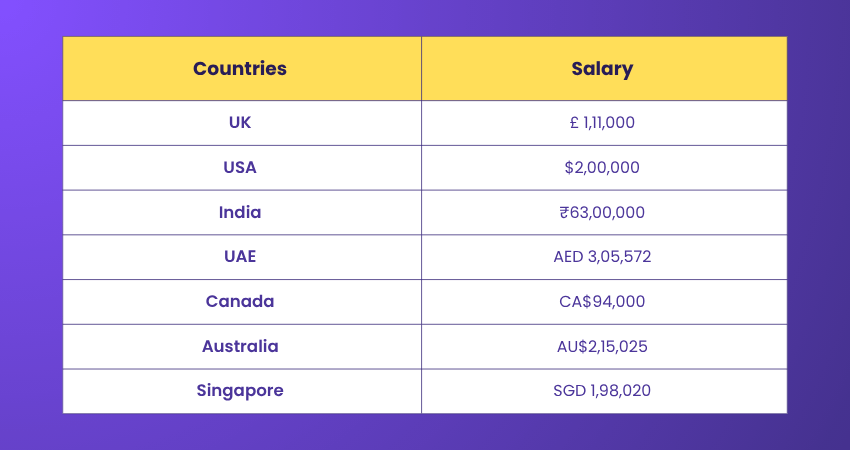
Source: Glassdoor
How to become a Chief Information Security Officer?
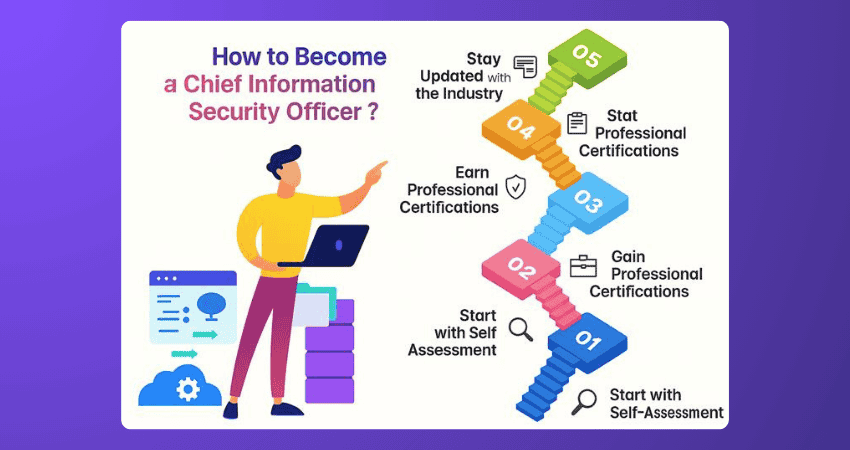
Becoming a Chief Information Security Officer (CISO) isn't merely about climbing the corporate ladder; it's a strategic journey that requires a blend of education, experience, and continuous development. Here's a roadmap to guide aspiring individuals on their quest to assume this pivotal role:
1) Start with Self-Assessment
Becoming a CISO does not just requires technical skills but also strong leadership, decision-making and dedication. This role is high-pressure and high-responsibility, in which you have to work with multiple departments and senior people. So first of all, ask yourself, are you mentally ready for this role?
If the answer is yes, then the next step is to build a strong base with the right education and right direction.
2) Build a Strong Educational Foundation
Getting a bachelor's degree in a field like Computer Science, Information Security, or Business Management can be the first step. Moving forward, master’s or specialised cyber security degrees also help a lot, especially if you are preparing for a top-level CISO role.
Along with education, it is also equally important to get practical experience, which gives you real-world skills.
3) Gain Practical Experience
Getting hands-on experience in Cyber Security is very important. You can start with junior roles such as Security Analyst, Network Administrator, or IT Auditor. As you grow, depending on the types of information systems used in the organisation, handling risk management, compliance, and leadership roles strengthens your chances of becoming a CISO.
Now that you have enough experience, the next step is to officially prove your skills through certifications.
4) Earn Professional Certifications
Certifications validate your skills. CCISO (Certified Chief Information Security Officer) is the most important certification to become a CISO. Certifications such as CISSP, CISM, CEH, and CompTIA Security+ are also valuable.
But certifications alone are not enough, and the cyber world is so dynamic that staying updated is equally important.
5) Stay Updated with the Industry
Cyber Threats are new every day, so it’s important to stay updated with new trends, tools, and regulations.
By following these steps and maintaining a steadfast commitment to excellence, aspiring individuals can navigate the path towards assuming the esteemed role of Chief Information Security Officer.
Is IT hard to become a CISO?
Becoming a CISO is not easy, as this role involves high-level responsibility. Along with technical knowledge, you also need leadership, decision-making and business understanding. Many years of experience and proper certifications are also required.
But on the other hand, if you are dedicated, consistently learning and growing in the right direction, then becoming a CISO is absolutely possible. It takes some time, but in the long term, it can become a rewarding and respected career.
Is CISO considered C-level?
The CISO is considered a C-level executive because they make the most important decisions related to the cyber security of the company. But their position is not the same in all companies. In some places, they report to the CEO, while in other places, they work under the CIO.
When the CISO is in direct contact with the CEO, his role becomes even stronger. But if he reports at a lower level, sometimes his power and visibility are reduced. Still, the CISO is a key decision-maker for every organisation, especially when it comes to security and risk.
Conclusion
Becoming a CISO can be a bit tough, but if you have patience, dedication and a passion for learning, this role can be quite rewarding. You become a trusted person for any company that keeps their important data safe. There is growth as well as respect in this field. With the right skills and experience, you can build a strong career in the Cyber Security world.
Do you want to be a Certified Information Systems Security Professional? Register for our CISSP-ISSAP Training.
Frequently Asked Questions
What are the biggest concerns of a CISO?

The biggest concern for a CISO is keeping the company's data safe. They are at risk of hackers, data leaks, and system failures. Their main focus is to protect the company from online threats and follow the rules.
What does a CISO need to know?
The CISO should be able to understand basic computer security, handle the team, and make important business decisions. They should also know how to deal with new online threats and follow the company's rules.
What are the Other Resources and Offers Provided by The Knowledge Academy?
The Knowledge Academy takes global learning to new heights, offering over 3,000+ online courses across 490+ locations in 190+ countries. This expansive reach ensures accessibility and convenience for learners worldwide.
Alongside our diverse Online Course Catalogue, encompassing 17 major categories, we go the extra mile by providing a plethora of free educational Online Resources like Blogs, eBooks, Interview Questions and Videos. Tailoring learning experiences further, professionals can unlock greater value through a wide range of special discounts, seasonal deals, and Exclusive Offers.
What is The Knowledge Pass, and How Does it Work?
The Knowledge Academy’s Knowledge Pass, a prepaid voucher, adds another layer of flexibility, allowing course bookings over a 12-month period. Join us on a journey where education knows no bounds.
What are the Related Courses and Blogs Provided by The Knowledge Academy?
The Knowledge Academy offers various CISSP Courses, including Information system security management and Chief Information Security Officer Training Courses. These courses cater to different skill levels, providing comprehensive insights into Information Security.
Our IT Security & Data Protection cover a range of topics related to Cyber Security, offering valuable resources, best practices, and industry insights. Whether you are a beginner or looking to advance your Cyber Security skills, The Knowledge Academy's diverse courses and informative blogs have you covered.
Upcoming IT Security & Data Protection Resources Batches & Dates
Date
 CISSP Training
CISSP Training
Mon 13th Jul 2026
CISSP Training
Mon 10th Aug 2026
CISSP Training
Mon 7th Sep 2026
CISSP Training
Mon 12th Oct 2026
CISSP Training
Mon 9th Nov 2026
CISSP Training
Mon 14th Dec 2026

 If you wish to make any changes to your course, please


