


 Top Rated Course

We may not have the course you’re looking for. If you enquire or give us a call on +1 6474932992 and speak to our training experts, we may still be able to help with your training requirements.
What is an NFT? Meaning, Uses and How It Works
Richard Harris 13 July 2026An NFT is a unique Blockchain-based digital asset that proves ownership and authenticity of items like digital art, music, or collectibles. Unlike Cryptocurrencies, which are fungible and interchangeable, each NFT is unique and cannot be copied or substituted due to the immutable and decentralised nature of the Blockchain.

Training Outcomes Within Your Budget!
We ensure quality, budget-alignment, and timely delivery by our expert instructors.
Table of Contents
Imagine owning a meme, a tweet or a piece of virtual land! Welcome to the world of Non-fungible Tokens (NFT), where ownership transcends the physical world and into the virtual one. Unlike traditional currency or Cryptocurrency, an NFT is a one-of-a-kind asset on the Blockchain, making it as unique as a collector’s item.
From digital art to exclusive digital content, NFTs have revolutionised the concept of ownership for the modern era. This blog examines What is an NFT, exploring its benefits, the buying process, NFT marketplaces and more. So read on and become a proud owner of collectables in the digital realm!
Table of Contents
1) What is an NFT?
2) How Do NFTs Work?
3) How Do You Make, Buy and Sell NFTs?
4) What is an NFT Marketplace?
5) Examples of NFTs
6) Where are NFTs going next?
7) Benefits of NFTs
8) NFT Scams
9) The Difference Between Cryptocurrency and NFTs
10) Are NFTs a Good Investment?
11) Conclusion
What is an NFT and What Does NFT Stand For?
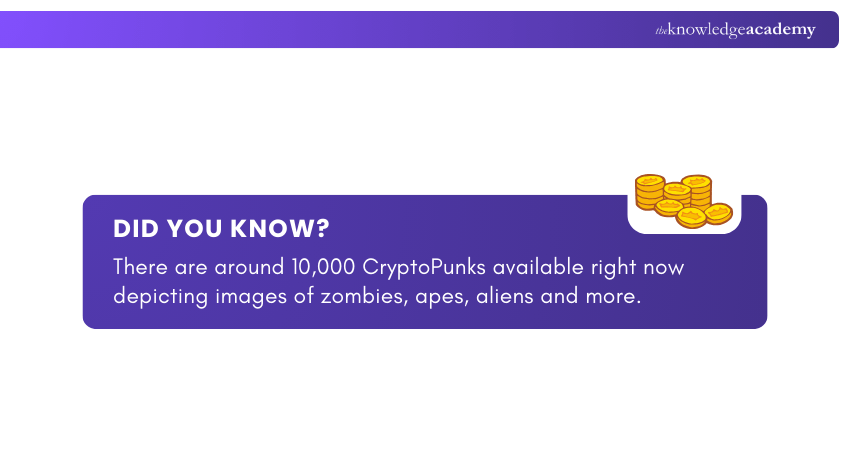
Non-fungible Tokens (NFTs) are unique digital assets such as artwork, videos, music, or other digital creations. These are tokenised using Blockchain Technology. Each NFT is assigned a distinct identification code generated from metadata through encryption. The token itself is stored on a Blockchain ledger, while the actual digital asset may be hosted elsewhere.
What makes an NFT special is the verified link between the token and the asset it represents. NFTs can be bought, sold or traded for money, Cryptocurrency, or even other NFTs, depending on how the market values them. For example, you could doodle a smiley face on a banana, take a photo of it, attach metadata, and mint it as an NFT on a Blockchain.
How Do NFTs Work?
The central idea behind the NFT meaning is the ability to assign a unique and verifiable identity to a specific digital asset. Here are the key points to remember:
1) Normally, digital files like images, videos and documents can be copied infinitely with no distinction between the original and its duplicates.
2) An NFT changes that by marking one specific version as the authentic original, which is recorded on a Blockchain.
3) Even if thousands of copies exist online, the Blockchain ledger confirms which one is the true original.
4) This gives it scarcity and traceable ownership.
5) Like physical items, NFTs can be bought, sold and transferred, with ownership shifting between individuals or businesses.
NFTs are used for a wide range of digital assets, including:
1) Virtual property or land in digital worlds
2) Collectables, including 3D models or fan items
3) Digital artwork such as images, photographs, and illustrations
4) In-game assets like character skins or wearable items
How Do You Make, Buy and Sell NFTs?
Here are the basic steps you must consider:
a) Making an NFT:
Choose or create a digital asset such as artwork, music, video, meme, or tweet.
b) Use an NFT marketplace or platform to “mint” the asset, i.e. register it on the Blockchain with unique metadata and token ID.
c) This token lives on the Blockchain (while the asset file may be stored off-chain).
2) Selling an NFT:
a) After minting, list the NFT on an online marketplace (e.g. OpenSea, Rarible) for sale.
b) You set terms such as fixed price or auction.
c) When someone buys it, ownership is transferred via Blockchain, and you receive payment (often in Cryptocurrency).
3) Buying an NFT:
a) You’ll need a digital wallet that supports Cryptocurrency and NFTs.
b) Browse NFT marketplaces to find items you want to purchase.
c) Pay using Crypto (or whatever currency the marketplace accepts). After purchase, the NFT is transferred to your wallet on the Blockchain.
Interested in knowing how NFTs work on Blockchain? You can learn that and so much more with our Blockchain Course - Sign up now!
What is an NFT Marketplace?
An NFT marketplace is a digital forum where you can:
1) Buy and sell NFT
2) Store and display NFTs
3) Mint NFTs (create them) in some cases
4) Own a piece of digital art or collectable
5) Trade unique digital assets
Most NFT marketplaces fall into these categories:
1) Open Marketplace: Anyone can sell, buy or mint NFTs. Open marketplaces typically mint NFTs for you, although creators can mint their works.
2) Closed Marketplace: Artists have to apply to join, and the marketplace typically undertakes the minting processes. However, selling and trading are more restricted.
3) Proprietary Marketplace: This marketplace sells NFTs trademarked or copyrighted by the company that operates it.
Your journey towards becoming a confident Crypto Trader starts here. Sign up for our Cryptocurrency Trading Training now!
Examples of NFT Marketplaces
There are numerous NFT marketplaces catering to different interests. Here are a few popular ones:
1) OpenSea: One of the largest platforms, OpenSea offers NFTs across art, music, fashion, sports, gaming, and collectibles. It also provides learning resources for beginners.
2) NBA Top Shot: A favorite among sports fans, NBA Top Shot lets users trade basketball highlight clips. Its vibrant community and interactive challenges add a social twist.
3) Nifty Gateway: Focused on high-value art, Nifty Gateway features collections from renowned multimedia, video, fine art, and animation artists.
4) Rarible: This is an Ethereum-based marketplace enabling creators to mint, sell and buy NFTs representing digital artwork ownership.
5) Foundation: This is NFT platform that connects digital artists directly with collectors. It focuses on high-quality artwork and exclusive drops through an invite-only creator model.
6) SuperRare: This is a premium NFT marketplace dedicated to single-edition digital artworks. It emphasises scarcity, artist provenance and gallery-style curation for serious art collectors.
Where are NFTs Going Next?
NFTs are evolving beyond collectibles into assets with intrinsic value, serving as verifiable proof of ownership, existence, and authenticity of digital items. Unlike fungible tokens, NFTs capture both transferable assets and the non-transferable digital value that we recognise and trust.
This shift reflects the broader promise of Blockchain Technology: Driving digitisation, tokenisation and the democratisation of finance through value exchange with less friction and fewer intermediaries. The key challenge now lies in how businesses and individuals understand this disruption and integrate emerging NFT-driven models into new growth opportunities.
Benefits of NFTs
The biggest benefit of NFTs is market efficiency, as tokenising a physical asset streamlines sales processes and removes intermediaries. NFTs representing physical or digital artwork on a Blockchain can bypass the need for agents and enable sellers to connect directly with their target audiences.
1) Investing
NFTs can streamline investing, as exemplified by real estate property being parcelled into multiple sections, each containing different characteristics. For example, one section might be on a lakeside, while another may be closer to the forest. Depending on the features, each piece of land could be priced differently and represented by an NFT.
2) Security
Non-fungible tokens are helpful in identity security. For example, personal information stored on a Blockchain can't be accessed or used by anyone who doesn't have the keys. Additionally, NFTs can democratise investing by fractionalising physical assets.
Join our up-to-date Bitcoin and Cryptocurrency Course and understand the real power behind Bitcoin and Crypto - Sign up now!
NFT Scams
NFT scams are quite common, and it’s important to stay aware of the most frequent tactics used by fraudsters:
1) Phishing scams: These involve misleading links and pop-ups on social media that promote fake NFT drops or projects.
2) Catfishing: This involves fraudulent marketplace sites, impersonated celebrity accounts and fake profiles that advertise NFT collections.
3) Counterfeit NFTs: These involve scammers minting and selling someone else’s work while claiming it as their own original creation.
4) Pump-and-dump schemes: This involves artificially inflating the hype around an NFT to drive up its price. After this, scammers cash out, leaving buyers with assets of little to no value.
5) Free mint scams: In this scam, victims are pressured into a “free mint”, following which they unknowingly sign transactions that give scammers control of their wallet.
How You Can Protect Yourself from NFT Scams?
Here are steps you can take to protect yourself from NFT scams:
1) Follow basic Cyber Security measures like using strong passwords and enabling two-factor authentication.
2) Store your Cryptocurrency in a cold wallet instead of keeping all assets on exchanges.
3) Before investing any large amount, make a small test transaction to make sure everything is secure.
4) Ignore suspicious DMs or any random NFT sent to your wallet. These may contain malicious smart contracts.
5) Research thoroughly before purchasing. Read user reviews and safety tips to understand the risks and how to protect your funds and personal data.
The Difference Between Cryptocurrency and NFTs
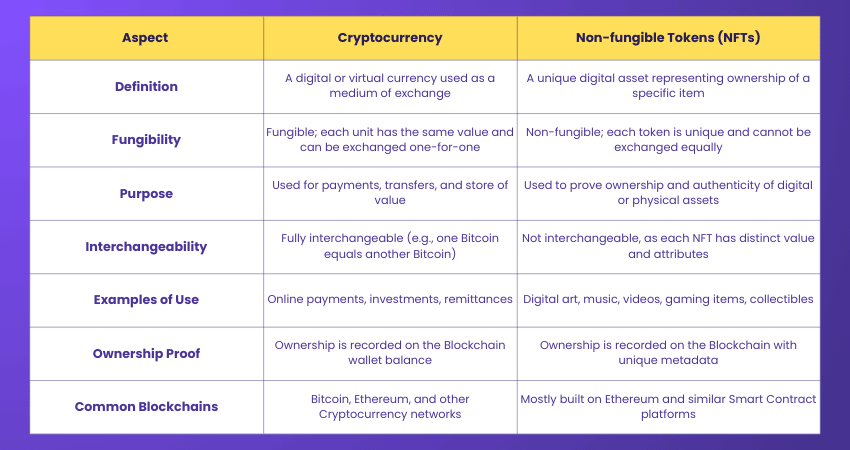
Here are the key differences between Cryptocurrency and NFTs:
Can I Create My Own NFT?
Yes, you can mint an NFT using platforms like OpenSea or Mintable. All you have to do is upload your digital asset and pay a transaction fee. You’ll also need a Crypto wallet to cover gas fees during the minting process. Once created, you can list it for sale or keep it as a verified digital collectable.
Are NFTs a Good Investment?
NFT values fluctuate based on demand, rarity and market trends. This makes them a high-risk investment. It’s highly recommended that you do thorough research before buying. It's important that you only invest what you can afford to lose. Also always verify the authenticity and credibility of the project or creator.
Conclusion
NFTs have redefined the digital landscape by providing an innovative way to own, create and trade digital assets. By combining the individuality of collectables with the power of Blockchain Technology, NFTs have opened new doors for Gamers, Artists, investors and more. As the digital world continues to evolve at breakneck speed, learning What is an NFT is becoming an essential skill in the field of ownership.
Advance Ethereum Development and take a huge digital step towards decentralised excellence. Sign up for our Ethereum Developer Training now!
Frequently Asked Questions
Are NFTs Cryptocurrency?

No, NFTs are not Cryptocurrency. NFTs are unique digital assets representing ownership of specific items, while Cryptocurrencies are fungible digital currencies used for transactions and investments.
What is NFT Digital Art, and how Does NFT Artwork Work?
NFT digital art refers to artwork that has been tokenised on a Blockchain. This token proves authenticity and tracks ownership history. An Artist creates a digital piece and “mints” it as an NFT. Even if the artwork is shared online or copied, only one token represents the original, and whoever holds that token is the verified owner.

Richard Harris


Senior Full Stack Developer and Technology Educator
Richard Harris is a highly experienced full-stack developer with deep expertise in both frontend and backend technologies. Over his 12-year career, he has built scalable web applications for startups, enterprises and government organisations. Richard’s writing combines technical depth with clear explanations, ideal for developers looking to grow in modern frameworks and tools.


 If you wish to make any changes to your course, please


