


 Top Rated Course

We may not have the course you’re looking for. If you enquire or give us a call on +1 6474932992 and speak to our training experts, we may still be able to help with your training requirements.
What is Healthcare Management: A Complete Overview
William Brown 14 July 2026Healthcare Management focuses on planning, organising, and overseeing healthcare services to ensure quality patient care and operational efficiency. It combines leadership and technology to improve hospital performance and support better health outcomes. It enhances patient safety, workforce coordination, and service accessibility.

Training Outcomes Within Your Budget!
We ensure quality, budget-alignment, and timely delivery by our expert instructors.
Table of Contents

Ever wondered how a busy hospital is so well managed? With the countless departments to provide health care to both inpatients and outpatients, it can often get hectic! That’s why there is a system established to manage everything from registering a patient to the care given and billing all of these, properly accounted for. That, friends, is the answer to "What is Healthcare Management?"
Need more clarification on What is Healthcare Management? This blog will walk you through a brief understanding of Healthcare Management and all its different aspects. Let's dive in!
Table of Contents
1) What is Healthcare Management?
2) What Does Healthcare Management Involve?
3) How to Get Into Healthcare Management?
4) The Importance of Healthcare Management
5) Key Functions and Roles in Healthcare Management
6) Challenges in Healthcare Management
7) The Future of Healthcare Management
8) Types of Healthcare Management Jobs
9) What are the Competencies of Healthcare Management?
10) What is an Example of Health Management?
11) Conclusion
What is Healthcare Management?
Healthcare Management is the process of running hospitals, clinics, and other healthcare services efficiently. It focuses on organising people, resources, and systems so that patients receive good care and staff can do their jobs well.
Instead of treating patients, Healthcare Managers work behind the scenes. They handle tasks like managing budgets, hiring staff, improving services, and making sure health rules are followed. Their work helps healthcare organisations stay safe, organised, and ready to serve patients effectively.

What Does Healthcare Management Involve?
Healthcare Management involves planning, organising, and overseeing the daily operations of healthcare facilities like hospitals, clinics, and aged care centres. It focuses on making sure that services run smoothly, staff are supported, and patients receive safe, quality care.
Key responsibilities include managing budgets, hiring and training staff, maintaining patient records, improving service quality, and ensuring the organisation follows healthcare laws and regulations. Managers also work with different departments to coordinate care, use data to make informed decisions, and adapt to changes in the healthcare system. The goal is to provide efficient, patient-centred care across the organisation.
What Does a Healthcare Manager do?
A Healthcare Manager's role goes far beyond administrative tasks, as they balance patient care needs with operational, financial, and strategic responsibilities. Here's what they do:
1) Oversee the day-to-day operations of a hospital, clinic, or specific department
2) Plan, organise, and coordinate healthcare services to ensure smooth service delivery
3) Optimise budgets, manage finances, and ensure cost-effective use of resources
4) Define organisational outcomes and develop strategies to achieve healthcare goals
5) Attend meetings, prepare reports, and communicate updates to staff and leadership
6) Ensure compliance with healthcare regulations, safety standards, and policies
7) Maintain strong relationships with internal teams and external stakeholders
8) Handle operational issues, risks, and conflicts as they arise
9) Lead and manage change initiatives within the healthcare facility
10) Support quality improvement efforts to enhance patient care and service efficiency
How to Get Into Healthcare Management?
If you want to work in Healthcare Management, you’ll need the right education and experience. Here’s a simple step-by-step guide to help you get started.
1) Earn Your Degree
Start by completing a degree in a related subject, such as healthcare administration, public health, or business. A bachelor’s degree is enough for many entry-level jobs. If you want to move into higher positions later, you might consider doing a master’s degree in Healthcare Management or an MBA with a focus on healthcare.
2) Explore Internships and Fellowships
Internships and fellowships are a great way to get real experience. They let you work in hospitals or clinics while learning how things run. These opportunities also help you meet people in the field and build useful skills.
3) Gain Some Work Experience
After your studies, look for an entry-level job in a healthcare setting. This could be a role like an Office Assistant or an administrative support. These jobs will help you learn how healthcare organisations work and give you hands-on experience.
4) Build up Your Resume
As you gain experience, try to take on more responsibility. This could mean helping manage a team, organising schedules, or assisting with budgets. Each step adds to your skills and helps show future employers that you’re ready for a management role.
5) Consider a Certification
Getting certified can make you stand out. It shows you understand the field and meet professional standards. It can also improve your confidence, enhance your credibility, and increase your chances of better job opportunities and career growth.
Master team leadership skills today - join our Performance Management Training for impactful results now!
The Importance of Healthcare Management
Effective Healthcare Management is paramount for successful healthcare organisations and the overall healthcare system. It serves as a guiding force, steering the course of healthcare delivery towards excellence. Let us go over some of the importance of Healthcare Management:

Enhancing patient care
a) Quality Improvement Initiatives:
Healthcare Management plays a crucial role in enhancing patient care standards by implementing quality improvement plans. These efforts incorporate Six Sigma in Healthcare by setting parameters, adopting quantitative measurements, evaluating Key Performance Indicators (KPIs), and monitoring healthcare processes to ensure continuous improvement in patient outcomes.
b) Patient-centred Approach:
Healthcare Managers initiate and push a patient-centred strategy that focuses on an individual patient as a primary person. By working together, healthcare workers treat each patient holistically and compassionately, differentiating each patient by having effective communication and collaborating.
c) Efficient Resource Allocation:
Proper Healthcare Management implies the correct distribution of resources, such as medical equipment, personnel, and facilities with a view to facilitate the provision of high-quality medical care within the shortest possible time. Effectively scheduled appointments also lead to a better regulated patient flow; shortens waiting times; and minimises the likelihood of medical errors.
d) Patient Safety Protocols:
A Healthcare Manager enforces medication safety protocols to minimise medical errors, infections, and other health-related risks. This proactive approach supports patient safety and overall care quality. Certified professionals in Healthcare Risk Management play a key role in upholding these standards. Consistent adherence across the organisation ensures a safe and secure healthcare environment.
e) Continuity of Care:
Healthcare Management achieves this by bringing together fragmented independent care providers ensuring uniform patient care. They are consistent and guarantee that patient details get to all Healthcare providers, leading to harmoniesd care and minimisation of chances of treatment repetition.
f) Clinical Training and Education:
Healthcare Managers are eagerly in the promotion and creation of clinical education programmes as well as professional schooling of healthcare workers. For improvements of the patient service quality, the staff trainings are arranged to keep them up-to-date on the most recent discoveries and the best practices that are being used.
Ensuring Cost Efficiency
a) Budget Planning and Management:
Healthcare Management is representing careful budget planning and management, to spend the resources avoiding an extra cost. Through the thorough evaluation of financial requirements and costs savings of expenditures, healthcare organisations can achieve the cost efficiency without compromising the quality of patient’s care.
b) Value-based Care Models:
In Healthcare Management, increasing focus is put on value-based care paths, thus providing excellent care at a lower price. These models promote healthcare providers’ emphasis on prevention strategies and restrict healthcare services that are unnecessary, which in turn reduces the cost of care and improves patient outcomes.
c) Resource Utilisation Analysis:
Healthcare Management is responsible for monitoring resource utilisation to detect the regions of waste occurrence or inefficiency. This statistics-oriented method will give the healthcare providers the ability to make informed decisions about resource allocation, thus reducing costs and raising labour productivity.
d) Negotiating With Vendors and Suppliers:
Holding the vendor and supplier relations is Healthcare Managers responsibility for the best medical supplies, equipment, and pharmaceuticals delivery. These strategic business alliances may result in both cheaper costs and more availability of needed resources.
e) Process Optimisation:
Healthcare Management is designed to streamline the administrative and clinical processes in order to reduce slack and cut off unnecessary workloads. Hospitals and health organisations can cut costs and ensure better service of patients by improving their workflow efficiency.
f) Preventing Unnecessary Readmissions:
Healthcare Managers work implementation of measures to avoid re-hospitalisations which can make a huge difference of the healthcare costs. Hospitals could cut down on the number of readmissions and associated costs by the provision of such support services as well as follow up care after discharge.
Boost your confidence, master leadership skills with our expert-led Assertiveness Skills Training – Join Now!
Improving Healthcare Outcomes:
a) Evidence-based Practice:
It is critical to the Health Management system to choose an evidence-based practice. Healthcare services are designed and developed depending upon the scientific evidence and standard best practices. These measures are undertaken aim at improving the quality of care and to minimises the possibility of medical error.
b) Clinical Pathways and Protocols:
Healthcare Managers develop plans to establish and implement clinical pathways and protocols that would outline an organised treatment plan for a particular medical condition. In addition to these rules, healthcare professionals provide consistent, high-level care, which thus give better health results.
c) Patient Education and Engagement:
Healthcare Management comprise such subjects as patient education and patient engagement which play a key role in self-care. Patients who are knowledgeable about their health and have close connections with their treatment plans are more prone to follow them, thus they experience improved health outcomes and rather fewer instances of re-admission to the hospital.
d) Outcome Monitoring and Analysis:
Healthcare Management develops control systems, which are responsible for the constant monitoring and evaluation of the medical results. Through monitoring KPIs regularly and comparing themselves to the metrics set by the industry standard, healthcare organisations can discover improvement areas and apply focused improvements.
e) Continuous Quality Improvement:
Healthcare Managers liquidate a culture of permanently quality improvement, imploring healthcare professionals to appraise their executions and search for the moment of development. The cycle thus sets the continuous learning process of providing individualised patient care and results.
f) Interdisciplinary Collaboration:
Healthcare Management acts as a medium of interdisciplinary attitude coordination between the health teams. Effective communication and teamwork among different specialisations trigger comprehensive care with coordinated continuance of treatment which improves patient’s outcome.
g) Emphasis on Preventive Care:
The concentration of Healthcare Managers mainly on early recognition and proactive intervention on health problems through preventive measures is the focus of this public health practice. Through tackling health risks and encouragement of healthy living, Healthcare Organisations will be able to decrease the frequency of chronic diseases and achieve better health outcomes.
Ensure your healthcare business is up to date! Download the Healthcare Compliance PDF and discover the best practices for managing regulatory compliance.
Key Functions and Roles in Healthcare Management
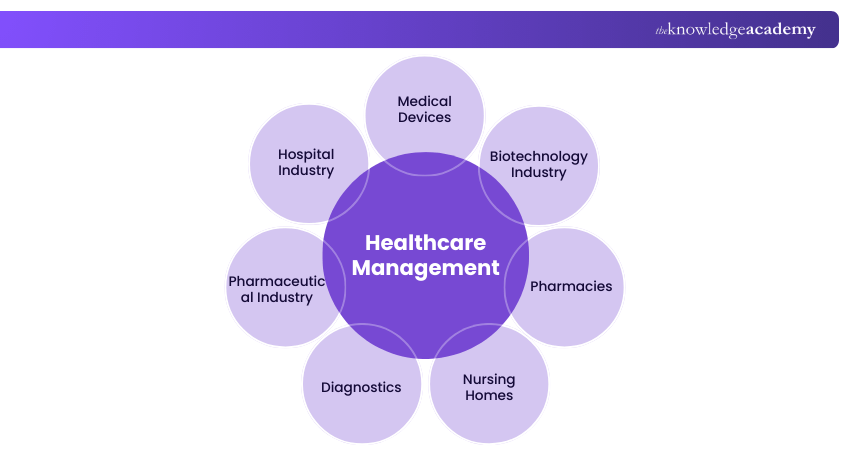
Healthcare Management encompasses a diverse array of essential functions and roles critical for the smooth operation of Healthcare organisations. Some of them are:
1) Healthcare Leadership and Governance
a) Strategic Planning: Healthcare leaders develop long-term strategic plans that align with the organisation's mission and vision. These plans set clear objectives and guide decision-making to achieve organisational goals.
b) Decision-making and Policy Implementation: Healthcare leaders make critical decisions and implement policies that influence the organisation's operations, patient care, and overall performance.
c) Stakeholder Engagement: Healthcare leaders collaborate with various stakeholders, including medical staff, administrators, board members, and community members, to ensure a shared vision and foster a culture of transparency and accountability.
d) Ethical and Regulatory Compliance: Healthcare leaders uphold ethical standards and ensure compliance with Healthcare regulations, laws, and industry standards, safeguarding the organisation's integrity and reputation.
Financial Management and Budgeting
a) Budget Development: Healthcare Managers are responsible for creating comprehensive budgets that allocate resources to various departments and initiatives within the Healthcare organisation.
b) Financial Analysis: Healthcare Managers conduct financial analyses to assess the organisation's financial health, identify trends, and make data-driven decisions.
c) Cost control Measures: Healthcare Managers implement measures to reduce unnecessary expenditures while maintaining high-quality patient care.
d) Revenue Generation: Healthcare Managers explore opportunities to increase revenue, such as expanding services, negotiating contracts, or optimising reimbursement processes.
Human Resources and Talent Management
a) Recruitment and Selection: Healthcare Managers oversee the recruitment and selection process, attracting and hiring qualified healthcare professionals who align with the organisation's values and mission.
b) Training and Development: Healthcare Managers are responsible for providing regular training and development opportunities to improve the skills and knowledge of the healthcare workforce. This ensures that the staff is competent in delivering quality care.
c) Performance Management: Healthcare Managers implement performance management systems, conducting regular evaluations to assess employee performance, provide feedback, and recognise achievements.
d) Workforce Planning: Healthcare Managers engage in strategic workforce planning, anticipating future staffing needs and ensuring the right mix of healthcare professionals to meet patient demand.
Information Technology and Healthcare Informatics
a) Electronic Health Records (EHR): Healthcare Managers oversee the implementation and maintenance of EHR systems, enabling secure and accessible patient health information, improving care coordination, and reducing medical errors.
b) Health Information Exchange (HIE): Healthcare Managers facilitate health information exchange between different healthcare providers and organisations, promoting seamless data sharing and continuity of care.
c) Data Analytics: Healthcare Managers rely on data analytics tools to extract valuable insights from huge amounts of healthcare data. This helps them make decisions based on evidence, manage population health, and undertake initiatives to improve the quality of healthcare.
d) Telemedicine and Telehealth: Healthcare Managers explore and integrate telemedicine and telehealth technologies, enabling remote consultations, virtual care delivery, and improving availability to healthcare services, especially in rural or underserved areas.
Strengthen your decision-making and strategic thinking skills with our Senior Management Training – Register today!
Challenges in Healthcare Management
Healthcare Management is a complex field and faces numerous challenges in its quest to deliver high-quality patient care and ensure the effective functioning of Healthcare organisations. Let us look at some of these challenges:
Evolving Healthcare Policies and Regulations
a) Frequent Policy Changes: Healthcare Managers must continuously monitor and adapt to frequent changes in Healthcare policies and regulations at the local, state, and federal levels. These changes can impact reimbursement models, quality standards, and operational requirements.
b) Compliance Challenges: Staying compliant with many Healthcare regulations, such as HIPAA (Health Insurance Portability and Accountability Act) and the Affordable Care Act, requires meticulous attention to detail and the development of robust compliance programs.
c) Reimbursement Complexity: Evolving reimbursement models, including value-based care and alternative payment models, present challenges in accurately documenting and reporting healthcare services to ensure appropriate reimbursement.
Balancing Quality and Cost
a) Efficiency in Resource Allocation: Healthcare Managers carefully allocate resources to ensure cost-effectiveness without compromising patient care quality. This involves optimising staffing levels, managing inventory efficiently, and identifying areas for cost savings.
b) Evidence-based Decision Making: Healthcare Managers rely on evidence-based practices and clinical guidelines to make informed decisions prioritising quality patient care while avoiding unnecessary and costly treatments.
c) Preventive Care and Population Health: Emphasising preventive care and population health initiatives helps Healthcare managers reduce the burden of costly chronic conditions through early detection and disease management.
Addressing Healthcare Disparities
a) Access to Healthcare: Healthcare Managers work towards ensuring equitable access to Healthcare services for all individuals, regardless of socioeconomic status, geographic location, or cultural background.
b) Culturally Competent Care: Healthcare Managers promote culturally competent care, ensuring that healthcare professionals understand and respect diverse cultural beliefs and practices, improving patient satisfaction and health outcomes.
c) Language Services: Healthcare Managers implement language services, such as interpretation and translation services, to overcome language barriers and enhance communication with patients with limited English proficiency.
The Future of Healthcare Management
The future of Healthcare Management is shaped by technology, data, and system integration. Managers will increasingly use Electronic Health Records (EHRs), AI-powered analytics, and telemedicine platforms to streamline operations and improve patient care. Real-time data will guide decision-making, resource allocation, and performance tracking throughout the process.
There will also be a shift towards value-based care, requiring managers to focus on outcomes rather than volume. Cybersecurity, regulatory compliance, and digital transformation will remain top priorities. Practically, this means Healthcare Managers must develop skills in IT systems, data analysis, and cross-functional leadership to meet the upcoming demands of modern healthcare delivery.
Types of Healthcare Management Jobs

The Healthcare Management field consists of many jobs that cover different areas such as leadership and management. Without these roles, no area in the healthcare industry will be viable. Here are the different roles of Healthcare Management:
Health Coordinators
This is a role that mostly occurs in hospitals and nursing homes where they assess and monitor the quality of care given in their service area. A Health Coordinator will develop care plans for patients; record the care hours he / she provides and order necessary medical supplies.
Clinical Directors
Clinical direction has a place in different sectors of healthcare such as hospitals, nursing homes, research institutions and clinics. The clinical directors’ main task is to guide their staff teams to achieve the organisation’s objectives. They create goals, establish amounts of budgets, prepare staff procedures, and hire employees when necessary.
Hospital Managers
Hospital Managers often work within the hospital facilities as well as in specific clinical units or private practices. Managers in hospitals are responsible for the entire hospital and the number of Care Management Programmes; therefore, their responsibilities are quite diverse.
A Hospital Manager can spend their days overseeing the financial operations, communicating with investors and stakeholders, and ensuring adherence to laws and regulations.
Health supervisors are usually found in aged care facilities and hospitals, and their duties are similar to those of healthcare administrators. They often handle tasks such as keeping records, preparing staff schedules, attending meetings, and entering data into systems.
However, their responsibilities can vary depending on the size and type of the organisation. Despite these differences, the role remains important in every setting and offers strong career growth and development opportunities.
What are the Competencies of Healthcare Management?
Healthcare Management requires a mix of knowledge, skills, and personal qualities to handle complex operations in medical settings. Core competencies include leadership, communication, problem-solving, and decision-making. Managers must be able to lead teams, resolve issues quickly, and make informed choices that benefit both patients and staff.
Other important competencies include financial management, understanding healthcare laws and ethics, strategic planning, and the ability to use data and technology effectively. A strong focus on patient care, adaptability, and teamwork is also essential. These skills help ensure healthcare services run efficiently, safely, and in line with quality standards.
What is an Example of Health Management?
An example of Health Management is how a hospital manages patient care and operations on a daily basis. This includes scheduling doctors and nurses, managing patient admissions and discharges, maintaining medical records, and ensuring treatments are delivered safely and on time. It also involves budgeting, improving service quality, and following healthcare regulations to deliver efficient patient care.
Conclusion
Healthcare Management is the backbone of an effective healthcare system, bringing structure and strategic direction to patient care services. It ensures that healthcare organisations balance quality care with efficient operations, financial sustainability, and regulatory compliance. As the healthcare industry continues to grow and adapt, strong Healthcare Management will remain essential in driving innovation, improving patient experiences, and supporting healthier communities.
Gain the confidence and skills to become a capable leader, sign up for our Management Courses now!
Frequently Asked Questions
How Does Healthcare Management Contribute to Improving Patient Care?

Healthcare Management allows the smooth functioning of the healthcare facility allowing them to provide patients with the best quality health care. And do so in a systematic and organised manner.
What Role Does Technology Play in Modern Healthcare Management?
Technology provides great support to help manage modern healthcare. It allows data storage and organisation in a manner that is accessible in the most convienient manner for the healthcare provider.

William Brown


Senior Business Analyst and Strategic Advisor
William Brown is a senior business analyst with over 15 years of experience driving process improvement and strategic transformation in complex business environments. He specialises in analysing operations, gathering requirements and delivering insights that support effective decision making. William’s practical approach helps bridge the gap between business goals and technical solutions.
View Detail

 If you wish to make any changes to your course, please


