


 Top Rated Course

We may not have the course you’re looking for. If you enquire or give us a call on +1 6474932992 and speak to our training experts, we may still be able to help with your training requirements.
AWS DevOps: Key Benefits, Tools, Architecture, and Best Practices
Lily Turner 15 November 2025AWS DevOps combines Amazon Web Services with DevOps principles and practices to help teams build, test and deploy applications faster and more reliably. It improves collaboration, reduces errors, and speeds up releases to ensure stable, high-performing applications. It reduces operational costs and simplifies Infrastructure Management.

Training Outcomes Within Your Budget!
We ensure quality, budget-alignment, and timely delivery by our expert instructors.
Table of Contents
Ever released an update that broke something else, caused downtime or took hours of manual work? This is a common issue nowadays. Many teams still struggle with slow deployments, unexpected issues, and the pressure to deliver faster than ever. AWS DevOps offers a smarter way forward to overcome this.
It combines powerful Amazon Web Services (AWS) cloud services with DevOps practices. It helps teams automate repetitive tasks and move code smoothly from development to production. In this blog, we will learn what is AWS DevOps, how it works, the tools it provides, and the best practices to deliver high-quality applications. Let's dive in!
Table of Contents
1) What is AWS DevOps?
2) How AWS DevOps Works?
3) Benefits of AWS DevOps
4) What are the Principles of AWS DevOps?
5) AWS DevOps Architecture
6) AWS DevOps Tools
7) AWS DevOps Best Practices
8) Conclusion
What is AWS DevOps?
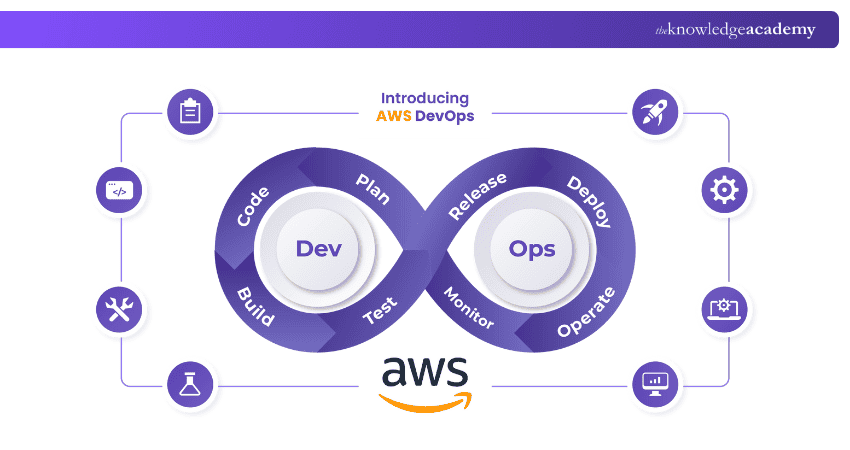
AWS DevOps refers to the combined use of Amazon Web Services and DevOps practices to help organisations deliver applications more quickly, with fewer errors and greater reliability. It brings together automation, cloud services, cultural principles, and continuous delivery to streamline how teams plan, build, test, and release software.
AWS provides infrastructure and tools to enable automation, scalability, and operational efficiency. DevOps focuses on collaboration and continuous improvement. Together, they empower teams to improve release frequency, reduce downtime, and maintain consistent performance.
What is AWS?
Amazon Web Services (AWS) is one of the world’s leading cloud platforms, offering services that support modern application development. It provides everything from computing and storage to networking, databases, analytics, and security tools.

It falls under the Infrastructure as a Service (IaaS) category, giving customers full control over virtual servers, Operating Systems and cloud resources while AWS manages the underlying hardware. Some core AWS services include:
1) Amazon EC2 for scalable virtual servers
2) Amazon S3 for durable, secure object storage
3) Amazon RDS for managed relational databases
4) AWS Lambda for serverless computing, where code runs without provisioning servers

What is DevOps?
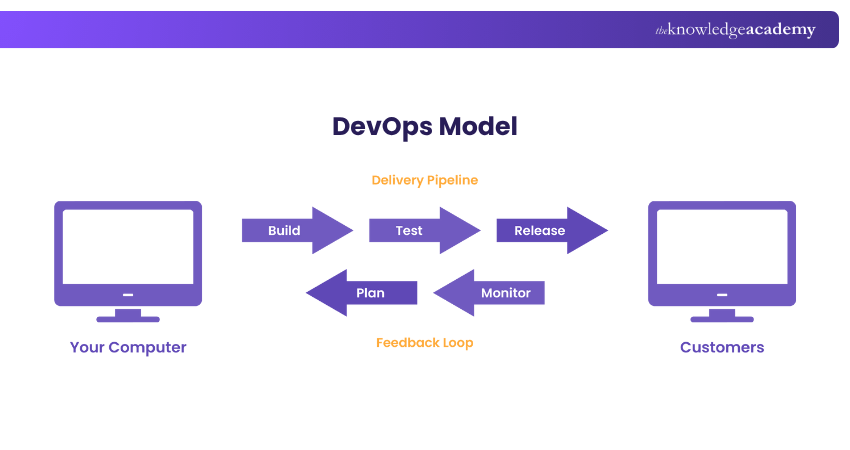
DevOps is a combination of two words. Development and Operations. It is a cultural and technical approach that encourages software developers and IT operations teams to collaborate instead of working in separate silos. Its main goal is to deliver high-quality software faster, with fewer issues and smoother workflows.
Development
Development refers to the phase where software is planned, designed, coded, and tested. Developers focus on adding features, improving user experience, fixing bugs and ensuring the product evolves in line with customer needs.
Operations
Operations is the practice of maintaining and running software in production. The goal is to keep systems running smoothly and securely. This team collaborates closely with Developers, sharing insights on system performance and user impact.
How AWS DevOps Works?
AWS DevOps works by combining DevOps principles with powerful AWS cloud services to automate and streamline the entire Software Development Lifecycle. It helps teams move code from development to deployment quickly through automation, collaboration and continuous feedback.
Developers write code and save it in a shared place called a repository. AWS tools such as CodePipeline and CodeBuild automatically check and test the code to make sure it works properly. Once everything looks good, the code is deployed to servers using services like CodeDeploy or CloudFormation. AWS also offers tools for monitoring and scaling, so the application stays healthy, fast and reliable.
Benefits of AWS DevOps
AWS DevOps offers several benefits that help teams build and deliver software with better quality. The following are its benefits:
1) Better Collaboration: Teams work together effectively using shared AWS tools.
2) Faster Development Cycles: CI/CD automation reduces time from coding to deployment.
3) Quick Issue Response: Monitoring tools provide real-time insights for faster fixes.
4) High Scalability and Availability: AWS automatically adjusts resources based on demand.
5) Higher Quality Delivery: Automation reduces human errors and speeds up releases.
6) Cost-efficient: You can pay only for what you use, reducing overall operational costs.
What are the Principles of AWS DevOps?
AWS DevOps follows the same core principles as traditional DevOps but enhances them using AWS tools and cloud services. So, those principles are:
1) Continuous Integration and Delivery: Code changes are regularly merged, tested and deployed through automated pipelines.
2) Automation: Testing, deployment, monitoring and scaling are automated to reduce errors and increase speed.
3) Infrastructure as Code: Templates and code define infrastructure, keeping environments consistent and easy to manage.
4) Monitoring and Logging: Real-time tracking helps identify and fix performance issues quickly.
5) Microservices Architecture: Applications are split into small, independent services that can be deployed and scaled separately.
6) Collaboration and Shared Ownership: Teams work together across the entire lifecycle, improving quality and reducing deployment issues.
Equip yourself with advanced automation deployment skills with our AWS Professional DevOps Engineer Training – Register today!
AWS DevOps Architecture
AWS DevOps architecture uses a collection of AWS cloud services that work together to support continuous integration, continuous delivery and efficient infrastructure management. Now that you know what AWS DevOps is, below are the key components that typically form an AWS DevOps architecture.
1) Elastic Load Balancing
Elastic Load Balancing (ELB) distributes incoming traffic across multiple servers to maintain reliability and prevent overload. If one server fails, traffic is immediately routed to healthy instances. This helps maintain strong performance and ensures applications remain available at all times.
2) Amazon CloudFront
CloudFront is a Content Delivery Network (CDN) that delivers static, dynamic and streaming content quickly to users worldwide. It integrates seamlessly with other AWS services but also works with non-AWS environments.
3) Amazon Security Group
Security Groups act as virtual firewalls for Amazon EC2 (Elastic Compute Cloud) instances. They control inbound and outbound traffic by allowing only specific IPs, ports and protocols. Multiple security groups can be applied to each instance for layered security.
4) Elastic Caches
Elastic Caches help improve application speed by storing frequently used data in memory. This reduces the need to fetch information from primary databases, which allows applications to load faster and handle higher traffic with much better efficiency.
5) Amazon RDS (Relational Database Service)
Amazon RDS makes it simple to set up and manage relational databases in the cloud. It handles backups, updates and maintenance automatically. Supported engines include MySQL, PostgreSQL, MariaDB, Oracle, Amazon Aurora and SQL Server.
6) AWS Simple Storage Service (S3)
AWS S3 provides a highly durable object storage service for data, backups, media files and application assets. Data is stored as objects inside buckets and can be accessed or updated anytime from anywhere.
7) Amazon Elastic Block Store (EBS)
Amazon EBS offers high-performance block storage for EC2 virtual machines. It is ideal for databases, file systems, and workloads that require low latency, fast access and persistent storage.
8) Amazon Auto Scaling
Auto scaling on Amazon automatically adjusts the number of EC2 instances based on traffic and workload. It ensures that applications always have the right capacity, like scaling up when demand increases and scaling down to save costs when demand drops.
Discover the basics of AWS services, coding, and real-world deployments with our AWS Associate Developer Training – Join now!
AWS DevOps Tools
AWS provides powerful tools that help automate the development, testing and deployment processes. They form the core pillars of DevOps. Below are some of the most important AWS DevOps tools:
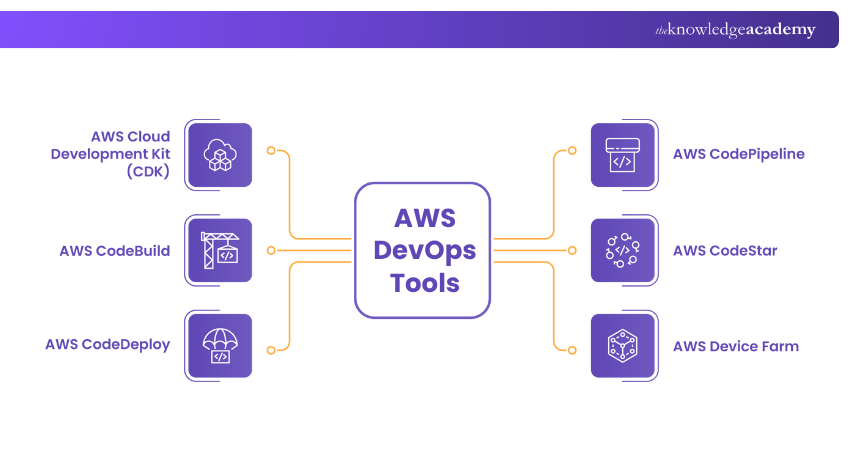
1) AWS Cloud Development Kit (CDK)
AWS CDK is an open-source tool that allows engineers to define cloud infrastructure using familiar programming languages such as Python, TypeScript, Java and C Sharp. It simplifies Infrastructure as Code and improves collaboration between developers and operations teams.
1) Reduces manual errors by generating CloudFormation templates automatically
2) Encourages reusable components through “constructs”
3) Makes infrastructure easier to version, review and update through code
2) AWS CodeBuild
AWS CodeBuild compiles source code, runs tests and produces ready-to-deploy build artefacts. It removes the need for maintaining build servers and ensures that builds run consistently in a managed environment.
1) Fully managed build servers
2) Integrates smoothly with CodePipeline for automated CI workflows
3) Scales automatically to handle large or parallel builds
3) AWS CodeDeploy
AWS CodeDeploy automates deployments to EC2, Lambda, Fargate and on-premises servers. It helps teams perform updates safely and quickly by handling the entire deployment process with minimal human intervention.
1) Supports blue/green and rolling deployments for safe updates
2) Automatically rolls back if a deployment fails
3) Provides detailed deployment logs for troubleshooting
4) AWS CodePipeline
AWS CodePipeline is the heart of the DevOps workflow. It automates the entire CI/CD workflow for rapid software delivery. It ensures that every code change moves through build, test and deploy stages in a streamlined, automated manner.
1) Offers visual pipeline stages for clear visibility
2) Supports integrations with GitHub, Jenkins and other tools
3) Ensures consistent, repeatable deployments with every code change
5) AWS CodeStar
AWS CodeStar offers an easy-to-use dashboard for building, deploying and managing applications. It includes project templates, dashboards and integration with AWS services to help teams collaborate more effectively.
1) Comes with prebuilt project templates for faster setup
2) Offers real-time project tracking through an integrated activity dashboard.
3) Provides built-in collaboration features for team members
6) AWS Device Farm
The AWS Device Farm offers the opportunity for teams to test their mobile and web applications on real devices and browsers that are cloud-based. This service is aimed at making the apps function flawlessly across various types of devices, different screen sizes and different Operating Systems.
1) Supports manual interactive testing on real devices
2) Helps identify device-specific bugs quickly
3) Generates detailed reports with screenshots, logs and performance data
Build strong and secure AWS systems with confidence with our AWS Specialty Security Training – Sign up soon!
AWS DevOps Best Practices
To get the most value from AWS DevOps, here are the best practices that you can try to follow:
1) Use CI/CD Pipelines: Automate building, testing and deploying your code, so updates happen faster and with fewer mistakes.
2) Use Infrastructure as Code: Create your servers and settings using code (CloudFormation or CDK) so everything is consistent and easy to repeat.
3) Monitor Everything: Use CloudWatch and X Ray to watch your systems, find issues quickly and keep apps running smoothly.
4) Build Security Into Every Step: Use tools like Security Hub to manage access and check for security problems early.
5) Promote Continuous Improvement: Review your processes often, learn from what works and stay updated with new AWS tools and features.
Conclusion
AWS DevOps is a significant combination of cloud services and modern development practices that help organisations innovate faster and deliver better software. It offers the best tools, flexibility and support needed to streamline your entire development lifecycle. With the right tools, practices and regular improvement, teams can innovate confidently and stay ahead in an ever-changing digital world.
Level up your cloud skills and core AWS services with our AWS Certification – Explore now!
Frequently Asked Questions
Is Coding Used in AWS DevOps?

Yes, coding is used in AWS DevOps. Developers write code for applications and also for automation. You may use languages like Python, Shell scripting or YAML to build pipelines or manage infrastructure.
Is AI Going to Replace DevOps?
Artificial Intelligence (AI) will not replace DevOps. Instead, it will support DevOps by automating repetitive tasks like monitoring or scaling. Human roles will still be important for designing systems, solving problems and making decisions.
What are the Other Resources and Offers Provided by The Knowledge Academy?
The Knowledge Academy takes global learning to new heights, offering over 3,000+ online courses across 490+ locations in 190+ countries. This expansive reach ensures accessibility and convenience for learners worldwide.
Alongside our diverse Online Course Catalogue, encompassing 19 major categories, we go the extra mile by providing a plethora of free educational Online Resources like Blogs, eBooks, Interview Questions and Videos. Tailoring learning experiences further, professionals can unlock greater value through a wide range of special discounts, seasonal deals, and Exclusive Offers.
What is The Knowledge Pass, and How Does it Work?
The Knowledge Academy’s Knowledge Pass, a prepaid voucher, adds another layer of flexibility, allowing course bookings over a 12-month period. Join us on a journey where education knows no bounds.
What are the Related Courses and Blogs Provided by The Knowledge Academy?
The Knowledge Academy offers various AWS Certification, including AWS Cloud Practitioner Training, AWS Professional DevOps Engineer Training and AWS Associate Developer Training. These courses cater to different skill levels, providing comprehensive insights into Cloud Storage.
Our Cloud Computing Blogs cover a range of topics related to AWS DevOps, offering valuable resources, best practices, and industry insights. Whether you are a beginner or looking to advance your Amazon Web Services skills, The Knowledge Academy's diverse courses and informative blogs have got you covered.

Lily Turner


Senior AI/ML Engineer and Data Science Author
Lily Turner is a data science professional with over 10 years of experience in artificial intelligence, machine learning, and big data analytics. Her work bridges academic research and industry innovation, with a focus on solving real-world problems using data-driven approaches. Lily’s content empowers aspiring data scientists to build practical, scalable models using the latest tools and techniques.
View Detail
Upcoming Cloud Computing Resources Batches & Dates
Date
 AWS Cloud Practitioner Training
AWS Cloud Practitioner Training
Fri 20th Mar 2026
AWS Cloud Practitioner Training
Fri 15th May 2026
AWS Cloud Practitioner Training
Fri 17th Jul 2026
AWS Cloud Practitioner Training
Fri 20th Nov 2026

 If you wish to make any changes to your course, please


