




We may not have the course you’re looking for. If you enquire or give us a call on 01344203999 and speak to our training experts, we may still be able to help with your training requirements.
Social Media and Mental Health: Effects, Risks, and Benefits
ByMichael JonesLast updated on: 22 September 2026
Social media and mental health have a complex link, offering connection but also increasing risks like anxiety, depression, and low self-esteem due to comparison. Using Social Media mindfully makes it easier to protect your well-being. Finding the right balance can help you enjoy its benefits without harming your Mental Health.
These days, the relationship between Social Media and Mental Health has become a topic of crucial interest and concern. But can scrolling through Instagram or tweeting on Twitter impact an individual’s well-being? Or can the virtual connections formed online truly replace real-world interactions? This blog delves into the intricate ways Social Media affects Mental Health, exploring both its benefits and potential pitfalls.
While tools like Facebook and Snapchat offer unprecedented connectivity, they also pose risks that can lead to feelings of isolation and anxiety. Hence, understanding the complex dynamics of Social Media and Mental Health is crucial for effectively navigating online lives. Read this blog to unpack the psychological effects on your mental well-being in the age of Social Media.
How Does Social Media Affect Mental Health?
Social Media can influence Mental Health in several interconnected ways, offering both meaningful benefits and genuine risks. It helps you stay in touch with friends, find support, and learn about important issues. But when you use it too much, it can harm your wellbeing. Constant scrolling may make you feel unhappy, lonely, or not good enough, and can increase stress, anxiety, or low mood.
Many people also use Social Media when they feel awkward, bored, or lonely. But instead of helping, it can make those feelings stronger. This can create a cycle: you feel low, so you scroll more, but scrolling makes you feel worse, so you keep going back to it. The Fear of Missing Out (FOMO) can also keep you checking Social Media apps very often.

Positive Impacts of Social Media on Mental Health
While Social Media for Mental health has its share of certain drawbacks, it is essential to acknowledge that these platforms can also positively affect our well-being. Some of these positive effects are as follows:
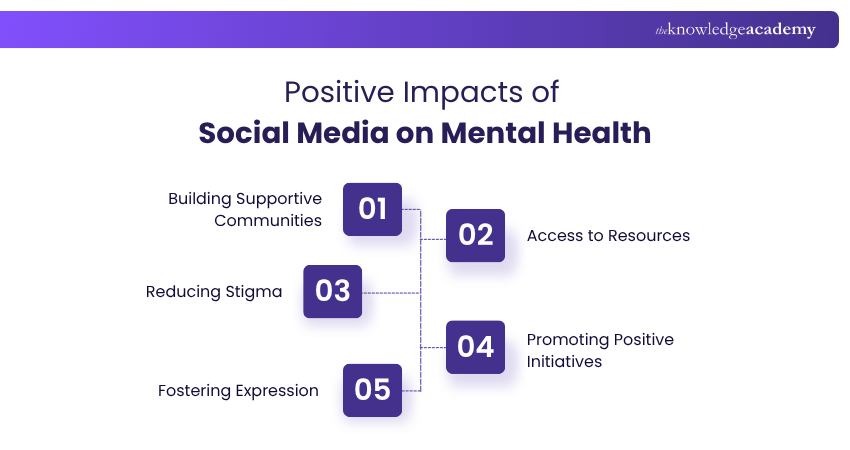
1) Building Supportive Communities
Social Media makes it easier for people to find others who share similar experiences, challenges, or interests. Whether it’s Mental Health groups, hobby communities, or support networks, these spaces help people feel understood, less alone, and more connected.
These communities can also inspire positive changes by sharing real stories and practical tips. Seeing others overcome similar struggles can give people hope and motivation to keep going.
2) Access to Resources
Many platforms offer quick access to helpful information, expert advice, and Mental Health tools. From educational posts to videos by Therapists, people can learn coping strategies, find helpline details, and discover ways to manage stress or anxiety.
People can also follow trusted organisations or experts to stay updated on new research and support options. This makes it easier to make informed decisions about their Mental Health.
3) Reducing Stigma
Social Media provides a space where people can talk openly about Mental Health. Personal stories, awareness campaigns, and supportive interactions help normalise seeking help. As more people share their experiences, it reduces shame, encourages understanding and challenges long-standing stigma.
This open communication encourages others to seek help sooner and builds a more compassionate and supportive environment for those who may be struggling in silence.
4) Promoting Positive Initiatives
Social Media has become a catalyst for promoting positive Mental Health initiatives and campaigns. Various online challenges, hashtags, and movements encourage individuals to prioritise self-care, practice gratitude, and engage in acts of kindness.
These initiatives create a ripple effect, inspiring others to take care of their mental well-being and fostering a collective commitment to Mental Health.
5) Fostering Expression
Social Media platforms provide individuals with a creative outlet to express themselves and share their talents with the world. Through visual content, such as photography, art, and videos, people can showcase their creativity, share their passions, and inspire others.
Engaging in creative activities and appreciating the creativity of others can contribute to positive emotions, self-expression, and overall mental well-being.
Don’t let stress hold you back - Register for our Handle Stress and Develop Your Resilience Course and turn challenges into opportunities!
Negative Impacts of Social Media on Mental Health
The negative impact Social Media has on its users can be listed as follows:
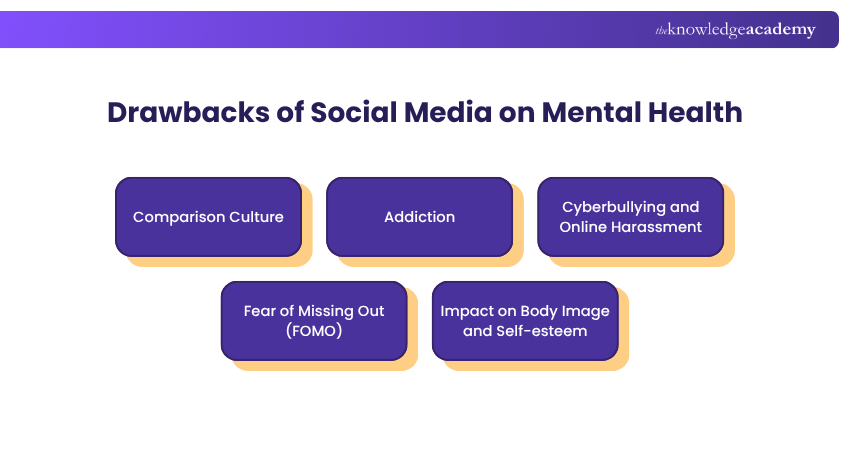
1) Comparison Culture
Social Media often shows the best parts of people’s lives, which can lead to unhealthy comparisons. That's why understanding the connection between Social Media and Mental Health is important. Seeing perfect photos, achievements, or lifestyles can make you feel less successful or less attractive. Over time, this can lower your confidence and affect how you see yourself.
These comparisons can also create constant pressure to “keep up” or look a certain way. This can lead to stress, self-doubt, and a never-ending need for validation.
2) Addiction
Social Media addiction is a still-growing concern in the digital age. The constant thought to check notifications, scroll through news feeds, and seek validation through likes and comments can become addictive.
This addiction can negatively affect Mental Health, leading to anxiety, stress, and feelings of isolation. Moreover, excessive Social Media use can disrupt sleep patterns and hinder productivity. These adverse effects often push individuals to look into How to Delete Snapchat Account and take a digital detox.
3) Cyberbullying and Online Harassment
Social Media platforms might provide a breeding ground for cyberbullying and online harassment. The anonymity and distance offered by the online environment make it easier for individuals to engage in hurtful behaviour without immediate consequences.
Victims of cyberbullying often experience significant psychological distress, including increased levels of anxiety, depression, and a decline in self-esteem. The constant exposure to negative comments and online harassment can have long-lasting effects on mental well-being.
4) Fear of Missing Out (FOMO)
The Fear of Missing Out is a psychological phenomenon amplified by Social Media. Seeing others' experiences, social gatherings, and events through posts and photos can evoke a sense of exclusion and a fear of being left out.
This fear often results in anxiety, restlessness, and a constant need to be active on Social Media tools to avoid missing out on the latest updates and events.
5) Impact on Body Image and Self-esteem
Social Media platforms often prioritise physical appearance, leading to a significant impact on body image and self-esteem. The constant exposure to carefully edited and filtered images can create unrealistic beauty standards and perpetuate body dissatisfaction. This may lead to the onset of eating disorders, body dysmorphia, and a negative self-image.
Over time, this pressure can make people feel insecure or constantly compare themselves to others. It can reduce confidence and affect how they view their worth beyond physical appearance.
Boost your brainpower with our Mental Capacity Training – Sign up now and discover techniques to sharpen your mind!
How to Stop Social Media Depression?
Stopping Social Media-related depression starts with becoming more aware of how these platforms affect your mood. Here's how you can do it:
1) Limit your screen time by setting daily usage boundaries
2) Turn off non-essential notifications to reduce constant checking
3) Unfollow accounts that trigger comparison or negative feelings
4) Follow positive, uplifting, or educational pages instead
5) Take regular breaks or try a short Social Media detox
6) Spend more time on offline activities like hobbies, exercise, or reading
7) Talk to someone you trust about how you're feeling
8) Seek help from a Mental Health professional if symptoms don’t improve
Tips for Healthy Social Media Habits
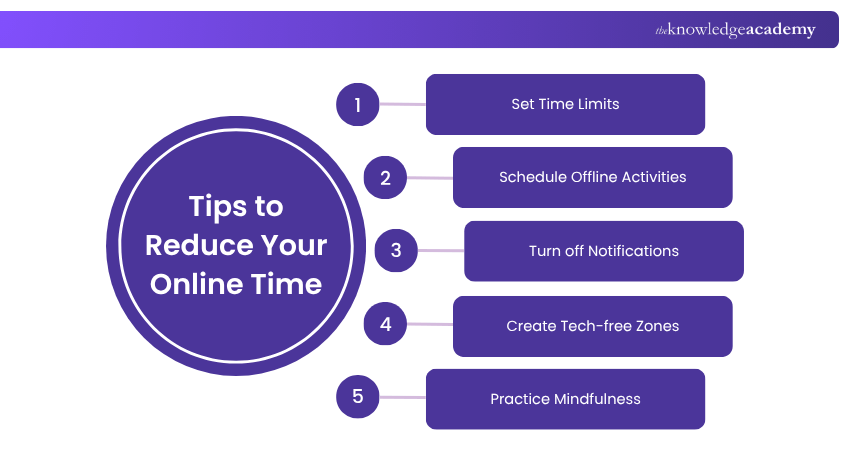
The adverse effects that Social Media has had on Mental Health can be managed by following a few simple strategies. Some of these Mental Health Tips are as follows:
1) Reduce Time Online
Studies worldwide have proven that reducing the time of Social Media consumption reduces feelings of anxiety, depression, loneliness, sleep-related problems and so on. However, it might be more challenging for some people to drastically decline their Social Media use. For them, being mindful of the time spent on Social Media is a more efficient way to reduce time online.
2) Change Your Focus
Often, you turn to Social Media to kill time or escape boredom. Instead, if you use it with a clear purpose and set personal guidelines, we can reduce our usage and filter out its negative aspects.
Logging in with specific intentions, like checking on someone’s health, sharing a photo, or chatting with a friend, can make your Social Media experience more positive. The next time you use Social Media, make sure you know the reason behind using it.
3) Spend More Time With Offline Friends
Spending time with friends offline provides you with a chance to build a meaningful relationship. You can try setting aside a particular time once every week for a gathering with friends. But remember to keep your phones off while you are a part of the gathering. You can also spend time offline by starting a new hobby that involves interacting with people face-to-face. If you want to try something really different, you can also try interacting with strangers and unlocking new friendships that will be great for your mental well-being.
4) Express Gratitude
Having gratitude towards your life is essential for good Mental Health. Taking the time to reflect on where you are, what you are doing with your life, and the initiatives you need to take to become better gives you the willpower to regulate your habit of using Social Media. Humans are wired up to help each other and live in a society.
By helping others and working to build your community, you can overcome Social Media addiction and improve your Mental Health.
Download the Mental Health and Wellbeing PDF to foster better Mental Health!

Michael Jones develops practical resources that help professionals recognise workplace hazards and implement appropriate preventive measures. His content connects day-to-day safety responsibilities with the wider need for compliant and responsible working environments.
View Detail

 If you wish to make any changes to your course, please


