


 Top Rated Course

We may not have the course you’re looking for. If you enquire or give us a call on +32 35001305 and speak to our training experts, we may still be able to help with your training requirements.
12 Types of Difficult People You’ll Meet at Work
Scarlett Adams 20 March 2026Difficult coworkers hurt productivity through gossip, bullying, or negativity. Spotting these Types of Difficult People at Work helps you respond wisely. Workplaces bring together people with different personalities, and some behaviours can be challenging to work with, affecting collaboration, productivity, and team morale.

Training Outcomes Within Your Budget!
We ensure quality, budget-alignment, and timely delivery by our expert instructors.
Table of Contents
Most people expect workplaces to be collaborative, respectful, and productive. However, every organisation eventually encounters challenging personalities that can make daily tasks more stressful than they should be. Understanding the Types of Difficult People at Work can help employees recognise problematic behaviours early and handle them in a calm and constructive way.
From constant complainers to micromanagers and workplace gossipers, different behaviours can disrupt teamwork and lower morale. In this blog, you will learn about the Types of Difficult People at Work and ways to deal with them to help you respond with confidence, maintain professionalism, and create healthier working relationships with colleagues.
Table of Contents
1) What are Difficult Personalities?
2) Workplace Implications of Difficult Personalities
3) Common Types of Challenging Personalities
4) Strategies for Managing Difficult Personalities
5) Conclusion
What are Difficult Personalities?
Difficult personalities in the workplace refer to individuals whose behaviours and traits create challenges in communication, collaboration, and the overall work environment. These Types of Difficult People at Work can be disruptive, causing tension, conflict, and reduced productivity. Difficult personalities at work often exhibit behaviours that are hard to manage or understand, leading to strained relationships and workplace grievances.
Psychologists explain personality using the Five-factor Model (Big Five), which includes traits such as openness, conscientiousness, extraversion, agreeableness, and neuroticism. Some of these traits may appear in difficult ways at work, such as:
1) Low Agreeableness: Manipulative or uncooperative behaviour that leads to conflict.
2) High Neuroticism: Emotional instability that creates tension or distrust.
3) High Extraversion: Overly dominant behaviour that can lead to control issues or power struggles.
Understanding these traits helps employees recognise why some behaviours appear difficult and how they can be managed more effectively.

Workplace Implications of Difficult Personalities
Workplace implications of difficult personalities can greatly impact the overall environment, productivity, and Well-Being at Work. Here are some key implications:
1) Increased Conflict: Difficult personalities often lead to frequent misunderstandings and disagreements, which can escalate into conflicts, disrupting team cohesion and collaboration.
2) Lowered Morale: Persistent exposure to challenging behaviours can demoralise employees, leading to decreased job satisfaction, increased stress, and a negative workplace atmosphere.
3) Reduced Productivity: Time and energy spent managing difficult personalities can divert attention from core tasks, lowering individual and team productivity. In some cases, Micromanagement can further exacerbate these challenges, creating a stressful work environment.
4) Higher Turnover Rates: A toxic work environment created by difficult personalities can lead to higher employee turnover as staff seek more positive work environments because of Toxic Traits in an organisation.
5) Strained Communication: Difficult personalities can hinder effective communication, leading to miscommunication, delays, and errors in work processes.
6) Poor Team Dynamics: The presence of difficult personalities can disrupt team dynamics, causing division, lack of trust, and inefficiency in achieving collective goals.
7) Impact on Leadership: Leaders may find it challenging to manage teams effectively, as they spend significant time addressing issues caused by difficult personalities rather than focusing on strategic initiatives. Learning How to Manage Negative People becomes crucial to ensure that these challenges do not hinder the team's progress and overall productivity.
Understanding these implications highlights the importance of proactively addressing difficult personalities to maintain a healthy, productive, and positive workplace environment.
Develop skills that elevate your self-confidence in the work environment with our Personal Development Courses – Register now!
Common Types of Challenging Personalities
Not all challenging behaviours are inherently difficult; some stem from cultural clashes or misaligned goals. However, certain personality types are more frequently perceived as 'difficult.' Let's take a closer look at these common Types of Difficult People at Work below:
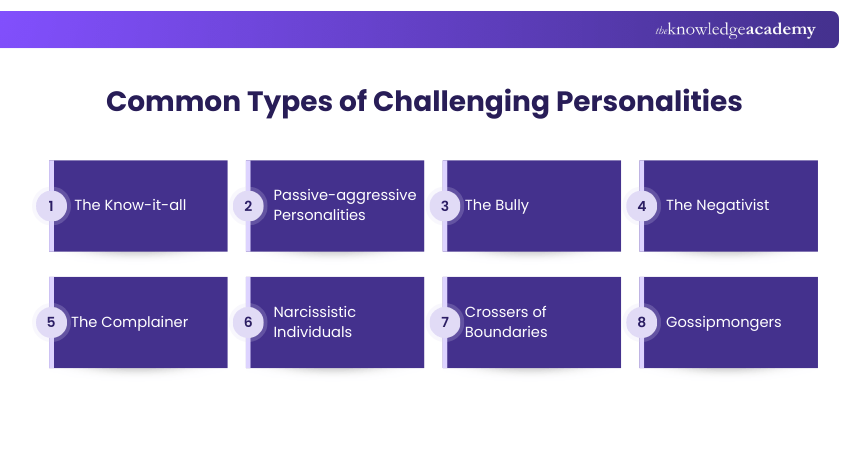
1) The Know-it-all
The Know-it-all is one of the common difficult personalities in the workplace. This person believes they are always right and tends to dominate conversations. They may talk over colleagues, dismiss ideas, and rarely listen to feedback. Their condescending tone and constant need to prove their knowledge can make collaboration frustrating for team members.
This behaviour comes from a need for control or validation. Some know-it-all's act this way because they feel insecure about their abilities, using confidence as a defence mechanism. Others may genuinely have strong experience or expertise but lack humility, believing their knowledge makes them more important than others in the team.
2) Passive-aggressive Personalities
Passive-aggressive personalities can be challenging to identify in the workplace. However, their impact on morale and team goals can be significant and long-lasting. These individuals may make commitments but fail to follow through or, in extreme cases, sabotage other’s work to elevate themselves.
Unlike narcissists, passive-aggressive individuals may show some empathy and often perform better in roles with clear expectations. When addressing such behaviour, avoid responding in kind. Instead, take a direct approach to highlight their actions and explain how they affect others, helping to set clear boundaries.
3) The Bully
Workplace bullies use intimidation, manipulation, or belittling behaviour to control others. Their actions can turn a positive work environment into a stressful one, affecting confidence, morale, and productivity. Bullies often dominate conversations, criticise colleagues unfairly, or create fear to assert authority and maintain control.
This behaviour is linked to insecurity or learned habits. Some bullies feel powerless in other areas of life and use work as a place to feel powerful. Others may simply copy behaviour they experienced from previous managers, believing that dominance and aggression are the only ways to gain respect or get results.
4) The Negativist
The Negativist is someone who always focuses on the downside of situations. They rarely support new ideas and highlight potential problems before solutions can be explored. This constant pessimism can discourage innovation and reduce team morale.
Their negative outlook comes from past disappointments or a lack of trust. Previous failures or difficult experiences may make them expect the worst in every situation. As a result, negativity becomes a defence mechanism that helps them avoid disappointment or perceived failure.
5) The Complainer
The Complainer constantly points out problems but rarely offers solutions. They focus on what is wrong rather than how things can improve. Their frequent complaints can create frustration among colleagues and make progress difficult.
However, complainers are not always negative people. In many cases, their behaviour stems from low confidence or fear of responsibility. They may hesitate to suggest solutions because they worry about being accountable for fixing the problem.
Develop emotional intelligence for stronger workplace relationships by joining Emotional Intelligence Training now!
6) Narcissistic Individuals
Narcissistic personalities are characterised by a strong need for attention and inflated egos. Though they may initially appear charming, they can quickly become arrogant and detached. Narcissists are often highly sensitive to criticism, yet they show little to no empathy for others' feelings.
While they may thrive in management roles due to their desire for status, managing a narcissist can be challenging. It's crucial not to belittle them or make them feel inferior in front of others. Instead, when appropriate, openly praise them to help maintain a positive working relationship.
7) Crossers of Boundaries
Crossers of boundaries are individuals who frequently overstep personal or professional limits, often disregarding others' comfort zones. They may intrude on personal space, ignore established rules, or impose their opinions and demands without considering the impact on others. This behaviour can create tension and discomfort in the workplace, leading to strained relationships and reduced productivity.
Managing boundary-crossers requires clear communication and firm boundaries. It's essential to address their behaviour directly and establish clear expectations to prevent further overstepping. By reinforcing these limits consistently, you can help maintain a respectful and cooperative work environment.
8) Gossipmongers
Office gossip is a common experience, and some gossip can be harmless and even motivational. However, it becomes problematic when individuals consistently spread negative stories about colleagues, clients, or the business. This toxic behaviour can harm the work environment and needs careful management.
When addressing office gossip, it's important not to try to change the individual's behaviour too abruptly. Instead, subtly highlight how their gossip might negatively impact others or the business. If they persist, it's best to politely excuse yourself and focus on your work.
9) Guilt Tripper
Think of a time when you shifted blame to avoid consequences—Guilt Trippers do this habitually. They rarely accept fault and often blame others, sometimes even lying to escape accountability. Guilt Trippers typically struggle in collaborative environments.
When dealing with them, stand firm and refuse to be their scapegoat. If they succeed in blaming you once, they’ll likely target you again. Establish boundaries to protect yourself from their toxic behaviour.
Learn to handle workplace difficult conversations with confidence and clarity with Managing Difficult Conversations Training today!
10) Victim Mentality
Victim personalities are often characterised by a tendency to see themselves as powerless or unfairly treated, constantly feeling wronged by circumstances or others. They may frequently complain, deflect responsibility, and seek sympathy rather than solutions. This can create a negative atmosphere, as their persistent negativity and self-pity can drain team morale and hinder progress.
Managing a victim's personality requires patience and a balanced approach. It's important to acknowledge their feelings without enabling their behaviour. Encourage them to focus on solutions rather than problems. Help them take responsibility for their actions, fostering a more proactive and positive mindset.
11) Those Addicted to Anger
Unfortunately, many have encountered the "anger addict" in the office, often recognised as the "office bully." This toxic personality thrives on belittling colleagues, undermining others in meetings, and displaying aggressive behaviour. It's important to observe how the anger addict expresses their anger, which may include subtle, undermining tactics or private attacks that aren't immediately visible.
Managing this personality requires careful handling. Avoid engaging in aggressive behaviour, as it can escalate quickly. They should be told clearly when they cross the line and, if necessary, offered different Types of Counselling to address their issues if their behaviour doesn't improve.
12) The Escapist
The Escapist is a personality type characterised by avoiding responsibilities and difficult situations. Instead of confronting challenges head-on, they tend to retreat, delay tasks, or shift blame onto others. This avoidance can lead to missed deadlines, unresolved issues, and added stress for their colleagues.
Managing an Escapist requires clear communication, setting firm expectations, and providing support to help them face responsibilities rather than evade them. Encouraging accountability and offering constructive feedback can help guide an Escapist towards more productive behaviour.
Master effective communication with our Active Listening Training – Sign up today!
Strategies for Managing Difficult Personalities
Managing challenging behaviours in the workplace requires the right awareness and approach. After recognising the Types of Difficult People at Work, the following strategies can help you understand how to deal with difficult people more effectively:
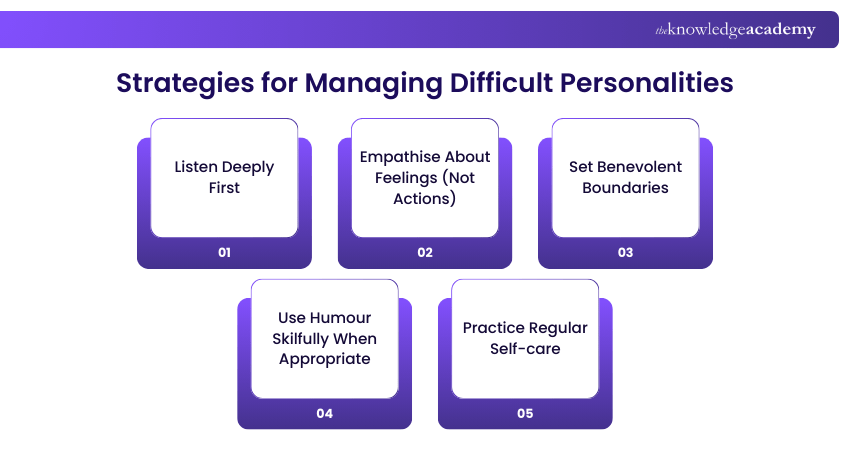
1) Listen Deeply First
Allow people to express their thoughts fully before responding. Ask thoughtful questions to understand their perspective and the reasons behind their behaviour. Once you understand the context, guide the conversation towards a constructive solution.
2) Empathise About Feelings (Not Actions)
Show understanding of a person’s emotions without approving harmful behaviour. Acknowledging someone’s feelings can help reduce tension and create space for more open and constructive dialogue.
3) Set Benevolent Boundaries
Address inappropriate language or behaviour calmly and directly. Focus on the impact of the behaviour rather than attacking the individual to maintain professionalism and mutual respect. Consistently reinforcing these boundaries helps prevent repeated negative behaviour.
4) Use Humour Skilfully When Appropriate
In some situations, light humour can reduce tension and improve the tone of a conversation. However, it should be used cautiously and only when appropriate, depending on the personalities and relationships involved.
5) Practice Regular Self-care
Difficult personalities can be mentally draining. Therefore, it is important to protect your well-being. Taking time to relax, maintain healthy relationships, and engage in activities outside work helps maintain balance and resilience.
Conclusion
Understanding the Types of Difficult People at Work is important for fostering a productive and harmonious workplace. Recognising and addressing challenging behaviours with effective strategies can reduce conflict, improve team dynamics, and contribute to a more positive work environment in your company. Developing these skills not only benefits the workplace but also your personality Development.
Create an empowering mindset for personal and professional growth with Building an Empowering Mindset Training now!
Frequently Asked Questions
What are the Long-term Effects of Working with Difficult Personalities?

Working with difficult personalities for the long-term can increase stress, reduce productivity, and affect confidence. Constant tension may lead to anxiety, poor concentration, and low motivation. Without healthy boundaries, these challenges can impact both mental well-being and overall job satisfaction.
What is the Best Way to Handle a Chronic Complainer at Work?
The best way to handle a chronic complainer is to listen carefully, acknowledge their concerns, and guide the conversation toward solutions. Encouraging them to suggest improvements and setting clear boundaries helps reduce constant negativity while maintaining a constructive workplace environment.
What are the Other Resources and Offers Provided by The Knowledge Academy?
The Knowledge Academy takes global learning to new heights, offering over 3,000+ online courses across 490+ locations in 190+ countries. This expansive reach ensures accessibility and convenience for learners worldwide.
Alongside our diverse Online Course Catalogue, encompassing 17 major categories, we go the extra mile by providing a plethora of free educational Online Resources like Blogs, eBooks, Interview Questions and Videos. Tailoring learning experiences further, professionals can unlock greater value through a wide range of special discounts, seasonal deals, and Exclusive Offers.
What is Knowledge Pass, and How Does it Work?
The Knowledge Academy’s Knowledge Pass, a prepaid voucher, adds another layer of flexibility, allowing course bookings over a 12-month period. Join us on a journey where education knows no bounds.
What are Related Courses and Blogs Provided by The Knowledge Academy?
The Knowledge Academy offers various Personal Development Courses, including Dealing With Difficult People Training, Managing Difficult Conversation Training, and Stress Management Course. These courses cater to different skill levels, providing comprehensive insights into Behaviour Management.
Our Business Skills Blogs cover a range of topics related to Personal Development, offering valuable resources, best practices, and industry insights. Whether you are a beginner or looking to advance your Personal Development Skills, The Knowledge Academy's diverse courses and informative blogs have you covered.
Upcoming Business Skills Resources Batches & Dates
Date
 Dealing with Difficult People
Dealing with Difficult People
Fri 5th Jun 2026
Dealing with Difficult People
Fri 21st Aug 2026
Dealing with Difficult People
Fri 23rd Oct 2026

 If you wish to make any changes to your course, please


