


 Top Rated Course

We may not have the course you’re looking for. If you enquire or give us a call on +32 35001305 and speak to our training experts, we may still be able to help with your training requirements.
Fire Safety Precautions: A Complete Guide
Michael Jones 05 March 2026Ensure Fire Safety Precautions by installing smoke alarms, placing the right fire-fighting equipment, and keeping all fire exits clear for quick evacuation. Regular training, hazard checks, and a solid evacuation plan can save lives, reduce damage, and keep your space secure and prepared at all times. Read on to learn more.

Training Outcomes Within Your Budget!
We ensure quality, budget-alignment, and timely delivery by our expert instructors.
Table of Contents
Imagine you're at work, and the fire alarm suddenly goes off. Panic can spread quickly, but what if everyone knew exactly what to do? That’s the power of having proper Fire Safety Precautions in place. From spotting hazards early to using the right equipment, knowing how to stay safe during a fire can protect lives and property.
Whether you're managing a business or just want to keep your home secure, understanding Fire Safety Precautions is essential. These steps help prevent fires and ensure people know how to respond calmly and effectively. In this blog, you'll learn the basics of prevention, planning, and emergency response. Let’s explore how simple measures can make a big difference when it matters most.
Table of Contents
1) Essential Fire Safety Precautions and Procedures
a) Identifying Fire Hazards
b) Fire Prevention Measures
c) Fire Safety Equipment
d) Emergency Evacuation Plans
e) Fire Alarms and Detectors
f) Escape Routes
g) Evacuation of Disabled People
h) Fire Extinguishers
2) Implementing Fire Safety Precautions and Regulations
3) Conclusion
Essential Fire Safety Precautions and Procedures
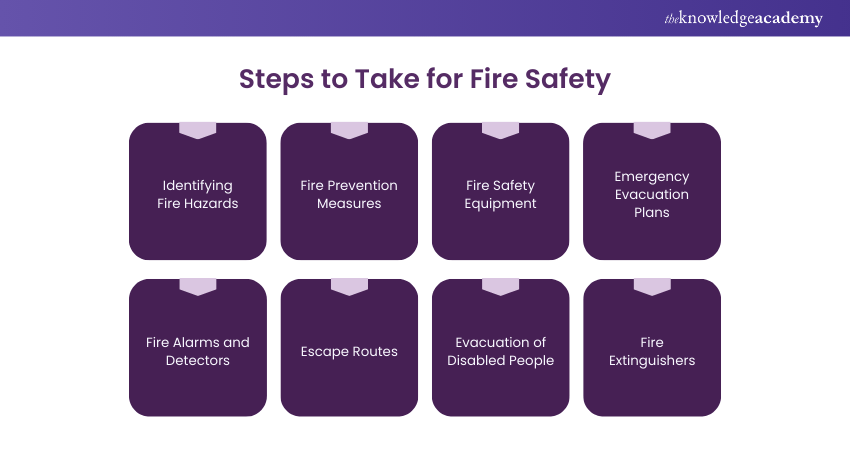
Understanding Fire Safety Precautions is the foundation of creating a secure and protected environment against the devastating effects of fire incidents. It involves a comprehensive awareness of potential fire hazards, implementing preventive measures, properly using Fire Safety Equipment, and formulating efficient emergency response plans. The following are some important Fire Safety Precautions:
Identifying Fire Hazards
The first step in Fire Safety is recognising potential fire hazards. These hazards can vary depending on the setting but may include faulty electrical wiring, improper storage of flammable materials, heating appliances, smoking, and kitchen equipment. Regular inspections and risk assessments are crucial to identify and address these hazards promptly, and should be incorporated into an effective Emergency Response Plan to ensure a swift and organised reaction in case of an emergency.

Fire Prevention Measures
Preventing fires is the most effective way to ensure safety. Implementing fire prevention measures involves:
a) Educating individuals about safe practices, such as proper handling of electrical appliances
b) Avoiding overloading power outlets
c) Maintaining smoke detectors in working condition
Adequate housekeeping and proper storage of flammable substances are also essential in fire prevention.
Fire Safety Equipment
Having the right Fire Safety equipment is essential in case of an emergency. This includes smoke detectors, fire extinguishers, fire blankets, and fire hoses. It is vital to ensure that the equipment is in good working condition and easily accessible and that occupants are trained in proper usage.
Emergency Evacuation Plans
Establishing well-defined evacuation plans is critical to ensure a swift and organised response during a fire. These plans should include clearly marked escape routes, emergency exits, and designated assembly points. Additionally, a Personal Emergency Evacuation Plan can be tailored to individual needs, ensuring that everyone can evacuate safely, especially those with specific requirements.
Fire Alarms and Detectors
Ensuring prompt detection and warning of fires is crucial for building safety. Implement a fire alarm system that can be activated easily from any location within the premises, emitting a clear and audible signal to facilitate safe evacuation.
Regular testing, preferably weekly, is essential to maintain the effectiveness of the fire alarm system. Provide clear instructions or notices to guide individuals on operating the alarm and responding appropriately in case of an emergency.
Escape Routes
Escape routes must be clearly marked and easily identifiable to facilitate swift evacuation. Display instructions for safe egress prominently along these routes and conduct regular training sessions on emergency evacuation procedures for employees.
Ensure an adequate number of exits are positioned strategically throughout the building to ensure accessibility and minimise congestion during evacuations. Conduct daily checks to ensure escape routes remain unobstructed and well-illuminated for optimal safety.
Evacuation of Disabled People
Special considerations must be made for the safe evacuation of individuals with disabilities. A comprehensive fire risk assessment identifies and assesses vulnerable groups or individuals' needs.
So, develop Personalised Emergency Evacuation Plans (PEEPs) tailored to the specific needs of individuals requiring assistance. Provide training for employees on implementing PEEPs effectively during emergencies to ensure the safe evacuation of all occupants, including those with disabilities.
Fire Extinguishers
Understanding the principles of fire extinguishment is vital for effective fire management. Different types of fire extinguishers target specific elements of a fire—oxygen, fuel, or heat—to suppress flames. Assess the fire risks present in the premises and select appropriate extinguishers, accordingly, ensuring they are strategically located and easily accessible.
Provide visible signage to indicate the location of fire extinguishers and conduct regular training for individuals likely to use them. Ensure annual fire extinguishers are serviced to maintain operational readiness and effectiveness in combating fires.
Take the first step towards safeguarding your environment with our Fire Extinguisher Training – Click here to join now!
Implementing Fire Safety Precautions and Regulations
Instilling a Fire Safety culture is essential for maintaining a safe environment. This involves educating individuals about the importance of Fire Safety, encouraging responsible behaviour, and fostering a sense of shared responsibility for fire prevention.

Conducting regular Fire Safety training for occupants and employees is crucial. Training should include Fire Safety procedures, the proper use of Fire Safety equipment, and evacuation drills. Raising awareness through seminars, workshops, and informative materials can reinforce Fire Safety practices.
Building owners and managers should collaborate with local fire authorities to ensure compliance with Fire Safety regulations. Fire departments can provide valuable guidance, conduct safety inspections, and offer recommendations for improvement.
Conclusion
Fire Safety Precautions and regulations are essential for creating a secure environment. By identifying hazards, implementing preventive measures, and promoting compliance, we can greatly reduce fire risks. Regular training and fostering a Fire Safety culture ensure everyone is prepared to respond effectively and protect lives from the dangers of fire incidents.
Empower yourself with vital skills to protect lives and property – sign up for our Fire Risk Assessment Training today!
Frequently Asked Questions
What are the Five Steps of Fire Safety?

The five steps are: identify fire hazards, identify people at risk, evaluate and reduce risks, record findings and prepare a plan, and review regularly. These steps help keep buildings and people safe. Following them makes it easier to stop fires before they start.
How can we Prevent Fire from Spreading?
Preventing fire spread involves swift action. Use fire-resistant materials, maintain clear escape routes, and install fire extinguishers. Regularly inspect and maintain electrical systems, educate occupants on safe practices, and conduct fire drills. Quick response and effective containment significantly mitigate the risk of fire escalation.
What are the other resources and offers provided by The Knowledge Academy?
The Knowledge Academy takes global learning to new heights, offering over 3,000+ online courses across 490+ locations in 190+ countries. This expansive reach ensures accessibility and convenience for learners worldwide.
Alongside our diverse Online Course Catalogue, encompassing 17 major categories, we go the extra mile by providing a plethora of free educational Online Resources like Blogs, eBooks, Interview Questions and Videos. Tailoring learning experiences further, professionals can unlock greater value through a wide range of special discounts, seasonal deals, and Exclusive Offers.
What is Knowledge Pass, and how does it work?
The Knowledge Academy’s Knowledge Pass, a prepaid voucher, adds another layer of flexibility, allowing course bookings over a 12-month period. Join us on a journey where education knows no bounds.
What are related courses and blogs provided by The Knowledge Academy?
The Knowledge Academy offers various Fire Safety Training, including Fire Safety Training, Fire Warden Training, Fire Extinguisher Training and Fire Risk Assessment Training. These courses cater to different skill levels, providing comprehensive insights into the Fire Safety Systems.
Our Health and Safety Blogs cover a range of topics related to Fire Safety, offering valuable resources, best practices, and industry insights. Whether you are a beginner or looking to advance your Health and Safety skills, The Knowledge Academy's diverse courses and informative blogs have you covered.

Michael Jones


Health and Safety Consultant and Compliance Trainer
Michael Jones is a seasoned health and safety expert with more than 15 years of experience in workplace safety, risk management, and compliance training. He has worked across construction, manufacturing, and corporate sectors, helping organisations meet legal requirements and create safer working environments. Michael’s training and writing are known for being practical, clear, and aligned with UK regulations.

Upcoming Health & Safety Resources Batches & Dates
Date
 Fire Safety Training
Fire Safety Training
Fri 20th Mar 2026
Fire Safety Training
Fri 1st May 2026
Fire Safety Training
Thu 7th May 2026
Fire Safety Training
Thu 23rd Jul 2026
Fire Safety Training
Fri 24th Jul 2026
Fire Safety Training
Thu 1st Oct 2026
Fire Safety Training
Fri 23rd Oct 2026

 If you wish to make any changes to your course, please


