


 Top Rated Course

We may not have the course you’re looking for. If you enquire or give us a call on +1 7204454674 and speak to our training experts, we may still be able to help with your training requirements.
IT Communication Strategy: Key Elements for Success
Charlotte Wilson 10 February 2026IT Communication Strategy is a plan outlining how an organisation shares IT-related information to inform stakeholders and support various business goals. It's crucial for bridging the gap between technical initiatives and overall goals. This communication ensures that technological advancements align with the broader objectives.

Training Outcomes Within Your Budget!
We ensure quality, budget-alignment, and timely delivery by our expert instructors.
Table of Contents
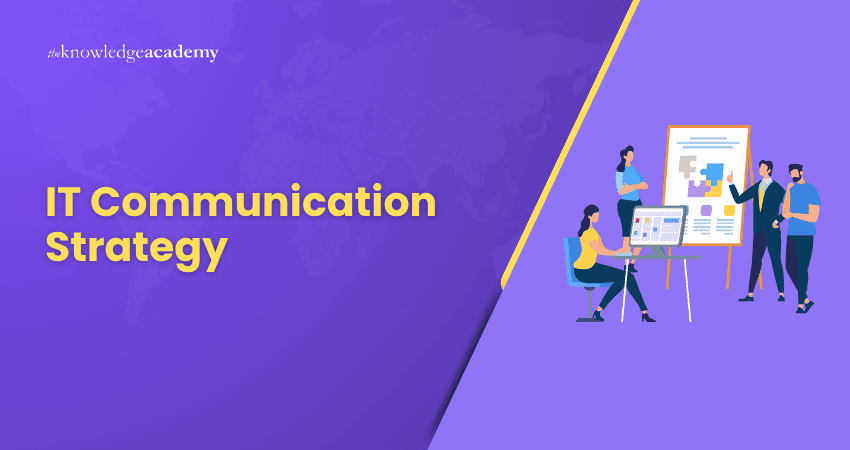
A well-crafted IT Communication Strategy is the heartbeat of successful tech operations. Whether you're rolling out new systems, managing incidents or aligning cross-functional teams, timely and clear communication can make or break your outcomes. It’s about building trust, clarity, and connection across every level of an organisation.
This blog explores IT Communication Strategy in detail. Here you will learn the key elements that transform any IT communication plan from reactive to strategic, helping you reduce friction and drive results across your organisation. So read on and turn tech talk into business impact!
Table of Contents
1) What is an IT Communication Strategy?
2) Why do you Need an IT Strategy?
3) Creating an Effective IT Communications Plan
4) IT Communications Strategy Tips
5) What Should Your IT Communications Plan Look Like?
6) When Should You Develop a Plan for Communication?
7) What is an Example of a Communications Strategy?
8) Conclusion
What is an IT Communication Strategy?
An IT Communication Strategy is a structured approach to conveying information within an organisation, specifically focusing on technology-related topics. It outlines how to share updates, changes, and developments in IT while ensuring Secure Internal Communication.
It ensures everyone in the organisation is informed, understands the impacts, and can act accordingly. This strategy aims to improve communication efficiency, reduce misunderstandings, and enhance the overall IT operations within a company.
Why do You Need an IT Strategy?
Here's why effective IT Communication Strategy is important:
a) A well-defined IT strategy empowers Managers to communicate essential information that supports organisational IT objectives, such as:
a) 100% system uptime
b) Reduced helpdesk calls
c) Zero data breaches
d) Full compliance with IT policies
e) Greater user adoption of new systems
b) Strong IT communication strategies minimise productivity and profitability risks caused by IT outages through proactive communication.
c) It improves helpdesk efficiency by reducing ticket volume and allowing teams to focus on critical issues.
d) A proper IT communication plan It strengthens Cyber Security awareness by promoting safe online behaviour among employees.
e) It drives digital transformation by encouraging staff engagement and smooth adoption of new technologies.
f) A well-outlined IT communication plan builds trust between IT and end users through clear communication, improved satisfaction and transparency.
g) Good IT communication strategies ensure timely updates, project clarity and alignment between IT initiatives and overall business goals.
Creating an Effective IT Communications Plan
Here are the steps to create a plan that keeps everyone informed and engaged with your IT initiatives.
1) Define Audiences
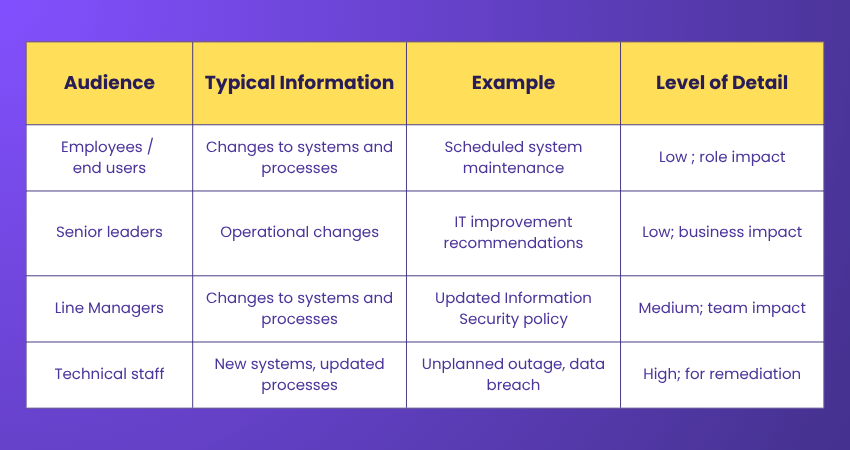
Start by identifying who you need to communicate with, because each audience has unique needs. Senior leadership may prefer concise updates on the business impact, while employees need only role-relevant details. Defining your audiences ensures that your messages are relevant and targeted.
2) Set Goals
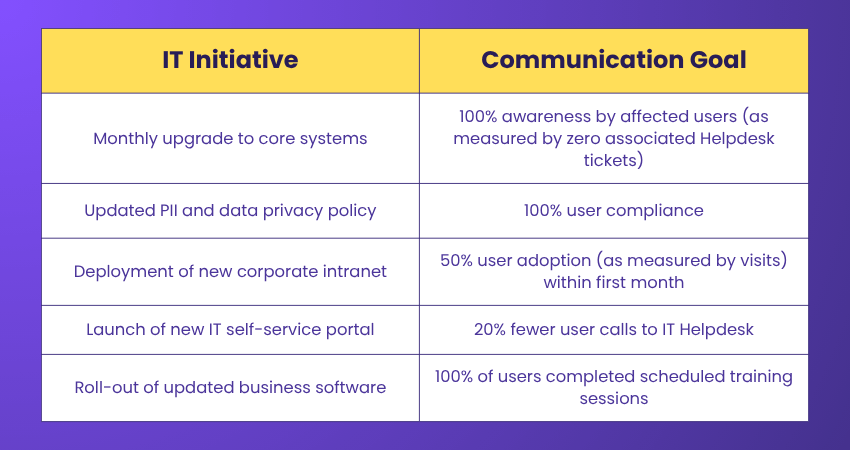
Determine the initiatives from your IT plan and define the communication goals for each. For example, a policy update may need complete compliance, whereas a new system launch requires strong user adoption. Align every goal with a clear action that you want your audience to take.
3) Select Channels
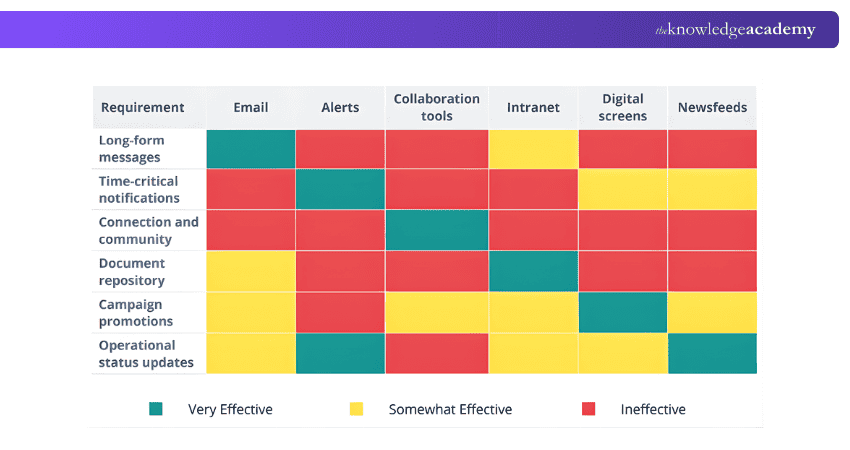
Once the audiences and goals are set, choose the communication channels that best deliver your message. Each has its strengths; some support dialogue while others offer quick reach. Combine the visibility tools like pop-ups with passive ones, such as digital signage, for balanced coverage and greater impact.
4) Create Messages
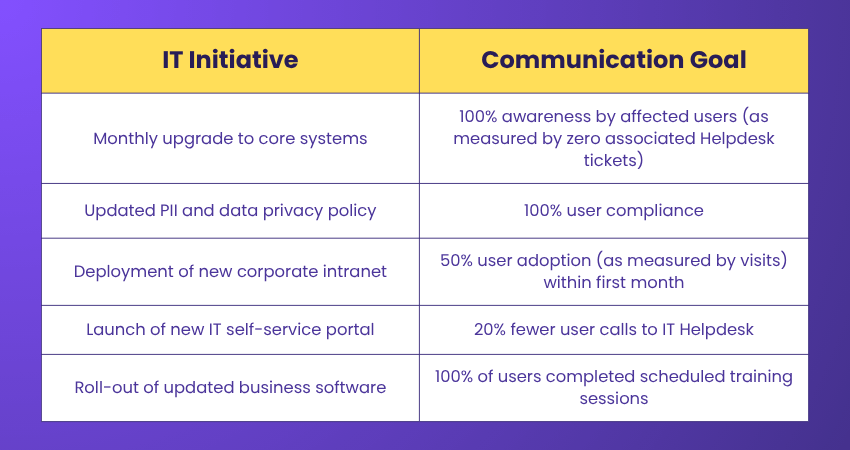
Craft messages tailored to your goals and the needs of the audience. Urgent messages must be short and direct, while critical project updates can include more detail and visuals. You must use pre-designed templates for recurring communications, like maintenance alerts, to save time during critical incidents.
5) Confirm Logistics
Define the operational details of your IT communication plan. Clarify who handles each task, which departments are involved, message timing and contingency plans for unexpected issues. This ensures accountability, smooth coordination and timely communication during both planned and unplanned events.
6) Measure Success
Monitor communication performance using metrics like delivery success, open and clickthrough rates and readership duration. Gather employee feedback to assess clarity and relevance. Compare results over time to identify trends, measure improvements and refine your communication strategy for better engagement.
Learn the different ways to overcome communication barriers with our Executive Communication Training – Join today!
IT Communications Strategy Tips
Here are some expert tips to help you communicate clearly, build trust, and keep your audience engaged.
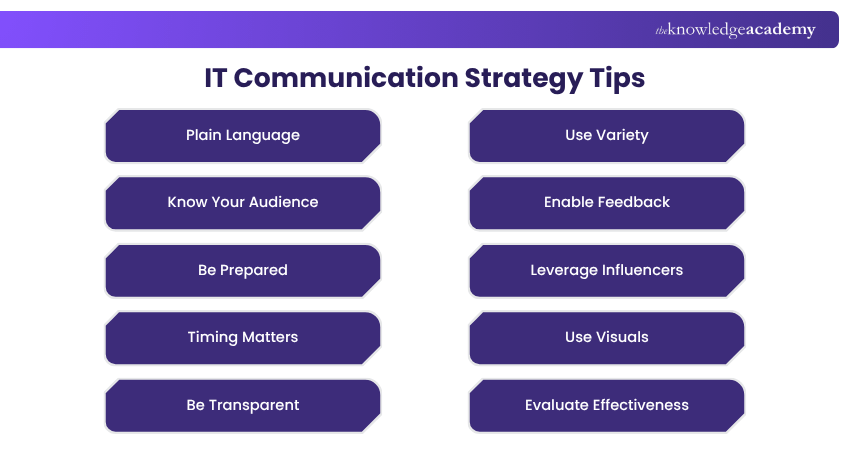
a) Plain Language: Use simple, clear language to ensure everyone understands your messages. Avoid technical jargon unless you're communicating with IT staff. Plain language helps in reaching a broader audience and reduces the risk of misunderstandings.
b) Know Your Audience: Understand the needs of your audience. Tailor your messages to be relevant and engaging for each group. Knowing your audience helps in creating more effective and impactful communications.
c) Be Prepared: Always be ready to communicate promptly, especially in emergencies. Having a pre-defined communication plan can save time and ensure that important information is shared. Preparation reduces stress and confusion during critical times.
d) Timing Matters: Choose the time to send your messages. Consider the schedules and routines of your audience to maximise engagement. Timing can impact the effectiveness of your communications.
e) Be Transparent: Be honest and open in your communications. Transparency builds trust and credibility. Even when delivering bad news, straightforward communication is appreciated and respected.
f) Use Variety: Utilise a variety of communication methods to reach your audience. Mix emails, meetings, visual aids, and interactive platforms to keep your Visual Communications fresh and engaging. Variety ensures that your message reaches everyone effectively.
g) Enable Feedback: Encourage feedback from your audience. Providing channels for feedback helps you understand the effectiveness of your communications and areas for improvement. Feedback loops make your strategy more adaptive and responsive.
h) Leverage Influencers: Identify key influencers within your organisation who can help spread your messages. These individuals can amplify your communications and ensure they reach a wider audience. Influencers can be Managers, team leaders, or respected colleagues.
i) Use Visuals: Incorporate visuals like infographics, charts, and videos to make your messages more engaging and easier to understand. Visual aids can simplify complex information and enhance retention. They add interest and clarity to your communications.
j) Evaluate Effectiveness: Regularly assess the impact of your communications. Use metrics and feedback to evaluate what’s working and what’s not. Continuous evaluation helps refine your strategy and make necessary adjustments.
Understand marketing communication activities with our B2B Communications Training – Join today!
What Should Your IT Communications Plan Look Like?
An effective IT communication strategy should include the following:
a) Clear goals such as improving incident handling, supporting new system rollouts or strengthening stakeholder connections.
b) Communication channels like emails, intranet updates, Teams, Slack, dashboards, or live briefings.
c) Outlined regular update schedule, including weekly summaries or real-time alerts during incidents.
d) Assigned clear responsibilities and ensured accountability for each communication type.
e) Feedback tools like surveys and Q&A sessions to support open dialogue and refinement.
f) A crisis communication process for managing emergencies such as system failures or data breaches, complete with escalation steps and prepared templates.
When Should You Develop a Plan for Communication?
An IT communication plan should be developed at the same time an organisation starts defining its objectives and activities. Rather than a single, isolated effort, communication is an ongoing process that will evolve with the organisation.
Throughout every stage of organisational growth, communication remains essential. It helps us build awareness of new initiatives, renew interest in existing programmes and attract potential funding and partnerships.
What is an Example of a Communications Strategy?
Let’s consider the example of a retirement planning workshop. Workshops need a clear and structured communications plan. The following outline shows how such a plan can be developed.
1) Identify Audience and Objectives
Begin by defining the target audience and the purpose of the workshop. Consider factors such as age group, level of financial awareness, and the intended outcomes. These outcomes may include stronger engagement, better understanding of retirement planning, or increased participation in follow-up services.
2) Listen to Clients and Attendees
Engage with the clients and potential attendees to identify their expectations. Invite a qualified guest speaker with expertise in retirement planning and brief them on audience demographics and concerns.
3) Create Messaging for the Audience
Develop clear and relevant messages that communicate the workshop’s benefits. Focus on practical outcomes such as completing retirement planning worksheets, learning saving techniques and exploring investment options that support long-term financial security.
4) Plan Communication Activities
Outline the communication timeline, budget and responsibilities. Decide who manages each platform or channel. This will ensure consistent messaging across all communication methods leading up to the event.
5) Evaluate the Event
Collect feedback through post-workshop surveys, conducted virtually or in person. Analyse whether the workshop achieved its goals and met the expectations of both clients and attendees.
Conclusion
An effective IT Communication Strategy is essential for any organisation to ensure clear, efficient, and impactful communication about technology-related matters. By defining your audience, setting clear goals, choosing the right channels, creating clear messages and planning Logistics, you can develop a robust communication plan. With these tips, you can ensure your IT communications are effective, engaging, and beneficial for your entire organisation.
Say it better and connect deeper with our exciting range of Communication Skills Courses - Register now!
Frequently Asked Questions
What are the Three Elements of a Communications Strategy?

The three main components of a communications strategy are the audience, the message, and the channel. Understanding who you're communicating with, what you want to say, and how you'll deliver the message are crucial for effective communication.
What are the Five Ps of Strategic Communication?
The five Ps of strategic communication are Purpose, People, Plan, Process, and Performance. These principles help ensure your communication is clear, targeted, well-organised, efficiently executed, and effectively evaluated.
What are the Other Resources and Offers Provided by The Knowledge Academy?
The Knowledge Academy takes global learning to new heights, offering over 3,000+ online courses across 490+ locations in 190+ countries. This expansive reach ensures accessibility and convenience for learners worldwide.
Alongside our diverse Online Course Catalogue, encompassing 19 major categories, we go the extra mile by providing a plethora of free educational Online Resources like Blogs, eBooks, Interview Questions and Videos. Tailoring learning experiences further, professionals can unlock greater value through a wide range of special discounts, seasonal deals, and Exclusive Offers.
What is The Knowledge Pass, and How Does it Work?
The Knowledge Academy’s Knowledge Pass, a prepaid voucher, adds another layer of flexibility, allowing course bookings over a 12-month period. Join us on a journey where education knows no bounds.
What are Related Courses and Blogs Provided by The Knowledge Academy?
The Knowledge Academy offers various Communication Skills Courses, including the Business Communication Course, B2B Communications Training, and Effective Communication Skills Course. These courses cater to different skill levels, providing comprehensive insights into Secure Internal Communication.
Our Business Skills Blogs cover a range of topics related to Communication, offering valuable resources, best practices, and industry insights. Whether you are a beginner or looking to advance your Communication skills, The Knowledge Academy's diverse courses and informative blogs have got you covered.

Charlotte Wilson


Soft Skills and Business Training Manager
Charlotte Wilson is an expert in soft skills development, with over 14 years of experience helping individuals and teams improve communication, productivity and emotional intelligence in the workplace. Her training content is focused on enhancing interpersonal effectiveness and fostering positive, collaborative environments across all levels of an organisation.
View Detail
Upcoming Business Skills Resources Batches & Dates
Date
 Business Communication Course
Business Communication Course
Fri 24th Jul 2026
Business Communication Course
Fri 25th Sep 2026

 If you wish to make any changes to your course, please


