


 Top Rated Course

We may not have the course you’re looking for. If you enquire or give us a call on 800969236 and speak to our training experts, we may still be able to help with your training requirements.
Benefits of Portfolio Management: A Detailed Explanation
The Knowledge Academy 06 May 2026Portfolio Management ensures that resources are used efficiently and projects are chosen based on their importance to the overall strategy. This blog explores the Benefits of Portfolio Management, highlighting how it meets with project strategic goals and maximises value. It also covers the process of Portfolio Management.

Training Outcomes Within Your Budget!
We ensure quality, budget-alignment, and timely delivery by our expert instructors.
Table of Contents

Curious about how to effectively manage projects and resources in today’s fast-paced business world? This blog uncovers the Benefits of Portfolio Management. This isn’t just about making more money; it’s about making your money work smarter for you. With a well-managed portfolio, you can balance risks, align investments with your goals, and adapt to life’s twists and turns. It’s like having a financial GPS that keeps you on the best route towards your financial destination. So, let’s get started and discover how Portfolio Management can be the key to unlocking your investment potential!
Table of Contents
1) What is Portfolio Management?
2) What is Management of Portfolios (MoP) Certification?
3) Benefits of Management of Portfolios (MoP)
4) What is the Process of Portfolio Management?
5) Conclusion
What is Portfolio Management?
Portfolio Management is a strategic approach to managing an organisation's projects, programmes, and other work as a cohesive portfolio. It ensures that an organisation's initiatives are aligned with its overall strategy and objectives.
By managing projects collectively as a portfolio, organisations can better allocate resources, manage risks, and achieve their strategic goals. Portfolio Management provides a high-level overview, enabling decision-makers to prioritise projects and investments that deliver the most value.

What is Management of Portfolios (MoP) Certification?
The Management of Portfolios (MoP) Certification is a professional qualification designed to validate an individual's knowledge and Skills in Portfolio Management. This Certification is recognised globally and is aimed at helping organisations implement effective Portfolio Management practices. The MoP framework provides guidelines and best practices for selecting, prioritising, and managing projects and programmes to achieve strategic objectives.
Benefits of Management of Portfolios (MoP)
The Benefits of Portfolio Management include:
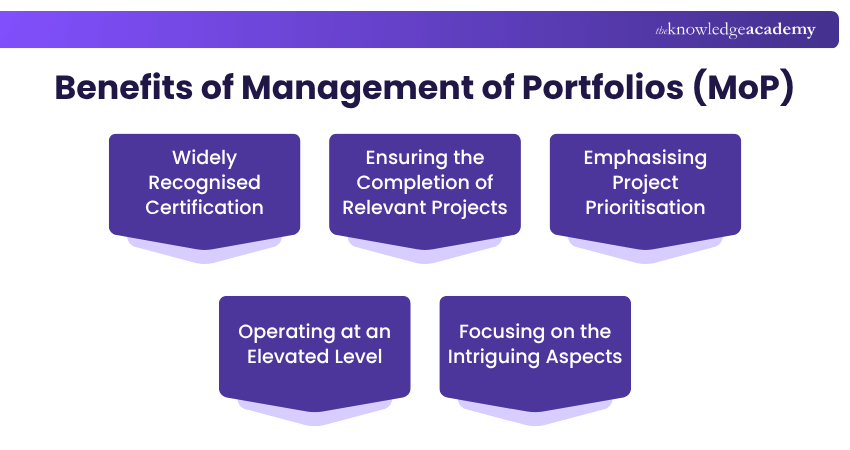
1) Widely Recognised Certification
The MoP Certification is recognised worldwide as a standard for excellence in Portfolio Management. Having this Certification on your CV demonstrates your commitment to professional development and your expertise in managing portfolios, particularly in the context of Portfolio Management vs Project Management. It enhances your credibility and can open doors to career advancement opportunities. Employers value the MoP Certification because it assures them that the certified individual possesses a deep understanding of Portfolio Management principles and practices.
2) Ensuring the Completion of Relevant Projects
One of the key benefits of MoP is its focus on ensuring that only relevant and strategically aligned projects are undertaken. This prevents resources from being wasted on initiatives that do not contribute to the organisation's objectives. By rigorously assessing each project against strategic goals, MoP helps ensure that all efforts and investments are directed towards the most impactful projects. This alignment maximises the return on investment and drives organisational success.
3) Emphasising Project Prioritisation
Becoming a Portfolio Manager involves understanding frameworks like MoP, which emphasises the importance of prioritising projects based on their strategic value and potential benefits. This prioritisation process requires evaluating projects against a set of criteria, such as strategic alignment, risk, resource availability, and expected benefits. By doing so, MoP helps organisations focus on the most critical projects that will deliver the greatest value. This prioritisation ensures that resources are allocated effectively and that high-priority projects receive the attention they need to succeed.
4) Operating at an Elevated Level
MoP enables organisations to operate at a higher strategic level by providing a structured approach to Portfolio Management. It promotes a holistic view of all projects and programmes, allowing for better coordination and integration. This elevated level of operation ensures that decisions are made with a clear understanding of their impact on the entire portfolio. It also facilitates more informed decision-making by providing a comprehensive overview of the portfolio's performance, risks, and opportunities.
5) Focusing on the Intriguing Aspects
MoP encourages a focus on the intriguing and high-impact aspects of Portfolio Management. It highlights the importance of innovation, strategic thinking, and continuous improvement. By fostering a culture of innovation and strategic focus, MoP helps organisations stay competitive and adapt to changing market conditions. It also promotes a forward-looking approach, ensuring that the portfolio is continually evolving to meet future challenges and opportunities.
Lead portfolios that shape business success and make high-impact strategic investment decisions with the Portfolio Management Professional PfMP® Certification now!
What is the Process of Portfolio Management?
The process of Portfolio Management involves several key steps:
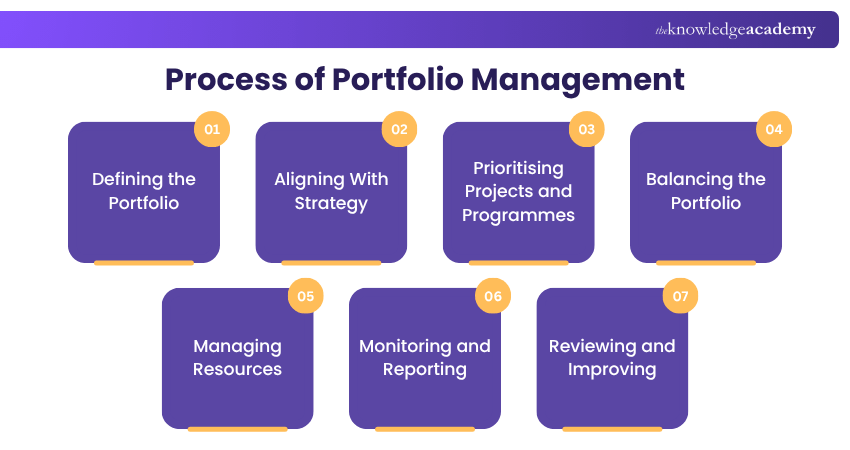
a) Defining the Portfolio: This step involves identifying and defining the scope of the portfolio, including the projects, programmes, and other work that will be included. It also involves establishing the governance structure and defining roles and responsibilities.
b) Aligning With Strategy: Ensuring that the portfolio aligns with the organisation's strategic objectives is crucial. This involves assessing each project and programme against strategic goals and ensuring that they contribute to the overall strategy.
c) Prioritising Projects and Programmes: Projects and programmes are evaluated and prioritised based on their strategic value, risk, resource requirements, and expected benefits. This prioritisation helps ensure that resources are allocated to the most critical initiatives.
d) Balancing the Portfolio: Balancing the portfolio involves ensuring that there is an optimal mix of projects and programmes. This includes balancing short-term and long-term projects, high-risk and low-risk initiatives, and different types of projects.
e) Managing Resources: Effective Project Resource Management is essential for successful Portfolio Management. This involves allocating resources to projects and programmes based on their priority and ensuring that resources are used efficiently.
f) Monitoring and Reporting: Continuous monitoring and reporting are essential to track the performance of the portfolio. This involves measuring progress, identifying risks and issues, and making adjustments as needed to ensure that the portfolio remains aligned with strategic objectives.
g) Reviewing and Improving: Regular reviews of the Portfolio Management process are important to identify areas for improvement. This involves assessing the effectiveness of the Portfolio Management practices and making changes to enhance performance.
Identify techniques for implementing and maintaining Portfolio Management with our Management of Portfolios (MoP®) Foundation Course – join today!
Conclusion
Portfolio Management is a strategic approach that enables organisations to manage their projects and programmes as a cohesive portfolio. Incorporating Business Portfolio Analysis into this approach helps assess the performance and strategic fit of various business units or investments, guiding better decision-making. Benefits of Portfolio Management include ensuring the completion of relevant projects, emphasising project prioritisation, operating at an elevated level, and focusing on intriguing aspects of Portfolio Management. Understanding the Benefits Management Job Description is also crucial in this context, as it helps align portfolio initiatives with the broader benefits strategy, ensuring that the value derived from each project is maximised. By following a structured process, organisations can effectively manage their portfolios, allocate resources efficiently, and achieve their strategic goals.
Build a strong base in Portfolio Management with the Management Of Portfolios (MoP®) Foundation Training – Sign up today!
Frequently Asked Questions
What are the Key Elements of Portfolio Management?

The key elements of Portfolio Management include defining the portfolio, aligning it with strategic goals, prioritising projects, balancing resources, and continuous monitoring and improvement.
What are the Four Ps of Portfolio Management?
The 4 Ps of Portfolio Management are People, Projects, Programs, and Portfolios. They represent the different components that need to be managed and coordinated to achieve strategic goals efficiently.
What are the Other Resources and Offers Provided by The Knowledge Academy?
The Knowledge Academy takes global learning to new heights, offering over 3,000+ online courses across 490+ locations in 190+ countries. This expansive reach ensures accessibility and convenience for learners worldwide.
Alongside our diverse Online Course Catalogue, encompassing 19 major categories, we go the extra mile by providing a plethora of free educational Online Resources like Blogs, eBooks, Interview Questions and Videos. Tailoring learning experiences further, professionals can unlock greater value through a wide range of special discounts, seasonal deals, and Exclusive Offers.
What is The Knowledge Pass, and How Does it Work?
The Knowledge Academy’s Knowledge Pass, a prepaid voucher, adds another layer of flexibility, allowing course bookings over a 12-month period. Join us on a journey where education knows no bounds.
What are the Related Courses and Blogs provided by The Knowledge Academy?
The Knowledge Academy offers various MoP® Management of Portfolios Courses, including the Management of Portfolios (MoP®) Foundation & Practitioner Course, Management of Portfolios (MoP®) Foundation Course and Management of Portfolios (MoP®) Practitioner Upgrade Course. These courses cater to different skill levels, providing comprehensive insights into PgMP vs PMP.
Our Project Management Blogs cover a range of topics related to Portfolio Management, offering valuable resources, best practices, and industry insights. Whether you are a beginner or looking to advance your Portfolio Management skills, The Knowledge Academy's diverse courses and informative blogs have got you covered.

The Knowledge Academy


Global Training Provider
The Knowledge Academy is a world-leading provider of professional training courses, offering globally recognised qualifications across a wide range of subjects. With expert trainers, up-to-date course material, and flexible learning options, we aim to empower professionals and organisations to achieve their goals through continuous learning.

Upcoming Project Management Resources Batches & Dates
Date
 Portfolio Management Professional PfMP® Certification
Portfolio Management Professional PfMP® Certification
Mon 17th Aug 2026
Portfolio Management Professional PfMP® Certification
Mon 14th Dec 2026

 If you wish to make any changes to your course, please


