





 To help and support our clients we are providing a limited number of 250 daily discount codes. Hurry, first come, first served!



Ethical Hacking Training FAQs
An Ethical Hacking Course teaches the skills and techniques used by hackers to penetrate networks and systems, but with the goal of finding and fixing security vulnerabilities to prevent malicious attacks.
Individuals with a strong interest in cybersecurity, problem-solving skills, and a background in IT, especially in network security, are well-suited for a career in ethical hacking.
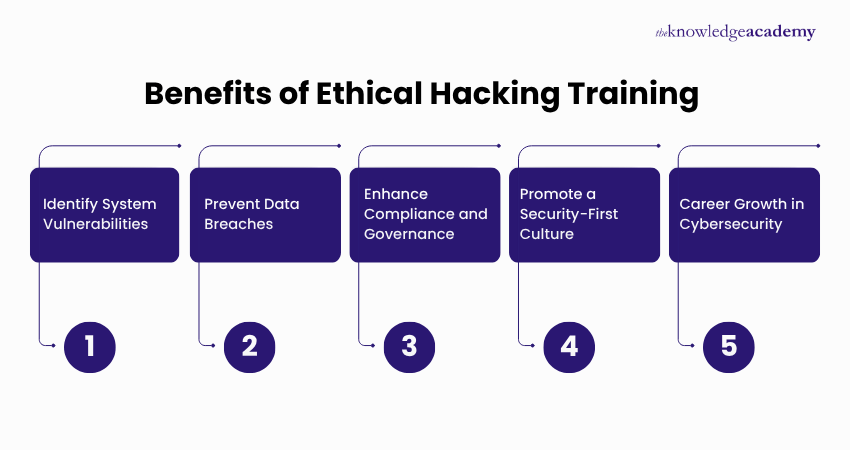
Yes, Ethical Hacking Training Courses can significantly enhance your career, particularly in the cybersecurity field, by equipping you with in-demand skills to protect organizations from cyber threats.
Ethical Hackers are responsible for identifying vulnerabilities in systems and networks, conducting penetration tests, and recommending solutions to improve security against potential cyber-attacks.
Yes, ethical hacking is legal as it is performed with permission from the organization owning the system, strictly to improve security and not for malicious intentions.
Becoming an Ethical Hacker typically requires a background in IT or cybersecurity, knowledge of networking and systems, and an understanding of hacking techniques and tools.
Hackers are generally categorized as White Hat (ethical hackers), Black Hat (malicious hackers), and Grey Hat (hackers who sometimes work ethically and sometimes not).
To become a certified Ethical Hacker, complete an Ethical Hacking Certification Course and pass the certification exam, such as the Certified Ethical Hacker (CEH) offered by EC-Council.
Yes, ethical hackers are in high demand as businesses and governments increasingly recognize the importance of proactive cybersecurity measures to protect against cyber threats.
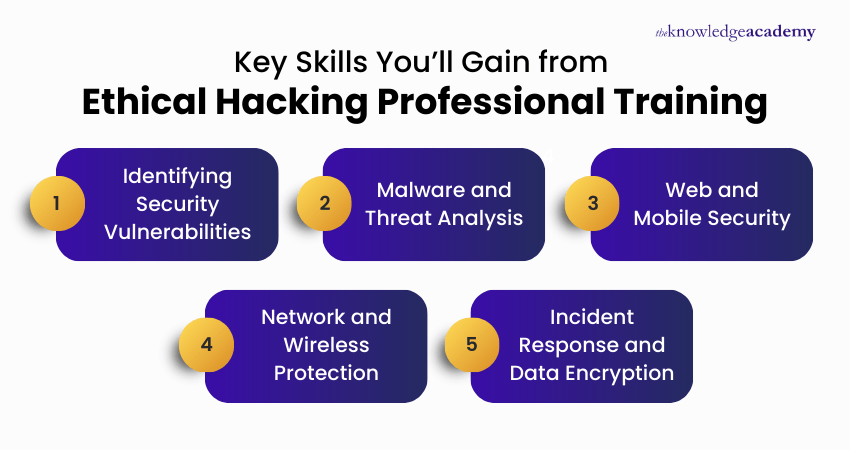
Ethical Hackers need skills in various areas including network and system security, programming, penetration testing, knowledge of hacking tools, and the ability to think like a hacker to anticipate and counteract potential security breaches.
Please see our Ethical Hacking Training available in India
The Knowledge Academy is one of the Leading global training provider for Ethical Hacking Training.
The training fees for Ethical Hacking Training in India starts from INR372295

Why we're the go to training provider for you

Best price in the industry
You won't find better value in the marketplace. If you do find a lower price, we will beat it.
Trusted & Approved
Recognised by leading certification bodies, we deliver training you can trust.

Many delivery methods
Flexible delivery methods are available depending on your learning style.

High quality resources
Resources are included for a comprehensive learning experience.





"Really good course and well organised. Trainer was great with a sense of humour - his experience allowed a free flowing course, structured to help you gain as much information & relevant experience whilst helping prepare you for the exam"
Joshua Davies, Thames Water






 If you wish to make any changes to your course, please


