


 Top Rated Course

We may not have the course you’re looking for. If you enquire or give us a call on +918037244591 and speak to our training experts, we may still be able to help with your training requirements.
What is a Standard Operating Procedure (SOP)?
The Knowledge Academy 03 February 2026A Standard Operating Procedure (SOP) is a set of step-by-step instructions used to perform routine tasks consistently, safely, and in line with standards. SOPs are essential in industries like manufacturing, healthcare, and laboratories, where precision and safety are critical, enabling quality control and regulatory adherence.

Training Outcomes Within Your Budget!
We ensure quality, budget-alignment, and timely delivery by our expert instructors.
Table of Contents
Imagine you’re running a busy restaurant during the lunch rush. It's a carnival of orders piling up, staff stressed, and customers waiting. What’s really causing the chaos? In many cases, it’s the absence of a clear Standard Operating Procedure (SOP). Think of SOP as your behind-the-scenes ally, keeping everything consistent, efficient, and under control.
Whether in a kitchen, a factory, or a corporate setting, SOPs reduce errors, ensure quality, and keep workflows smooth. This blog explores What is SOP by spotlighting its benefits, challenges, features and more. So read on and decode the blueprint of operational excellence!
Table of Contents
1) What is a Standard Operating Procedure (SOP)?
2) How to Write an Effective Standard Operating Procedure?
3) Formats of Standard Operating Procedures
4) Advantages of Using Standard Operating Procedures
5) Challenges of Using SOPs
6) What are the Five Components of SOP?
7) What is the Meaning of SOP Template?
8) Conclusion
What is a Standard Operating Procedure (SOP)?
An SOP is essentially a clear set of step-by-step instructions designed to improve efficiency, ensure consistent quality and promote uniformity. Uniformity means that everyone performing the same task follows the same process every time, reducing variation and errors.
By outlining the tasks in a logical order, SOPs help standardise processes and outputs, directly supporting quality control. They also play a crucial role in scaling operations. A well-designed SOP can drive efficiency and organisational success, while a poorly developed one can create confusion and slow progress.

How to Write an Effective Standard Operating Procedure?
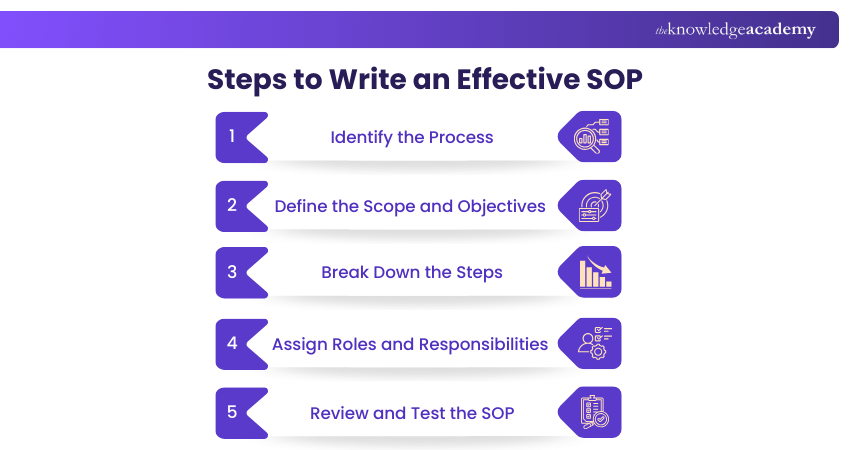
Creating a Standard Operating Procedure (SOP) becomes easier when the process is divided into clearly defined steps. A well-structured SOP supports strong Operation Management, improves performance standards, and strengthens regulatory compliance. Your organisation can create an effective SOP by following the procedure below:
1) Identify the Process
Begin by selecting the process that needs documentation. This could be a recurring task, a compliance-related activity, or a procedure where mistakes commonly occur. You can use this step to clarify why SOP is needed and what problem it solves.
1) Notice if mistakes happen because people skip steps
2) See if different people do the same task in different ways
3) Find tasks that new employees struggle to learn
4) Look for processes that need clear coordination
2) Define the Scope and Objectives
Clarify What is SOP, what it will cover and why it is being created. Define the goal, boundaries, and expected outcomes. This helps avoid unnecessary details and keeps the document targeted and relevant.
1) Say what part of the process the SOP will cover
2) Explain why you are creating this SOP
3) State what you want the SOP to help you achieve
4) Set limits so the SOP doesn’t include extra or unrelated steps
3) Break Down the Steps
List the procedure in simple, logical, and sequential steps. Use clear, action-oriented instructions and include required tools, safety notes, and important decision points. This allows employees to follow the procedure accurately.
1) Divide the task into small, easy steps
2) Write the steps in the order they should be done
3) Use simple words to explain exactly what to do
4) Add tools or materials needed for each step
4) Assign Roles and Responsibilities
Assigning responsibility ensures accountability and smooth workflow transitions, especially when multiple people are involved. Specify who is responsible for each part of the procedure. Clearly defined roles prevent confusion and ensure the process runs smoothly across teams.
1) Write who will do each step of every task
2) Say who needs to check or approve the work
3) Add backup people if someone is absent
4) Explain clearly when the task moves from one person to another
5) Review and Test the SOP
Before finalising, review the Standard Operating Procedure (SOP) with stakeholders and test it in real conditions. This helps identify unclear steps, missing details, or potential improvements. Adjust the document based on feedback to ensure effectiveness.
1) Ask someone new to try the steps and see if they can follow them
2) Collect feedback to fix unclear or missing parts
3) Update the SOP whenever the process changes
4) Test the whole process again after you make updates

Formats of Standard Operating Procedures
All SOPs are designed to clearly outline the steps required to complete a task that’s done regularly. There’s no single format or tool that works for everyone. The main goal is to help people understand what to do and how to do it well. Now, let’s explore some common formats used for writing Standard Operating Procedures.
1) User Documents
These are written documents that explain a process step-by-step to help employees understand and follow tasks correctly. They are useful for training and routine activities.
Examples include:
a) How to review code.
b) How to add a new vendor in the banking system.
c) Onboarding and exit steps for employees.
You can use Google Docs, Microsoft Word, SharePoint, Confluence and Microsoft Teams for this purpose.
Become the trusted compass of Corporate Compliance! Sign up for our comprehensive Chief Compliance Officer Training now!
2) Check Lists (Business Process Automation)
Checklists are useful when a task follows a fixed series of steps. They make it easy to follow procedures in the right order every time.Examples include:
Examples include:
a) Publishing a blog.
b) Pushing a software release.
c) Doing a final QA check.
You can use automation tools like Tallyfy for this purpose.
3) Infographics
Some tasks are easier to understand when shown visually. Infographics make complex steps simple and more engaging for users.
Examples include:
a) Showing tips for looking good on a webcam
b) Explaining a quick step-by-step “how-to” guide
c) Displaying safety reminders or best practices
You can use visual design tools like Canva to create these infographics. These tools make it easy to design clear visuals even if you have no graphic design experience.
4) Diagrams/Flowcharts
When processes follow a logical path or decision-making flow, diagrams or flowcharts work best. They help users see the steps clearly.
Examples include:
a) How to escalate a problem
b) How a lead moves from signup to sales
c) How does an employee onboarding process flow from hiring to training
You can use a tool like Whimsical for this purpose. It allows you to create clean, easy-to-understand diagrams that make complex workflows simple to follow.
5) Wiki/Collaboration
When multiple team members update SOPs regularly, a shared workspace or internal wiki is the best option. Everyone can edit, view, and stay in sync.
Examples include:
a) Daily meetings.
b) Weekly stand-up meetings.
c) One-on-one check-ins.
You can use tools like Microsoft OneNote, Microsoft Teams and Notion.so for this purpose.

Advantages of Using Standard Operating Procedures
Discovering What is SOP will offer many advantages to organisations by creating clear, consistent, and reliable ways of completing tasks. Here are its key benefits:
1) Consistency
SOPs ensure that employees across all departments follow the same defined processes. This helps create a unified workflow and maintain stable performance levels, leading to reliable and predictable outcomes.
2) Compliance Support
By clearly outlining compliance steps, SOPs help organisations meet regulatory, legal and industry requirements. This reduces the risk of non-compliance and makes sure that the processes align with recognised standards.
3) Minimal Operational Errors
Clear, standardised instructions guide employees on how to complete tasks correctly. This significantly reduces the chances of mistakes. This structured approach boosts quality assurance and minimises the risk of costly rework.
4) Improved Communication
SOPs support clear communication by documenting processes in one accessible place. When procedures change, updates can be shared quickly. This supports effective change management and reduces ambiguity and misunderstandings.
5) Safer Work Environment
Well-written SOPs that align with organisational values are more likely to be embraced by employees. They reinforce expected behaviours and promote a shared sense of professionalism and accountability, thus helping create a safer work environment.
6) Consistent Training
SOPs make onboarding and training more efficient by providing clear reference material. This saves time, ensures uniform learning and reduces operational risks that can be caused by knowledge gaps.
7) Audit Evidence
During internal and external audits, documented SOPs and policies provide reliable evidence. They showcase process control, accountability and a commitment to governance and continuous improvement.
Challenges of using SOPs
While there are numerous benefits to developing SOPs within your organisation, creating effective SOPs that are consistently followed also presents its fair share of challenges including the following:
1) Compartmentalised Development
a) Keeping SOPs up to Date: Maintaining current SOPs requires ongoing input and commitment from both employees and senior management. Without regular reviews, procedures can quickly become outdated and lose relevance.
b) Lack of Flexibility: SOPs can be restrictive in situations that require creative thinking or adaptable responses. Rigid procedures may limit innovation or slow decision-making when flexibility is needed.
c) Incomplete or Unclear Documentation: Determining the right level of detail for an SOP can be difficult. If important steps are missed or guidance is vague, the SOP becomes less effective and requires continuous refinement to remain useful.
d) Non-compliance: Employees may ignore SOPs if they are poorly written, difficult to follow, or not consistently enforced. This reduces their effectiveness and undermines standardisation efforts.
e) Training Challenges: Even well-designed SOPs can be challenging for new employees to interpret. Trainees may struggle to grasp complex procedures or resist learning unfamiliar processes.
Empower your medical practice with better compliance! Register for our Medical Compliance Training now!
What are the Five Components of SOP?
Here are the five main components of SOP:
1) Clear User Viewpoint: Write with the end-user in mind. Use simple, direct language and step-by-step instructions. Avoid jargon so anyone following the SOP can understand and act without confusion.
2) Clear Formats: Select formats that align with the procedure. Use checklists for straightforward tasks and flowcharts or diagrams for steps with decision points. Visual clarity helps users follow steps easily.
3) Well-defined Scope: Clearly explain at the start what the SOP covers, for whom it’s intended, and when it should be used. Setting boundaries prevents misuse and keeps everyone on the same page.
4) Well-specified Roles and Impacts: Specify which roles are responsible for each step. Explain why each step matters to the larger workflow. This helps users understand their part and feel connected to the task.
5) Authority and Approval: Make sure the SOP is reviewed and signed off by both the people doing the work and upper management. Official approval ensures it’s accepted and followed across the organisation.
What is the Meaning of SOP Template?
An SOP template is a ready-to-use format that helps you document and repeat tasks easily. It gives a clear and organised layout for things like hiring new employees, handling tasks, or finishing projects. Since it can be used again, it saves time and helps everyone follow the same simple steps every time.
Conclusion
In a world driven by precision and performance, SOPs are the unsung heroes behind every smooth operation. They turnguesswork into accurate guidance, and routine into reliability. Whether you're scaling a startup or refining a legacy system, an in-depth understanding of What is SOP is your roadmap to excellence.
Make compliance simple and stress-free with our Compliance Training – Start now!
Frequently Asked Questions
What is an SOP Checklist?

Developing an SOP involves identifying the process, gathering data from teams, and setting clear goals. It includes step-by-step guidance, assigned responsibilities, and accuracy testing. Regular reviews and updates ensure the SOP remains effective and relevant, helping maintain consistency, compliance, and operational efficiency.
What Must an SOP Include?
An SOP must include a clear title, purpose, scope, step-by-step instructions, assigned roles, compliance requirements, and review schedules. It should be detailed yet concise, ensuring tasks are performed consistently while allowing room for updates as processes evolve.
What are the Other Resources and Offers Provided by The Knowledge Academy?
The Knowledge Academy takes global learning to new heights, offering over 3,000+ online courses across 490+ locations in 190+ countries. This expansive reach ensures accessibility and convenience for learners worldwide.
Alongside our diverse Online Course Catalogue, encompassing 19 major categories, we go the extra mile by providing a plethora of free educational Online Resources like Blogs, eBooks, Interview Questions and Videos. Tailoring learning experiences further, professionals can unlock greater value through a wide range of special discounts, seasonal deals, and Exclusive Offers.
What is The Knowledge Pass, and How Does it Work?
The Knowledge Academy’s Knowledge Pass, a prepaid voucher, adds another layer of flexibility, allowing course bookings over a 12-month period. Join us on a journey where education knows no bounds.
What are the Related Courses and Blogs Provided by The Knowledge Academy?
The Knowledge Academy offers various Compliance Training, including Effective Compliance Training, PCI DSS Implementer Course, and the PCI DSS Foundation Course. These courses cater to different skill levels, providing comprehensive insights into The Importance of Compliance.
Our ISO & Compliance Blogs cover a range of topics related to Standard Operating Procedure (SOP), offering valuable resources, best practices, and industry insights. Whether you are a beginner or looking to advance your Compliance skills, The Knowledge Academy's diverse courses and informative blogs have got you covered.

The Knowledge Academy


Global Training Provider
The Knowledge Academy is a world-leading provider of professional training courses, offering globally recognised qualifications across a wide range of subjects. With expert trainers, up-to-date course material, and flexible learning options, we aim to empower professionals and organisations to achieve their goals through continuous learning.

Upcoming ISO & Compliance Resources Batches & Dates
Date
 Security Governance and Compliance Training
Security Governance and Compliance Training
Fri 27th Mar 2026
Security Governance and Compliance Training
Fri 19th Jun 2026
Security Governance and Compliance Training
Fri 2nd Oct 2026
Security Governance and Compliance Training
Fri 27th Nov 2026

 If you wish to make any changes to your course, please


