


 Top Rated Course

We may not have the course you’re looking for. If you enquire or give us a call on +918037244591 and speak to our training experts, we may still be able to help with your training requirements.
What Is a Sales Pitch? A Complete Guide for Beginners
Charlotte Wilson 27 April 2026A Sales Pitch is a short, persuasive message designed to highlight the value of a product or service and encourage potential customers to take action. It explains how the offering solves a problem or meets a customer’s need. A strong pitch captures attention quickly and encourages the audience to learn more or make a purchase.

Training Outcomes Within Your Budget!
We ensure quality, budget-alignment, and timely delivery by our expert instructors.
Table of Contents

Have you ever tried to explain a product or idea to someone in just a few moments? Whether it is during a meeting, a networking event, or a quick conversation, the way you present your idea can make a big difference. A Sales Pitch is a short and persuasive explanation that highlights the value of a product or service and shows how it can solve a customer’s problem.
In today’s competitive business environment, understanding What is a Sales Pitch helps businesses capture attention and create interest quickly. From quick elevator conversations to detailed presentations, it helps organisations communicate ideas clearly and persuade potential customers.
Table of Contents
1) What is a Sales Pitch?
2) Key Elements of a Successful Sales Pitch
3) Types of Sales Pitches
4) How to Create a Sales Pitch?
5) Examples of Successful Sales Pitches
6) 5 Tips for Delivering a Sales Pitch
7) Conclusion
What is a Sales Pitch?
A Sales Pitch is a short and persuasive message used to present a product, service, or idea to potential customers. Its goal is to capture attention and encourage the audience to take action, such as making a purchase or learning more about the offering. Sales Pitches can be delivered through conversations, calls, emails, presentations, or social media.
Unlike general communication that only shares information, a Sales Pitch focuses on persuasion by highlighting the value of a product or service. It explains how the offering solves a problem or meets customer needs, helping the audience understand its benefits and motivating them to take the next step.

Key Elements of a Successful Sales Pitch
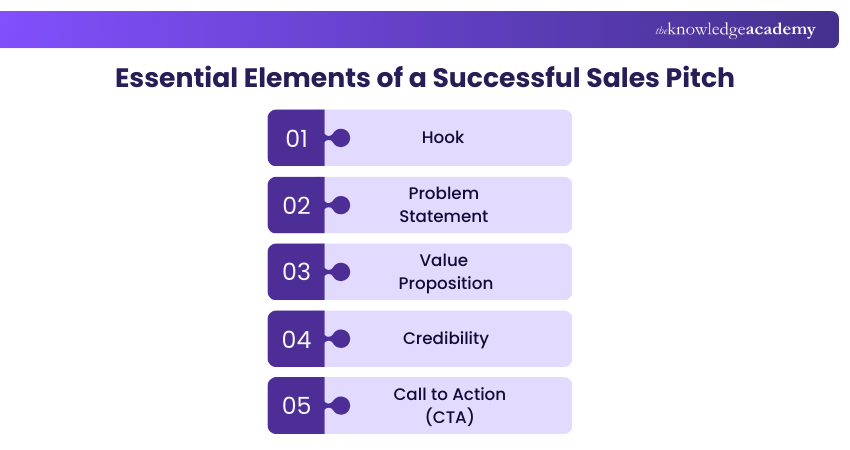
A successful Sales Pitch follows a clear structure that captures attention, explains the problem, presents the solution, and guides the audience towards action. As part of a strong Sales Strategy, the following elements make a Sales Pitch clear and persuasive for potential customers:
1) Hook
The hook is the opening line of a Sales Pitch that captures the audience’s attention. It should spark curiosity and encourage the listener to keep listening. This could be a surprising statistic, an interesting question, or a strong statement related to the customer’s problem. A strong hook sets the tone and creates interest from the beginning.
2) Problem Statement
The problem statement clearly explains the challenge or pain point that the audience is facing. This step shows that you understand the needs and difficulties of the customer. By presenting the problem in a relatable way, you help the audience recognise the issue and feel the importance of finding a solution.
3) Value Proposition
The value proposition describes how your product or service solves the problem. It highlights the key benefits and shows why the solution is better than other alternatives. Instead of only describing features, it focuses on the value the customer will gain, such as saving time, reducing costs, or improving efficiency.
4) Credibility
Credibility builds trust and confidence in your solution. It shows that your product or service is reliable and has delivered results before. This can be supported by customer testimonials, case studies, industry experience, statistics, or recognised clients who have successfully used the solution.
5) Call to Action (CTA)
The call to action tells the audience what step they should take next. This could include booking a demo, signing up for a service, scheduling a meeting, or making a purchase. A clear and direct CTA helps guide the audience toward taking action after hearing the pitch and encourages them to respond without delay.
Learn to close high-value deals with confidence and strategic selling techniques. Join our Corporate Selling Training now!
Types of Sales Pitches
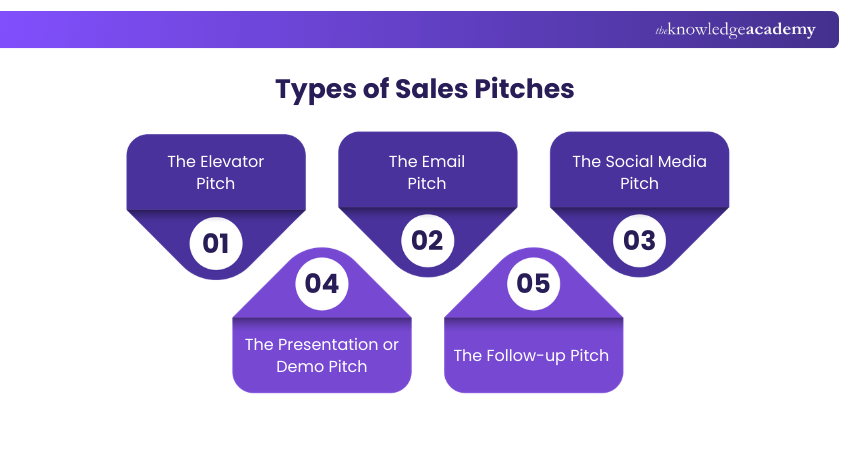
Sales Pitches are not always delivered in the same way. The style often depends on the situation, communication channel, and audience. The following are some common types of Sales Pitches used in different scenarios:
1) The Elevator Pitch
An elevator pitch is a short explanation of a product, service, or idea that can be delivered in about 30 to 60 seconds. It highlights the key value offered to the customer and explains why the solution matters. This type of pitch is often used during networking events, conferences, or informal meetings where there is limited time to make an impression.
2) The Email Pitch
An email pitch is a written message sent to potential customers to introduce a product or service. It is often used when contacting prospects who are unfamiliar with the sender. A good email pitch usually highlights the customer’s problem, presents a possible solution, and ends with a clear call to action, such as scheduling a meeting or replying to the message.
3) The Social Media Pitch
A social media pitch is a short and conversational message shared through platforms such as LinkedIn or other professional networks. This pitch style is usually more informal and focuses on starting a conversation with the prospect. It often references the prospect’s interests, posts, or challenges, making the message more personalised and relevant.
4) The Presentation or Demo Pitch
A presentation or demo pitch is a detailed Sales Pitch delivered during a scheduled meeting or product demonstration. It may include slides or a live demo to show how the product works. This pitch explains the problem, demonstrates the solution, highlights key benefits, and supports the value with examples or case studies.
5) The Follow-up Pitch
A follow-up pitch is used to reconnect with a potential customer after an initial interaction. This type of pitch reminds the prospect about previous discussions and provides additional value, such as new information, insights, or relevant examples. It helps maintain the conversation and encourages the prospect to move forward with the next step in the Sales Process.
Understand how to measure, manage, and analyse sales performance with the Sales Analytics Training – Register today!
How to Create a Sales Pitch?
Creating a successful Sales Pitch requires preparation, clarity, and a good understanding of the customer’s needs. A well-crafted pitch should clearly communicate the value of your product or service while keeping the customers engaged. The following steps can help you build a strong and effective Sales Pitch.
1) Understand Your Audience
The first step in creating a Sales Pitch is to understand your audience. Research their needs, challenges, goals, and expectations. Knowing who you are speaking to helps you tailor the message and focus on the points that matter most to them, making the pitch more relevant and engaging.
2) Define Your Value Proposition
Your value proposition explains why your product or service is useful and how it solves the customer’s problem. It should clearly highlight the benefits your solution provides and what makes it different from other options. A strong value proposition helps the audience quickly understand the unique value you offer.
3) Develop a Structured Outline
A clear structure helps organise your Sales Pitch and makes it easier for the audience to follow. Start with a strong opening to capture attention, then explain the problem, present your solution, and highlight the key benefits. Ending with a clear call to action ensures the pitch guides the audience towards the next step.
4) Practice and Refine
Practising your Sales Pitch helps improve clarity, confidence, and delivery. Rehearse the pitch several times to ensure it flows naturally and stays concise. Reviewing and refining the message based on feedback can help make the pitch more effective and impactful for different audiences and selling situations.
Examples of Successful Sales Pitches
Successful Sales Pitches often follow different approaches to clearly communicate value and capture the audience’s attention. While the main goal is always to show how a product or service benefits the customer, using the right approach can make the message more persuasive and memorable. The following examples highlight some common Sales Pitch styles.
Sales Pitch Example 1: The “Pain and Solution” Pitch
The “pain and solution” pitch focuses on a specific problem the customer faces and presents the product as the solution. It begins by highlighting a common challenge and then introduces the product or service as an effective way to solve it, making the benefits clear and relatable to them.
Sales Pitch Example 2: The “Statistic Start” Pitch
The “statistic start” pitch begins with a strong or surprising statistic to capture attention. By presenting data or research at the start, the pitch creates interest and adds credibility to the message. After introducing the statistic, the salesperson explains how their product or service can help improve the situation or achieve better results.
Sales Pitch Example 3: The “Question Approach” Pitch
The “question approach” pitch begins by asking a question related to the customer’s needs or challenges. This encourages the audience to think about their situation and become more engaged. The pitch then presents the product or service as a solution to the identified problem.
Learn to close deals confidently with proven negotiation frameworks and strategies with our Sales Negotiation Training – Join today!
5 Tips for Delivering a Sales Pitch
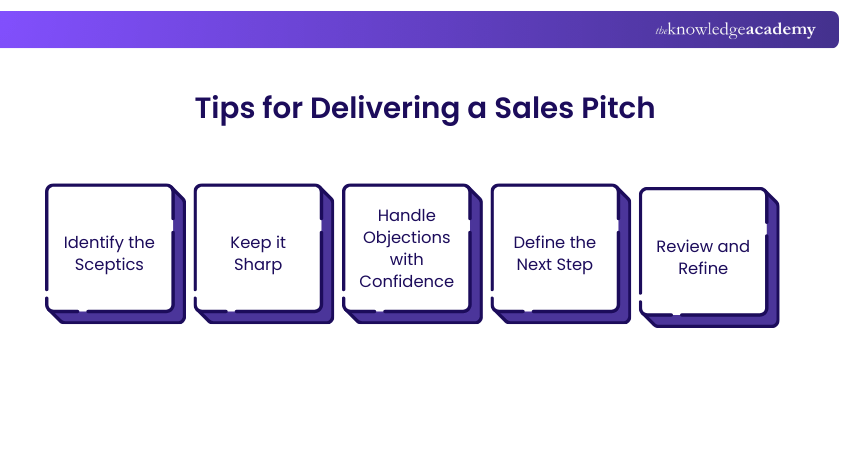
In sales, how you deliver your pitch is just as important as the research and preparation behind it. Below are some proven ways to elevate your delivery and guide your prospect towards closing the deal.
1) Identify the Sceptics
While it’s tempting to aim straight for the decision-maker, that’s not always realistic. Buying decisions are often made collectively, meaning you'll need to win over internal sceptics first. One useful approach is to ask:
“Hey [Customer], I imagine you’ll share this with your team after our call. Who usually has the toughest concerns, and what are they typically sceptical about?”
When they respond, follow with:
“Thanks for that. Would it help if I sent you something that addresses it? I’d hate for you to be caught in a back-and-forth between teams.”
(Note: sometimes the most sceptical person is the decision-maker. The buyer might just not want to admit it.)
2) Keep it Sharp
Avoid buzzwords and irrelevant details. Speak clearly and use language your prospect understands. Most importantly, refer back to the financial or operational impact they shared with you during discovery. This ensures your pitch stays focused on what truly matters to them.
3) Handle Objections with Confidence
Most objections are predictable, so don’t be thrown off by them. Rather than rushing to “handle” objections, take a moment to explore them. Ask what’s behind the concern, listen carefully, and guide the conversation back toward the outcome they’re looking for. This shows you’re confident, prepared, and genuinely understand their needs.
4) Define the Next Step
Open-ended conversations often lose momentum. Instead, recommend a clear next step like booking a follow-up call, scheduling a demo, or offering a free trial. Summarise your key points and remind them of the value you bring. This makes it easier for the prospect to agree and reinforces your role as a partner, not just a seller.
5) Review and Refine
Every pitch offers insights. After each conversation, take time to reflect on what went well and where there’s room for improvement. Use this feedback to sharpen your delivery and tailor future pitches more effectively. The more you refine, the better your chances of closing the next deal.
Conclusion
Understanding What is a Sales Pitch helps businesses present their ideas in a clear and persuasive way. A well-crafted pitch captures attention, explains value, and addresses customer needs effectively. By using the right structure and approach, organisations can make stronger connections with potential customers and turn conversations into successful business opportunities.
Enhance communication abilities for successful Sales Pitches with our Sales Training – Join today!
Frequently Asked Questions
What are the 4 Essential Elements of a Sales Pitch?

The four important elements of a Sales Pitch include:
1) Attention-grabbing Opening: Start it with an engaging hook
2) Value Proposition: Explain product or service benefits
3) Evidence and Testimonials: Provide case studies or testimonials
4) Call to Action: End with a Clear Call-to-Action (CTA)
Why are Sales Pitches Important?
Sales Pitches are important because they help spark interest, explain value, and influence decisions. A well-crafted pitch builds trust, showcases solutions, addresses concerns, and drives action, making it essential for guiding prospects through the buying journey.
What are the Other Resources and Offers Provided by The Knowledge Academy?
The Knowledge Academy takes global learning to new heights, offering over 3,000+ online courses across 490+ locations in 190+ countries. This expansive reach ensures accessibility and convenience for learners worldwide.
Alongside our diverse Online Course Catalogue, encompassing 17 major categories, we go the extra mile by providing a plethora of free educational Online Resources like Blogs, eBooks, Interview Questions and Videos. Tailoring learning experiences further, professionals can unlock greater value through a wide range of special discounts, seasonal deals, and Exclusive Offers.
What is The Knowledge Pass, and How Does it Work?
The Knowledge Academy’s Knowledge Pass, a prepaid voucher, adds another layer of flexibility, allowing course bookings over a 12-month period. Join us on a journey where education knows no bounds.
What are the Related Courses and Blogs Provided by The Knowledge Academy?
The Knowledge Academy offers various Sales Training, including the Online Sales Training, Sales Funnels Training, and Sales Management Training. These courses cater to different skill levels, providing comprehensive insights into Sales Analytics.
Our Business Skills Blogs cover a range of topics related to Sales Pitch, offering valuable resources, best practices, and industry insights. Whether you are a beginner or looking to advance your Sales skills, The Knowledge Academy's diverse courses and informative blogs have got you covered.

Charlotte Wilson


Soft Skills and Business Training Manager
Charlotte Wilson is an expert in soft skills development, with over 14 years of experience helping individuals and teams improve communication, productivity and emotional intelligence in the workplace. Her training content is focused on enhancing interpersonal effectiveness and fostering positive, collaborative environments across all levels of an organisation.
View Detail
Upcoming Digital Marketing Resources Batches & Dates
Date
 Online Sales Training
Online Sales Training
Fri 10th Jul 2026
Online Sales Training
Fri 2nd Oct 2026

 If you wish to make any changes to your course, please


