


 Top Rated Course

We may not have the course you’re looking for. If you enquire or give us a call on +918037244591 and speak to our training experts, we may still be able to help with your training requirements.
Digital Photography: A Complete Beginner’s Guide
The Knowledge Academy 02 March 2026Digital Photography captures and stores images electronically using sensors, allowing instant viewing, editing and sharing unlike traditional film methods. It encompasses various formats, from smartphones to professional cameras, making it accessible to a range of users seeking to experiment with settings and techniques.

Training Outcomes Within Your Budget!
We ensure quality, budget-alignment, and timely delivery by our expert instructors.
Table of Contents
Think about the last photo you took, maybe a fun selfie, a cute pet, or a delicious meal worth sharing. Digital Photography turns simple moments into memories we can relive anytime. Our photos are not just images. They are stories, emotions, and a way to stay connected with others. Each picture captures a piece of our life that we never want to forget.
In this blog, you will learn what Digital Photography is and how it started. You will also explore how Digital Cameras work, the camera types, key benefits, popular genres, and basic skills. Let’s get started!
Table of Contents
1) What is Digital Photography?
2) History of Digital Photography
3) How Does a Digital Camera Work?
4) Types of Digital Cameras
5) Benefits of Digital Photography
6) Digital Photography Examples and Genres
7) What are the Basics of Digital Photography?
8) What are the Two Types of Digital Photography?
9) Conclusion
What is Digital Photography?
Digital Photography is the method of taking and saving photos using digital technology instead of film. A Digital Camera uses an electronic sensor, like CCD or CMOS, to turn light into digital data. This data is saved as a file, which can be viewed, edited, or shared on a computer or device.
In Film Photography, images are developed using chemicals, but in Digital Photography, pictures are saved as computer files. These files can be quickly viewed, edited, and shared on a device. The easy access and editing options make this type of Photography a big advantage, allowing Photographers to improve their pictures in ways that were once very difficult.

History of Digital Photography
To understand the revolutionary impact of Digital Photography, it’s worth tracing its history a little. Here's a brief look back on how it all transpired:
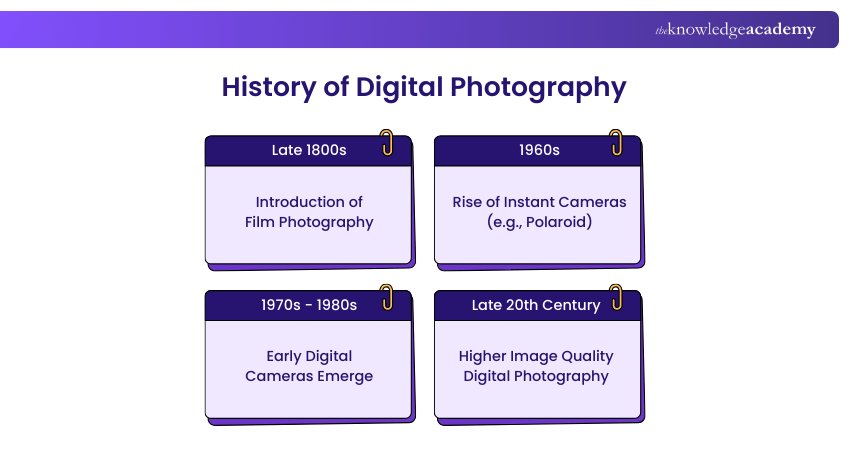
1) Before Digital Cameras, photography was primarily captured in film back in the late 1800s. Film cameras require a negative image to be developed and printed in a darkroom, which demands time and patience. It takes several minutes or hours, depending on the type of film, the method utilised, and the developer's expertise.
2) Many Photographers still find that film shooting creates something unique in an image. Its only downfall is that you must wait until your photos are developed to see how they turn out. So, for novices, anyone testing out a new camera’s settings, and even professional Photographers, it can be hard to learn what’s working for you until the moment has passed.
3) Instant cameras such as Polaroid [MP1] resolved this issue when they became popular in the ’60s, allowing users to develop and view their photographs instantly.
4) Early Digital Cameras started to hit the scene in the '70s and '80s. Because of their exclusivity, they were expensive. As technology advanced, they produced low-resolution photographs.
5) However, with the digital revolution in the late 20th century, the quality of Digital Photography cameras began to surpass that of film and instant cameras. Different types of Digital Cameras were being made, the technology was better, and so was the final image. Ultimately, Digital Cameras became affordable and available to the masses.
Join our comprehensive Lightroom Course and unlock the secrets to stunning photo edits in just a few clicks.
How Does a Digital Camera Work?
Digital Photography means taking pictures with a Digital Camera instead of using film. The camera contains a sensor that converts light into electrical signals, which are processed into a digital image displayed on the screen. The photo is then saved to a memory card so you can view or transfer it later.
Here are the main parts that help a Digital Camera take good photos:
1) Camera Body: This is the main part of the camera. It holds all the important pieces like the sensor, buttons, and software that help the camera work.
2) Viewfinder: This is what you look through to see your photo before taking it. It can be a screen or a small window that helps you focus on your subject.
3) Shutter: The shutter is a tiny door inside the camera. It opens and closes when you take a picture. The more time it stays open, the more light goes in.
4) Shutter Button: This is the button you press to take the picture. When you press it, the camera opens the shutter and captures the image.
5) Sensor: The sensor collects light and turns it into a digital photo. Bigger sensors usually make better quality pictures.
6) Storage: After taking the photo, it is saved in the memory of the camera. This can be a memory card that you can remove or storage built into the camera.
7) Lens: The lens focuses light into the camera. Some cameras have one fixed lens, while others allow you to change lenses. You can choose different lenses for close-up shots or distant subjects.
Types of Digital Cameras
Whether it’s eccentric fashion portraits or a sky-diving adventure you want to capture, plenty of Digital Camera categories are out there to suit your needs. We explore some of them below:

a) Compact Cameras:
These are also referred to as ‘point-and-shoot’ cameras. They are small, portable cameras with built-in lenses and automatic settings. Many casual Photographers and travellers opt for a compact camera, as they require little technical knowledge to use and don’t need any additional equipment (like lenses) to lug around.
b) DSLR Cameras:
Digital Single Lens Reflex (DSLR) cameras are popular among professionals and serious hobbyists because they offer interchangeable lenses, manual controls, and high-quality sensors for greater creative freedom. They are versatile enough for portraits, landscapes, and action shots with the right settings. However, if someone prefers convenience and portability, Mobile Photography can be a great alternative with impressive results.
c) Bridge Cameras:
Bridge Cameras are a good option if you’re looking for something in between the two. They have a more powerful zoom lens than compact cameras, with some of the manual controls and image quality of DSLRs. They tend to strike a good balance between features and affordability, too.
d) Medium Format Cameras:
These use larger image sensors than those in traditional DSLRs and, as a result, can deliver digital photos of incredible quality – both in terms of detail and colour reproduction. These are the cameras behind many iconic fashion portraits, but you’ll find them in advertising, too.
e) Action Cameras:
Action Cameras are ideal for sports lovers and adventurers who want to capture fast-paced moments like hiking, surfing or extreme sports. They are small, strong, and built to handle tough environments, often waterproof and shockproof. Their durable design makes them perfect for recording action and movement clearly, especially in exciting Types of Photography that involve adventure and high energy.
Perfect every pixel with the art of flawless photo retouching. Sign up for our Photo Retouching Training now!
Benefits of Digital Photography
The transition from film to digital has not only made capturing moments easier but also brought along numerous benefits. Here are the key advantages:
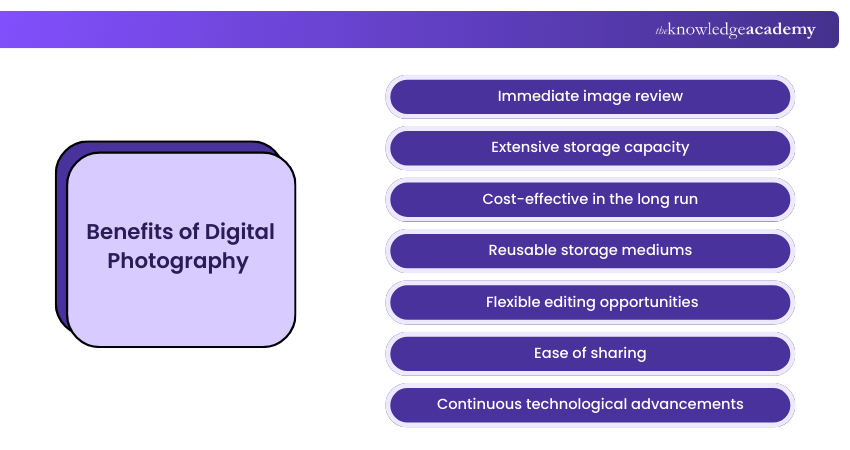
a) Immediate Image Review: One of the joys of Digital Photography is the capacity to instantly view and evaluate your shot. If something isn't right, you can take another.
b) Extensive Storage Capacity: Modern memory cards can store vast numbers of images, allowing Photographers to shoot freely without constantly changing storage mediums.
c) Cost-effective in the Long Run: After the initial investment in equipment, there's no need to keep buying film or paying for its development.
d) Reusable Storage Mediums: Once you've secured your Photographs elsewhere, memory cards can be cleared and reused multiple times, maximising value.
e) Flexible Editing Opportunities: Digital images can be edited using software. Adjustments like cropping, colour enhancement, or applying filters are all possible.
f) Ease of Sharing: One can send to friends, upload them to social media, or create Digital albums effortlessly.
g) Continuous Technological Advancements: As technology improves, Cameras receive updates, and new features become available, ensuring Photographers always have the best tools at their disposal.
Dive into hobbies that inspire you and interests that ignite your imagination. Sign up for our Hobbies & Interests Courses now!
Digital Photography Examples and Genres
Digital Photography offers a vast range of styles and genres. Here's a glimpse into some popular categories and their typical subjects:
a) Portraits: Focuses on capturing the essence of a person or group. Examples include selfies, family shots, and professional headshots, often enhanced with creative Photography Captions to add context and personality.
b) Landscape: Emphasises the vastness and beauty of nature. Think serene beaches, majestic mountains, or dense forests.
c) Macro: Highlights small details not visible to the naked eye. Shots of dew on a leaf or patterns on an insect fall here.
d) Wildlife: Captures animals in their natural habitat. Lions on a hunt or birds in mid-flight are classic examples.
e) Sports: Freezes fast-paced action moments. It can range from a basketball dunk to a sprinter crossing the finish line.
f) Street Photography: Documents everyday life on the streets. A bustling market, a lone pedestrian, or kids playing can be subjects.
g) Architectural: Focuses on buildings, structures, and design. From ancient ruins to modern skyscrapers, it showcases man-made wonders.
h) Night Photography: Explores scenes under low light conditions. Star trails, city skylines at dusk, and lit-up monuments are typical examples.
i) Documentary: Tells real-life stories through pictures. Photographers might cover social issues, events, or the daily life of a community.
Master creative editing with our Photoshop course! Learn pro techniques and unlock your design potential. Join today to excel!
What are the Basics of Digital Photography?
The basics of Digital Photography are the simple skills that help you take good pictures. These include:
1) Understanding Light: Light helps the camera see the scene clearly. Good light makes photos look bright and full of detail.
2) Learning Camera Settings: Settings like ISO, shutter speed, and aperture help control how bright or sharp the photo will be.
3) Focusing on the Subject: Make sure the main thing in your photo looks clear and sharp.
4) Composition: This means arranging what you see in the frame in a neat and beautiful way. It helps your photos look more interesting.
5) Holding the Camera Steady: A steady hand or a tripod helps avoid blurry images.
6) Choosing the Right Lens: Different lenses help you take close-up photos, wide landscapes, or pictures of things that are far away.
7) Practice Often: Taking photos regularly helps you learn what works best and improve your skills.
What are the Two Types of Digital Photography?
Digital Photography can be grouped into two simple categories: based on the camera used and based on the type of image created.
By Camera Type
1) Compact Cameras (Point-and-Shoot): Small, lightweight, and easy to use. They are perfect for everyday photos. Modern smartphones also function similarly to compact cameras.
2) DSLR and Mirrorless Cameras: Used by professionals. They have bigger sensors, changeable lenses, and more control for high-quality photos.
By Image File Type
1) Raster Images: Made of pixels. JPEG is the most common type. Good for regular photos, but may lose quality when enlarged.
2) Vector Images: Made of lines and shapes. They can be resized without losing quality. Used mainly for graphics and logos, not normal Photography.
Conclusion
Digital Photography has made capturing memories easier, faster, and more creative than ever before. From simple snapshots to professional shoots, anyone can tell a story through photos. With the right camera, basic skills, and a little practice, every moment can become a picture worth keeping. So keep exploring, keep clicking, and keep turning everyday life into unforgettable visual memories.
Unlock your filmmaking potential with our comprehensive Filmmaking Course. Join now!
Frequently Asked Questions
What Do Digital Photographers Do?

A Digital Photographer's task is to capture images using Digital Cameras and technology instead of film. They store photos as digital files, which can be edited, enhanced and shared instantly. Their work often includes adjusting lighting, correcting errors and preparing images for print, online use or artistic projects.
What's the Difference Between Digital Photography and Traditional Photography?
Digital Photography uses electronic sensors to capture and save images as digital files, which can be easily edited and shared. Traditional Photography relies on film, where images are chemically developed. Digital methods offer faster access, easier editing and more flexibility compared to traditional Film Photography.
What are the Other Resources and Offers Provided by The Knowledge Academy?
The Knowledge Academy takes global learning to new heights, offering over 3,000+ online courses across 490+ locations in 190+ countries. This expansive reach ensures accessibility and convenience for learners worldwide.
Alongside our diverse Online Course Catalogue, encompassing 17 major categories, we go the extra mile by providing a plethora of free educational Online Resources like Blogs, eBooks, Interview Questions and Videos. Tailoring learning experiences further, professionals can unlock greater value through a wide range of special discounts, seasonal deals, and Exclusive Offers.
What is The Knowledge Pass, and How Does it Work?
The Knowledge Academy’s Knowledge Pass, a prepaid voucher, adds another layer of flexibility, allowing course bookings over a 12-month period. Join us on a journey where education knows no bounds.
What are the Related Courses and Blogs Provided by The Knowledge Academy?
The Knowledge Academy offers various Hobbies & Interests Courses, including Photography Course and Filmmaking Course. These courses cater to different skill levels, providing comprehensive insights into What is Photography.
Our Business Skills Blogs cover a range of topics related to Photography, offering valuable resources, best practices, and industry insights. Whether you are a beginner or looking to advance your Photography skills, The Knowledge Academy's diverse courses and informative blogs have got you covered.

The Knowledge Academy


Global Training Provider
The Knowledge Academy is a world-leading provider of professional training courses, offering globally recognised qualifications across a wide range of subjects. With expert trainers, up-to-date course material, and flexible learning options, we aim to empower professionals and organisations to achieve their goals through continuous learning.

Upcoming Business Skills Resources Batches & Dates
Date
 Photography Course
Photography Course
Fri 19th Jun 2026
Photography Course
Fri 4th Sep 2026
Photography Course
Fri 27th Nov 2026

 If you wish to make any changes to your course, please


