


 Top Rated Course

We may not have the course you’re looking for. If you enquire or give us a call on +358 942454206 and speak to our training experts, we may still be able to help with your training requirements.
12 Types of Management Styles: Which One is Right for You?
William Brown 03 March 2026Types of Management styles include autocratic, democratic, bureaucratic, laissez-faire, consultative, and situational leadership approaches used in organisations. Each style shapes decision-making, communication, and team motivation across departments. Choosing the right type depends on goals and employee capability in daily operations.

Training Outcomes Within Your Budget!
We ensure quality, budget-alignment, and timely delivery by our expert instructors.
Table of Contents
Related Courses

Understanding how leaders guide teams is key to building a productive workplace. The right leadership approach can influence motivation, communication, and overall performance.
In this blog, we’ll explore the different approaches leaders use and how they affect organisational success. Let’s begin by looking at the different Types of Management Styles and what makes each one unique.
Table of Contents
1) What are Management Styles?
2) Tips on How to Improve Your Management Skills?
3) Management Skills Everyone Needs (No Matter Your Style)
4) What is the Most Successful Management Style?
5) Can you use More Than one Management Style?
6) Conclusion
What are Management Styles?
Management Styles show how leaders guide teams to achieve goals, shaped by their personality and experience. Among different Management Styles, the democratic style involves team input, open communication, and collaboration, with the manager making final decisions. It builds trust, engagement and connects daily tasks to bigger goals.
1) Autocratic Management Style
The Autocratic Management Style means the manager makes all the decisions and gives clear directions without much input from the team. They set goals, choose tasks, and expect the team to follow their lead. It’s a one-way, top-down approach.
Advantages:
1) Quick decisions can be made easily
2) Useful in high-pressure situations where there's no room for mistakes
3) Ensures consistent results by following a clear, structured process
Disadvantages:
1) This can lead to micromanaging
2) Team members may feel ignored and stop sharing ideas
3) Creativity might be limited due to strict control

2) Democratic Management Style
The Democratic Management Style, or participative leadership, involves team input while the manager makes final decisions. It encourages communication, feedback, and connects daily tasks to larger goals, building trust, boosting engagement, and improving ideas through collaboration.
Advantages:
1) Increases team involvement and trust
2) Encourages better ideas and problem-solving
3) Helps employees grow with continuous feedback
4) Aligns individual work with company goals
Disadvantages:
1) Collaboration can be time-consuming
2) Requires active manager involvement to maintain focus and progress
3) Laissez-faire Management Style
The Laissez-faire Management Style is a relaxed, hands-off approach where managers give teams the freedom to work independently. They step in only when needed and offer guidance if asked. For skilled, self-driven teams, it can be the best type of Management Style to promote autonomy and creativity.
Advantages:
1) Encourages creativity and initiative
2) Great for self-driven team members who enjoy independence
3) Builds trust by showing confidence in the team’s abilities
Disadvantages:
1) New or less experienced employees may feel lost without clear direction
2) Managers may not give enough feedback or connect tasks to company goals
3) Some team members may feel unsupported or unsure about priorities
4) Transformational Management Style
The Transformational Management Style is a form of democratic leadership that focuses on big goals, innovation, and personal growth. Common in creative or fast-paced environments, it works best with teams eager to learn and improve. These leaders set high expectations and inspire their teams to adapt and think forward.
Advantages:
1) Great for team members who are motivated and want to develop new skills
2) Inspires a strong sense of purpose and keeps everyone focused on a clear vision
Disadvantages:
1) High expectations can cause stress or burnout if the team doesn’t get enough support
2) If goals seem too hard to reach, people may feel frustrated and leave the job
5) Servant Leadership Management Style
The Servant Leadership Style flips the traditional manager-team dynamic. Rather than giving orders, the manager focuses on supporting the team’s success. They listen, remove obstacles, and prioritise well-being over control. Built on trust and empathy, this style believes great results come when the team feels truly supported.
Advantages:
1) Creating a positive, people-first work environment
2) Builds strong, trusting relationships between managers and team members
3) Encourages teamwork and shared responsibility for goals
Disadvantages:
1) The manager might try too hard to please everyone and lose authority
2) This can cause confusion if the manager avoids making decisions when needed
6) Coaching Management Style
The Coaching Management Style is all about helping team members grow and improve. Managers act as mentors guiding, asking questions, and giving regular feedback. They focus on how people work, not just what they deliver, aiming to build skills, confidence, and long-term success.

Advantages:
1) Supports personal and professional growth with regular guidance
2) Builds trust and keeps employees engaged for the long run
3) Helps people see how their daily tasks connect to their bigger potential
Disadvantages:
1) Takes time and doesn’t suit fast-paced environments
2) It may feel too involved for experienced workers who prefer more freedom
7) Charismatic Management Style
The Charismatic Management Style relies on a leader’s personality and charm. These managers inspire through confidence, energy, and clear communication. Their passion builds loyalty, motivates the team, and creates a positive work environment. People follow them because they believe in the leader, not just the mission.
Advantages:
1) Inspires and energises the team with a strong vision
2) Builds trust, loyalty, and motivation among employees
3) Encourages a positive, enthusiastic work environment
Disadvantages:
1) Too much focus on the leader can lead to dependency
2) May lack structure if decisions rely only on personal influence
3) If the lead leaves, the team might struggle without their presence
8) Paternalistic Management Style
The Paternalistic Management Style is a type of autocratic leadership where the manager makes all the decisions but genuinely cares about the team’s well-being. While the team doesn’t help make decisions, they’re encouraged to share their thoughts. The manager listens and tries to do what’s best for everyone, even if they don’t follow every suggestion.
Advantages:
1) Team members’ well-being is considered in every decision
2) Employees feel heard and supported, even if they don’t make the final call
Disadvantages:
1) If trust is missing, team members may feel ignored or unmotivated
9) Persuasive Management Style
The Paternalistic Management Style is a type of autocratic leadership where the manager makes all the decisions but genuinely cares about the team’s well-being. While the team doesn’t help make decisions, they’re encouraged to share their thoughts. The manager listens and tries to do what’s best for everyone, even if they don’t follow every suggestion.
Advantages:
1) Team members’ well-being is considered in every decision
2) Employees feel heard and supported, even if they don’t make the final call
Disadvantages:
1) If trust is missing, team members may feel ignored or unmotivated
10) Visionary Management Styles
The Visionary Management Style focuses on inspiring teams through a clear, future‑driven mission. Leaders communicate a clear long-term vision, encourage collaboration, and motivate employees creatively and autonomously. They are imaginative, innovative, and often challenge traditional ways of working to spark meaningful progress.
Advantages:
1) Drives ambitious goals that inspire higher team motivation
2) Builds strong employee engagement through shared vision
3) Encourages creative thinking and a supportive risk‑taking culture
Disadvantages:
1) Long‑term focus may overlook immediate operational needs
2) Innovative ideas can be difficult for teams to implement
3) Success depends heavily on employees’ commitment to the vision
11) Consultative Management Style
The Consultative Management Style involves a manager who seeks team input before making decisions. While the final decision remains with the manager, the approach incorporates two‑way communication and values employee perspectives.
Advantages:
1) Encourages employee input and open communication
2) Builds stronger team relationships through consultation
3) Helps managers make more informed decisions
Disadvantages:
1) Consultation can slow decision‑making processes
2) Too many opinions may create decision confusion
3) Final authority may still limit true collaboration
12) Delegative Management Style
The Delegative Management Style gives team members significant autonomy to decide how they work and execute tasks. Managers provide minimal direction, trusting employees to manage their own responsibilities while stepping in only when necessary.
Advantages:
1) Empowers employees with high autonomy and ownership
2) Encourages independent decision‑making and creativity
3) Reduces micromanagement and increases team flexibility
Disadvantages:
1) Limited guidance may cause a lack of clarity
2) Team performance can vary without manager oversight
3) Risk of inconsistent results across tasks or projects
Lead virtual workforces with our Managing Remote Teams Course – Join now!
Tips on how to Improve Your Management Skills?
Improving Management Skills is a continual effort that involves self-reflection, learning, and adaptation. This will help you towards improve your skills as a leader and increase the performance of your team for a better work environment. Let’s find some valuable tips on how to develop Skills in Management:
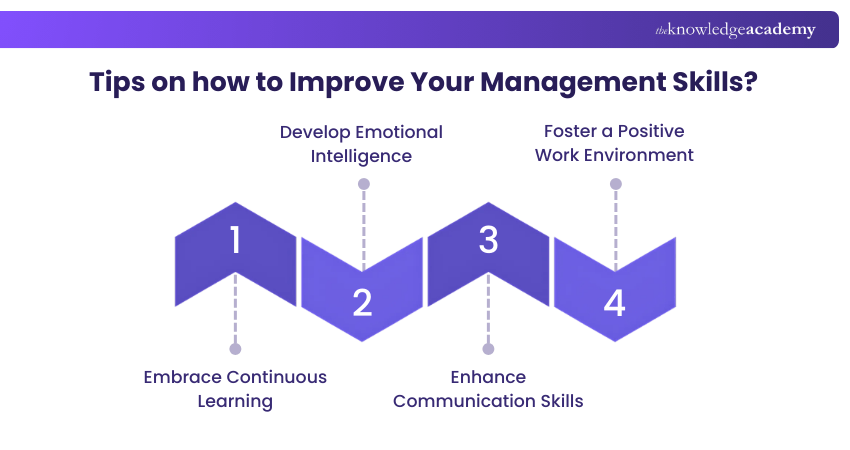
a) Embrace Continuous Learning: This practice is crucial for being up-to-date and effective in a constantly changing business environment. It calls for taking an active role in seeking new knowledge, skills, and perspectives from different channels that including books, courses, and professional networks.
b) Develop Emotional Intelligence: Emotional Intelligence is the key to managing personal feelings and those of other individuals. Building good relations, enabling better communication, and working through workplace conflicts greatly depend on the manifestation of emotional intelligence.
c) Enhance Communication Skills: Effective leadership is based largely on effective communication, meaning clear articulation of thoughts and instructions and also listening to what others have to say. Enhancing these skills can prevent misunderstandings, build trust, and foster a more collaborative team environment.
d) Foster a Positive Work Environment: Creating a positive work environment involves promoting teamwork, acknowledging achievements, and ensuring employees feel valued and supported. This approach boosts morale, increases job satisfaction, and enhances productivity.
e) Adaptability and Flexibility: The ability to adapt and be flexible allows managers to respond effectively to changes, challenges, and opportunities in the business environment. This is crucial for solving problems creatively, seizing new opportunities and leading teams through uncertainty.
f) Time Management and Delegation: It is important for leaders to develop Time Management and delegation skills. They must ensure maximum use of resources in achieving the set relevant goals. Delegation of operations empowers the doer, and this means that prioritisation of work at the departmental level enables the top management to be oriented towards the strategic objectives of the organisation.
g) Seek Feedback and Reflect: Regularly seeking feedback from peers, superiors, and team members provides valuable insights into your Management Style and areas for improvement. Reflective practice on this feedback and your experiences helps you develop as a leader.
Strengthen decision-making, conflict resolution, and strategic leadership. Join our Senior Management Training now!
Management Skills Everyone Needs (No Matter Your Style)
Good leadership is built on key skills that apply across different Management Styles. These skills help you guide your team effectively and support their growth.
1) Connect Daily Work to Bigger Goals
One of the best things you can do as a manager is explain how each task fits into the bigger picture. Many people don’t clearly see how their work helps the company. When you show that connection, your team can stay motivated and make better decisions.
2) Delegate with Intention
A good manager doesn’t try to do everything alone. You understand your team’s strengths and give them tasks that match their skills. Delegating properly helps people grow without feeling overwhelmed, and regular check-ins help keep things balanced.
3) Offer Feedback and Support Growth
Helpful feedback helps your team improve. Great managers also act like coaches offering support, discussing career goals, and helping each person grow in their own way.
4) Build Trust and Collaboration
Managers build trust and collaboration by offering clarity, context, and open communication that help teams work together effectively. Effective leaders connect expectations and information, helping teams feel aligned, valued, and confident.
What is the Most Successful Management Style?
The coaching style is one of the most effective styles of management, focusing on growth through support, feedback, and clear goal-oriented guidance. It builds trust, boosts motivation, and supports both personal development and strong team performance.
Can you use More Than one Management Style?
Yes, Effective managers don’t stick to just one style. They adapt their approach based on the team, situation, or challenge. By blending different styles of management, they lead more effectively and achieve better results.
Conclusion
Great leadership is about adapting your approach to support your team effectively. Understanding the different types of management styles helps create a motivated and productive workplace. Use these insights as a starting point to keep improving your leadership.
Understand effective time management skills to improve productivity. Join our Management Training for New Managers now!
Frequently Asked Questions
What Management Style do I Respond to Best?

The Management Style to which you respond best depends on your personal preferences, work habits, and professional goals. Thinking about times when you were motivated and felt supported at work can help you determine which management methods work best for you.
How can I Effectively Transition to a New Management Style?
Transitioning to a new management style requires self-awareness, learning, and embracing change. Define the aspects of the new style you wish to adopt and seek guidance and training in those areas.
What are the Other Resources and Offers Provided by The Knowledge Academy?
The Knowledge Academy takes global learning to new heights, offering over 3,000+ online courses across 490+ locations in 190+ countries. This expansive reach ensures accessibility and convenience for learners worldwide.
Alongside our diverse Online Course Catalogue, encompassing 17 major categories, we go the extra mile by providing a plethora of free educational Online Resources like Blogs, eBooks, Interview Questions and Videos. Tailoring learning experiences further, professionals can unlock greater value through a wide range of special discounts, seasonal deals, and Exclusive Offers.
What is The Knowledge Pass, and How Does it Work?
The Knowledge Academy’s Knowledge Pass, a prepaid voucher, adds another layer of flexibility, allowing course bookings over a 12-month period. Join us on a journey where education knows no bounds.
What are the Related Courses and Blogs Provided by The Knowledge Academy?
The Knowledge Academy offers various Management Courses, including the Management Training for New Managers Course, Managing Remote Teams Training, and Introduction to Managing People Course. These courses cater to different skill levels, providing comprehensive insights into Principles of Management.
Our Business Skills Blogs cover a range of topics related to Types of Management, offering valuable resources, best practices, and industry insights. Whether you are a beginner or looking to advance your Strategic Management skills, The Knowledge Academy's diverse courses and informative blogs have got you covered.

William Brown


Senior Business Analyst and Strategic Advisor
William Brown is a senior business analyst with over 15 years of experience driving process improvement and strategic transformation in complex business environments. He specialises in analysing operations, gathering requirements and delivering insights that support effective decision making. William’s practical approach helps bridge the gap between business goals and technical solutions.
View Detail
Upcoming Business Skills Resources Batches & Dates
Date
 Conflict Management Training
Conflict Management Training
Fri 17th Jul 2026
Conflict Management Training
Fri 18th Sep 2026
Conflict Management Training
Fri 13th Nov 2026

 If you wish to make any changes to your course, please


