




We may not have the course you’re looking for. If you enquire or give us a call on 01344203999 and speak to our training experts, we may still be able to help with your training requirements.
Legal vs Compliance: Key Differences Explained
BySubiksha ArulprakashLast updated on: 03 October 2026
Legal vs compliance explains how legal teams interpret laws and manage legal risk, while compliance teams translate regulatory obligations into policies, controls, monitoring, and daily practices.
Legal and compliance are distinct yet interconnected functions within organisations. Both help organisations understand and meet relevant obligations, but their responsibilities and approaches differ. Understanding legal vs compliance helps clarify how each function supports governance and risk management.
Under GDPR rules, major compliance failures can result in fines of up to €20 million or 4% of its total worldwide annual turnover from the preceding financial year, whichever is higher. This highlights the financial consequences organisations can face when regulatory requirements are not met. This blog explains legal vs compliance, their responsibilities, key differences, and how the two functions work together.
What is the Legal Function?
The legal function helps an organisation understand and apply relevant laws, assess legal rights and obligations, and manage legal risk. Legal professionals provide advice on matters such as contracts, disputes, regulatory requirements, liabilities, and other legal issues affecting the organisation.
They also interpret changes in legislation and case law, support decision-making, and help organisations respond appropriately to legal matters.
What is Compliance?
Compliance involves meeting applicable legal and regulatory requirements, industry standards, and internal policies. Compliance teams develop and monitor policies, procedures, and controls to help organisations meet these obligations and identify areas where requirements are not being met.
Their work can include monitoring compliance controls, advising employees, assessing regulatory requirements, conducting reviews, and supporting corrective action where needed.
Quick Check
Can you distinguish the two functions? Legal teams mainly interpret laws, rights, obligations, and legal risk, while compliance teams turn relevant requirements into policies, controls, monitoring, and operational practices.

Key Differences Between Legal and Compliance
Legal and compliance are distinct but interconnected functions that help organisations manage obligations, risks, and governance responsibilities. Understanding their differences helps clarify how each function approaches legal requirements, regulatory compliance, and organisational risk.
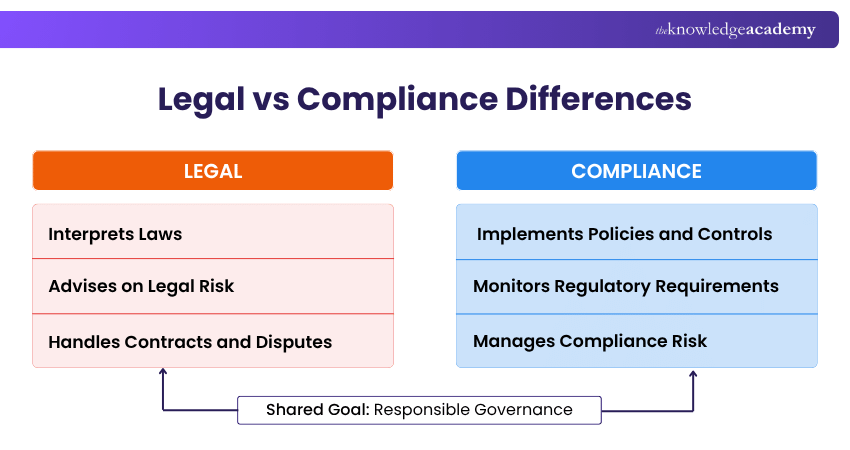
The following differences show how legal and compliance functions approach organisational obligations and risk:
1) Focus and Perspective
Legal professionals primarily focus on interpreting and applying the law. Their main objective is to ensure that legal rights and obligations are protected, and they provide legal advice and guidance to individuals and organisations. They are well-versed in the legal framework and use their expertise to navigate legal complexities.
Compliance professionals, on the other hand, concentrate on implementing internal controls and policies to ensure adherence to applicable laws, regulations, standards, and internal requirements. Their focus is often operational and preventive, aiming to translate applicable requirements into practical controls, monitoring, and organisational processes.
2) Enforcement and Consequences
Legal issues can result in consequences such as litigation, contractual liability, regulatory enforcement, fines, penalties, or, in some circumstances, criminal sanctions.
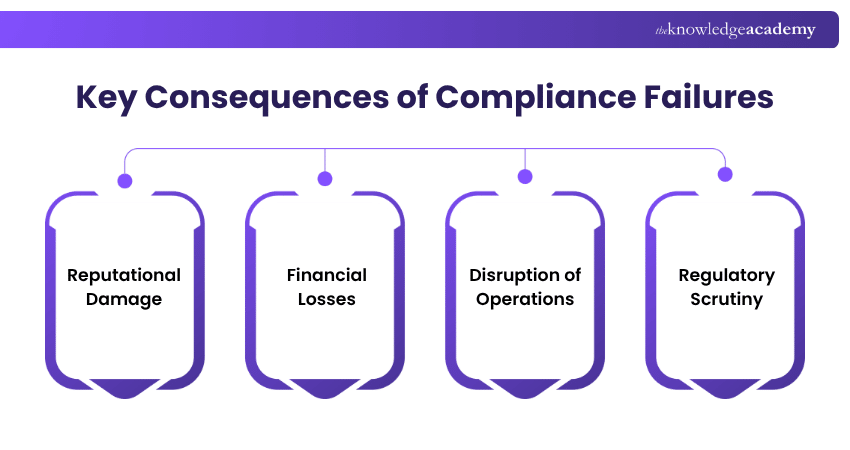
Compliance failures can result in internal disciplinary action, remediation requirements, regulatory enforcement, fines, licence restrictions, reputational harm, or other consequences depending on the requirement breached. Where non-compliance also breaches a law or regulation, legal consequences may also arise.
3) Roles and Responsibilities
Legal professionals advise the organisation on legal rights, obligations, risks, contracts, disputes, regulatory matters, and other legal issues. They have the expertise to navigate the complexities of the legal system, interpret laws and regulations, and advocate for their clients’ interests.
Compliance officers, on the other hand, are responsible for developing and implementing compliance programmes within organisations. They help ensure adherence to regulations, monitor activities, conduct audits, and provide guidance to employees. Their role is focused on creating a culture of compliance and mitigating compliance risks.
4) Adaptability
The legal system evolves over time through legislative changes, court decisions, and amendments to existing laws. Legal professionals adapt to these changes and interpret new laws in light of existing legal principles.
Compliance frameworks also evolve, but the focus is more on adapting to regulatory changes and industry standards. Compliance professionals monitor and assess new regulations, updating internal policies and procedures accordingly.
Strengthen compliance knowledge and risk management with Effective Compliance Training - Sign up now!
5) Scope of Application
Legal requirements apply according to factors such as jurisdiction, activity, organisation type, contractual relationships, and specific circumstances. Some laws apply broadly, while others affect only particular industries, activities, or entities.
Compliance requirements also depend on context and can arise from legislation, regulations, licence conditions, industry standards, contractual commitments, and internal policies. Compliance programmes therefore vary according to the organisation's obligations and operating environment.
6) Nature of Guidance
Legal advice draws on applicable legislation, regulations, case law, contractual requirements, and legal principles to assess rights, obligations, liabilities, and legal risk. Legal professionals rely on legal precedents, interpretations, and principles to provide advice and navigate legal complexities.
Compliance activities draw on applicable laws and regulations as well as regulatory guidance, industry standards, internal policies, and organisational requirements. Compliance professionals use these sources to develop controls, monitoring activities, and compliance programmes.
7) Collaboration and Synergy
While legal and compliance functions are distinct, they often collaborate to support effective governance within organisations. Legal and compliance professionals work together to align efforts, share knowledge, and enhance overall organisational compliance.
This collaboration is important because legal professionals provide guidance on legal requirements, while compliance professionals implement processes and controls to help ensure adherence to those requirements. The synergy between legal and compliance departments helps organisations:
1) Establish robust compliance programmes
2) Mitigate legal and compliance risks
3) Maintain legal and ethical standards
Trainer's Pro Tip
When a regulatory issue has both legal and operational implications, involve legal and compliance teams early. Legal can clarify rights and obligations, while compliance can translate those requirements into practical controls and monitoring.
8) Timeframe
Legal requirements may apply continuously or when specific legal conditions, events, or obligations arise. Organisations are expected to comply with applicable laws, and non-compliance can result in legal consequences.
Compliance obligations may have specific timeframes, such as reporting deadlines or renewal dates for licences and permits. Compliance professionals monitor and help ensure the timely fulfilment of these obligations.
Keep This in Mind
Legal and compliance functions serve different purposes but work towards a shared goal of helping organisations operate responsibly and meet their obligations.Legal teams focus on legal interpretation and risk, while compliance teams turn relevant requirements into practical controls, monitoring, and everyday processes.
Strengthen governance and compliance practices with Security Governance and Compliance Training - Sign up today!

Subiksha Arulprakash is a Copywriter with 5+ years of experience in content writing, editing, content development and digital marketing. Her experience researching and writing about Business Skills, ISO standards and compliance enables her to produce clear, accessible content for different audiences.
View Detail

 If you wish to make any changes to your course, please


