




We may not have the course you’re looking for. If you enquire or give us a call on 01344203999 and speak to our training experts, we may still be able to help with your training requirements.
What Are the Key Features of Science in Psychology?
ByVishnu SankarLast updated on: 22 September 2026
Features of science in psychology include evidence, objectivity, replicability, and falsifiability, ensuring valid, reliable, and unbiased results. By applying systematic methods and empirical testing, psychology maintains its scientific credibility while explaining human behaviour through measurable and observable evidence.

Psychology is a field of science that delves into the detailed understanding of human thought complexities, behaviour, development, and personality.By learning Psychology, you can understand how people react in different levels of scenarios.
Therefore, understanding Features of Science Psychology will help you tailor your approach to their behaviour when interacting on a day-to-day basis. Furthermore, this blog will help you understand all the questions related to the topic, for example, various Science in Psychology concepts, their definitions, approaching principles, and more. Let’s ignite the journey!
What is the Science of Psychology?
Psychology is the scientific study of the mind and behaviour, exploring thoughts, emotions, and actions in humans and animals. Psychologists use scientific methods to form hypotheses and test them through experiments, observations, and brain-based studies to gather measurable, empirical data.
Rooted in the late 19th century, psychology combines biological and social sciences to understand behaviour. It focuses on explaining what is observable, avoiding moral judgments or subjective interpretations.

Features of Science in Psychology
To fully appreciate Psychology’s significance as a scientific discipline, it’s crucial to explore Features of Science Psychology. By examining its key aspects, you can gain a deeper understanding of how psychology applies scientific methods to study people’s minds and behaviour. Let’s look at some of these points below:
1) Systematic Empiricism
To grasp the foundations of scientific inquiry in psychology, it's essential to explore the approach known as systematic empiricism. Here's a guide on Systematic Empiricism in psychology:
a) Definition: Systematic Empiricism uses objective, measurable evidence through controlled and replicable observation of psychological phenomena.
b) Methodologies: Researchers apply rigorous methods to ensure reliability, validity, and minimal bias in studies.
c) Applications: Used in experiments, observations, and assessments to establish causal relationships between variables.
2) Empirical Question
To delve deeper into the research process in psychology, it's crucial to understand the concept of empirical questions. Here's a guide on empirical questions in psychology:
a) Definition: Empirical questions focus on observable phenomena and are answered through systematic observation and data collection.
b) Hypothesis Development: Researchers create testable hypotheses grounded in measurable evidence through observation or experimentation.
c) Quantitative Research: Involves analysing numerical data to identify patterns and make generalisations.
d) Qualitative Research: Uses interviews and case studies to explore behaviours in depth.
Apply social influence seamlessly in real-world scenarios- Join our Social Psychology Training today!
3) Public Knowledge
Public knowledge plays a vital role in shaping societal perspectives and influencing decision-making in psychology. Here's a guide on the importance of public knowledge in psychology:
a) Publication of Discoveries: Scientists publish findings in journals to share discoveries and promote wider discussion.
b) Transparency and Accountability: Open publication fosters transparency, accountability, and collective knowledge growth in psychology.
c) Application of Principles: Public knowledge supports evidence-based applications in education, healthcare, and organisational development.
4) Falsifiability
Understanding the criteria for scientific theories is crucial in the study of psychology. Here's a guide on Karl Popper's theory of Falsifiability:
a) Theory of Falsifiability: Karl Popper stated that scientific theories must be testable, observable, and open to being proven wrong.
b) Example: Taste preferences, like strawberry versus chocolate ice cream, aren’t falsifiable due to subjectivity.
c) Provisional Nature of Research: Scientific understanding evolves through testing and revising falsifiable theories.
d) Use of Existing Knowledge: Researchers apply existing theories and deductive logic to test or refine understanding.
e) Significance of Results: Valid, replicable results strengthen theories and ensure scientific accuracy.
5) Objectivity
Understanding the role of objectivity is crucial in the study of psychology. Here’s a guide on how psychologists maintain impartiality in research:
a) Definition: Objectivity involves collecting and analysing data free from personal bias, emotions, or expectations.
b) Measurement: Psychologists use standardised tools and statistical methods to ensure consistent and unbiased results.
c) Peer Review: Studies are evaluated by other experts to verify accuracy and eliminate subjectivity.
d) Significance: Maintaining objectivity enhances the credibility and validity of psychological findings.
6) Control
Understanding the importance of control is crucial in the study of psychology. Here’s a guide on how researchers manage variables effectively:
a) Definition: Control refers to managing variables to isolate the effect of the independent variable on the dependent variable.
b) Experimental Design: Controlled experiments use groups, such as control and experimental groups, to compare outcomes accurately.
c) Minimising Confounds: Researchers eliminate or hold constant external variables that could distort results.
d) Significance: Control ensures results are reliable and changes are due to the intended manipulation.
7) Hypothesis Testing
Understanding the process of hypothesis testing is crucial in the study of psychology. Here’s a guide on how researchers validate predictions:
a) Definition: Hypothesis testing involves formulating a testable statement that predicts relationships between variables.
b) Data Collection: Researchers gather measurable evidence through experiments or observations.
c) Statistical Analysis: Data are analysed to determine whether results support or refute the hypothesis.
d) Significance: This process refines theories and strengthens the scientific foundation of psychology.
8) Replication
Understanding the value of replication is crucial in the study of psychology. Here’s a guide on why repeating studies is essential:
a) Definition: Replication means repeating a study using the same or similar methods to confirm results.
b) Purpose: It tests the consistency and reliability of findings across different samples and conditions.
c) Scientific Integrity: Replicated results build confidence in research outcomes and theories.
d) Significance: Replication prevents false claims and promotes accuracy in psychological science.
9) Theory Construction
Understanding the process of theory construction is crucial in the study of psychology. Here’s a guide on how theories are built and refined:
a) Definition: Theory of construction involves organising facts, principles, and observations into coherent explanations of behaviour.
b) Data-Driven: Theories are formed based on empirical evidence gathered from systematic research.
c) Testing and Refinement: Theories evolve through ongoing research, verification, and revision.
d) Significance: Well-constructed theories help predict, explain, and understand psychological phenomena.
10) Paradigms and Paradigm Shifts
Understanding paradigms and paradigm shifts is crucial in the study of psychology. Here’s a guide on how scientific perspectives evolve:
a) Definition: A paradigm is a dominant framework or model that guides research and understanding within a discipline.
b) Examples: Behaviourism, cognitive psychology, and humanistic psychology represent distinct paradigms in psychological science.
c) Paradigm Shifts: Occur when new evidence challenges existing frameworks, leading to major scientific change.
d) Significance: Paradigm shifts drive progress, allowing psychology to adapt and incorporate new insights into human behaviour.
How can Psychology be Approached Through a Scientific Process?
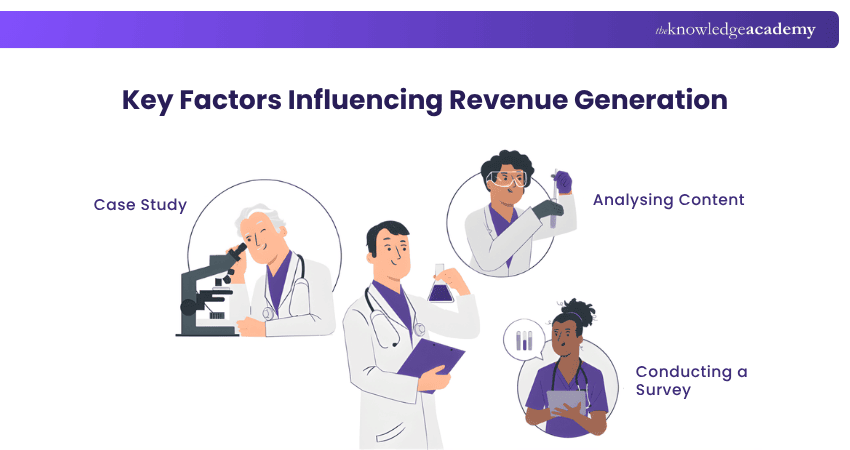
As psychology is a scientific branch, it also requires a large amount of data and research to derive results from experiments done on subjects. There are various ways in which psychology can be approached through scientific processes. When preparing for a role in this field, Psychology Interview Questions often delve into how data and research are applied in real-world psychological practices and experiments. Below are the various approaches to psychology through scientific processes:
1) Case Study: There are several scenarios where an observation is recorded to interpret the data from that study. Psycho-analysts sometimes use this data to draw a conclusion or make an observation that helps them in their research.
2) Analysing Content: There are many articles, interviews, journals, and research materials that scientists use to analyse previous data. This helps them draw conceptual and relational conclusions from their projects on relevant topics.
3) Conducting a Survey: Surveys are a great way to predict mass behaviour or opinions. Scientists often use this method to draw relevant observations and conclusions for their research.
For example, numerous surveys are conducted asking people about their Good Mental Health. This helps the scientists know the ratio of the number of people with good mental health to the number of people struggling with their mental health.
What is the Role of Science in Psychology?
Science plays a vital role in psychology by providing systematic methods to study the mind and behaviour objectively. Through experimentation, observation, and data analysis, psychologists develop evidence-based insights into human and animal behaviour.
It helps eliminate bias, ensures accuracy, and allows theories to evolve through continuous testing and replication, strengthening psychology’s credibility as a scientific discipline.
Enhance your organisation's workplace environment with our Workplace Stress and Mental Health Identification for Manager Course – Sign up today.

Vishnu Sankar is a Senior Content Writer with 5+ years of experience across content development, software development, web development and system administration. His technical background and professional training support his expertise in IT and Tech, while his extensive research and writing experience covers Project Management and Health and Safety.
View Detail

 If you wish to make any changes to your course, please


