




We may not have the course you’re looking for. If you enquire or give us a call on +44 1344 203 999 and speak to our training experts, we may still be able to help with your training requirements.
Business Operations: Importance, Types, and Different Sectors
BySubiksha ArulprakashLast updated on: 19 September 2026
Business operations are the everyday activities that keep a company running, from production and customer service to procurement and quality control. They help improve efficiency, boost profits, ensure customer satisfaction, and support business growth across different sectors like retail, manufacturing, services, and technology.
Overview
1. Business operations include the everyday activities and processes that keep a company functioning smoothly.2. Production, procurement, quality assurance and customer service are important areas of business operations.3. Operational activities vary across sectors such as retail, services, manufacturing and technology.4. Effective business operations can improve productivity, quality, cost efficiency and customer satisfaction.5. Measuring performance and streamlining processes can help identify inefficiencies and improve operational results.
Ever noticed how your favourite cafe serves coffee so quickly or how your online orders arrive right on time? That’s the magic of business operations, the behind-the-scenes engine that keeps everything running. From managing stock to handling customer queries, it’s the invisible thread that ties every part of a company together.
Behind these outcomes are interconnected processes, people, and resources working together to turn plans into results. Understanding how these elements work together can reveal where delays occur, how resources are used, and where operations can be improved. Let's learn more!
What are Business Operations?
Business operations are the daily tasks that keep a company running, such as making products, serving customers, managing staff, and handling finances. These activities ensure smooth functioning, reduce delays and costs, and help maintain consistency for better decision-making.
Operations differ by business type, but all rely on daily tasks to serve customers and meet goals. Regardless of the industry, a business's day-to-day operations directly shape how reliably it can deliver what it promises.

Types of Business Operations
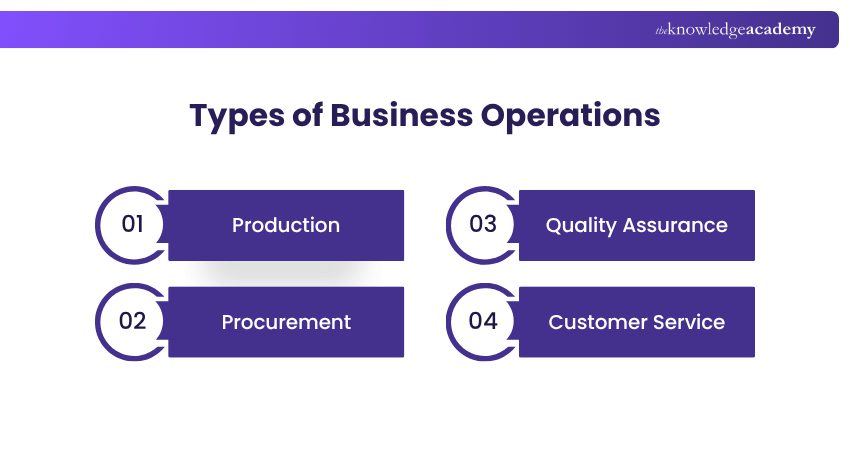
There are many types of business operations. They may vary from one business to another. Let’s discuss some common types found in most companies:
1) Production
Production means making products or giving services to customers. In a factory, this could be putting parts together to build something. In a service business, it could be cutting hair or fixing cars. Production is a key part of what a business offers to its customers.
Example:
A bakery’s production includes baking bread, cakes, and pastries every day for people who visit the shop or order online.
2) Procurement
Procurement means buying the things a business needs to work. This includes finding suppliers, getting good prices, and making sure items arrive on time. Without procurement management, a business can’t make its products or serve its customers properly.
Example:
A clothing brand buys fabric, buttons, and zippers from suppliers before making clothes in its factory.
3) Quality Assurance
Quality assurance means checking that the product or service is good and meets the right standards. It involves testing, looking for mistakes, and listening to what customers say. This helps the business avoid problems and keep people happy with what they get.
Example:
A smartphone company checks each phone for screen quality, battery life, and camera performance before packing it for sale.
4) Customer Service
Customer service is about helping customers before, during, or after they buy something. It includes answering questions, fixing problems, and giving support. Good customer service builds trust and helps customers feel important and happy.
Example:
An online shopping website offers 24/7 live chat to help customers with tracking orders, returns, or solving payment issues quickly.
Make smarter decisions that move business forward with the Business Management Training – Join now!
Business Operations in Different Sectors
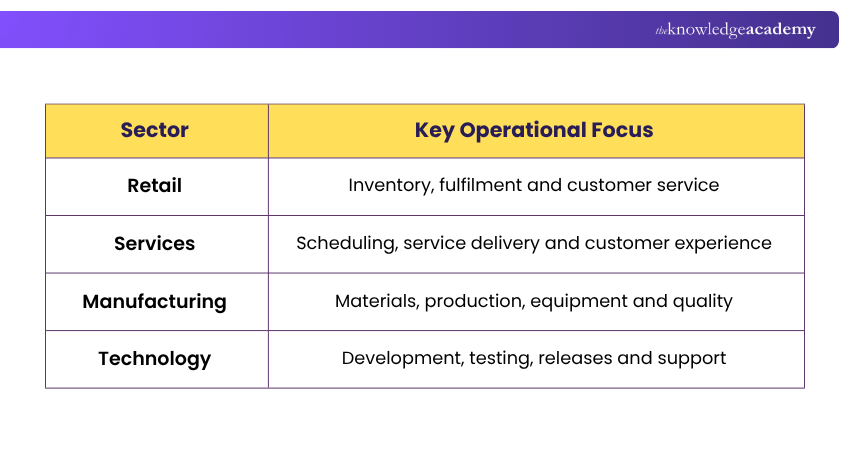
Different industries have different kinds of operations based on what they offer and how they work. Let’s look at how business operations are used in different sectors:
1) Retail Industry
In the retail industry, business operations include stocking shelves, managing cash registers, tracking inventory, and serving customers. Stores also need to make sure products are delivered on time and prices are updated. Online retail businesses also focus on packaging, delivery, and website management.
2) Service Industry
In service businesses like beauty salons, hotels, or consultancy firms, operations include booking appointments, providing the service, managing staff, and collecting customer feedback. The focus is more on how the service is delivered and how satisfied the customer is.
3) Manufacturing Industry
Manufacturing businesses make products. Their operations include buying raw materials, using machines to build products, checking quality, and shipping finished goods. They also maintain machinery, manage workers, and handle safety rules.
4) Technology Industry
Technology companies deal with software, apps, and digital tools. Their operations include coding, testing, launching products, fixing bugs, and providing customer support. They also focus on cybersecurity, data management, and regular updates to their products.
How to Improve Business Operations?
Running a business smoothly takes effort and planning. Here are some simple ways to make business operations better:
1) Performance Measurement
Businesses can make performance measurement more useful by selecting Key Performance Indicators (KPIs) that relate directly to their operational goals. Depending on the activity, these may include turnaround time, error rates, costs, output, delivery performance or customer satisfaction.
2) Keep Up With the Latest Trends
Keeping up with new trends helps businesses work better. New tools and technology can make tasks faster, reduce mistakes, and improve service. Learning about new methods helps businesses stay updated and work more smoothly.
3) Streamline Processes
Making tasks simpler helps save time and avoid confusion. This can be done by removing steps that aren’t needed, using smarter tools, or training staff properly. Clear and easy processes help work get done faster and better.
Trainer's Insight
Repeated delays, duplicated tasks, frequent errors, unclear responsibilities, rising costs or inconsistent results can indicate an inefficient process. Identifying where these issues occur can help businesses determine which operations require closer attention.
Functions of Business Operations
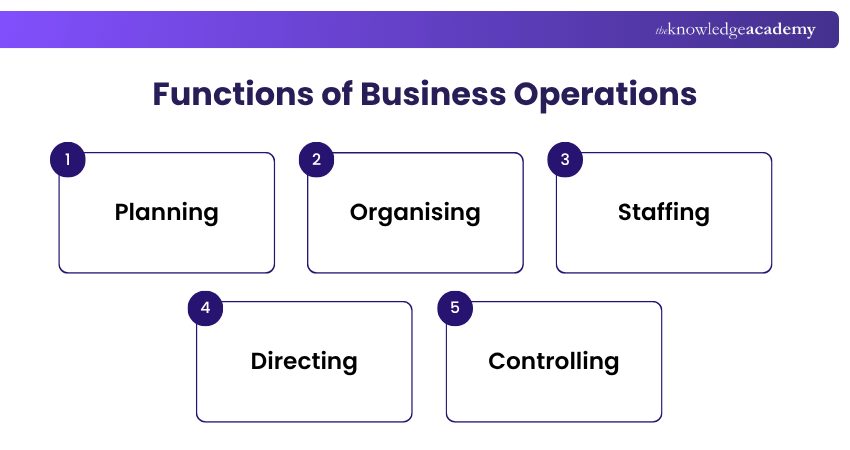
Business operations serve many roles in a company. Here are some important functions:
1) Planning
Planning means setting clear goals and deciding how to achieve them. It includes understanding what the business wants to do, checking available resources, and creating a step-by-step action plan to reach those goals.
2) Organising
Organising is about putting the plan into action. It includes assigning tasks, arranging resources, and setting up teams so that everyone knows what to do. This helps make work more organised and efficient.
3) Staffing
Staffing involves hiring the right people, giving them proper training, and placing them in the right roles. A skilled and knowledgeable team is an advantage in getting work done well and meeting business goals.
4) Directing
Directing means guiding and leading employees. It includes giving instructions, setting clear expectations, encouraging teamwork, and keeping everyone focused on the company’s goals.
5) Controlling
Controlling is checking if everything is going as planned. It involves tracking progress, comparing results with goals, and making changes if needed. This helps keep the business on the right path and improve performance.
Learn how to turn ambitious change into meaningful progress with the Business Transformation Strategy Training - Join now!
Importance of Business Operations
Business operations bring many good things to a company. These are some of the key benefits:
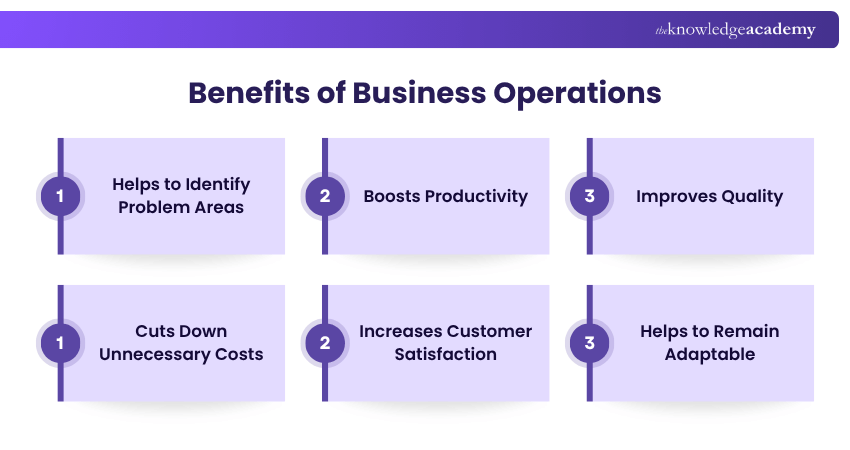
1) Spotting Problem Areas
1) Identifies slow or wasteful parts of the workflow
2) Detects where processes are not working well
3) Helps avoid delays and improve efficiency
4) Supports better use of resources
2) Boosting Productivity
1) Reviews and improves existing processes
2) Helps employees work faster and more accurately
3) Saves time and reduces errors
4) Increases overall work output
3) Improving Quality
1) Highlights flaws and gaps in processes
2) Reduces product or service defects
3) Supports consistent, high-quality delivery
4) Enhances customer trust in offerings
4) Cutting Costs
1) Finds and removes unnecessary steps
2) Uses resources more efficiently
3) Lowers waste across operations
4) Helps businesses save money
5) Increasing Customer Satisfaction
1) Ensures faster delivery and fewer issues
2) Improves overall customer experience
3) Builds trust and satisfaction
4) Encourages customer loyalty
6) Staying Adaptable
1) Allows regular review of business processes
2) Helps adjust to changing market needs
3) Supports compliance with new rules
4) Keeps businesses competitive and flexible
Keep This in Mind
Better operations do not simply mean completing work faster. Effective improvements should consider efficiency alongside quality, costs, customer experience and employee workload. Improving one measure at the expense of another may not produce a better overall outcome.
Limitations of Business Operations
Even though business operations are helpful, there are some limits:
1) Limited Predictive Ability
Business operations cannot always account for future conditions accurately. This is because the future is uncertain, and outside events like economic shifts or new laws can change operational requirements in ways a business cannot fully anticipate.
2) Dependence on Data Quality
Effective business operations rely on accurate and complete information. If the data is wrong, missing or obsolete, businesses may make poor operational decisions that affect efficiency and performance.
3) Human Bias
Sometimes, individual assumptions or priorities can impact how people make operational decisions. This bias can lead to decisions that are not completely based on information, which may reduce the quality of the outputs.
4) Ignoring the Bigger Picture
Concentrating only on operational numbers can cause a loss of essential information, like customer feelings, market trends or social behaviours. These non-numeric elements are sometimes just as essential in making well-rounded business decisions.
5) Narrow Focus
Some operational improvements may focus only on one part of a process. This can cause essential details to be missed or lead to changes that improve one area while creating problems elsewhere.
6) Can’t Predict Rare Events
Business operations cannot always prepare for unusual and rare events called black swan events, like sudden market crashes or pandemics. These unexpected events can have major effects on businesses.
7) Lack of Real-time Information
In fast-changing environments, using old data can lead to slow or outdated decisions. Without real-time data, companies may not react quickly enough to new developments or sudden changes.
Clear bottlenecks and keep progress moving by signing up with the Business Process Improvement Training - Join today!

Subiksha Arulprakash is a Copywriter with 5+ years of experience in content writing, editing, content development and digital marketing. Her experience researching and writing about Business Skills, ISO standards and compliance enables her to produce clear, accessible content for different audiences.
View Detail

 If you wish to make any changes to your course, please


