


We may not have the course you’re looking for. If you enquire or give us a call on 01344203999 and speak to our training experts, we may still be able to help with your training requirements.
Key Benefits of Facility Management
ByThe Knowledge AcademyLast updated on: 10 November 2026
Facility management often works behind the scenes, yet its impact is felt across the workplace. Understand how it contributes to operational stability, cost control and employee well-being.
Key Highlights
1. Facility management helps control operational expenses through planned maintenance and resource management.2. It supports productivity through efficient space utilisation and reliable workplace services.3. Facility management can help extend equipment lifespan and reduce the risk of unexpected breakdowns.4. It supports safer workplaces and adherence to relevant regulations.5. It encourages efficient energy use, waste reduction and responsible resource management.
Imagine arriving at work to find:
1) The air conditioning has stopped working.
2) Essential equipment needs urgent repairs.
3) Meeting rooms are poorly maintained.
4) Safety checks have been overlooked.
Even small disruptions can affect productivity and employee comfort. This is where effective facility management makes a difference. By keeping workplace facilities safe, functional and well-maintained, it helps organisations support daily operations. But its value goes beyond routine maintenance. This blog explores the key benefits it brings to organisations. So, continue reading!
Top Benefits of Facility Management
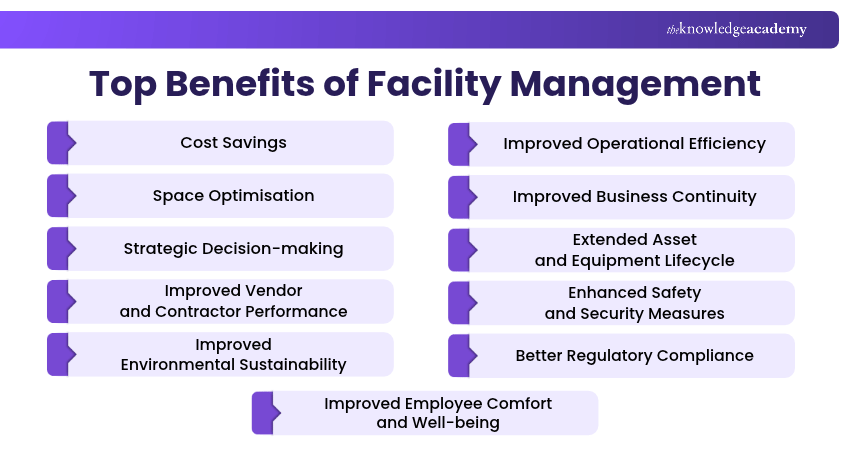
Effective facility management provides several advantages that support operational performance, workplace safety and long-term organisational goals. Here are the top benefits organisations can achieve through effective planning and management:
1) Cost Savings
Facility management helps organisations control operating expenses by improving resource allocation, maintenance planning and service management. Regular inspections and preventive maintenance can reduce the likelihood of expensive equipment failures and unexpected repairs.
It also supports cost management through efficient energy consumption, effective supplier agreements and appropriate use of building resources. By monitoring expenses and identifying areas of unnecessary spending, organisations can potentially achieve long-term savings.
Pro Tip
Compare the cost of planned maintenance with previous emergency repairs and associated downtime. This can help identify where preventive maintenance offers the best potential savings and where resources should be prioritised.

2) Improved Operational Efficiency
Facility management improves operational efficiency by coordinating building services, maintenance activities and workplace processes. Well-organised maintenance schedules and clear service procedures help teams respond to facility requirements with fewer delays.
Facility management software can also help teams monitor maintenance requests, track work orders and coordinate services more effectively. Better communication between departments and service providers supports faster issue resolution and reduces delays in everyday operations.
3) Space Optimisation
Space optimisation is an important benefit of facility management because it helps organisations use available workspace effectively. Facility Managers analyse occupancy patterns, employee requirements and workspace utilisation to identify overcrowded or underused areas.
This is particularly valuable in hybrid workplaces, where employee attendance may vary throughout the week. Flexible seating arrangements, meeting space management and occupancy monitoring can help organisations adapt their facilities to changing workplace requirements.
4) Improved Business Continuity
Facility management supports business continuity by helping organisations prepare for and respond to unexpected facility-related disruptions. These may include power failures, equipment breakdowns, natural disasters or other emergencies affecting building operations.
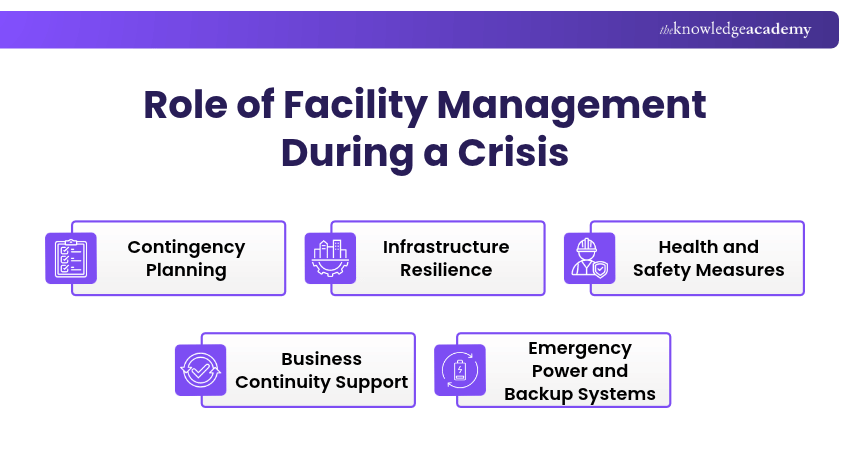
For example, a hospital may depend on backup generators and planned maintenance to support essential building services during a power outage. When properly maintained and tested, these systems can help reduce interruptions to essential operations. Let's check how facility management supports organisations during a crisis:
5) Strategic Decision-making
Facility management provides useful operational information that supports long-term business planning. Data related to maintenance costs, space utilisation, energy consumption and asset performance helps organisations evaluate how effectively their facilities are operating.
Facility Managers can use these insights to recommend building upgrades, identify investment priorities and allocate resources according to organisational requirements. For example, analysing the maintenance history and performance of ageing equipment may help an organisation decide whether continued repairs or replacement would offer better long-term value.
6) Extended Asset and Equipment Lifecycle
Facility management helps extend the useful life of building systems and equipment through planned maintenance, inspections and condition monitoring. These practices can reduce unnecessary wear, identify developing faults and prevent avoidable damage.
Regular servicing of Heating, Ventilation and Air Conditioning (HVAC) systems, electrical equipment and other essential assets helps maintain their performance and reliability. Accurate maintenance records also allow Facility Managers to monitor equipment condition and make informed decisions about repairs, upgrades and replacements.
Trainer's Insight
Not every building asset requires the same maintenance frequency. Consider equipment condition, operational importance, usage and manufacturer recommendations when developing maintenance schedules.
7) Improved Vendor and Contractor Performance
Facility management supports reliable service delivery by coordinating the vendors and contractors responsible for building operations. These may include cleaning providers, maintenance specialists, security contractors and technical service teams.
Facility Managers oversee service agreements, review contractor performance and monitor whether work meets agreed quality, safety and operational requirements. Clearly defined responsibilities and performance expectations help organisations identify service issues and address them promptly.
8) Enhanced Safety and Security Measures
Facility management plays an important role in maintaining safe and secure workplaces. This involves identifying hazards, maintaining relevant building systems and coordinating measures that protect employees, visitors and organisational assets.
Facility Managers may oversee fire safety systems, access controls, security equipment and workplace inspections. Regular maintenance and risk assessments help identify potential problems and support appropriate preventive measures. For example, arranging appropriate inspections and testing of fire alarms and emergency lighting can help identify faults that may affect their operation during an emergency.
Implement corrective actions that enhance workplace safety with Safety Investigation Training – Join now!
9) Improved Environmental Sustainability
Facility management supports environmental sustainability by helping organisations use energy, water and other resources responsibly. This may involve introducing energy-efficient lighting, improving HVAC performance, reducing water consumption and implementing waste management practices.
Monitoring resource consumption allows Facility Managers to identify inefficiencies and recommend improvements that reduce environmental impact. For example, adjusting lighting and temperature settings according to building occupancy may help reduce unnecessary energy consumption.
10) Better Regulatory Compliance
Facility management helps organisations support compliance with applicable building, workplace safety and operational requirements. Facility Managers coordinate inspections, maintain relevant records and support adherence to regulations that affect building operations.
Compliance activities may include fire safety inspections, equipment maintenance documentation, accessibility requirements and relevant health and safety procedures. Maintaining accurate records and addressing identified issues helps organisations demonstrate their compliance efforts and reduce the risk of penalties or operational interruptions.
11) Improved Employee Comfort and Well-being
Facility management contributes to employee comfort and well-being by maintaining clean, safe and functional working environments. Appropriate lighting, ventilation, temperature control and workplace maintenance can improve everyday working conditions.
Facility Managers also support employees by coordinating workplace services and addressing facility-related concerns, such as malfunctioning equipment or uncomfortable working areas. By responding to environmental complaints and maintaining suitable workplace facilities, they can help create a more comfortable and supportive working environment.
Facility Management Performance Checklist
Use the following checklist to assess important areas of performance.
□ Are critical building assets maintained according to appropriate schedules?□ Are workplace spaces being used effectively?□ Are safety inspections and compliance records up to date?□ Are energy consumption and waste levels monitored?□ Are emergency procedures and backup systems reviewed regularly?□ Is employee feedback considered when improving workplace facilities?
So, facility management helps organisations create safe, efficient and well-maintained workplaces. From controlling costs and improving operational performance to supporting sustainability and business continuity, its benefits extend across everyday operations.
A healthy workplace is the foundation of a thriving team. Learn how to ensure it with the Health & Safety in the Workplace Training – Sign up now!

The Knowledge Academy develops accessible learning content across Project Management, IT, Cybersecurity, Data Science, Business Analysis, HR, Accounting and Finance, Leadership and Health and Safety. Its resources combine subject research with clear explanations to help professionals build practical knowledge across a wide range of disciplines.
View Detail

 If you wish to make any changes to your course, please


