


We may not have the course you’re looking for. If you enquire or give us a call on +32 35001305 and speak to our training experts, we may still be able to help with your training requirements.
Top Benefits of Continuous Learning for Career Growth
ByThe Knowledge AcademyLast updated on: 18 November 2026
Explore key benefits of continuous learning for career growth, including stronger skills, improved employability, greater adaptability and personal fulfilment. Discover practical ways to build a learning habit, develop professionally and work towards your career goals.
The Gist
1. Continuous learning involves regularly developing knowledge and skills through training, experience and self-directed learning.2. Ongoing learning can prepare professionals for changing responsibilities, new opportunities and long-term career development.3. Professional training, mentoring, workplace experience and feedback help individuals develop skills relevant to their careers.4. Setting achievable goals and applying new knowledge can make continuous learning more effective.
Have you ever wondered why some professionals continue to grow while others struggle to keep up with changing workplace demands? One key difference is their willingness to keep learning and adapting.
As technologies and industry practices evolve, this willingness becomes increasingly important. Continuous learning helps professionals develop relevant skills, stay prepared for new challenges and pursue long-term career growth.
Beyond keeping skills up to date, continuous learning can improve workplace performance, open up new career opportunities and support personal development.
Benefits of Continuous Learning
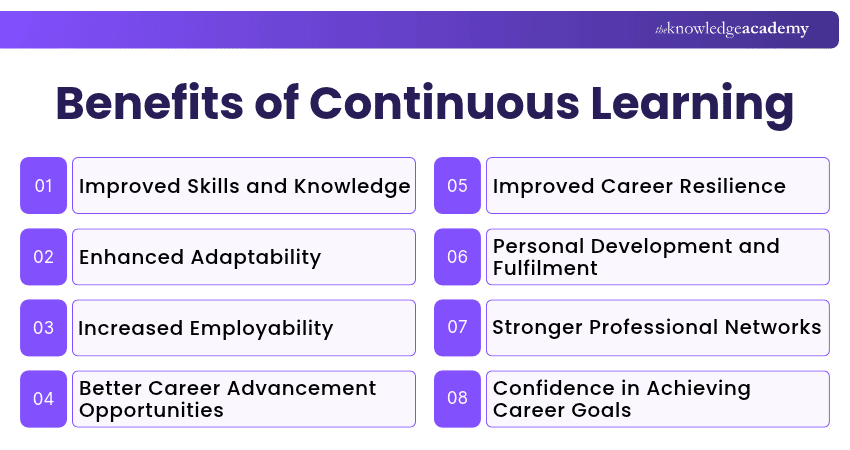
Continuous learning offers several advantages that can help professionals strengthen their capabilities, explore new opportunities and achieve long-term career goals. Here are eight major benefits of continuous learning:
1) Improved Skills and Knowledge
Continuous learning helps you acquire new skills, expand your knowledge and improve your existing abilities. By regularly exploring new concepts and techniques, you can perform your responsibilities more effectively and stay informed about developments in your field.
It also helps you identify areas where improvement is needed and develop the expertise required to handle more complex tasks. This ongoing development can make you a more capable and valuable professional.

2) Enhanced Adaptability
Workplaces constantly evolve due to technological advancements, changing business requirements and new industry practices. Continuous learning helps you adapt to these changes by developing relevant knowledge and improving your ability to handle unfamiliar situations.
It encourages flexibility and a willingness to explore new approaches, helping you respond to challenges with greater confidence.
3) Increased Employability
Employers often look for candidates who demonstrate relevant skills, practical knowledge and a willingness to learn. Continuous learning helps you strengthen these qualities by keeping your expertise aligned with changing industry requirements.
Developing new competencies and gaining relevant qualifications can also help you explore a wider range of job opportunities and demonstrate your commitment to professional development.
4) Better Career Advancement Opportunities
Continuous learning can support career advancement by helping you develop the knowledge and abilities needed for greater responsibilities. Whether you aim for a promotion, leadership position or specialised role, learning relevant skills can strengthen your preparation.
It also demonstrates initiative and a commitment to improvement, qualities that employers may value when considering employees for new opportunities.
5) Improved Career Resilience
Changes in technology, automation and industry requirements can affect existing job roles. Continuous learning helps you respond to these developments by updating your skills and exploring new areas of expertise.
Although learning cannot guarantee job security, it can strengthen your ability to adapt, remain employable and explore alternative career opportunities when circumstances change.
6) Personal Development and Fulfilment
Continuous learning contributes to personal growth by encouraging curiosity, creativity and self-improvement. Discovering new ideas and mastering unfamiliar skills can provide a sense of achievement and satisfaction.
It can also build confidence and encourage individuals to explore interests beyond their immediate professional responsibilities, making learning a rewarding part of everyday life.
7) Stronger Professional Networks
Participating in training programmes, workshops and professional learning communities creates opportunities to connect with people who share similar interests and goals.
These connections can help you exchange knowledge, gain different perspectives and learn from experienced professionals. Over time, they may also lead to mentoring relationships, collaborations and new career opportunities.
Trainer's Insight
Turn professional connections into learning opportunities by asking experienced colleagues for feedback or guidance on specific career challenges. Meaningful discussions and shared experiences can offer practical insights that formal training may not cover.
8) Confidence in Achieving Career Goals
Continuous learning can strengthen your confidence by helping you recognise what you have learned and apply new abilities to professional challenges. As your skills develop, you may feel better prepared to take on unfamiliar tasks and pursue career goals.
It also allows you to track your development, recognise achievements and adjust your approach as your professional aspirations evolve.
How to Develop a Continuous Learning Habit
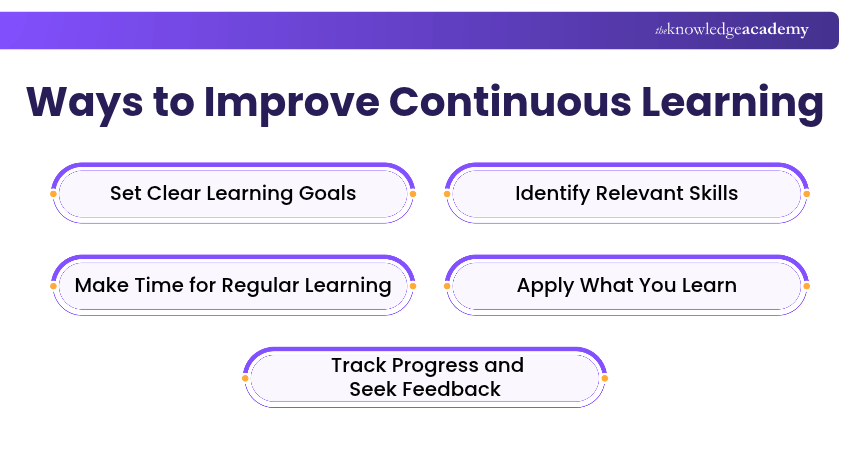
Understanding the benefits of continuous learning is important, but developing a consistent learning habit helps you gain lasting value from it. You do not need to make major changes to your routine to get started. Here are five practical ways to develop a continuous learning habit:
1) Set Clear Learning Goals
Start by identifying what you want to achieve through learning. Your goal could involve improving a technical skill, gaining a qualification or preparing for a new professional responsibility. Setting specific, achievable goals provides direction and helps you focus on learning activities that support your career aspirations.
2) Identify Relevant Skills
Review your current abilities and compare them with the requirements of your role or desired career path. This can help you identify skill gaps and determine which areas deserve attention. Focus on developing knowledge that supports your immediate responsibilities and long-term professional goals.
3) Make Time for Regular Learning
Balancing work, personal responsibilities and learning can be challenging. However, creating a realistic schedule can make professional development more manageable. Set aside dedicated time for learning activities such as reading, attending online courses or practising new skills. Regular learning sessions are often more manageable than trying to cover everything at once.
Pro Tip
Set aside 15 to 20 minutes for focused learning on suitable days. Short, consistent sessions can make it easier to develop new skills without overwhelming your existing work and personal commitments.
4) Apply What You Learn
Learning becomes more meaningful when you put new knowledge into practice. Look for opportunities to apply your skills through workplace tasks, personal projects or practical exercises. Using what you learn can strengthen your understanding, improve confidence and help you identify areas that need further development.
5) Track Progress and Seek Feedback
Regularly review your learning goals to understand how much progress you have made. You can track completed activities, newly developed skills and improvements in your performance. Seeking feedback from colleagues, mentors or trainers can also help you recognise strengths, identify weaknesses and adjust your learning approach.
Are You Making the Most of Continuous Learning?
Use the following checklist to assess whether your learning habits support your professional development and career goals:□ Am I learning skills relevant to my current role or future career goals?□ Am I keeping my knowledge updated with industry developments?□ Am I applying newly acquired skills in real-world situations?□ Am I exploring learning opportunities beyond formal training?□ Am I seeking feedback to identify areas for improvement?□ Am I using my learning to handle new challenges more confidently?□ Am I reviewing how my new skills support my career progression?□ Am I maintaining a healthy balance between learning, work and personal life?
Gain expertise in designing and implementing successful development initiatives with our Learning and Development Training – Join now!

The Knowledge Academy develops accessible learning content across Project Management, IT, Cybersecurity, Data Science, Business Analysis, HR, Accounting and Finance, Leadership and Health and Safety. Its resources combine subject research with clear explanations to help professionals build practical knowledge across a wide range of disciplines.
View Detail

 If you wish to make any changes to your course, please


