


 Top Rated Course

We may not have the course you’re looking for. If you enquire or give us a call on +43 720 115337 and speak to our training experts, we may still be able to help with your training requirements.
Why DevOps is Important? Key Benefits, Tools & Future Trends
Lily Turner 09 April 2026Discover Why DevOps is Important, its key benefits, best tools, and future trends. Learn how DevOps enhances efficiency, collaboration, and automation. This in-depth blog unpacks its core principles, real-world use cases, top tools, and long-term impact on organisational agility and digital transformation across industries.

Training Outcomes Within Your Budget!
We ensure quality, budget-alignment, and timely delivery by our expert instructors.
Table of Contents

The DevOps response to the above question explains Why DevOps is Important, especially in the current competitive technological environment, where development and operations teams need to be brought together to make the delivery of the software faster and efficient. DevOps helps to minimise gaps within the workflow and increase co-operation.
The next argument in support of Why DevOps is Important is the Benefits of DevOps like higher quality software, improved security, and better flexibility. Organisations with continuous integration and delivery are able to react rapidly to change. DevOps supports scalable innovation, and it is an essential factor of success in the era of the digital world.
Table of Contents
1) What is DevOps?
2) Why is DevOps Popular?
3) Why is DevOps important?
4) The Best Tools for DevOps
5) Best DevOps Practices
6) Challenges in implementing DevOps
7) The Future of DevOps
8) What are the Key Benefits of DevOps?
9) What are the Different Phases of the DevOps Lifecycle?
10) Conclusion
What is DevOps?
DevOps is a set of practices that combines Software Development (Dev) and IT operations (Ops), which are aimed at shortening the systems development lifecycle and providing continuous delivery with high software quality.
What is DevOps lies in its focus on collaboration, automation, and integration between development and operations teams, core DevOps concepts that improve efficiency and reduce time to market. It helps organisations streamline workflows, accelerate deployments, and deliver consistent, reliable software at scale.

Why is DevOps Popular?
The usage of DevOps is becoming popular because it addresses shortcomings that affect other models, such as Waterfall and Agile. Whereas Waterfall is inflexible and postpones testing, Agile will enhance flexibility but usually fails to integrate the development and operations personnel resulting in problems of integration and deployment.
DevOps is a combination of development and operations within the software development lifecycle where a collaborative culture of automation and accountability should take place. It solves the holes of previous models and makes releases quicker, more reliable, and continous feedback. DevOps may eliminate the disadvantages of both the Waterfall and Agile models, since it allows:
a) Greater Security: DevOps can ensure that security is embedded in every stage of the Software Development process, from design to deployment. DevOps can also automate security checks and audits and enable faster detection and resolution of security issues.
b) Increased Market Speed: DevOps can reduce the time to market for software products, enabling faster delivery of features and updates by properly defining tasks through a DevOps roadmap. DevOps can also enable faster feedback loops, customer validation, and faster adaptation to changing market demands.
c) Increased Conversions: DevOps can improve the user experience and satisfaction with software products, as it enables higher quality and reliability. DevOps can also enable better performance and scalability and better monitoring and analytics of user behaviour and feedback.

d) Customer Satisfaction: DevOps can enhance the customer value and loyalty of software products, as it enables more innovation and differentiation. DevOps can also enable more personalisation and customisation and enable more engagement and communication with customers.
e) Environment Stability: DevOps can ensure the Software Development environment is consistent and stable, enabling automation and standardisation of tools and processes. DevOps can also enable better visibility and traceability of the software development process and better collaboration and communication among team members.
f) Time Availability: DevOps can free up more time and resources for Software Development teams, enabling automation and optimising repetitive tasks. DevOps can also enable more focus and creativity, and more learning and improvement.
Gain insights into advanced DevSecOps practices and technologies in our DevSecOps Practitioner Certification - Register now!
Why is DevOps important?
DevOps is all about bringing the development and operations teams together under one umbrella. By doing this, businesses can manufacture products and services faster than traditional methods. Apart from this, they can rectify errors and release updates at the earliest. This hybrid culture is gaining much traction primarily due to its efficiency.
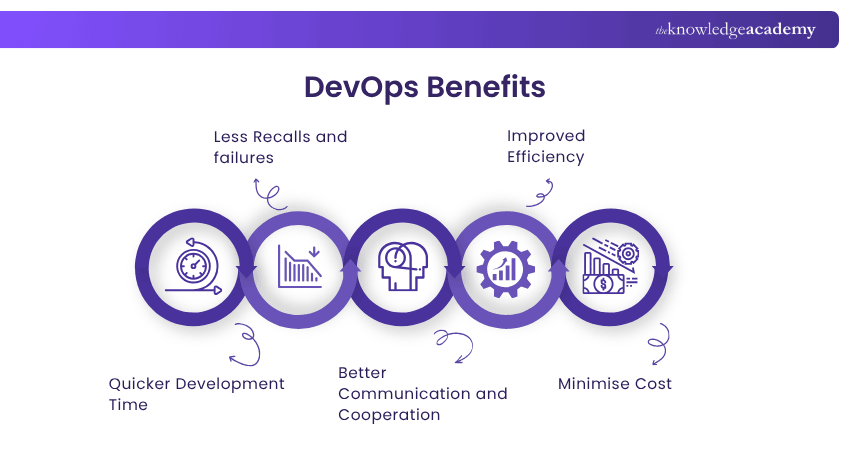
Quicker Development Time
Most organisations prior to DevOps used traditional Software Development processes in which there was no collaboration between the development and the operations team. This became the cause of delays in product launches and failure to monitor progress. The handoff of teams always entailed miscommunication, increased bottlenecks, and elongated development time, making it less efficient and time consuming to reach the market.
Less Recalls and Failures
Failure to deploy products is closely related to improper code, and this is further aggravated by longer development cycles. Reducing the cycle enables the teams to deploy more software, look over the code collaboratively, and identify errors over time. Attentive cooperation eliminates failure and rollbacks and shortens recovery.
Better Communication and Cooperation
Combining teams increases the work culture significantly. Plus, they will also become happier, leading to increased productivity. Increased communication and trust will allow more room for innovation and creativity. So, releasing the product will become their primary goal rather than their individual goals. Most importantly, no more waiting for one team to finish their work as everything will be combined.
Efficiency
Collaboration of both teams significantly increases work efficiency, resulting in faster development. Apart from increased productivity, there will be fewer errors, too. Other than that, some processes can be automated, and some can only be done manually. You can automate tasks like Software Testing by utilising the power of Artificial Intelligence (AI) and automation. This further increases productivity, and your team can focus on the processes that cannot be automated.
Less Cost
With DevOps, the work is done efficiently, and then there is automation, too. So, you won't need a lot of manpower to do the job anymore. This work efficiency and fewer workforce requirements will monumentally reduce operating costs, resulting in more profits. If you're exploring a career in this field, reviewing DevOps Interview Questions can help you gain a deeper understanding of the processes that drive this efficiency.
Sign up for our Certified Agile DevOps Professional (CADOP) Course and learn how to collaborate effectively with Process Stakeholders.
The Best Tools for DevOps
The DevOps life cycle starts with creating, storing, analysing, and reviewing your source code. Source Code Management includes Version Control, issue tracking, code review, packaging, and more. To enhance your understanding of these concepts, a DevOps Tools PDF can offer detailed explanations and resources. Here are five popular DevOps tools explained in detail:
Git
Git is a widely used DevOps tool in the software industry. It is a distributed Source Code Management (SCM) tool that remote teams and open-source contributors love. Git lets you track the progress of your development work. You can store different versions of your source code and go back to the previous version when needed. Consider the following:
a) Git allows experimenting with separate branches and merging features when ready.
b) It’s primarily a command-line tool but offers GUI clients for easier Source Code Management.
c) It’s integrated with source code editors like Visual Studio Code for streamlined usage.
d) It requires hosting source code in repositories for team collaboration in DevOps workflows.
e) It includes popular Git hosting services include GitHub, GitLab, and Bitbucket.
f) It supports public and private repositories, issue tracking, and Release Management.
g) It offers additional DevOps features like continuous development, security tools, code review, auditing, and collaboration functionalities.
Learn to integrate security practices seamlessly within DevOps frameworks in our Site Reliability Engineering Practitioner Training - Sign up now!
Mercurial
Mercurial is a free, distributed revision control tool in Python supported on Windows and Unix. Compared to Git, it is usually a good choice for less experienced Developers, with a simpler structure and syntax and an easy and intuitive Command-Line Interface (CLI). Consider the following:
a) Mercurial tracks changes to ensure the entire team works with the correct version of the code.
b) It uses a distributed model, where each user has a full repository copy on their machine.
c) It employs named branching for separate lines of development.
d) It is scalable and performs well with large codebases.
e) It features a plugin architecture for customisation by Developers.
f) It’s compatible with major hosting services like GitHub, Bitbucket, and Google Code.
g) It supports authentication and authorisation to manage codebase access.
h) It encrypts data in transit and at rest to ensure security.

Apache SVN
Apache SVN (Subversion) is a Source Code Management tool for Version Control to manage and track changes, and is often compared to Git in the SVN vs Git debate for its centralised approach. Apache SVN is good at handling large codebases and managing multiple code versions simultaneously. It is designed to work with other DevOps Tools, especially other Apache products like Maven.
Here are the important things to remember about Apache SVN:
a) SVN uses a centralised repository model, ensuring everyone works on the same version and reducing conflicts.
b) It provides a branching model for experimental or feature-specific work with easy merging into the main codebase.
c) It tracks changes to source code over time, enabling teams to revert to previous versions as needed.
d) It supports DevOps teams by facilitating quick issue resolution in fast-paced development and deployment cycles.
e) It offers Access Management to the codebase, ensuring only authorised users can make changes or access sensitive information.
f) It integrates security throughout the DevOps cycle, addressing critical concerns for DevOps teams.
Jira
Jira is a versatile platform for issue tracking and Project Management. It was developed by Atlassian, a leading IT company that offers various software tools, such as Confluence, Bitbucket, Trello, and Statuspage. You can use Jira in the Cloud or on your servers.
Here are some important points about Jira:
a) Jira originated as a bug-tracking tool and now supports various aspects of software development.
b) Jira enables various tasks such as project monitoring, branch and pull Request Management, code change tracking, and release handling.
c) It supports Agile Project Management with Scrum and Kanban boards, roadmaps, and reporting tools.
d) It features a strong automation engine with a drag-and-drop interface for creating automation rules.
e) It allows Jira tasks to be automated and integrated with tools like Bitbucket, GitHub, and Microsoft Teams.
f) It integrates seamlessly as part of the Atlassian Open DevOps suite of Cloud tools.
SonarQube
SonarQube is an open-source tool for code review that works with 27 Programming Languages. It is great for analysing the source code of multi-language applications. It helps you maintain code quality and security throughout the development process by automatically applying thousands of static code analysis rules.
Here are some key points to remember about SonarQube:
a) SonarQube’s quality gates evaluate source code for bugs, vulnerabilities, code smells, coverage, and duplications.
b) Quality gates determine if the code meets release criteria and assist in reviewing pull requests.
c) It monitors overall code health and identifies new issues in the codebase.
d) It provides visualisations to display the state of the codebase.
e) It supports Cloud and on-premises deployment.
f) It integrates with DevOps tools like GitHub, GitLab, Jenkins, Azure Pipelines, and Bitbucket.
g) It requires minimal configuration for setup.
h) It improves security through continuous code inspection in DevOps workflows.
Enhance your career with our Certified DevOps Security Professional (CDSOP) Training– Sign up now!
Best DevOps Practices
Some of the DevOps best practices are:
1) Cultivate a collaborative culture with open, blameless communication.
2) Implement Continuous Integration and Delivery (CI/CD) practices.
3) Establish robust automated testing frameworks.
4) Prioritise observability and identify meaningful metrics.
5) Avoid manual work with automation.
6) Integrate security considerations early in the development lifecycle.
7) Analyse incidents to create and refine processes.
8) Focus on concepts first, then find the right tools.
9) Adopt Infrastructure as Code (IaC) and advocate for a self-service infrastructure model.
10) Don’t create a separate DevOps team.
11) Avoid having a single DevOps hero and ensure that knowledge is spread across teams and team members.
12) Don’t attempt to automate and change everything at once. Take a gradual approach.
13) Avoid chasing new tools.
14) Maintain a balance between quality and speed.
15) Don’t give up on Continuous Improvement.
16) Ensure thorough documentation and promote knowledge sharing.
Challenges in implementing DevOps
Here are some challenges involved in implementing DevOps:
1) Transitioning from Legacy Applications to Microservices: Legacy technology can hinder competitiveness. Moving to microservices introduces complexity, robust Configuration Management, automation, and CI/CD to handle the operational demands of DevOps.
2) Adopting and Integrating New Tools: Choosing and integrating tools for development, testing, and deployment can be challenging. The DevOps Cheat Sheet provides a quick reference to ensure tools meet security requirements, align with infrastructure, and include comprehensive training to maintain productivity.
3) DevOps Governance: DevOps enforces strict governance, including access control, SLAs, and Change Management processes, which can be daunting for new adopters.
4) Managing Multiple Environments: Increasing application complexity demands distinct development, staging, testing, and production environments.
5) bottom-up collaboration: devops encourages a culture where Developers and operations teams choose the best tools and platforms, challenging traditional top-down decision-making.
6) Building a DevOps Centre of Excellence (CoE): Centralising knowledge reduces reliance on key individuals and ensure smoother transitions when team members leave. However, to set up a DevOps CoE, you need professionals with in-depth experience with DevOps challenges and solutions, and such resources are not widely available.
7) Overcoming Change Resistance: Introducing DevOps requires a gradual, well-planned, but time-consuming approach to ease cultural and technical resistance.
8) Measuring Success: Measuring success can be a huge challenge. Success metrics for DevOps should be determined by experts who can accurately quantify the delivered value, not by cost-saving measures alone.
9) Budget Considerations: DevOps is not solely about cost reduction; it drives revenue growth by enabling organisations to deliver greater value to customers. However, implementing DevOps requires budgets and specialised resources.
Attain knowledge about DevOps principles, practices, and related frameworks in our comprehensive DevOps Engineering Foundation Course - Sign up now!
The Future of DevOps
The future of DevOps is shaped by the growing automation and integration of AI and Machine Learning. This highlights the DevOps Engineer roles and responsibilities, ensuring more efficient, seamless, and secure software delivery. As a result, collaboration and innovation across different IT teams will be significantly enhanced. Let us explore the future of DevOps in more detail:
Automation
Automation in DevOps will streamline complex processes, reducing manual errors and increasing efficiency. Let us see some more ways automation will influence the future of DevOps:
a) Organisations can give quicker responses to market changes with the help of automation. It will also accelerate the DevOps cycle and help keep the business competitive.
b) Automation will ensure that the processes will have less human error and are consistent and reliable. Every deployment will have the same set of procedures, making the results more stable and predictable.
c) With the help of automation, the bridge between development, operations and IT teams will be connected, and the shared environment will have better communication and collaboration.
d) Automation allows DevOps practices to be scaled more effectively. With the increase in infrastructure and complexity of applications, these automated processes can manage the complexities more efficiently than manual efforts.
e) Automation greatly reduces labour costs as it requires minimum manual interventions, which leads to faster deployment and a reduction in costs in projects.
Artificial Intelligence for IT Operations (AIOps)
Artificial Intelligence for IT Operations or AIOps will have a significant impact on the future of DevOps in several ways. Some of these are:
a) With the help of AIOps, organisations can predict potential issues and failures within the system. This analysis will allow the DevOps team to address the problems and reduce downtime, which will improve system reliability.
b) It will also help with intelligent decision-making and automated processes. This will optimise workflows and manage resource allocation, which will automate even complex tasks. This will help enhance the overall efficiency of DevOps practices.
c) With the help of AIOPS, incident management can be efficiently handled. It can quickly identify, categorise and address IT issues.
d) It also facilitates continuous feedback learning cycles, which is essential for DevOps. With the help of operational data, actionable insights and strategies can be derived, which will help in refining the process.
e) AIOPs provide a unified view of the IT environment. It allows collaboration between development and operation teams, which is crucial in breaking down silos and promoting a more unified DevOps culture.
Cloud Optimisation
The future of DevOps will remain to be Cloud Optimisation because of the effectiveness in sustaining scalable, efficient DevOps operations at reasonable costs. Specifically, the AWS DevOps approaches are critical in optimising the use of resources and automation on Cloud.
a) With effective strategies of cloud optimisation, the DevOps teams which are working on scalable, cloud-native applications can avoid the misuse of any resource, especially if they are still paying for its unused capacity.
b) With the help of cloud optimisation, DevOps teams will scale resources only on demand. There will be flexibility in handling different workloads, which will ensure that the applications are running smoothly despite any demand.
c) With the help of cloud optimisation tools, the DevOps teams can make informed decisions, which will help in allocating and scaling resources. This will ensure that the applications have the resources without going to waste.
d) The DevOps teams will have an easier time in Cloud Management as it will automate routine tasks such as resource allocation, backups and security checks.
Discover the pros and cons of Continuous Delivery vs Continuous Deployment for seamless DevOps!
What are the Key Benefits of DevOps?
DevOps can achieve efficiency, quality, and collaboration in software development. The key benefits are:
1) DevOps facilitates speedy production of software since it automated the development and deployment procedures.
2) It enhances coordination among development and operation teams by having common objectives and communicating.
3) Continuous integration and continuous testing guarantee maintenance of quality and problems within code.
4) The DevOps practice enhances the quality of software by ensuring that any bugs are identified in initial stages and the failure levels minimised.
5) It enhances increased scalability and freedom of adaptation, hence enabling teams to adjust rapidly.
6) DevOps automation avoids manual work and considerably decreases operations expenses.
Attain knowledge about DevOps principles, practices, and related frameworks in our comprehensive DevOps Engineering Foundation Course - Sign up now!
What are the Different Phases of the DevOps Lifecycle?
DevOps Stages and Lifecycle includes a certain number of interrelated parts that guarantee continuous delivery and enhancements. The important phases are:
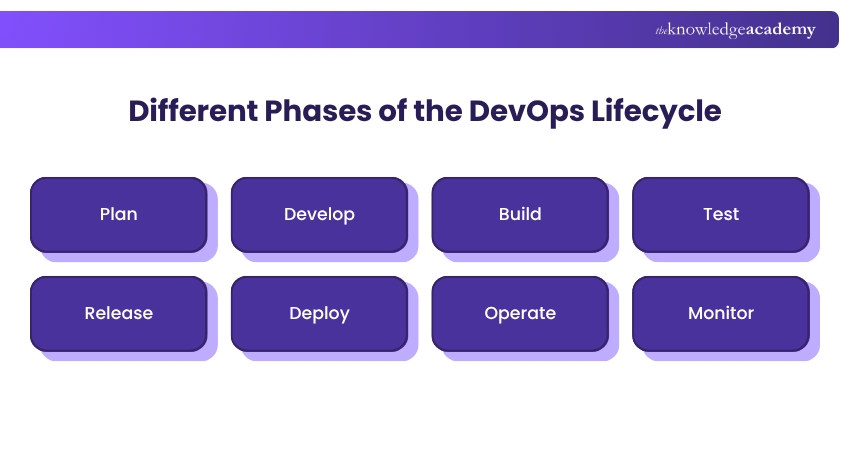
1) Plan: Define project scope, requirements, and objectives.
2) Develop: Write, review, and manage source code.
3) Build: Compile code and create deployable builds.
4) Test: Perform automated and manual testing for quality.
5) Release: Approve and schedule production deployments.
6) Deploy: Deploy code to live environments reliably.
7) Operate: Monitor application performance and system health.
8) Monitor: Gather feedback and analyse data for improvement.
Conclusion
In conclusion, understanding Why DevOps is Important gives contemporary companies the opportunity to increase cooperation, automate operations, as well as guarantee continuity, to make the innovations, much faster, enhance its quality, and increase its flexibility during software development. For those looking to dive deeper into Jenkins, exploring Jenkins Interview Questions can offer valuable insights into its role in DevOps.
Sign up for our DevOps Leader Certification and acquire the skills to improve your work efficiency!
Frequently Asked Questions
What are Some Cool Facts About DevOps?

Here are some cool facts about DevOps:
a) The global market of DevOps is predicted to hit £23.67 billion by 2028, according to DevOps Global Market Report 2024.
b) As per the same report, it is expected to grow at a Compound Annual Growth Rate (CAGR) of 23.5 per cent.
Why is DevOps Needed?
DevOps is needed to bridge the gap between Software Development and IT operations, ensuring faster, more efficient deployment of software. It fosters a culture of collaboration, leading to continuous integration, automated testing, and rapid delivery.
What is Knowledge Pass, and How Does it Work?
The Knowledge Academy’s Knowledge Pass, a prepaid voucher, adds another layer of flexibility, allowing course bookings over a 12-month period. Join us on a journey where education knows no bounds.
What are the Other Resources and Offers Provided by The Knowledge Academy?
The Knowledge Academy takes global learning to new heights, offering over 3,000+ online courses across 490+ locations in 190+ countries. This expansive reach ensures accessibility and convenience for learners worldwide.
Alongside our diverse Online Course Catalogue, encompassing 17 major categories, we go the extra mile by providing a plethora of free educational Online Resources like Blogs, eBooks, Interview Questions and Videos. Tailoring learning experiences further, professionals can unlock greater value through a wide range of special discounts, seasonal deals, and Exclusive Offers.
What are Related Courses and Blogs Provided by The Knowledge Academy?
The Knowledge Academy offers various DevOps Certification Courses, including Certified DevOps Professional, Certified Agile DevOps Professional, and Certified DevOps Security Professional. These courses cater to different skill levels, providing comprehensive insights into What is DevOps.
Our Programming and DevOps Blogs cover a range of topics related to DevOps, offering valuable resources, best practices, and industry insights. Whether you are a beginner or looking to advance your Programming and DevOps skills, The Knowledge Academy's diverse courses and informative blogs have you covered.

Lily Turner


Senior AI/ML Engineer and Data Science Author
Lily Turner is a data science professional with over 10 years of experience in artificial intelligence, machine learning, and big data analytics. Her work bridges academic research and industry innovation, with a focus on solving real-world problems using data-driven approaches. Lily’s content empowers aspiring data scientists to build practical, scalable models using the latest tools and techniques.
View Detail
Upcoming Programming & DevOps Resources Batches & Dates
Date
 Certified DevOps Professional (CDOP)
Certified DevOps Professional (CDOP)
Thu 1st Oct 2026
Certified DevOps Professional (CDOP)
Thu 17th Dec 2026

 If you wish to make any changes to your course, please


