


 Top Rated Course

We may not have the course you’re looking for. If you enquire or give us a call on + 1-866 272 8822 and speak to our training experts, we may still be able to help with your training requirements.
Critical Success Factors: The Ultimate Guide
William Brown 04 February 2026Critical Success Factors are key elements an organisation must achieve to meet its goals, influenced by strategy, industry, and operational priorities. They vary by industry, but all guide strategic focus, resource allocation, and performance measurement. These factors help leaders align operations to drive growth and sustainability.

Training Outcomes Within Your Budget!
We ensure quality, budget-alignment, and timely delivery by our expert instructors.
Table of Contents

Let’s say a new restaurant opens with a star chef, stylish décor, and glowing reviews; but it shuts down in six months. Why? Because it missed the Critical Success Factors. These are the essential elements that directly impact success, yet many overlook them. Moreover, they help you focus, prioritise, and align your vision with real, measurable outcomes. In this blog, we’ll explore how recognising and applying these key factors can transform plans into lasting achievements.
Table of Contents
1) What are Critical Succes Factors (CSFs)?
2) Why Do Critical Success Factors Matter?
3) When Should You Define Critical Success Factors?
4) Key Terms Related to Critical Success Factors
5) Types of Critical Success Factors
6) How to Identify Critical Success Factors in Your Organisation?
7) How Do You Measure Critical Success Factors?
8) Advantages of Implementing Critical Success Factors
9) Examples of Critical Success Factors
10) Conclusion
What are Critical Success Factors (CSFs)?
Critical Success Factors are critical factors that define how an organisation is capable of attaining its objectives. Simply put, they are the key areas or activities that a business needs to concentrate on in order to reach success and growth.
As an example, one of the Mexican restaurants that had low profits identified its Critical Success Factors: to improve the quality of food and use fresh ingredients, provide home delivery, and lower prices on the most popular dishes. Such strategic moves resulted in a considerable increase in profits.

Why Do Critical Success Factors Matter?
Critical Success Factors (CSFs) assist organisations in being focused on what actually makes them successful. They give a sense of direction, so that each team activity is in line with the performance, objectives, and mission of the organisation.
Monitoring and tracking of CSFs enables businesses to plan resource prioritisation, manage risks effectively, and gauge progress. This strategy will encourage responsibility, increase output, and ensure strategic long-term development.
When Should You Define Critical Success Factors?
Defining Critical Success Factors (CSFs) is essential in steering projects to success. These are the major areas that should be implemented to meet the organisational goals and objectives without leaving any project activities outside the strategic goals and priorities.
Detecting CSFs at the planning stage allows effective resource allocation, risk management and monitoring of performance. Their early creation will help project managers provide clear expectations and maintain the team on the path towards success in meeting key milestones, as they will be strategic, focused, and have measurable outcomes.
Key Terms Related to Critical Success Factors
To understand Critical Success Factors in-depth, there are a few key terms every Strategic Business Management professional should remember. They are described below:
1) Key Result Area (KRA)
KRAs define key focus areas based on roles, like food quality maintenance being a Head Chef’s responsibility in a restaurant.
2) Critical Success Criteria (CSC)
CSC defines measurable criteria to validate a goal as a CSF, like 4.5-star ratings for sourcing fresh ingredients daily.
3) Key Success Area (KSA)
Key Success Area is a broad focus needing success, like food quality; CSF is the specific action, like sourcing ingredients.
Become a certified Business Process Expert with our BCS Practitioner Certificate In Modelling Business Processes- Join today!
Types of Critical Success Factors
Understanding the various types of CSFs is essential for steering an organisation towards its strategic objectives. Additionally, these CSFs can be categorised into five key areas: strategic focus, people, operations, marketing, and finances.

1) Strategic Focus
This involves leadership, planning, and management practices aligned with the organisation’s core values and mission. A strong strategic focus ensures all goals are supported by clear strategies, responsibilities, and tactics, helping to build a competitive and sustainable advantage.
2) People
The human element is crucial; selecting staff based on strengths, talent, and attitude, and offering equal development opportunities, enhances performance. Recognising and rewarding both individual and team success contributes to a motivated and high-performing workforce.
3) Operations
Efficient operations require streamlined processes that deliver maximum value to customers. Clearly communicating these processes to responsible staff ensures accountability and consistency, helping maintain high standards of quality and efficiency.
4) Marketing
Effective marketing is rooted in understanding customer needs and responding to feedback. It involves positioning the brand with long-term advantages in mind, while also building and maintaining strong customer relationships.
5) Finances
Sound Financial Management includes controlling cash flow, ensuring profitability, and maintaining competitive pricing. Effectively interpreting and using financial data supports informed decision-making and long-term financial health.
By focusing on these five critical areas, organisations can better align operations with strategic goals, enhance performance, and achieve sustainable success.
Boost your career and join our BCS Professional Certificate in Benefits Planning and Realisation today!
How to Identify Critical Success Factors in Your Organisation?
Identifying strategic success factors helps ensure your organisation focuses on what truly drives strategic success. Follow these steps to align efforts and resources with your long-term goals:
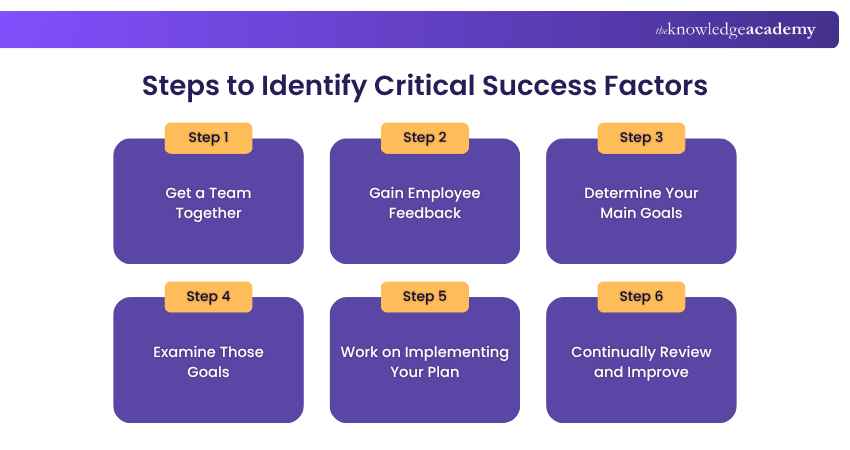
1) Get a Team Together
Form a diverse team that includes employees from all levels and departments. This ensures a wide range of perspectives and helps develop well-informed Critical Success Factors aligned with organisational goals.
2) Gain Employee Feedback
Collect feedback from all employees through meetings or surveys to understand their views on company goals. Use their insights to build a more accurate and inclusive list of Critical Success Factors.
3) Determine Your Main Goals
Identify both short-term and long-term business goals based on feedback. Then, develop practical strategies like budgeting or restructuring to achieve these goals effectively.
4) Examine Those Goals
Analyse your goals in detail and narrow them down to the most crucial ones. Communicate these key goals across the organisation so everyone understands what drives success.
5) Work on Implementing Your Plan
Prioritise and allocate resources for each Critical Success Factor. Implement them strategically, focusing on the most impactful areas first to achieve measurable progress.
6) Continually Review and Improve
Monitor the effectiveness of each Critical Success Factor regularly. Strengthen successful strategies and refine underperforming ones to ensure continuous improvement and sustained business growth.
Turn data into decisions – Join our Business Analysis Courses today!
How Do You Measure Critical Success Factors?
Critical Success Factors (CSFs) are measured using Key Performance Indicators (KPIs), which provide specific, measurable benchmarks for success. While CSFs represent overarching goals, KPIs break them into tangible metrics that track progress and performance.
For example, if a CSF is to enhance sales team performance, related KPIs could include completing sales training for 1,200 employees by Q3 and increasing new customer revenue by 8%. Managers regularly assess these KPIs to ensure alignment with strategic objectives and make adjustments when needed.
Advantages of Implementing Critical Success Factors
Implementing Critical Success Factors (CSFs) within your company offers numerous benefits. Here are some key advantages:
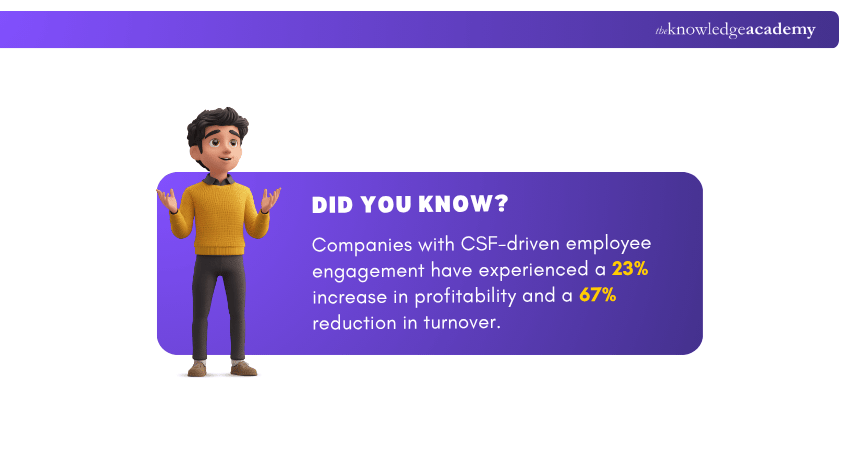
1) Improved Performance Measurement: Focuses on key impactful goals, removing outdated indicators to enhance efficiency and competitiveness.
2) Better Resource Allocation and Prioritisation: Optimises resource use, reduces waste, and boosts profitability for sustainable growth.
3) Streamlined Performance Reporting: Provides clear, measurable data, simplifying reporting and decision-making processes.
4) Boost in Employee Satisfaction: Sets clear goals that increase motivation, morale, and departmental productivity.
5) Higher Levels of Achievement: Encourages effective goal attainment and establishes new benchmarks for future success.
Boost your practical Benefits Management knowledge- Sign up for our BCS Practitioner Certificate In Benefits Management And Business Acceptance today!
Examples of Critical Success Factors
Here are some key examples of Critical Success Factors (CSFs) across various industries. These are general examples that may apply to many businesses within each industry:
1) Hospitality: High customer feedback, quality and reliable service, effective marketing, appealing menu, and higher profit margins.
2) Media: Ethical news sourcing, extensive news coverage, more diversity in departments, improved written quality, and better production value.
3) Health: Equal patient care, better hygiene standards, upholding clinical practices, swifter treatment times, and improved Verbal Communication.
4) Marketing: Improved delivery speed, decreased production costs, better product research, more accessible budget, and heightened audience attraction.
5) Retail: Cleaner shop floors, improved customer communication, better product offerings, faster employee reactions, and more effective Marketing Campaigns.
6) Banking: Better financial security, increased client retention, lower overall costs, strengthened Financial Assets, and improved success against competition.
7) Transportation: Better Time Management, improved vehicle hygiene, increased customer satisfaction, safer driving standards, and more shift flexibility.
8) Engineering: Cost-effective production, innovative product design, effective risk identification, improved development rates, and a more productive environment.
9) Manufacturing: Low-cost production, safe manufacturing procedures, enhanced employee satisfaction, improved work rates, and increased product quality.
Conclusion
Success doesn’t happen by chance; it’s shaped by focus, clarity, and the right direction. Critical Success Factors give you that direction, helping you steer your goals with purpose. When you know what truly matters, every effort counts. Start aligning your vision with what leads to real, lasting results.
Develop core Business Analysis skills- join our BCS Certificate in Business Analysis Practice today!
Frequently Asked Questions
What Are the Four Functions of CSF?

The four functions of CSFs are setting priorities to focus on key success areas and guiding decisions to align actions with goals. They also include measuring progress with clear benchmarks and allocating resources efficiently to critical tasks for achieving success.
What Is the Primary Purpose of CSF?
The primary purpose of CSFs is to identify and focus on the critical areas and actions essential for achieving organisational success. They help prioritise efforts, guide decision-making, measure progress, and allocate resources efficiently to meet strategic goals.
What are the Other Resources and Offers Provided by The Knowledge Academy?
The Knowledge Academy takes global learning to new heights, offering over 3,000+ online courses across 490+ locations in 190+ countries. This expansive reach ensures accessibility and convenience for learners worldwide.
Alongside our diverse Online Course Catalogue, encompassing 19 major categories, we go the extra mile by providing a plethora of free educational Online Resources like Blogs, eBooks, Interview Questions and Videos. Tailoring learning experiences further, professionals can unlock greater value through a wide range of special discounts, seasonal deals, and Exclusive Offers.
What is The Knowledge Pass, and How Does it Work?
The Knowledge Academy’s Knowledge Pass, a prepaid voucher, adds another layer of flexibility, allowing course bookings over a 12-month period. Join us on a journey where education knows no bounds.
What are the Related Courses and Blogs Provided by The Knowledge Academy?
The Knowledge Academy offers various Business Analysis Courses, including the BCS Foundation Certificate in Organisational Behaviour, BCS Practitioner Certificate in Modelling Business Processes Training, and the BCS Foundation Certificate in Digital Business Change Training. These courses cater to different skill levels, providing comprehensive insights into Net Present Value (NPV).
Our Business Analysis Blogs cover a range of topics related to Process Optimisation and Strategic Planning, offering valuable resources, best practices, and industry insights. Whether you are a beginner or looking to advance your Business Analysis skills, The Knowledge Academy's diverse courses and informative blogs have got you covered.

William Brown


Senior Business Analyst and Strategic Advisor
William Brown is a senior business analyst with over 15 years of experience driving process improvement and strategic transformation in complex business environments. He specialises in analysing operations, gathering requirements and delivering insights that support effective decision making. William’s practical approach helps bridge the gap between business goals and technical solutions.
View Detail
Upcoming Business Analysis Resources Batches & Dates
Date
 BCS Foundation Certificate in Organisational Behaviour
BCS Foundation Certificate in Organisational Behaviour
Thu 16th Apr 2026
BCS Foundation Certificate in Organisational Behaviour
Thu 20th Aug 2026
BCS Foundation Certificate in Organisational Behaviour
Thu 12th Nov 2026

 If you wish to make any changes to your course, please


