


 Top Rated Course

We may not have the course you’re looking for. If you enquire or give us a call on +1 7204454674 and speak to our training experts, we may still be able to help with your training requirements.
20 Essential Music Production Tips for Beginners
The Knowledge Academy 15 July 2026Music Production Tips include strong songwriting, quality sound selection, and referencing professional tracks for better arrangements and overall clarity. Keep your levels balanced and avoid overcrowding the mix with too many layers. Take regular breaks and listen on different speakers or headphones to catch hidden issues.

Training Outcomes Within Your Budget!
We ensure quality, budget-alignment, and timely delivery by our expert instructors.
Table of Contents

Great music rarely happens by accident. Behind every catchy song is careful planning, smart sound choices, and creative experimentation in the studio. Whether you’re a beginner or improving your skills, the right Music Production Tips can make a noticeable difference.
You don’t need expensive equipment to start producing better tracks. With practice, critical listening, and a few simple techniques, your mixes can sound clearer and more professional. Let’s look at the key ideas that can help you shape your sound.
Table of Contents
1) What is Music Production?
2) 20 Music Production Tips and Tricks
a) Acquire Quality Sound
b) Master Your DAW
c) Get to Know Your Tools
d) Embrace MIDI Editing
e) Learn Music Theory
3) Conclusion
What is Music Production?
Music Production is the intricate process of creating, shaping, and arranging musical elements to compose a cohesive and compelling audio experience. It encompasses numerous artistic, technical, and creative tasks that transform musical ideas into tangible soundscapes that resonate with listeners on emotional and aesthetic levels. Basically, Music Production fuses together technical expertise with artistic vision, resulting in the birth of songs, compositions, and sonic narratives that span genres and cultures.

20 Music Production Tips and Tricks
When it comes to Music Production, the pursuit of excellence is a continuous journey. Whether you're just starting out or are a seasoned producer looking to refine your skills, these 20 Music Production Tips and tricks will provide valuable knowledge and techniques to help you craft tracks that captivate and resonate with your audience. So, let’s have a detailed look at each one of them:
1) Acquire Quality Sound
One of the best Music Production Tips you will hear is setting a foundation for your sonic journey. It begins with the acquisition of high-quality sounds. The sounds you choose will shape the very essence of your compositions, determining whether they emerge as mediocre or masterful. Key factors that you need to keep in mind are:

a) Curating Your Sound Palette: Investing in premium sound libraries and sample packs can make a world of difference. These resources offer meticulously crafted sounds that have been professionally recorded and processed.
b) Authenticity and Originality: Starting with high-quality sounds streamlines the mixing and production process. Clean recordings and well-designed virtual instruments inherently possess a clarity that requires less effort to integrate into your mix.
Discover our Music Production Course and learn to create polished, professional music with confidence and creativity.
2) Master Your DAW
Digital Audio Workstation (DAW) serves as the canvas upon which you paint your sonic masterpiece. Mastery of your DAW is an indispensable skill that empowers you to navigate the intricate landscape of Music Production with finesse and efficiency. Using DAW can provide you with the following benefits:
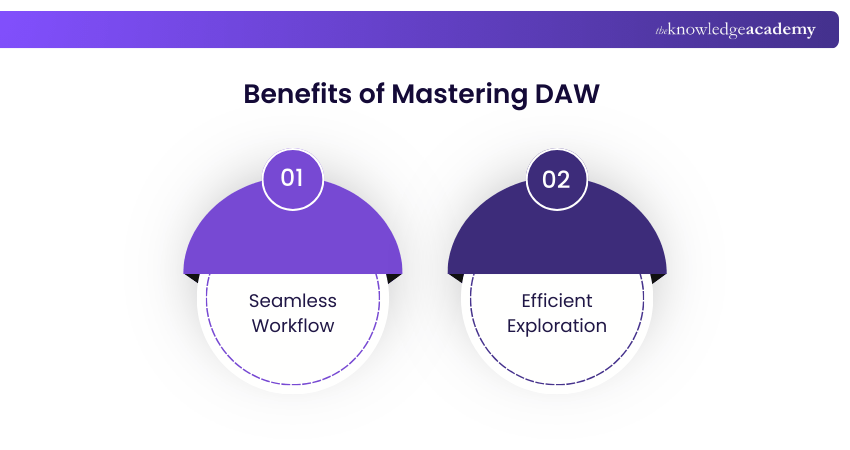
a) Seamless Workflow: A deep understanding of your DAW's features and functionalities leads to a smoother workflow. Learning keyboard shortcuts, menu navigation, and customising your workspace allows you to work faster and more intuitively.
b) Efficient Exploration: Mastering your DAW means you can effortlessly explore its vast range of tools and capabilities. From virtual instruments to audio effects, Musical Instrument Digital Interface (MIDI) manipulation to automation, each component becomes a tool in your creative weapon.
Join our Piano Course today and start mastering beautiful melodies with confidence, skill, and creativity.
3. Get to Know Your Tools
Understanding your tools is essential in Music Production, allowing you to work confidently, make faster decisions, and create higher‑quality tracks. While it may be tempting to collect endless plug‑ins, true efficiency comes from deeply learning a small, reliable toolkit. Moreover, it provides the following benefits:
a) Helps Improve Speed and Efficiency: Knowing your plug‑ins well, rather than owning many, prevents workflow slowdowns.
b) Helps Develop Consistent, Professional Results: Focusing on a smaller, well‑understood set of tools gives you more control over your sound.
4) Embrace MIDI Editing
MIDI Editing is a powerful tool in the realm of Music Production, allowing you to breathe life into your virtual instruments and compositions. While MIDI data represents musical notes and rhythms in a digital format, embracing it goes beyond mere technical adjustments. Moreover, it provides the following benefits:
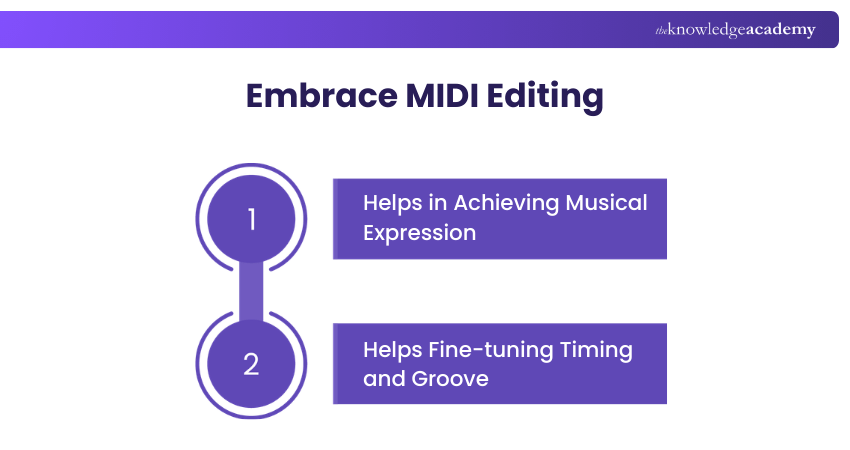
a) Helps in Achieving Musical Expression: MIDI Editing grants you the ability to add nuanced musical expression to your compositions. Techniques like velocity adjustments simulate the varying force of a Musician's touch on a keyboard, resulting in more dynamic and emotionally resonant performances.
b) Helps Fine-tuning Timing and Groove: Perfect timing is essential in Music Production, and MIDI editing lets you adjust note placements with unparalleled accuracy. From aligning notes precisely on the grid to introducing subtle timing variations for a human feel, MIDI editing ensures that your rhythm section grooves seamlessly.
5) Learn Music Theory
Learning Music Theory strengthens your understanding of how melodies, harmonies, and rhythms work together. Even a basic grasp of scales, chords, and progressions expands your creative options and helps you make more intentional musical choices.
a) Helps you Understand Why Sounds Work Well Together: Music Theory explains the relationship between notes and chords, helping you identify combinations that naturally complement each other.
b) Helps Expand Your Creative Possibilities: Knowing key theory concepts such as scales, modes, and chord structures diversifies the ideas you can draw from when creating tracks. It gives you more options when composing and helps you break out of repetitive patterns.
6) Set Goals
Clear goals guide your growth, shape your creative direction, and make it easier to stay consistent as you build your skills. Moreover, it provides the following benefits:
a) Helps Define Your Creative Direction: Understanding what kind of music you want to create and why you want to make it gives your work meaning.
b) Helps Improve Growth and Consistency: Goals encourage continuous learning, each session becomes an opportunity to develop new skills and strengthen your sound.
7) Arrange for Impact
Arranging your track with intention helps shape its flow, build interest, and keep listeners engaged from one section to the next. Thoughtful choices about when to add, remove, or layer instruments create movement and prevent your song from feeling repetitive.
a) Helps Create Contrast And Momentum: Shifting dynamics, introducing new elements, or simplifying sections can keep your song moving.
b) Helps Highlight Important Musical Moments: Selective layering or reduction of sounds at key points can draw attention to hooks, climaxes, or emotional peaks.
8) Layering and Stacking
Layering and stacking sounds is an artful technique that adds depth, complexity, and sonic richness to your compositions. By combining multiple instruments, samples, or textures, you can create a harmonious blend that captures the listener's attention and infuses your tracks with a unique sonic identity. It is useful for the following reasons:
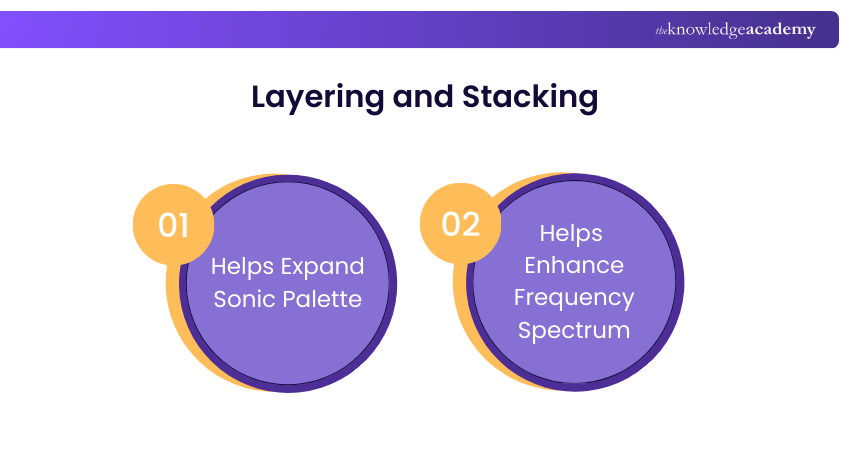
a) Helps Expand Sonic Palette: Layering allows you to expand your sonic palette by combining diverse sounds. You can mix contrasting elements like organic instruments with electronic textures to craft a rich and dynamic musical landscape.
b) Helps Enhance Frequency Spectrum: Each sound occupies a specific range of frequencies. Layering instruments with different frequency characteristics allows you to fill out the spectrum, avoiding clashes and ensuring a balanced mix.
9) Sampling and Chopping
Sampling and chopping involve taking parts of existing audio and reshaping them into new musical ideas. These techniques let producers transform melodies, rhythms, or textures into fresh patterns that inspire creativity.
a) Helps Create Unique Musical Ideas: By slicing audio into smaller sections and rearranging them, you can form new patterns that differ entirely from the original source.
b) Helps Add Variety and Character: Manipulating samples through pitching, time‑stretching, or effects can introduce distinctive tones and rhythmic variation.
10) Creative Effects
Creative effects give you the freedom to shape and transform sounds in unconventional ways, allowing your music to stand out. By experimenting with tools that alter tone, space, texture, or movement, you can push beyond traditional production techniques and explore new sonic possibilities.
a) Helps Add Unique Character: Using tools such as distortion, modulation, or filtering can introduce textures that set your music apart. These subtle or bold changes bring personality and depth to your sound.
b) Helps Expand Sonic Creativity: Creative effects encourage experimentation by letting you twist, stretch, and reshape audio in unexpected ways.
11) Experiment with Reverb
Reverb is a versatile tool in Music Production that transforms soundscapes, adding depth, dimension, and atmosphere to your tracks. You can create sonic spaces that envelop your audience, enhancing the emotional impact of your music. You can leverage the many benefits of reverbing as it helps in:
a) Creating Depth and Distance: Reverb simulates the natural acoustic environment, adding depth by placing sounds in virtual spaces.
b) Ambience and Atmosphere: Experimenting with reverb parameters allows you to craft different ambient environments. From intimate rooms to vast halls, each type of reverb adds a distinct character to your tracks.
12) EQ mastery
Equalization, or EQ, is a cornerstone of Music Production that empowers you to shape the tonal balance and clarity of your tracks. Skilfully applying EQ techniques, you can carve out space for each element, highlight important frequencies, and create a harmonious sonic. It provides the following benefits:
a) Sculpting Frequency Spectrum: EQ allows you to sculpt the frequency spectrum by boosting or attenuating specific frequency ranges.
b) Frequency Masking Avoidance: Frequency masking occurs when multiple elements compete for the same frequency range, leading to a muddy mix.
13) Compression Techniques
Music Production Equipment is a vital tool that allows you to control dynamics, balance elements, and shape the overall sound of your mix. After skilfully applying compression techniques, you can enhance the impact of individual tracks and the entire production. It helps you in the following manner:
a) Dynamic Control and Balance: Compression helps tame dynamic peaks, ensuring that quieter parts of a track are audible while preventing louder elements from overpowering the mix.
b) Parallel Compression for Depth: Parallel compression, also known as New York compression, involves blending a compressed signal with the original unprocessed signal. This technique can add weight and depth to instruments like drums and vocals, preserving the natural dynamics while enhancing their impact.
Join the Mixing and Mastering Course today and start creating polished, professional tracks with confidence and clarity.
14) Sidechain Compression
Sidechain compression is a production technique that uses the signal of one sound to control the compression of another. This approach creates space, movement, and clarity within a mix by allowing certain elements to stand out at the right moments.
a) Helps Improve Clarity in the Mix: By reducing the level of competing sounds when a key element plays, sidechain compression prevents masking and keeps important parts like kick drums or vocals clear and prominent.
b) Helps Create Rhythmic Movement: Applying sidechain to pads, basslines, or synths adds a pumping effect that enhances groove and energy.
15) Vocal Processing
Vocal processing is an essential part of bringing a performance to life, turning a raw vocal recording into a polished and expressive element within the track. Through tools that shape tone, clarity, and emotion, producers can help the vocal sit naturally in the mix while highlighting its character.
a) Helps Enhance Clarity and Presence: Techniques such as EQ, compression, and de‑essing can remove muddiness, control dynamics, and bring forward important details.
b) Helps Shape Emotion and Character: Effects like reverb, delay, saturation, and pitch correction can add depth, colour, and expressiveness.
16) Automate Everything
Automation is a transformative technique in Music Production that adds dynamic movement and evolution to your tracks. By automating parameters like volume, panning, effects, and more, you can introduce intricate changes that keep listeners engaged and captivated. It provides the following benefits:
a) Dynamic Shape and Expressiveness: Automation allows you to shape the dynamics of individual tracks or the entire mix.
b) Panning and Spatial Movement: Automated panning can move sounds across the stereo field, immersing the listener in a three-dimensional sonic landscape.
17) Reference Tracks
Reference tracks are an essential tool in Music Production that help guide your sonic direction and improve the quality of your work. By analysing professionally mixed and mastered songs, you can better understand industry standards and identify elements you want to apply to your own music.
a) Helps Improve mix and Tonal Balance: Comparing your work to a professionally produced track highlights differences in clarity, loudness, frequency balance, and overall polish.
b) Helps Strengthen Arrangement and Creative Choices: Studying how successful tracks use transitions, layering, and structure gives you insight into effective arrangements.
18) Limiting and Mastering
Limiting and mastering are the final steps in the Music Production process, ensuring your track reaches its full sonic potential before release. Limiting controls the loudest peaks in your mix and brings the overall level to a competitive standard, while mastering enhances tonal balance, clarity, and cohesion.
a) Helps Achieve Controlled Loudness: Limiting keeps the dynamic range in check by preventing sudden peaks from distorting. It helps your track reach a consistent, professional loudness level without losing clarity.
b) Helps Ensure Tonal and Playback Consistency: Excelling fine‑tunes EQ, stereo width, and overall balance so your track sounds polished on headphones, speakers, and streaming platforms.
19) Accept Feedback and Critiques
Collaboration and feedback play an important role in the Music Production journey, helping you grow creatively while sharpening your technical skills. Working with other producers, musicians, or vocalists exposes you to new ideas, fresh perspectives, and different approaches to making music.
a) Helps Expand Creativity and Learning: Sharing ideas with others introduces you to new techniques, workflows, and stylistic choices.
b) Helps Improve Track Quality and Perspective: Inviting feedback from trusted peers reveals areas that need adjustment, such as balance, arrangement, or clarity.
20) Know Your Listeners
Understanding your listeners is an important part of creating music that connects and resonates. When you know who you are producing for, you can make intentional choices about style, arrangement, emotion, and overall sound.
a) Helps Shape Creative Direction: Recognising your audience’s tastes, habits, and expectations guides decisions about genre, tempo, tone, and production style.
b) Helps Improve Engagement and Connection: Understanding what your audience responds to allows you to craft moments that capture attention and evoke emotion.
Conclusion
Producing great music is a process of patience, creativity, and constant refinement. By applying the right Music Production Tips, you can turn simple ideas into polished, professional-sounding tracks. Keep experimenting, trust your ears, and enjoy the journey of shaping your unique sound.
Elevate your hobbies and interests with our Hobbies & Interests Training – Embark on a journey of lifelong learning today!
Frequently Asked Questions
How to be Successful in Music Production?

Success in Music Production comes from consistent practice, a willingness to learn, and staying open to experimentation. When you refine your skills, understand your creative direction, and stay committed to growth, your music naturally becomes more impactful and competitive.
What are the Five Music Skills?
Music Production relies on five core skills: listening, creativity, technical ability, musical understanding, and problem‑solving. Together, these skills help producers make informed decisions, shape their sound, and create music that feels polished and expressive.

The Knowledge Academy


Global Training Provider
The Knowledge Academy is a world-leading provider of professional training courses, offering globally recognised qualifications across a wide range of subjects. With expert trainers, up-to-date course material, and flexible learning options, we aim to empower professionals and organisations to achieve their goals through continuous learning.


 If you wish to make any changes to your course, please


