


 Top Rated Course

We may not have the course you’re looking for. If you enquire or give us a call on + 1-866 272 8822 and speak to our training experts, we may still be able to help with your training requirements.
Ethics vs Morals: Understanding the Differences
The Knowledge Academy 13 February 2026While the terms 'ethics' and 'morals' are frequently used, many people struggle to articulate the difference between them. This blog aims to clarify the key distinctions between ethics and morals, providing real-world examples to enhance understanding.

Training Outcomes Within Your Budget!
We ensure quality, budget-alignment, and timely delivery by our expert instructors.
Table of Contents
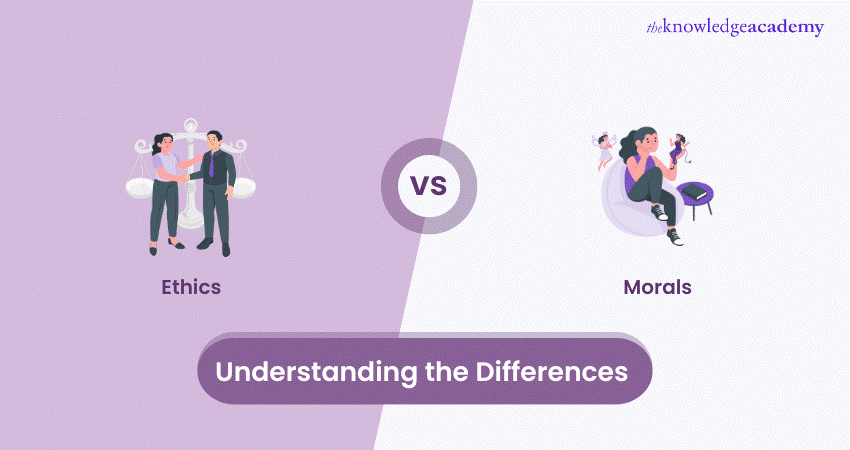
Moral and ethical dilemmas are inescapable parts of our daily lives, appearing in both personal and professional contexts. In essence, the dual heart of ethics and morals keep pumping the lifeblood of a well-behaved society.
But what do ‘morals’ and ‘ethics’ truly mean? Though these terms are often used interchangeably due to their similarities, they hold significant differences. This blog delves into these distinctions and examines the roles that morals and ethics play in our lives, whether in the workplace or society at large.
Table of Contents
1) What are Morals?
2) What are Ethics?
3) Differences between Ethics and Morals
a) Definitions
b) Sources of principles
c) Decision-making
d) Governing factors
e) Consistency
f) Acceptability
g) Adaptability
4) Conclusion
What are Morals?
An individual's guiding principles and personal values are referred to as “morals.” They shape their understanding of what’s right and wrong and originate from an internal set of beliefs. Personal Ethics play a crucial role in guiding an individual’s everyday decisions and actions. Commonly, factors such as upbringing, religious beliefs, and personal experiences profoundly influence a person's morals.
Consider these examples of moral principles:
a) Low tolerance to malicious activities
b) Loyalty
c) Patience
d) Truth
e) Generosity
What are Ethics?
Ethics deals with the principles of conduct of an individual or group. The term "ethical" defines standards of right and wrong within social, professional or legal contexts.
Ethical principles set the benchmarks for creating rules. For example, workplaces often establish a code of conduct or ethical code to outline acceptable behaviour.
The term is frequently used in institutions and among professionals who must adhere to ethical standards in their field. This goes for lawyers, healthcare providers, professors, Managers and more.
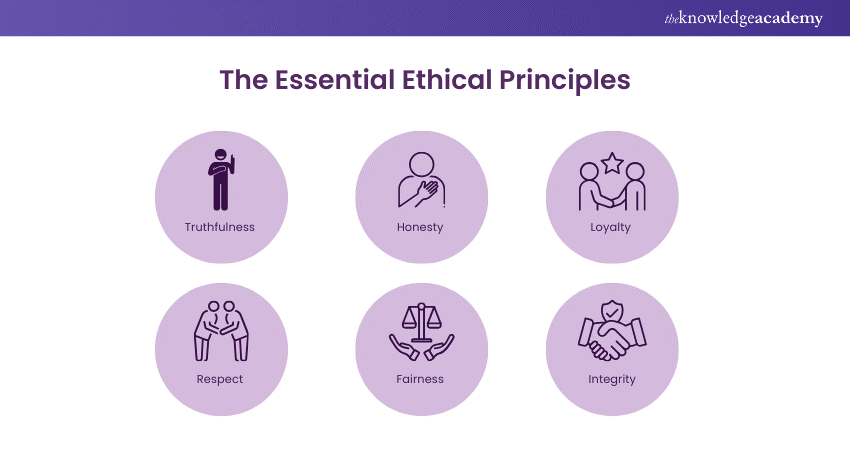
Here are some ethical principles:
a) Truthfulness
b) Honesty
c) Loyalty
d) Respect
e) Fairness
f) Integrity
So, "We should speak truth” is a moral principle. On the other hand, ethics address questions like “Is it ethical to state the truth in a particular situation?”
Expand your professionalism with our Personal Ethics Course!
Differences between Ethics and Morals
Let’s explore the main differences between ethics and morals in detail:
a) Definitions
Ethics refers to the rules of conduct recognised within a specific group, culture, or class of human actions. These rules are provided by external sources.
Morals are principles with respect to right or wrong conduct. Morals refer to an individual’s own principles and morality is a personal compass of right and wrong.
b) Sources of Principles
Ethics are external standards provided by groups, institutions, or cultures to which an individual belongs. For example, policemen, lawyers and doctors must follow an ethical code established by their profession, regardless of their own feelings or preferences. Ethics can also be regarded as a social framework for acceptable behaviour.
While morals are also influenced by culture or society, they are personal principles developed and upheld by individuals themselves.
c) Decision-making
Both moral values and Code of Ethics and Code of Conduct influence an individual’s decision-making. Moral decisions stem from personal values. For example, the choice to help a friend stems from the importance one places on friendship. A Code of Ethics often guides behavior in professional settings, ensuring that decisions align with ethical standards and organizational values.
However, when an individual encounters an ethical issue, the code of ethical behaviour influences the response. For example, defence lawyers choosing to defend clients even if it contradicts their moral beliefs owing to their ethical code as a lawyer.
d) Governing Factors
Different contexts impact morality and ethics. Ethical rules arise from a social context. These rules reflect societal regulations established by a community or organisation to collectively decide what is right and wrong.
In contrast, moral codes develop on a personal level, as individuals internalise values to form their own sense of what is morally correct.
e) Consistency
Moral rules may vary from individual to individual. While their moral beliefs and actions may remain consistent, the moral behaviours can differ greatly from the behaviour of others.
On the other hand, ethical principles remain consistent across institutions, as they offer firm behavioural guidelines. For instance, the code of professional ethics for doctors is the same, even if they live in different geographical locations, highlighting the importance of Ethics in the Workplace in maintaining universal standards of conduct across various professions.
f) Acceptability
Ethics are governed by legal and professional guidelines within a particular time and place. On the other hand, morality transcends cultural norms and applies to individuals regardless of their background.
g) Adaptability
Ethics are dependent on others for definition. Even though they tend to be consistent within a certain context, they can vary between contexts.
Morals can change if an individual’s beliefs change.
This table summarises the differences between morals and ethics:
|
|
ETHICS |
MORALS |
|
What they are |
The rules of conduct accepted regarding particular class of human actions or a specific group or culture. |
Principles regarding right or wrong conduct. Morality is a personal compass of right and wrong. |
|
Where they come from |
Social system - External |
Social system - External |
|
Why we follow it |
Because society says it is the right thing to do. |
Because of personal belief in right or wrong. |
|
Adaptability |
Ethics are dependent on others for definition. Even though they tend to be consistent within a certain context, they can vary between contexts. |
Morals can change if an individual’s beliefs change. |
|
Decision-making |
Code of ethical behaviour influences the response during an ethical issue. For example, defence lawyer working for a client |
Moral decisions stem from personal values. For example, decision to help a friend |
|
Acceptability |
Governed by legal and professional guidelines within a time and place |
Morality goes beyond cultural norms |
Enhance your stature in the business landscape with our Business Ethics Course!
Conclusion
Both morality and ethics relate to distinguishing the difference between “right and wrong” and “good and bad”. Morality relates to something that is personal and normative, whereas ethics involves standards of “good and bad” outlined by a certain community or social setting.
Are you seeking guidance on the ethics that comes with team management? Sign up for Team and Management Ethics Training now!
Frequently Asked Questions
What are the Sources of Ethics?

The sources of ethics range from childhood upbringing and religious beliefs to code of ethics and societal discussion on ‘right or wrong”
What are the Sources of Ethics?
Your moral values guide you in approaching decision-making in both personal and professional setting. Morals help you address dilemmas like conflict of interest and philanthropic actions.
What are the Other Resources and Offers Provided by The Knowledge Academy?
The Knowledge Academy takes global learning to new heights, offering over 3,000+ online courses across 490+ locations in 190+ countries. This expansive reach ensures accessibility and convenience for learners worldwide.
Alongside our diverse Online Course Catalogue, encompassing 19 major categories, we go the extra mile by providing a plethora of free educational Online Resources like Blogs, eBooks, Interview Questions and Videos. Tailoring learning experiences further, professionals can unlock greater value through a wide range of special discounts, seasonal deals, and Exclusive Offers.
What is The Knowledge Pass, and How Does it Work?
The Knowledge Academy’s Knowledge Pass, a prepaid voucher, adds another layer of flexibility, allowing course bookings over a 12-month period. Join us on a journey where education knows no bounds.
What are the Related Courses and Blogs Provided by The Knowledge Academy?
The Knowledge Academy offers various HR Courses, including Ethics in workplace training and Personal Ethics course. These courses cater to different skill levels, providing comprehensive insights into Business skills.
Our Human Resources Blogs cover a range of topics related to HR, offering valuable resources, best practices, and industry insights. Whether you are a beginner or looking to advance your understanding of ethics, The Knowledge Academy's diverse courses and informative blogs have got you covered.

The Knowledge Academy


Global Training Provider
The Knowledge Academy is a world-leading provider of professional training courses, offering globally recognised qualifications across a wide range of subjects. With expert trainers, up-to-date course material, and flexible learning options, we aim to empower professionals and organisations to achieve their goals through continuous learning.

Upcoming Business Skills Resources Batches & Dates
Date
 Ethics in Workplace Training
Ethics in Workplace Training
Fri 10th Apr 2026
Ethics in Workplace Training
Fri 29th May 2026
Ethics in Workplace Training
Fri 7th Aug 2026
Ethics in Workplace Training
Fri 2nd Oct 2026

 If you wish to make any changes to your course, please


