


 Top Rated Course

We may not have the course you’re looking for. If you enquire or give us a call on +60 1800812339 and speak to our training experts, we may still be able to help with your training requirements.
What is Integrated Marketing? An Overview
James Smith 24 February 2026Integrated marketing unifies ads, social, PR, and email to deliver a consistent, impactful brand message across every customer touchpoint. It focuses on creating clarity, alignment, and a seamless experience across channels. This approach helps brands communicate with purpose while maintaining a strong, unified presence.

Training Outcomes Within Your Budget!
We ensure quality, budget-alignment, and timely delivery by our expert instructors.
Table of Contents
The concept of consistency has become inevitable in the multi-channel world. Daily, audiences interact on multiple platforms, and brands have to talk in a purposeful and clear way. Understanding What is Integrated Marketing reveals the way brands succeed in being on the same queue at all the points of contact with customers. Let's explore this idea in detail below.
Table of Contents
1) What is Integrated Marketing?
2) How Integrated Marketing Works?
3) Importance of Integrated Marketing
4) Where to Begin With Your Integrated Marketing Strategy?
5) How to Create an Integrated Marketing Plan?
6) Examples of Successful Integrated Marketing
7) What Channels are Typically Integrated in Marketing?
8) What are the Challenges of Implementing Integrated Marketing?
9) Conclusion
What is Integrated Marketing?
Integrated marketing involves a radical strategy that connects all the marketing channels to convey a uniform marketing message and consumer experience. It works with a consortium of actions that can together achieve the business objectives. This strategy is centered around the four major components, which are typically referred to as the marketing mix:
a) Product: Concentrates on the development and positioning of an idea or a product that can satisfy the customer's wants and needs while being in line with the brand promise.
b) Place: Refers to the availability of the product through physical and online stores as well as distribution channels.
c) Price: Encompasses the setting of prices according to values, the market, competition, and the brand that the customer group identifies with.
d) Promotion: Comprises advertising, PR, social media, content, and campaigns that together help create attention and foster relations with the audience.
How Integrated Marketing Works
The process of integrated marketing is the same as presenting a consistent message and experience across all channels, which very much increases the rate of conversion. It works for the following reasons:
a) By using more channels, the visibility of your messaging will be greater.
b) Repetition is a great thing that helps to make your brand familiar and memorable.
c) The presence at all the customer touchpoints creates trust and authority.
d) Eventually, brand recall improves, and overall marketing effectiveness increases through consistent presence across channels.
Importance of Integrated Marketing
The modern digital environment requires Integrated Marketing to develop both a powerful and memorable brand presence. A business that delivers uniform messaging through all its platforms establishes trust and professionalism, which improves customer engagement. Here are some key points:
a) Creates a Consistent Brand Message: All marketing channels need to present one unified message which strengthens both brand identity and trust.
b) Enhances Brand Recognition: Brand recall reaches higher levels when marketing elements cohere, which enables better customer recognition and connection to the brand.
c) Builds Customer Trust and Loyalty: Consistency across platforms fosters reliability, strengthening customer relationships and loyalty.
d) Improves Marketing Efficiency: Organisations maintain operational efficiency and reduce unnecessary costs through a consolidated approach to marketing that coworkers toward one overall goal.
e) Maximises Return On Investment (ROI): When marketing campaigns align with each other, they produce enhanced performance outcomes while delivering greater investment returns.
f) Strengthens Multi-channel Engagement: Customers benefit from a continuous smooth encounter involving both digital and social media along with print and offline marketing touchpoints.
g) Boosts Conversion Rates: A unified marketing effort produces efficient customer journeys through the sales process and drives both higher conversion rates and revenue growth.
h) Adapts to Changing Market Trends: When brands integrate their marketing efforts, they maintain message consistency across different platforms as they adapt their content swiftly.
Build smarter campaigns and confident strategies with the Strategic Marketing Course designed for real-world impact.
Where to Begin With Your Integrated Marketing Strategy
Integrated marketing is not only about putting the same ads on several platforms. It is rather about the audience transferring through the different messages of the same story according to the needs of the marketing channel. To start with, reflect on the following critical steps:
a) Customer Perspective: Get what is most important for your audience and how your brand can be the solution to their problems.
b) Idea with a Strong Appeal: A powerful integrated campaign is always based on an engaging and clear idea that sheds light on what makes your brand unique.
c) Brand Values Alignment: Make sure that your core idea indeed depicts your mission, values, and long-lasting goals.
d) Make use of Each Platform's Advantages: Differentiate content per channel, but maintain the core message the same throughout all the interaction points.
How to Create an Integrated Marketing Plan?
Developing a successful Integrated Marketing strategy involves carefully planning, coordinating, and aligning various Marketing channels to deliver a consistent and compelling brand message. Here are key steps to create an effective Integrated Marketing strategy:
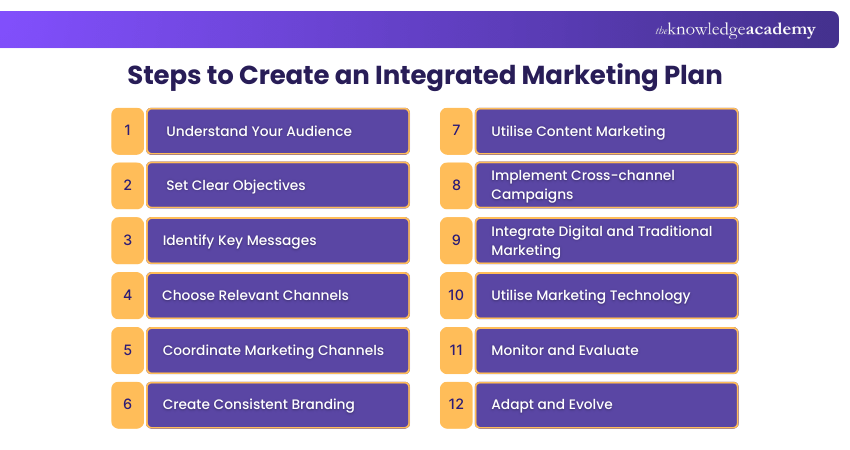
1) Understand Your Audience: Define your target audience and create detailed buyer personas. Understand the preferences, behaviours, and pain points of your audience.
2) Set Clear Objectives: Clearly define your Marketing objectives: brand awareness, lead generation, sales, or customer retention. Ensure that your objectives align with overall business goals.
3) Identify Key Messages: Develop key messages that resonate with your target audience. Ensure consistency in messages across all Marketing channels.
4) Choose Relevant Channels: Identify the channels most frequented by your target audience. Utilise online and offline channels, such as social media, email, content Marketing, traditional advertising, and events.
5) Coordinate Marketing Channels: Plan how different channels will work together to convey a cohesive message. Ensure an easy transition for customers between channels (e.g., from social media to your website).
6) Create Consistent Branding: Maintain a consistent visual identity, including logos, colours, and typography. Consistent branding builds recognition and trust.
7) Utilise Content Marketing: Develop high-quality, relevant content that aligns with your brand's goal and resonates with your audience. Distribute content across various channels to maximise reach.
8) Implement Cross-channel Campaigns: Plan and execute campaigns that span multiple channels simultaneously. Ensure that each channel reinforces the campaign's core message.
9) Integrate Digital and Traditional Marketing: Combine digital Marketing tactics (e.g., social media, email) with traditional methods (e.g., print, TV) for a comprehensive approach. By leveraging the strengths of both Traditional Marketing and Digital Marketing, businesses can reach different audience segments.
10) Utilise Marketing Technology: Implement Marketing technology tools for data analysis, automation, and tracking. Examine the performance of each channel and adjust strategies based on data insights.
11) Monitor and Evaluate: Regularly monitor the performance of your Integrated Marketing efforts. Use analytics to evaluate the impact of each channel and adjust your strategy accordingly.
12) Adapt and Evolve: Stay Agile and be ready to adapt your strategy based on changes in the market, consumer behaviour, or emerging trends. Continuously optimise your approach for better results.
Create effective mobile-first campaigns with the Mobile Marketing Course built for today’s digital audiences.
Examples of Successful Integrated Marketing
The following are some examples where Integrated Marketing has been used to run successful Ad campaigns:
Apple's In-store Experience
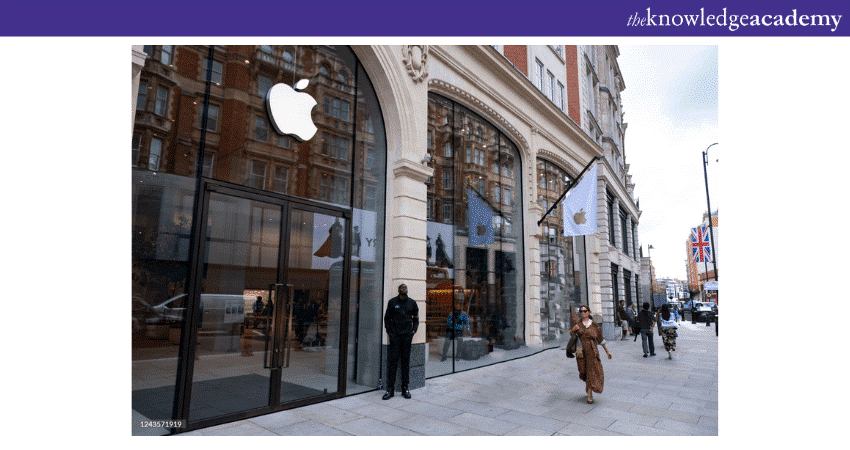
Apple exemplifies brand integration through its in-store experience, contributing to its global brand recognition and loyalty. Here's how it does that:
Apple exemplifies brand integration through its in-store experience, contributing to its global brand recognition and loyalty. Here's how it does that:
a) Consistent Branding: Apple ensures a consistent look and feel across products, advertisements, and physical stores, creating a seamless brand experience.
b) Identifiable Stores: Apple stores are designed with the same aesthetic as their products and website, making them immediately recognisable and reinforcing brand identity.
c) User Experience: The in-store experience mirrors Apple's commitment to simplicity and innovation, aligning with the brand narrative.
d) Brand Loyalty: Apple's integrated approach fosters customer identification and loyalty by delivering a cohesive brand experience throughout the customer journey.
Coca-Cola's 2014 "Share a Coke" Campaign
Coca-Cola's 2014 "Share a Coke" campaign is a prime example of successful Integrated Marketing. The campaign strategically leveraged various channels to create a cohesive and engaging experience. Coca-Cola replaced its traditional logo on 20-ounce bottles with 250 popular names, encouraging consumers to find and share bottles with their names or friends. Here's how it achieved success:
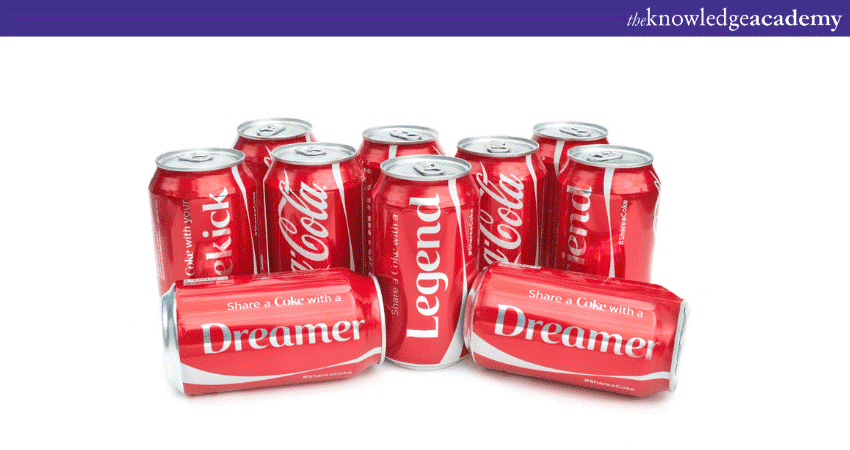
a) Product Design: The bottles became central to the Marketing strategy, transforming them into personalised, shareable items.
b) Social media Integration: The hashtag #shareacoke became a viral sensation, prompting consumers to share their personalised Coke bottles on social media platforms.
c) Online Engagement: Consumers actively participated in the campaign by searching for and sharing their personalised bottles, creating a sense of excitement and community.
d) User-generated Content: The campaign generated over 500,000 user-generated pictures with the #shareacoke hashtag, turning consumers into brand ambassadors.
e) Social Media Growth: Coca-Cola gained approximately 25 million new Facebook followers during the campaign, showcasing the impact of the integrated approach.
What Channels are Typically Integrated in Marketing?
Channels incorporated in integrated marketing include websites, email, social media, search advertising, and content marketing. It also incorporates offline platforms of communication, such as print, TV, radio, and PR, to offer a brand experience.
What are the Challenges of Implementing Integrated Marketing?
The major challenges encompass aligning the teams, ensuring consistent communication, and having good control of the data and performance measurement. To conquer these challenges, a clear strategy and coordination are necessary.
Conclusion
Intent and consistency are the hallmarks of successful brand communication. Understanding What is Integrated Marketing, can facilitate the process of providing consumers with uninterrupted experiences. We hope that this blog has been of assistance and that it will continue to support your strategy.
Elevate your Marketing capabilities and soar to success with our cutting-edge Marketing Courses – join today!
Frequently Asked Questions
What are the Different Types of Integrated Marketing Channels?

Integrated marketing channels include social media, email, TV, print, online ads, and in-store promotions. These channels work together to create a cohesive and unified brand message across various platforms.
What is the Primary Objective of Integrated Marketing Communications?
Integrated Marketing Communications (IMC) exists to maintain brand messages which are compelling and consistent across all communication channels. Integrating marketing strategies through IMC creates powerful effects that boost brand visibility and establish trust while enhancing customer satisfaction.
What are the Other Resources and Offers Provided by The Knowledge Academy?
The Knowledge Academy takes global learning to new heights, offering over 3,000 online courses across 490+ locations in 190+ countries. This expansive reach ensures accessibility and convenience for learners worldwide.
Alongside our diverse Online Course Catalogue, encompassing 17 major categories, we go the extra mile by providing a plethora of free educational Online Resources like Blogs, eBooks, Interview Questions and Videos. Tailoring learning experiences further, professionals can unlock greater value through a wide range of special discounts, seasonal deals, and Exclusive Offers.
What is The Knowledge Pass, and How Does it Work?
The Knowledge Academy’s Knowledge Pass, a prepaid voucher, adds another layer of flexibility, allowing course bookings over a 12-month period. Join us on a journey where education knows no bounds.
What are the Related Courses and Blogs Provided by The Knowledge Academy?
The Knowledge Academy offers various Marketing Courses, including the Marketing Budget Course, Content Marketing Course, and Video Marketing Course. These courses cater to different skill levels, providing comprehensive insights into Content Marketing.
Our Digital Marketing Blogs cover a range of topics related to Integrated Marketing, offering valuable resources, best practices, and industry insights. Whether you are a beginner or looking to advance your Digital Marketing skills, The Knowledge Academy's diverse courses and informative blogs have got you covered.

James Smith


Digital Marketing Manager and Trainer
James Smith is a digital marketing professional with over a decade of experience in SEO, content strategy, paid media and analytics. He has supported both SMEs and global brands in transforming their digital presence. James’s writing and training are rooted in results-driven tactics and the latest marketing trends.
View Detail
Upcoming Digital Marketing Resources Batches & Dates
Date
 Introduction to Marketing Training
Introduction to Marketing Training
Fri 1st May 2026
Introduction to Marketing Training
Fri 26th Jun 2026
Introduction to Marketing Training
Fri 28th Aug 2026
Introduction to Marketing Training
Fri 13th Nov 2026

 If you wish to make any changes to your course, please


