


 Top Rated Course

We may not have the course you’re looking for. If you enquire or give us a call on + 800 908601 and speak to our training experts, we may still be able to help with your training requirements.
What is FOMO: Psychology of Fear of Missing Out
The Knowledge Academy 13 July 2026FOMO means Fear of Missing Out. It’s the anxious feeling that others have better experiences, and it’s often fuelled by Social Media comparisons. It can make people feel left behind, pushing them to constantly check updates or join trends. Over time, this habit may affect mood, self-esteem, and focus on real-life goals.

Training Outcomes Within Your Budget!
We ensure quality, budget-alignment, and timely delivery by our expert instructors.
Table of Contents
Have you ever scrolled through Social Media and felt like everyone else is doing something exciting while you are just sitting there with your phone? Your friends are travelling, laughing, celebrating, and suddenly you think, “Why am I not there? Am I missing out?” That strange twist in your stomach is FOMO. Many people wonder What is FOMO feels like the same thing when they compare their lives to those of others online.
In this blog, we will explain what FOMO is, why it happens, and how it affects your mood and confidence. You will also see real examples and learn simple ways to manage it, understand What is FOMO in daily life, and feel more present and content.
Table of Contents
1) What is FOMO?
2) The Causes of FOMO
3) Effects of FOMO
4) How to Get Over FOMO?
5) What is an Example of FOMO?
6) How Do You Stop FOMO Anxiety?
7) Conclusion
What is FOMO?
The Fear of Missing Out (FOMO) is the worry that others are enjoying life more than you. It often comes from seeing people attend events, follow new trends, or share exciting updates online. The term was introduced by entrepreneur Caterina Fake. Earlier, people compared themselves only to neighbours, but now Social Media makes us compare ourselves to hundreds of people at once, increasing pressure and Anxiety Disorders.
FOMO can take you away from the present moment and affect your mood, confidence, and happiness. But remember, many people feel the same way. By being aware of these habits and focusing on your own life, you can slowly learn to manage FOMO in a healthier way.
FOMO can show up in many ways, such as:
a) Feeling upset when you are not invited somewhere
b) Constantly checking Social Media or messages
c) Joining activities even when you are tired
d) Feeling jealous when others share achievements or fun moments
e) Picking up your phone instantly when it gets a notification
Strong Correlation Between Social Media and the Fear of Missing Out
FOMO is strongly connected to our natural need to feel included and accepted. Social Media apps such as Facebook, Instagram, and TikTok make this feeling even stronger because they constantly show us what others are doing. When we see friends having fun or achieving something, we may feel left out or worry that we are missing something important. Over time, this can affect our mood, stress levels, and overall well-being.
How Social Media Triggers FOMO:
Social Media gives the brain small rewards. When we see exciting posts or when we get likes and comments on our own posts, our brain releases dopamine, a chemical that makes us feel good. This psychological phenomenon creates a habit loop:
a) We post something
b) We receive likes or comments
c) We feel happy for a short moment
d) We want that feeling again
Because of this, we may check our phones again and again, hoping for more likes or new updates. This can slowly turn into a habit that makes FOMO stronger, distracts us from real life, and lowers our confidence and happiness
FOMO, Age, and Gender
FOMO can affect anyone, no matter their age. Studies show that both young people and adults experience it. It is also linked to heavy smartphone and Social Media use, and this connection is seen across different ages and genders. When people spend too much time online, they can start worrying about what others think of them, which may affect their mood and make them feel stressed.
In teenagers, FOMO can sometimes lead to serious emotional and psychological problems like anxiety, sadness, low confidence, and even risky behaviour. Teens may feel pressured to do things just to fit in or keep up with others. Since their brains are still developing, they may struggle to think about long-term effects and make healthy decisions.
The Causes of FOMO
FOMO may be triggered by a more profound craving for belonging and social connection. Humans naturally desire close relationships with others and a sense of belonging to a larger community. People may experience mental and bodily distress when they feel they lack these kinds of relationships. This might have an impact on some people's general health and productivity. Even though it cannot be diagnosed, it can have particular symptoms:
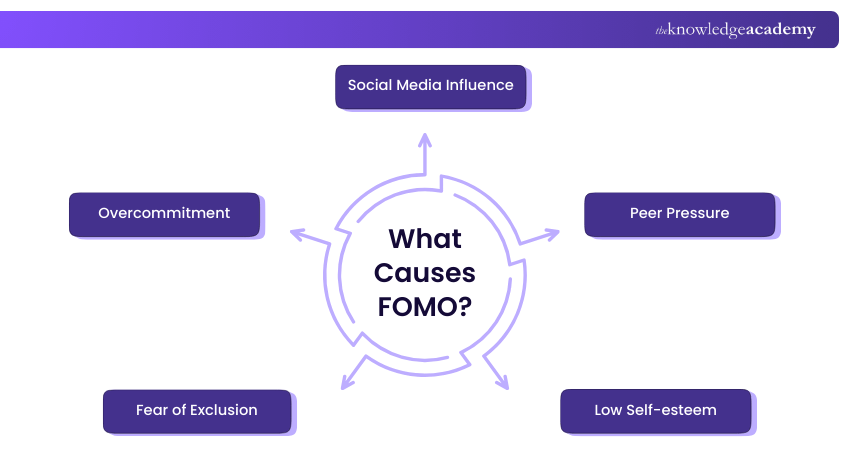
1) Overscheduling (trying to be everywhere at all times)
2) Withdrawal from other people
3) Body fatigue
4) Sorrow, anxiety, or depression
5) Difficulty paying attention
6) Struggling to fall asleep
Prioritise your Mental Health with our Mental Health And Wellbeing Training – Join now!
Effects of FOMO
FOMO may impact your whole health and well-being. It can affect your sleep and food habits if you overcommit to social engagements and activities to avoid FOMO, which can result in:
1) Exhaustion
2) Headaches
3) Loss of interest
4) Poor work or academic performance
5) Stress
FOMO can also lead to anxiety or depression. When you have FOMO, you could go through periods of self-doubt like:
a) What will happen if I forget anything or can't make it?
b) Will missing the occasion cause me to be demeaned?
c) "Will others see me negatively because I don't follow a particular trend?"
Who is Most Affected by FOMO?
FOMO tends to affect people who are highly active on social media or strongly influenced by what others are doing. It’s most common among individuals who constantly compare themselves to others or feel pressure to keep up.
1) Young Adults and Teenagers: They are more exposed to social media trends, peer pressure, and constant online comparison, making them more vulnerable to FOMO.
2) Frequent Social Media Users: People who spend a lot of time online often feel they’re missing out on experiences, achievements, or opportunities others seem to have.
3) Professionals in Competitive Fields: Individuals in careers like tech, finance, or marketing may fear falling behind in skills, promotions, or career growth.
4) People with Low Self Esteem: Those who seek validation from others may feel more anxious when they see others succeeding or enjoying opportunities they haven’t had.
5) Impulsive Decision Makers: Individuals who act quickly on emotions may rush into trends, investments, or activities just to feel included.
Gain practical insights to enhance mental health and foster positivity with our Positive Psychology Course – Join now!
How to Get Over FOMO?
The anxiety of missing out sometimes signals a detachment from what you genuinely see as significant in your life. Working to overcome destructive cycles can frequently be a necessary step in preventing FOMO. Here are a few suggestions for you to deal with it:
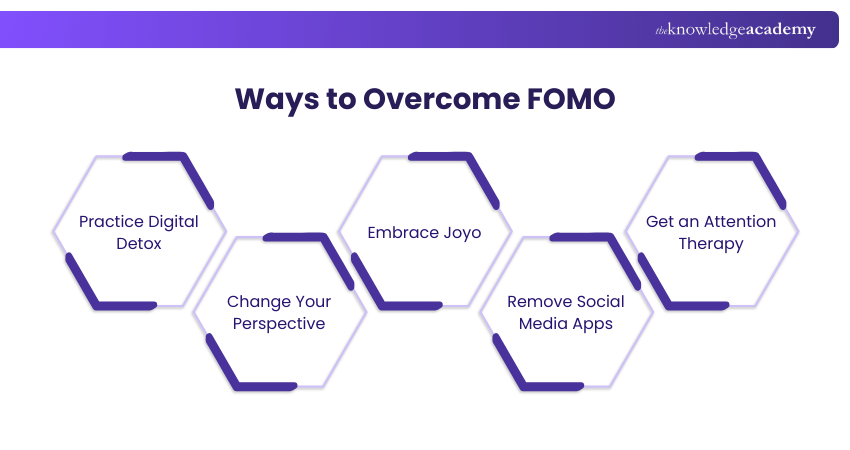
1) Digital Detox
Being less engaged in online activities, such as Social Media and breaking news, can make you more purposeful and present in your daily activities. Reconnecting with yourself and what you can be achieve by detoxing from Social Media may lead to FOMO. The Fear of Missing Out is a significant Impact of Social Media applications.
Consider limiting your use of Social Media apps that make you feel you are missing out if going through a complete digital detox isn't possible. Remove such apps temporarily, place daily usage restrictions on them, or remove your social network of those who constantly leave you feeling down about yourself or your life.
2) Change Your Focus
Shifting attention from what is lacking in life to what is already there. This can involve changing Social Media Platforms so that more postings from happy individuals appear in the feed rather than those from unhappy people.
3) Appreciate the JOMO (Joy of Missing Out)
People with JOMO accept the decisions they have made and find delight in the current circumstance, compared to people with FOMO, who may second-guess their choices and consider whether they could be having more fun somewhere else.
Countless fantastic things are happening all the time. Being present everywhere at once is impossible. Try making the option that is best for you and owning that choice rather than worrying about what you may or may not be missing out on. Enjoy what you're doing, and remember why you chose it in the first place.
4) Remove Social Networking Applications
Keep in mind that Social Media posts are frequently misleading. People are more inclined to share a snapshot of a fantastic adventure than a rant about any difficulties they may be experiencing, as opposed to the expected behaviour of just posting their finest selfies. Remember that everyone has bad days, no matter how fascinating or perfect a person's life appears.
5) Attending Therapy
You may stop worrying about what you're losing out on and start feeling confident in how you spend your time by unplugging technology, refocusing your thoughts, and getting treatment from a certified Mental Health expert.
6) Keep a Journal
Posting on Social Media to document fun experiences is common. However, if you start seeking too much validation online, consider taking some photos and memories offline and keeping a personal journal, either digitally or on paper.
Maintaining a journal can help shift your focus from seeking public approval to appreciating your private joys. This change can help break the cycle of Social Media and Fear of Missing Out.
Gain an understanding of stress awareness and management. Join our Mental Health and Wellbeing Training now!
What is an Example of FOMO?
FOMO often occurs when someone sees friends or acquaintances engaging in activities that they aren't part of. For instance, you might feel FOMO if you view photos on Social Media of your friends enjoying a party you weren't invited to. This feeling can make you worry that you're missing out on fun experiences, leading to feelings of inadequacy or exclusion.
How Do You Stop FOMO Anxiety?
To stop FOMO anxiety, try focusing on the present moment and appreciating what you have. Reducing your time on Social Media can mitigate exposure to triggers. Engage in events that you enjoy and bring you fulfilment, whether it's spending time with loved ones or pursuing hobbies. Keeping a journal to show your experiences and accomplishments can also help shift your focus from what you're missing to what you value in your life.
Conclusion
In essence understanding What is FOMO and building mindful habits, you can break free from constant comparison and step into a life filled with confidence, calm, and genuine happiness. FOMO may feel strong, especially in a world full of highlight reels, but you do not have to chase everything to feel enough. Focus on your journey, value real moments, and choose presence over pressure to live a more meaningful and peaceful life.
Enhance your ability to communicate with empathy in emotionally sensitive situations. Join our Mental Health Courses now!
Frequently Asked Questions
What Type of People Have FOMO?

FOMO can affect anyone, but is more common among young people, Social Media users, and those with low self-esteem or a fear of exclusion. People who compare themselves to others or feel pressure to keep up with trends are especially vulnerable to experiencing FOMO, leading to stress and anxiety.
Is FOMO Good or Bad?
FOMO can be both good and bad. It motivates people to seek new experiences and stay socially connected, but excessive FOMO often leads to stress, anxiety, and dissatisfaction. When managed well, it can encourage personal growth, but unchecked, it can harm mental health and lead to unhealthy behaviours.

The Knowledge Academy


Global Training Provider
The Knowledge Academy is a world-leading provider of professional training courses, offering globally recognised qualifications across a wide range of subjects. With expert trainers, up-to-date course material, and flexible learning options, we aim to empower professionals and organisations to achieve their goals through continuous learning.


 If you wish to make any changes to your course, please


