


 Top Rated Course

We may not have the course you’re looking for. If you enquire or give us a call on +918037244591 and speak to our training experts, we may still be able to help with your training requirements.
What is CSR? Definition, Types, and Benefits
The Knowledge Academy 03 April 2026Corporate Social Responsibility (CSR) is a business approach where companies take responsibility for their social, environmental, and economic impact. It encourages organisations to operate ethically, support communities, and ensure sustainable growth. It improves brand reputation, customer trust, and long-term business sustainability.

Training Outcomes Within Your Budget!
We ensure quality, budget-alignment, and timely delivery by our expert instructors.
Table of Contents

What makes a business truly successful today? It is no longer defined only by profit or market share. Customers, employees and investors now care about how companies treat people, protect the environment and contribute to society. This shift has made Corporate Social Responsibility (CSR) an important part of modern business practices.
It focuses on ethical practices, environmental protection and community support alongside financial success. In this blog, we will explore What is CSR, why it is important, its types, and the benefits it offers to businesses, society and the environment. Let’s dive in!
Table of Contents
1) What is Corporate Social Responsibility (CSR)?
2) The Importance of CSR
3) Types of Corporate Social Responsibility (CSR)
4) What are the Benefits of Corporate Social Responsibility?
5) Common Challenges in Implementing CSR
6) What is the Difference Between CSR and ESG?
7) Examples of Corporate Social Responsibility (CSR)
8) Conclusion
What is Corporate Social Responsibility (CSR)?
Corporate Social Responsibility (CSR) is a business approach in which organisations take responsibility for the impact their activities have on society, the environment, and the economy. Instead of focusing only on profit, businesses also consider how their decisions affect employees, communities, customers, and natural resources.
In simple terms, CSR is about doing business responsibly while contributing to a better world. Thus, it encourages businesses to operate ethically, follow fair labour practices, reduce environmental harm, and support community development.

The Importance of CSR
Corporate Social Responsibility plays a significant role in shaping modern business practices. Let's check why it is important in this fast-changing world:
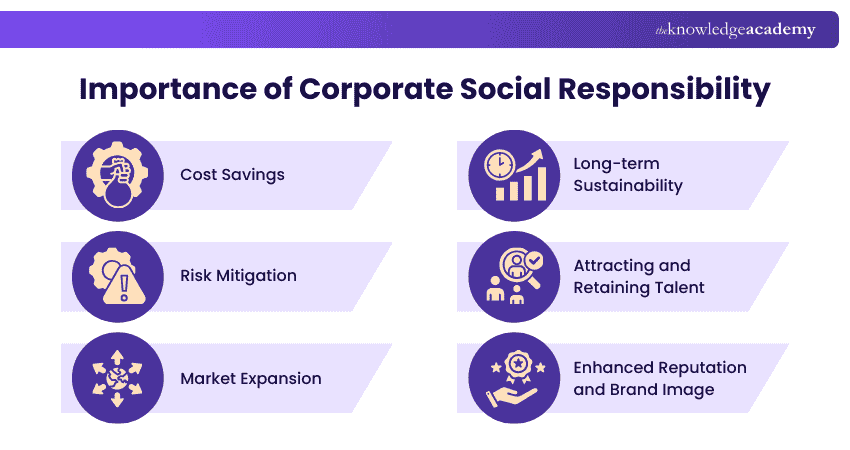
1) Cost Savings
CSR initiatives can lead to significant cost reductions over time. Many companies adopt environmentally friendly practices such as reducing energy use, minimising waste, and improving efficiency.
For example, organisations that use energy-saving equipment or renewable energy sources often lower their electricity bills. Similarly, reducing waste in manufacturing can save materials and lower production costs.
2) Risk Mitigation
Businesses that ignore social and environmental responsibilities may face legal problems, public criticism, or damage to their reputation. CSR helps organisations reduce these risks by considering their social impact.
By following ethical labour practices, ensuring safe working conditions, and maintaining transparent policies, companies can avoid legal issues and public backlash. By proactively addressing risks, businesses strengthen their reputation and avoid costly crises.
3) Market Expansion
CSR can also help businesses attract new customers and expand into new markets. Many consumers choose to buy from companies that behave responsibly and care about social and environmental issues.
As a result, companies attract more customers, increase sales, and build a stronger position in the market. For example, brands that sell eco-friendly products or support fair trade practices often attract customers who care about sustainability.
4) Long-term Sustainability
CSR encourages companies to think about the future and long-term value creation instead of focusing only on short-term profits. Sustainable practices help businesses protect natural resources and maintain long-term growth.
Companies that include sustainability in their strategies are better prepared to handle economic or environmental challenges. By protecting resources and maintaining good relationships with stakeholders, they create a strong base for long-term success.
Understand responsible business practices with our Business Sustainability Course – Register today!
5) Attracting and Retaining Talent
Many employees want to work with organisations that share their values. Companies that support social and environmental causes often attract skilled professionals who want meaningful work.
A responsible corporate culture also improves employee satisfaction and engagement. Workers feel proud to be associated with organisations that contribute positively to society. This leads to better employee retention, stronger team morale, and improved productivity.
6) Enhanced Reputation and Brand Image
CSR greatly improves a company’s reputation and brand image. Businesses known for ethical practices and social contributions are more trusted by customers and investors because of their responsible behaviour.
A strong reputation helps companies stand out in competitive markets. It leads to stronger partnerships with stakeholders and increased customer loyalty. This also helps businesses attract new customers and strengthen their market presence.
Types of Corporate Social Responsibility (CSR)
Corporate Social Responsibility is classified into several key categories. Those include the following:

1) Ethical Responsibility
Ethical responsibility means conducting business in a fair and honest way. Companies should treat employees, customers, and suppliers with respect and integrity. Ethical behaviour also supports a positive workplace culture and responsible leadership.
2) Economic Responsibility
Economic responsibility focuses on running a profitable business while maintaining ethical and sustainable practices. It also includes responsible financial decision-making, fair pricing, and sustainable investment strategies.
3) Philanthropic Responsibility
Philanthropic responsibility involves supporting social causes and community development. Many companies donate money to charities, sponsor local projects, or support education and healthcare programmes.
4) Environmental Responsibility
Environmental responsibility means that organisations need to operate in ways that reduce harm to the environment. It is one of the most widely recognised types of CSR. It focuses on reducing pollution, conserving resources, and adopting sustainable practices in daily operations.
Lead successful business transformation with our Business Transformation Strategy Training – Sign up soon!
What are the Benefits of Corporate Social Responsibility?
CSR creates value not only for businesses but also for consumers, communities, and the environment. Now that you know What is CSR, let’s check its benefits:
1) Business Benefits
Businesses that practice CSR often build stronger brands and gain customer trust. Responsible companies are more likely to attract loyal customers and supportive investors. Overall, businesses experience long-term growth and stability.
2) Consumer Benefits
Responsible business practices create benefits for consumers. Practices such as ethical sourcing, safe products and transparent policies help protect customer interests and build greater trust in the brand.
3) Environmental Benefits
CSR initiatives help protect the environment by reducing pollution and minimising resource consumption. Businesses that adopt sustainable practices contribute to global efforts to address environmental challenges such as climate change.
4) Societal Benefits
Many CSR initiatives focus on supporting communities and improving social well-being. Organisations can invest in education, healthcare, infrastructure or poverty reduction programmes.
Common Challenges in Implementing CSR
While CSR offers numerous benefits, organisations may face challenges when implementing responsible practices. Such challenges are listed below:
1) Short-term Focus
Some businesses prioritise short-term financial gains over long-term sustainability. CSR initiatives may require investment and time before delivering measurable benefits.
2) Greenwashing or Greenhushing
Greenwashing happens when companies falsely insist on being environmentally responsible without making meaningful changes. This can damage trust if consumers discover misleading information.
3) Resource Constraints
CSR initiatives may require money, time, and expertise. Small businesses in particular may struggle to invest in large CSR projects.
4) Complex Supply Chains
Large companies often work with many suppliers across different countries. Ensuring responsible practices across the entire supply chain can be difficult.
What is the Difference Between CSR and ESG?
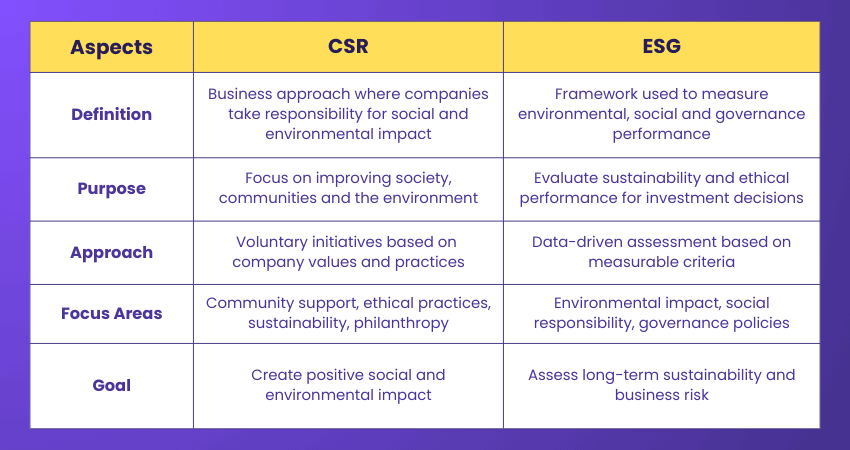
Corporate Social Responsibility and Environmental, Social, and Governance (ESG) are closely related concepts, but they serve different purposes. CSR focuses on the voluntary initiatives companies undertake to contribute positively to society and the environment.
On the other hand, ESG is a method used by investors and Analysts to evaluate a company’s sustainability and ethical impact. In simple terms, CSR represents the actions companies take to behave responsibly, while ESG provides measurable criteria used to evaluate those actions. Let's check their difference in detail:
Examples of Corporate Social Responsibility (CSR)
Here are some well-known examples of how companies practise CSR in the real world:
1) LEGO (Sustainable Materials):
LEGO invests in research to create toys made from sustainable and plant-based materials. The company is also working to reduce plastic waste and improve environmental sustainability in its manufacturing processes.
2) TOMS (Community Support):
TOMS became widely recognised for its “One for One” model, where the company donated shoes to people in need for every pair sold. The brand continues to support community programmes, including access to clean water and education.
3) Salesforce (Philanthropy and Volunteering):
Salesforce follows a 1-1-1 philanthropic model, donating one percent of its product, equity, and employee time to social causes. Employees are encouraged to participate in volunteering programmes that support education and community development.
Conclusion
Corporate Social Responsibility has become an important part of modern business practices. Businesses are expected to operate responsibly and consider the impact of their activities on society and the environment. With a solid foundation on What is CSR, organisations can balance profit with social responsibility. As a result, companies grow responsibly while contributing in a positive manner.
Manage business strategies effectively with our Management Courses – Join now!
Frequently Asked Questions
What Does CSR Mean in the Workplace?

CSR in the workplace means creating a fair, inclusive, and supportive working environment. Companies promote equal opportunities, diversity, employee well-being, and ethical labour practices.
Why are Companies Adopting CSR?
Companies adopt CSR because it improves reputation, builds customer trust, and supports long-term growth. It also strengthens long‑term business performance by aligning profits with positive social and environmental impacts.
What are the Other Resources and Offers Provided by The Knowledge Academy?
The Knowledge Academy takes global learning to new heights, offering over 3,000+ online courses across 490+ locations in 190+ countries. This expansive reach ensures accessibility and convenience for learners worldwide.
Alongside our diverse Online Course Catalogue, encompassing 17 major categories, we go the extra mile by providing a plethora of free educational Online Resources like Blogs, eBooks, Interview Questions and Videos. Tailoring learning experiences further, professionals can unlock greater value through a wide range of special discounts, seasonal deals, and Exclusive Offers.
What is The Knowledge Pass, and How Does it Work?
The Knowledge Academy’s Knowledge Pass, a prepaid voucher, adds another layer of flexibility, allowing course bookings over a 12-month period. Join us on a journey where education knows no bounds.
What are the Related Courses and Blogs Provided by The Knowledge Academy?
The Knowledge Academy offers various Management Courses, including Corporate Social Responsibility (CSR) Training, Business Sustainability Course and Equality and Diversity Training. These courses cater to different skill levels, providing comprehensive insights into Sustainability in Project Management.
Our Business Skills Blogs cover a range of topics related to Corporate Social Responsibility, offering valuable resources, best practices, and industry insights. Whether you are a beginner or looking to advance your business skills, The Knowledge Academy's diverse courses and informative blogs have got you covered.

The Knowledge Academy


Global Training Provider
The Knowledge Academy is a world-leading provider of professional training courses, offering globally recognised qualifications across a wide range of subjects. With expert trainers, up-to-date course material, and flexible learning options, we aim to empower professionals and organisations to achieve their goals through continuous learning.

Upcoming Business Skills Resources Batches & Dates
Date
 Corporate Social Responsibility CSR Training
Corporate Social Responsibility CSR Training
Fri 7th Aug 2026
Corporate Social Responsibility CSR Training
Fri 30th Oct 2026

 If you wish to make any changes to your course, please


