


 Top Rated Course

We may not have the course you’re looking for. If you enquire or give us a call on +918037244591 and speak to our training experts, we may still be able to help with your training requirements.
Difference Between Call By Value And Call By Reference
The Knowledge Academy 09 February 2026Call by value passes a copy of the variable to a function, while call by reference provides direct access to the original data, allowing modifications. Understanding both methods helps developers manage memory, control side effects, optimise performance, and write clearer, more predictable programs across different languages. Let's dive in!

Training Outcomes Within Your Budget!
We ensure quality, budget-alignment, and timely delivery by our expert instructors.
Table of Contents

Have you ever wondered how functions handle data in programming languages? When a function is called, does it work with the actual data or just a copy? The Difference Between Call By Value and Call By Reference lies at the heart of this question. Understanding these concepts is crucial for writing efficient and bug-free code.
In this blog, we'll dive deep into the Difference Between Call By Value and Call By Reference, exploring how they work, their effects on data, and when each method is most appropriate. By the end, you'll have a clear understanding of these fundamental concepts and be better equipped to make informed decisions in your coding projects.
Table of Contents
1) What is Call By Value?
a) How Does the Call By Value Method Work?
b) Examples of Call By Value
c) Advanatages of Call by Value
d) Disadavantages of Call by Value
2) What is Call By Reference?
a) How Does the Call By Reference Method Work?
b) Examples of Call By Reference
c) Advanatages of Call by Reference
d) Disadavantages of Call by Reference
3) Difference Between Call By Value and Call By Reference
4) Conclusion
What is Call By Value?
Call By Value is a method of passing arguments to a function where the function receives a copy of the argument’s value, not the actual variable itself. When a function is called, it gets its own local copy of the argument. This means any modifications made to the parameter inside the function only affect the copy, leaving the original argument unchanged.
Call By Value approach ensures that the original data remains intact, as the function works with a duplicate rather than the original variable. Call By Value is commonly used to prevent unintended side effects on the original data and maintain data integrity.
How Does the Call By Value Method Work?
This method involves passing the actual value to the function using the variable name directly. Here’s how it works:
1) Function Call: When we call a function, we include the actual parameter name in the function call syntax.
2) Value Copy: A copy of the actual argument’s value is created in the function’s memory space.
3) Local Operations: The function uses this copy to perform operations on the argument. Any changes made to the value are limited to this local copy.
4) Function Completion: Once the function finishes execution, the local copies of the function arguments are destroyed.
5) Original Value Unchanged: The original argument value remains unchanged in the memory space of the calling function.

Examples of Call By Value
Example in C:
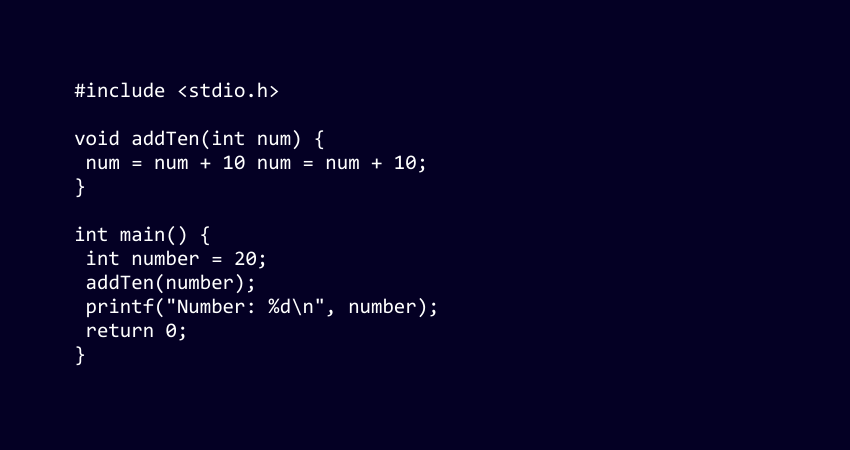
Output:

Example in JavaScript:
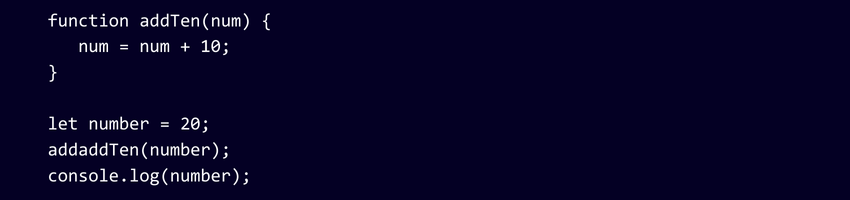
Output:

In both examples, the original value remains unchanged, demonstrating that Call By Value does not modify the argument outside the function.
Transform your code into career success with our Programming Courses – Sign up now!
Advanatages of Call by Value
This method provides simplicity, reliability, and safety while ensuring the original data remains unchanged.
a) Simplicity: This method is easy to understand and implement, making it ideal for beginners.
b) Safety: It keeps the original data unchanged, preventing accidental modifications.
c) Predictability: The argument value remains constant during execution, improving program reliability.
d) Easy to Debug: Since the original data is not altered, debugging becomes more straightforward.
Disadavantages of Call by Value
Although reliable, this method can affect performance and limit flexibility when dealing with large datasets.
Performance: Copying data to a new memory location can be time-consuming and use more memory.
Limited Access: It provides access only to a copy of the data, restricting direct modification of the original variable.
What is Call By Reference?
Call By Reference is a method of passing arguments to a function where a reference (or address) to the actual argument is provided rather than a copy of its value. This approach means that the function operates directly on the original data. As a result, any changes made to the parameter within the function directly affect the original argument.
Call By Reference allows functions to modify the original data and can be more efficient for large data structures, as it avoids creating copies. This ensures that the function's operations have a direct impact on the data used in the calling context.
How Does the Call By Reference Method Work?
Here's how the Call By Reference method works:
1) Create a Pointer: First, a pointer or reference variable is created to store the memory address of the actual argument.
2) Pass the Reference: This memory address is then passed to the function rather than the actual value. The function receives a pointer or reference to the original argument.
3) Access Data: Using the dereference operator (typically ‘*’ in many programming languages), the function can access and manipulate the data at the referenced memory location.
4) Modify Data: Any changes made through the pointer or reference directly affect the original argument in the calling function’s memory.
Examples of Call By Reference
Example in C:
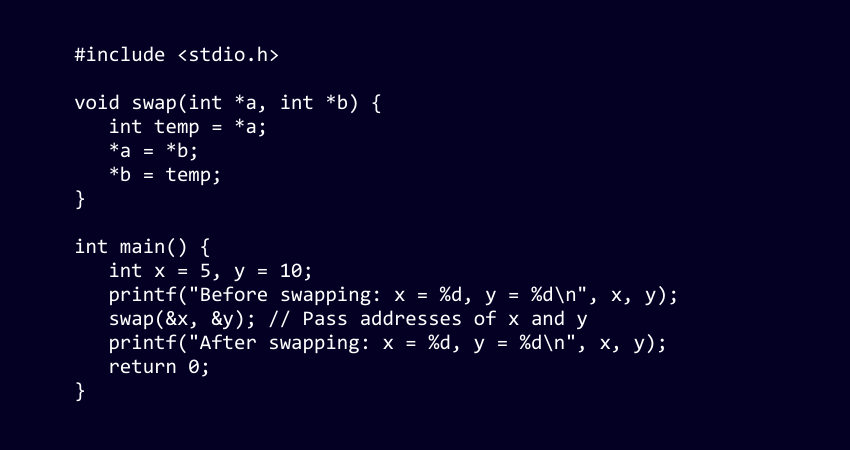
Output:

Example in JavaScript:
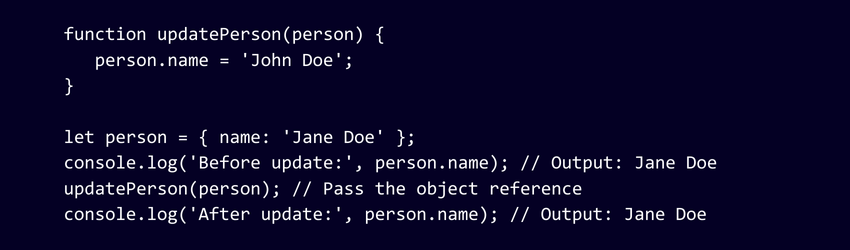
Output:

Transform your skills with our Python Course – Sign up today!
Advantages of Call by Reference
This method is efficient and flexible as it allows direct modification of original data without creating copies.
a) Efficiency: It eliminates the overhead of copying data to new memory locations, improving performance.
b) Full Access: Provides complete access to the original data, allowing greater control over variable manipulation.
c) Flexibility: Enables functions to return multiple values, making it useful for complex programming scenarios.
Disadvantages of Call by Reference
Despite its efficiency, this method can introduce safety risks and add complexity to code management.
a) Complexity: Requires deeper understanding of pointers and memory management, which can be challenging for beginners.
b) Safety: Direct access to original data can cause unintended modifications, making debugging and maintenance more difficult.
Difference Between Call By Value and Call By Reference
Here’s a comparison to help clarify the distinctions between these approaches and their impact on performance, data integrity, and usage scenarios.

1) Data Passing:
a) Call By Value: When a function is called, a copy of the actual value is passed. This means the function operates on this copy, not the original data.
b) Call By Reference: Instead of passing a copy, a reference (or address) to the original data is passed. The function directly accesses and manipulates the original data.
2) Impact on Original Data:
a) Call By Value: Since the function works with a copy, any changes made within the function do not affect the original data outside the function.
b) Call By Reference: The function can alter the original data because it operates directly on it. Thus, modifications inside the function are reflected in the original data.
3) Performance:
a) Call By Value: This can be less efficient, especially with large data structures, because creating copies of large data can be resource-intensive.
b) Call By Reference: More efficient for large data structures, as it avoids the overhead of copying and instead just passes a reference to the existing data.
4) Safety:
a) Call By Value: Offers better data integrity and safety since the original data cannot be altered by the function. This reduces the risk of unintended side effects.
b) Call By Reference: Carries a higher risk as the function can change the original data. This can lead to unintended consequences or side effects if not managed carefully.
5) Usage:
a) Call By Value: Preferred when you want to ensure that the original data remains unchanged and where functions do not need to modify the data. It's commonly used with basic data types and smaller data structures.
b) Call By Reference: Suitable when functions need to modify the data or when working with large data structures where copying would be inefficient. It's used for complex data types like objects and arrays in languages that support references.
Start coding with Visual Basic Course today—learn fast, build smart!
Conclusion
Mastering the Difference Between Call By Value and Call By Reference empowers you to write smarter, more efficient code. By choosing the right method, you’ll safeguard data integrity, boost performance, and steer clear of coding pitfalls, elevating your programming prowess to new heights. Ready to code with confidence? The choice is yours!
Build data skills with our practical R Programming Course today!
Frequently Asked Questions
How do you Pass Arguments Using Call By Value?

In Call By Value, arguments are passed by copying the actual values into function parameters. Changes made within the function don’t affect the original variables outside the function.
Is JavaScript Call By Value or Call By Reference?
JavaScript is primarily Call By Value. However, when passing objects or arrays, the reference to the object is passed by value, so changes to the object within the function will affect the original object.
What are the Other Resources and Offers Provided by The Knowledge Academy?
The Knowledge Academy takes global learning to new heights, offering over 3,000+ online courses across 490+ locations in 190+ countries. This expansive reach ensures accessibility and convenience for learners worldwide.
Alongside our diverse Online Course Catalogue, encompassing 19 major categories, we go the extra mile by providing a plethora of free educational Online Resources like Blogs, eBooks, Interview Questions and Videos. Tailoring learning experiences further, professionals can unlock greater value through a wide range of special discounts, seasonal deals, and Exclusive Offers.
What is The Knowledge Pass, and How Does it Work?
The Knowledge Academy’s Knowledge Pass, a prepaid voucher, adds another layer of flexibility, allowing course bookings over a 12-month period. Join us on a journey where education knows no bounds.
What are the Related Courses and Blogs Provided by The Knowledge Academy?
The Knowledge Academy offers various Programming Training, including Coding Training Course, Python Course, Python Django Training and PHP Course. These courses cater to different skill levels, providing comprehensive insights into Source Code.
Our Programming & DevOps Blogs cover a range of topics related to Programming, offering valuable resources, best practices, and industry insights. Whether you are a beginner or looking to advance your Programming skills, The Knowledge Academy's diverse courses and informative blogs have got you covered.

The Knowledge Academy


Global Training Provider
The Knowledge Academy is a world-leading provider of professional training courses, offering globally recognised qualifications across a wide range of subjects. With expert trainers, up-to-date course material, and flexible learning options, we aim to empower professionals and organisations to achieve their goals through continuous learning.

Upcoming Programming & DevOps Resources Batches & Dates
Date
 Coding Training Course
Coding Training Course
Fri 31st Jul 2026
Coding Training Course
Fri 30th Oct 2026

 If you wish to make any changes to your course, please


