


 Top Rated Course

We may not have the course you’re looking for. If you enquire or give us a call on +44 1344 203 999 and speak to our training experts, we may still be able to help with your training requirements.
Logistics Management: Types, Process and Benefits
The Knowledge Academy 27 February 2026Logistics Management encompasses the strategic oversight of transporting goods from origin to destination. It is integral to the Supply Chain Management. Dive into this blog to uncover the essence of Logistics Management, its fundamental elements, and its pivotal role in enhancing the efficiency of the Supply Chain.

Training Outcomes Within Your Budget!
We ensure quality, budget-alignment, and timely delivery by our expert instructors.
Table of Contents

Ever pondered the journey of goods from factory to your front door? It’s all orchestrated by the meticulous art of Logistics Management. If you haven’t heard about What is Logistics Management and why it is crucial for modern businesses, let us explain it to you in this blog.
Modern consumers demand faster deliveries, real-time tracking, and high-quality services, which brings the need for advanced Logistics solutions. This is where Logistics Management comes in. This strategic approach ensures timely product movement and storage through efficient resource allocation, technology integration, and strategic planning. With the globalisation of business, mastering the complexities of Supply Chains that crisscross various nations and territories is more crucial than ever. Read this blog to understand everything about What is Logistics Management and how it can optimise the transportation, distribution, and storage of goods.
Table of Contents
1) What is Logistics Management?
2) Core Components of Logistics Management
3) Different Types of Logistics Management
4) Logistics Management Process
5) Importance of Logistics Management
6) Challenges in Logistics Management
7) Benefits of Logistics Management
8) Conclusion
What is Logistics Management?
Logistics Management is a discipline that organises, implements, and controls the flow and storage of goods, services, and information. This process is not just limited to transportation. Instead, it represents an integrated effort that combines aspects of procurement, conversion, and distribution from the point of origin to the point of consumption. One of the key Objectives of Logistics Management is to ensure this seamless coordination across the supply chain to optimize efficiency and reduce costs.
The primary goal of Logistics Management is efficiency. It ensures that the right product reaches the right destination at the right time. This is achieved through a holistic approach that looks at every step, from sourcing raw components to the delivery of the final product to the end consumer.
Control is also a significant theme in Logistics Management. Businesses can improve their system and meet the needs of their customers by efficiently controlling the movement and storage of products in a cost-effective manner. Third Party Logistics providers often play a key role in enhancing these systems, ensuring a seamless connection between production processes and the consumers who rely on their products.

Core Components of Logistics Management
Logistics management is a complex and interconnected system that ensures products move smoothly from origin to end customer. Each component plays a vital role in maintaining efficiency, reducing costs, and enhancing customer satisfaction. Here’s a closer look at the core elements that define effective logistics operations:
Transportation Management
Transportation is the foundation of logistics, responsible for moving goods across various stages of the supply chain. It involves selecting the most efficient transport mode such as air, sea, rail or road to optimise cost and delivery time. Advanced Transportation Management Systems (TMS) help plan routes, track shipments, and streamline freight operations for better visibility and performance.
Warehousing and Distribution
Warehousing involves more than storage, it’s about positioning goods strategically for fast and efficient distribution. Key elements include layout design, inventory organisation and space management. Distribution ensures products are delivered promptly to customers, using methods like cross-docking and drop shipping to speed up operations and reduce handling.
Order Fulfillment
Order fulfillment covers the entire process from receiving an order to delivering it to the customer. This includes order processing, picking, packing, shipping and managing returns. As e-commerce expands, businesses must efficiently handle high-volume small-size orders with quick turnaround times, using technology to maintain accuracy and visibility throughout the process.
Supply Chain Management
Supply Chain Management (SCM) coordinates all logistical activities from sourcing raw materials to final delivery. It ensures seamless collaboration between suppliers, manufacturers and retailers. Effective SCM enhances responsiveness, reduces costs and streamlines the flow of goods and information using data-driven insights and integrated planning systems.
Inventory Control
Inventory control ensures that the right products are available at the right time and place. It focuses on maintaining optimal stock levels while minimising costs and avoiding stockouts. Tools like Just-In-Time (JIT), demand forecasting and Inventory Management Systems (IMS) help businesses automate reordering and monitor stock in real time for greater efficiency.
Elevate your Logistics Management expertise by joining our Logistics Management Training today!
Different Types of Logistics Management
Logistics involves the process of planning, executing, and managing the flow of goods, services, and information from the point of origin to the point of consumption. It involves the entire processing of sourcing raw materials as well as the assembling of the products and the delivery of finished goods to esteemed consumers.
There are various kinds of Logistics Management which focus on the different stages and aspects of this activity. Each of the stages has a very important role to play in the overall efficiency and success of a Supply Chain. Some of them are mentioned below.

Inbound Logistics Management
Inbound Logistics is the process of receiving and storing raw materials and components that are necessary for production. It includes managing the flow of goods from suppliers to the company's warehouses or production facilities. Activities such as sourcing, purchasing, transportation, and storage comes under this process.
The Inbound Logistics process begins when an organisation identifies the raw materials or components it needs for production. This may include working with suppliers to negotiate prices, delivery schedules, and other purchase agreement terms.
Once the materials have been sourced, the company must arrange transportation from the supplier to the warehouses or production facilities of the company. This may involve coordinating with freight carriers, customs brokers, and other logistics providers to ensure that the materials are delivered on time and in good condition.
The Inbound Logistics process is important in ensuring that a company has the materials to operate efficiently and meet customer demand. By effectively managing the flow of goods from suppliers to the company’s facilities, businesses can reduce costs, improve supply chain visibility, and increase their competitiveness in the market, especially when considering both Inbound and Outbound Logistics.
Outbound Logistics Management
Outbound Logistics involves the storage, transportation, and delivery of finished goods to end customers, effectively moving inventory out of the Supply Chain to fulfil customer orders. A successful outbound logistics process encompasses several key elements: inventory management, order management, packaging procedures, and distribution networks.
Ensuring each order is prepared and delivered on time to the correct location is essential for successful sales. This is especially important in outbound sales, where timely delivery and customer satisfaction can directly influence repeat business. With a streamlined outbound logistics process, businesses can consistently meet these goals, enhancing customer satisfaction and operational efficiency.
Expand Your Horizons – Understand What is Import and Export and tap into global opportunities!
Third-Party Logistics Management
A Third-party Logistics (3PL) provider offers outsourced logistics services, managing various aspects of procurement and fulfilment activities. In business, 3PL refers to any service contract involving the storage or shipment of items.
3PL services can range from single solutions, such as transportation or warehouse storage, to comprehensive bundles that handle complete Supply Chain Management. This flexibility allows businesses to tailor logistics support to their specific needs, enhancing efficiency and scalability.
Reverse Logistics Management
Reverse Logistics is a branch of Supply Chain Management that handles the return of goods from customers back to sellers or manufacturers. Once a customer receives a product, processes like returns and recycling necessitate reverse logistics.
This process begins with the end consumer and moves backwards through the Supply Chain, either to the distributor or directly to the manufacturer. Additionally, Reverse Logistics can involve the end consumer managing the final disposal of the product, including recycling, refurbishing, or resale. Learn to identify and mitigate potential risks in export and trade operations.
Green Logistics
Green logistics is the practice of minimising the environmental impact of logistics activities. It includes using fuel-efficient transportation, optimising routes, reducing packaging waste and adopting sustainable warehouse practices. Green logistics supports environmental responsibility while helping businesses lower operational costs and meet regulatory requirements.
Learn how to identify and mitigate potential risks in export and trade operations with our Export and Trade Compliance Training – Register today!
Logistics Management Process
Think of logistics management as a well-choreographed production. Every step, from the first plan to the final delivery, must work in harmony to ensure smooth, efficient operations. Below is a creative look at the key stages that bring this process to life.

Planning
Every successful logistics journey begins with a strong plan. This stage sets the tone by defining logistics goals, forecasting demand and aligning available resources with business needs. Strategic planning helps anticipate challenges and create action-ready roadmaps that support customer satisfaction and operational clarity.
It’s about more than schedules, it's about making smart decisions early on. Whether it's route design, inventory levels or staffing, planning builds the foundation that keeps everything else flowing like clockwork.
Procurement
Procurement is the powerhouse that keeps supplies flowing. It involves identifying what is needed, finding the best vendors, processing orders and managing payments. A well-run procurement system ensures that goods and services arrive on time, in the right quantity and within budget.
This step is critical not just for smooth operations but also for cost control and risk reduction. Effective procurement keeps the business agile, competitive and ready for anything the market demands.
Supplier Selection
Choosing the right suppliers is like assembling your dream team. You’re not just buying products, you’re forming partnerships. This stage involves vetting vendors based on quality, cost, reliability, and delivery capability.
The goal is to build a supplier network that delivers consistently, aligns with your objectives, and supports long-term growth. Strong supplier relationships mean fewer disruptions, better pricing, and more responsive service.
Warehousing and Inventory Management
Warehousing is where logistics meets precision. This stage focuses on storing, organising and managing products efficiently to ensure fast and accurate order fulfillment. From space optimisation and picking accuracy to timely restocking, every element must be perfectly coordinated.
Inventory management tools track product levels, forecast demand and reduce excess stock. It’s a balancing act between availability and cost, one that can make or break your logistics strategy.
Information Management
Information is the heartbeat of logistics. This stage involves capturing, analysing and acting on data across the supply chain to support real-time decisions. With access to the right insights, logistics teams can optimise routes, track performance and prevent delays.
Think of it as the control room of the entire operation. Good information management ensures transparency, improves planning and strengthens the connection between every moving part in the supply chain.
Importance of Logistics Management
Logistics management plays a vital role in navigating the growing complexity of moving goods from origin to final delivery. As customer expectations rise and market competition intensifies, effective logistics becomes essential for meeting demand and maintaining operational efficiency.
By planning and controlling the flow and storage of goods, logistics management ensures that customer requirements are met accurately and promptly. It also provides visibility into transportation activities, helping businesses analyse data and optimise routes to reduce delays and operational costs.
In addition, efficient logistics management identifies cost-saving opportunities across the supply chain, contributing to better productivity. It plays a crucial role in last-mile delivery, which directly influences customer satisfaction. By enabling reliable delivery strategies, logistics management not only improves service quality but also helps boost sales and customer loyalty.
Learn how to craft market-winning Product Management strategies by joining our Product Management Training now!
Technologies Used in Logistics Management
Modern logistics is undergoing a digital transformation powered by advanced technologies. From real-time tracking to automated warehouses, these tools improve efficiency, reduce costs and boost visibility across the supply chain. Below are key technologies for reshaping logistics management.
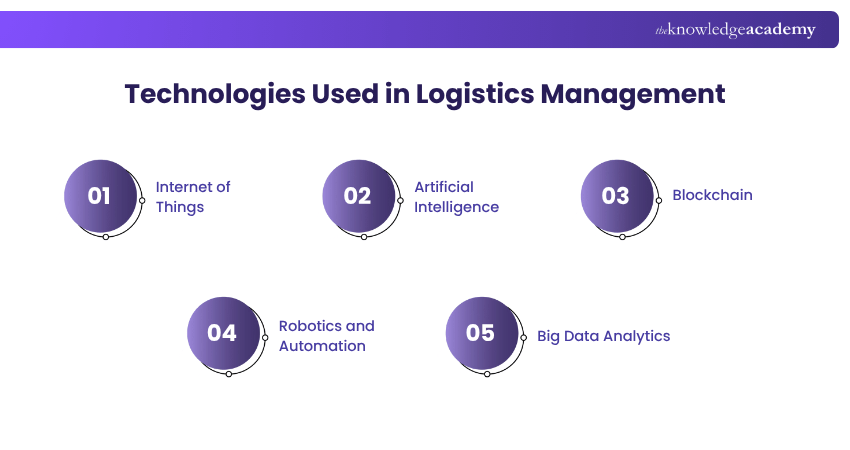
Internet of Things
The Internet of Things (IoT) enables logistics providers to connect physical objects like vehicles, containers and inventory to the internet through sensors and RFID. This allows real-time tracking of goods, helping reduce delays and losses.
IoT devices can also monitor environmental conditions such as temperature and humidity, ensuring sensitive goods are transported safely. Predictive maintenance powered by IoT alerts operators before breakdowns occur, while route optimisation helps improve delivery speed and cost-efficiency.
Artificial Intelligence
Artificial Intelligence (AI) plays a crucial role in predictive analytics, allowing logistics teams to forecast demand more accurately and allocate resources efficiently. AI also supports smarter decision-making in warehouse operations and supply chain planning.
AI-powered chatbots enhance customer service by handling queries around the clock. In logistics hubs, AI systems automate inventory checks, identify errors and recommend improvements. Machine learning helps optimise delivery routes based on weather, traffic and historical data.
Blockchain
Blockchain technology brings transparency and trust to logistics processes by recording data in an immutable, decentralised ledger. Every transaction, from sourcing to delivery, can be traced securely, minimising fraud and errors.
Smart contracts can automate payments once conditions are met, reducing manual paperwork and delays. Blockchain also improves compliance in cross-border logistics by storing certificates and customs records, simplifying international shipping operations.
Robotics and Automation
Blockchain technology brings transparency and trust to logistics processes by recording data in an immutable, decentralised ledger. Every transaction, from sourcing to delivery, can be traced securely, minimising fraud and errors.
Smart contracts can automate payments once conditions are met, reducing manual paperwork and delays. Blockchain also improves compliance in cross-border logistics by storing certificates and customs records, simplifying international shipping operations.
Big Data Analytics
Blockchain technology brings transparency and trust to logistics processes by recording data in an immutable, decentralised ledger. Every transaction, from sourcing to delivery, can be traced securely, minimising fraud and errors.
Smart contracts can automate payments once conditions are met, reducing manual paperwork and delays. Blockchain also improves compliance in cross-border logistics by storing certificates and customs records, simplifying international shipping operations.
Challenges in Logistics Management
Logistics management is essential for maintaining a smooth supply chain, but it comes with its own set of challenges. These obstacles can affect delivery timelines, cost efficiency and customer satisfaction. Below are the major challenges faced in modern logistics operations.

Customer Service
Meeting customer expectations has become increasingly difficult in an era of instant deliveries and real-time updates. Customers now demand faster shipping, accurate tracking and seamless returns, all of which put pressure on logistics systems.
Delays, damaged goods or poor communication can result in a negative customer experience. Maintaining service consistency while managing large volumes and tight schedules requires robust systems and strong coordination across all logistics stages.
Transportation Cost Control
Fuel price fluctuations, toll charges and vehicle maintenance can drive up transportation costs significantly. These rising expenses put pressure on profit margins and affect the overall efficiency of logistics operations.
To manage these costs, businesses must optimise delivery routes, consolidate shipments and invest in fuel-efficient vehicles. Using Transportation Management Systems (TMS) can also help identify savings and avoid unnecessary expenditures.
Planning & Risk Management
Unforeseen events like natural disasters, strikes or supply shortages can severely disrupt logistics operations. Without a solid risk management plan, businesses may struggle to respond quickly to such disruptions.
Effective planning requires real-time data and forecasting tools to anticipate potential risks. Having contingency plans, backup suppliers and alternative transport routes can help businesses maintain continuity in their logistics services.
Supplier/Partner Relationships
Logistics depends heavily on strong coordination between suppliers, distributors and third-party service providers. Miscommunication, late deliveries or inconsistent quality can cause serious delays and financial losses.
Building reliable partnerships involves regular communication, performance monitoring and mutual trust. Businesses must also ensure that all partners align with their goals and service standards for smooth operations.
Government and Environmental Regulations
Compliance with international trade laws, safety regulations and environmental standards adds complexity to logistics operations. Failing to meet these requirements can lead to fines, delays and legal complications.
Businesses must stay updated on regulations concerning customs procedures, emissions limits and product handling. Adopting sustainable logistics practices also helps reduce the environmental impact and aligns operations with global compliance goals.
Do you want to gain expertise in cost-effective maintenance? Join our Facilities Management Training today!
Benefits of Logistics Management
Imagine a business where products reach customers on time, costs are under control, and operations run like clockwork. That’s the power of great logistics management. It’s not just about moving goods; it’s about moving smarter, faster and better. Here's why logistics management is the silent engine behind every successful business.
1) Faster Deliveries, Happier Customers: Seamless logistics means shorter wait times, accurate tracking and smooth returns, turning first-time buyers into loyal fans.
2) Lower Costs, Higher Profits: From route optimisation to smarter inventory control, logistics management helps cut the fat and boost your bottom line.
3) Stronger Supply Chains: Predict delays before they happen. Build resilience. Logistics connects every dot, from warehouse to doorstep.
4) Real-Time Visibility: Stay in control with live insights. Know where every shipment is, what’s in stock and what needs action instantly.
5) Sustainable Operations: Smart logistics reduces waste, fuel use and carbon footprints. It is good for business and even better for the planet.
In a world where speed, precision and service make or break a brand, logistics management is your backstage hero, making sure everything runs smoothly while your business takes the spotlight.
Keep to understand how logistics impact business workflow, refer to our blog on Importance of Logistics.
Conclusion
Understanding What is Logistics Management is important for modern businesses. It is the strategic coordination that ensures goods are efficiently moved and stored. This discipline highlights streamlined processes and astute resource management. It showcases the necessity of foresight and proactive planning to address current and imminent demands. We hope this blog has helped you understand everything about Logistics Management.
Get an in-depth understanding of optimising Supply Chain links with our Supply Chain Management Training - join today!
Frequently Asked Questions
What is a logistics management system (LMS)?

A logistics management system (LMS) is software that helps plan, execute and monitor logistics operations such as transportation, warehousing, inventory and order fulfillment, improving efficiency, visibility and coordination across the entire supply chain.
What are the key skills for a logistics manager?
Key skills for a logistics manager include strategic planning, problem-solving, communication, data analysis and proficiency in supply chain software. Strong organisational skills and the ability to manage time-sensitive operations are also essential for success.
What are the other resources and offers provided by The Knowledge Academy?
The Knowledge Academy takes global learning to new heights, offering over 3,000+ online courses across 490+ locations in 190+ countries. This expansive reach ensures accessibility and convenience for learners worldwide.
Alongside our diverse Online Course Catalogue, encompassing 17 major categories, we go the extra mile by providing a plethora of free educational Online Resources like Blogs, eBooks, Interview Questions and Videos. Tailoring learning experiences further, professionals can unlock greater value through a wide range of special discounts, seasonal deals, and Exclusive Offers.
What is Knowledge Pass, and how does it work?
The Knowledge Academy’s Knowledge Pass, a prepaid voucher, adds another layer of flexibility, allowing course bookings over a 12-month period. Join us on a journey where education knows no bounds.
What are related courses and blogs provided by The Knowledge Academy?
The Knowledge Academy offers various Industry Training, including Logistics Management Training, Facilities Management Training and Supply Chain Management Training. These courses cater to different skill levels, providing comprehensive insights into Importance of Logistics.
Our Business Skills Blogs cover a range of topics, offering valuable resources, best practices, and industry insights. Whether you are a beginner or looking to advance your Logistics Management skills, The Knowledge Academy's diverse courses and informative blogs have you covered.

The Knowledge Academy


Global Training Provider
The Knowledge Academy is a world-leading provider of professional training courses, offering globally recognised qualifications across a wide range of subjects. With expert trainers, up-to-date course material, and flexible learning options, we aim to empower professionals and organisations to achieve their goals through continuous learning.

Upcoming Business Skills Resources Batches & Dates
Date
 Logistics Management Training
Logistics Management Training
Fri 17th Apr 2026
Logistics Management Training
Fri 17th Jul 2026
Logistics Management Training
Fri 9th Oct 2026

 If you wish to make any changes to your course, please


