


 Top Rated Course

We may not have the course you’re looking for. If you enquire or give us a call on +353 12338944 and speak to our training experts, we may still be able to help with your training requirements.
What is 3PL (Third Party Logistics)? Benefits & Challenges
The Knowledge Academy 27 April 20263PL, an abbreviation for Third-party Logistics, refers to outsourcing logistics and supply chain operations to a specialised provider. These services include inventory management, warehousing, order fulfilment, and shipping. It helps businesses scale operations, cut logistics costs, and improve delivery performance.

Training Outcomes Within Your Budget!
We ensure quality, budget-alignment, and timely delivery by our expert instructors.
Table of Contents
Consider this scenario: a local brand launches a product; overnight, orders surge. Yet everything from packing to delivery runs like clockwork. The secret? Third-party Logistics (3PL). What is 3PL and why are so many growing businesses using it? It’s not just outsourcing; it’s a smarter way to scale. In this blog, we break down how 3PL simplifies storage, shipping, and fulfilment so you can focus on growth.
Table of Contents
1) What is 3PL?
2) Services of 3PL
3) Benefits of 3PL
4) How do 3PL Warehouses Work?
5) Choosing the Right 3pl Provider
6) Challenges of Third Party Logistics
7) 3PL vs 4PL
8) Difference Between 3PL and Freight Forwardin
9) Difference Between 3PL and Drop Shipping
10) Conclusion
What is 3PL?
Third-party Logistics (3PL) refers to the outsourcing of eCommerce logistics processes to a third-party business, including inventory management, warehousing, and fulfillment. A 3PL provider allows businesses to scale operations, improve shipping efficiency, and focus on core activities while the logistics partner handles the supply chain operations.

Services of 3PL
Third-party Logistics (3PL) providers offer a comprehensive range of services designed to streamline and optimise supply chain operations. These services enable businesses to focus on their core activities while leveraging the expertise and infrastructure of specialist logistics partners.
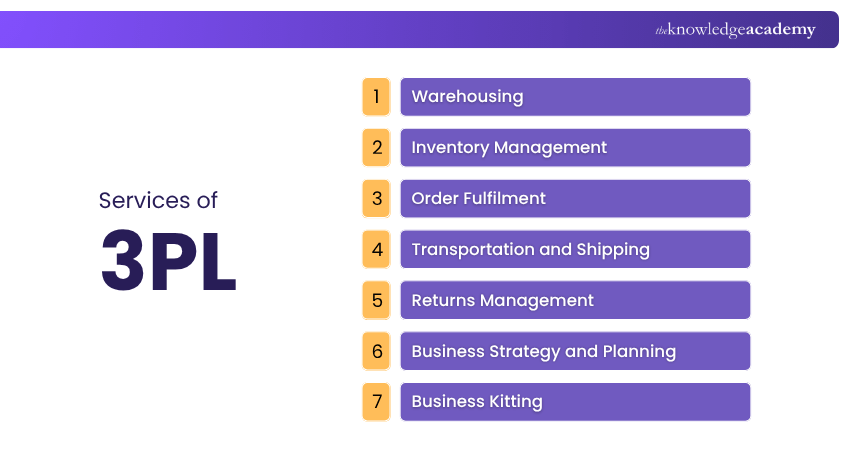
Warehousing
Warehousing is a fundamental component of logistics. 3PL providers offer secure, well-organised, and strategically located storage facilities, allowing for efficient handling and quick retrieval of products. With access to a network of fulfilment centres, businesses can reduce delivery times and avoid the costs of owning and operating their own warehouses.
Inventory Management
3PLs go beyond storage by offering sophisticated inventory management systems that provide real-time visibility into stock levels. These systems help businesses maintain optimal inventory, prevent overstocking or stockouts, and align supply with actual demand—enhancing operational efficiency.
Order Fulfilment
A key service of 3PL providers is managing the entire order fulfilment process. This includes picking, packing, and dispatching products when an order is placed. Many 3PLs support omnichannel fulfilment, enabling seamless order processing across different platforms, including eCommerce and subscription services.
Transportation and Shipping
3PLs handle transportation logistics, offering access to faster and often more economical shipping solutions. They may use their own delivery networks or collaborate with freight carriers to ensure timely delivery. Many also offer expedited shipping options, such as next-day or two-day delivery.
Returns Management
Efficient returns management is vital for maintaining customer satisfaction. 3PL providers oversee the reverse logistics process, handling returned items through inspection, restocking, or disposal. Some offer customer-facing returns portals, making the process simple and providing insights into return trends.
Business Strategy and Planning
Beyond logistics execution, 3PLs provide valuable strategic support through data analysis and reporting. Insights from supply chain data can highlight operational inefficiencies, reveal cost-saving opportunities, and guide decision-making to enhance overall logistics performance.
Business Kitting
Kitting involves assembling individual items into ready-to-ship packages, often tailored for promotional events or subscription boxes. 3PL providers manage the kitting process, ensuring accurate assembly, customised packaging, and consistent branding, enhancing the customer experience.
Upskill in handling operational management with our Supply Chain Management Training now!
Benefits of 3PL
Third-party Logistics (3PL) providers offer a range of advantages that can enhance a company's supply chain efficiency, reduce costs, and improve customer satisfaction. Below are some key benefits:
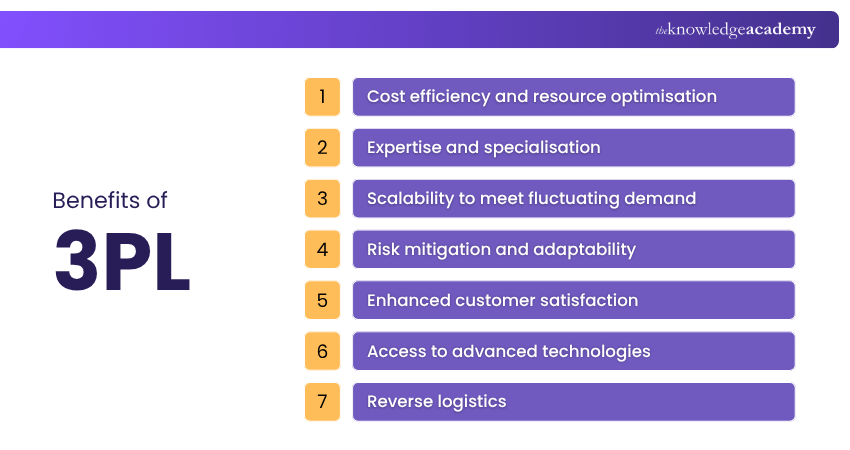
Cost Efficiency and Resource Optimisation
By outsourcing logistics operations to a 3PL provider, businesses can achieve significant cost savings. 3PLs leverage economies of scale, shared resources, and established networks to reduce expenses related to warehousing, transportation, and staffing. This allows companies to allocate resources more effectively towards core business activities.
Expertise and Specialisation
3PL providers possess specialised knowledge and experience in logistics management. Their expertise enables them to handle complex supply chain operations, navigate regulatory requirements, and implement best practices, ensuring efficient and compliant logistics solutions.
Scalability to Meet Fluctuating Demand
3PLs offer scalable solutions that can adapt to changing business needs. Whether it's seasonal demand spikes or business growth, 3PL providers can adjust their services accordingly, providing flexibility without the need for significant capital investment in infrastructure or personnel.
Risk Mitigation and Adaptability
Engaging a 3PL can help mitigate risks associated with logistics operations. Their established processes and contingency plans enable them to respond swiftly to disruptions, such as supply chain interruptions or regulatory changes, ensuring business continuity and adaptability.
Enhanced Customer Satisfaction
By improving delivery times, order accuracy, and overall service quality, 3PL providers contribute to higher customer satisfaction. Their efficient logistics operations ensure that customers receive products promptly and in good condition, fostering trust and loyalty.
Access to Advanced Technologies
3PLs invest in cutting-edge technologies, such as warehouse management systems (WMS), transportation management systems (TMS), and real-time tracking tools. Partnering with a 3PL allows businesses to leverage these technologies without the need for significant upfront investment, enhancing visibility and control over the supply chain.
Reverse Logistics
Managing returns and reverse logistics can be complex and resource-intensive. 3PL providers offer efficient reverse logistics solutions, handling product returns, refurbishments, and recycling processes. This not only improves customer service but also supports sustainability initiatives by reducing waste.
Gain skills and knowledge for successful logistics route planning and strategy; sign up for our Logistics Management Training now!
How do 3PL Warehouses Work?
Third-party Logistics (3PL) warehouses play a vital role in streamlining storage, order fulfilment, and delivery for businesses. Here’s a step-by-step look at how they operate:
a) Inventory Reception: Businesses send their inventory to the 3PL warehouse, where it is received, inspected for quality, and logged into an inventory management system.
b) Inventory Management: The system tracks stock levels in real time, ensuring efficient organisation and enabling accurate order fulfilment.
c) Order Processing: When a customer places an order, the 3PL team picks the correct items, packs them according to the client's guidelines, and prepares them for shipment.
d) Shipping: Orders are dispatched directly to the end customer, using reliable carriers to ensure timely delivery.
e) Value-Added Services: Many 3PL providers offer additional services such as kitting, custom packaging, and returns management.
f) Operational Benefits: By outsourcing logistics to a 3PL, businesses can scale more effectively, reduce overheads, and enhance customer satisfaction with faster, error-free fulfilment.
Choosing the Right 3pl Provider
Selecting the appropriate Third-party Logistics (3PL) provider is crucial for optimising your supply chain and ensuring seamless operations. Consider the following factors to make an informed decision:
Experience & Proven Track Record
Opt for a 3PL provider with a solid history in the logistics industry. Assess their years of operation, industry-specific experience, and client testimonials. Memberships in recognised industry bodies, such as the British International Freight Association (BIFA) or the United Kingdom Warehousing Association (UKWA), can also indicate credibility.
Scalability
Your logistics needs may evolve over time. Ensure the 3PL provider can scale their services to accommodate growth, seasonal fluctuations, or market changes. Discuss their capacity to adjust resources and services in response to your business's dynamic requirements.
Innovation
In today's fast-paced environment, technological adaptability is essential. Evaluate the 3PL's commitment to innovation, including their use of advanced systems for real-time tracking, data analytics, and integration capabilities with your existing platforms.
Tailored Solution
A one-size-fits-all approach may not suit your unique business needs. Seek a 3PL provider that offers customised solutions, demonstrating flexibility and a willingness to understand and align with your specific operational requirements.
Communication
Effective communication is the backbone of a successful partnership. Assess the 3PL's responsiveness, transparency, and the tools they use to keep you informed about your logistics operations. Reliable communication channels ensure prompt issue resolution and continuous alignment.
Cultural Fit
The 3PL provider's corporate culture should resonate with your company's values and working style. A compatible cultural fit fosters better collaboration, mutual understanding, and a more productive long-term relationship.
Ace your next logistics interview with these expert-curated Logistics Interview Questions and Answers!
Challenges of Third Party Logistics
Third-party Logistics (3PL) providers are navigating a complex landscape in 2024, marked by labour shortages, space constraints, rising costs, and intensified competition. Understanding these challenges is crucial for businesses relying on 3PL services.

Labour Shortages and Retention
The logistics industry continues to grapple with significant labour shortages. According to AutoStore, labour costs constitute over 40% of total operating expenses for 59% of 3PL providers, with 70% reporting difficulties in finding, retaining, and training workers. This shortage is exacerbated by increased competition for workers, as larger companies offer higher wages, making it challenging for 3PLs to attract and retain staff.
Warehouse Space Constraints
The surge in e-commerce has led to a heightened demand for warehouse space, resulting in historically low vacancy rates in key markets such as the UK, Germany, and the United States. AutoStore reports that nearly 40% of 3PL warehouses operate at 90–99% capacity, with 20% exceeding 100%. This scarcity of space limits the ability of 3PLs to expand and meet increasing customer demands.
Falling Profit Margins, Rising Fulfillment Costs
3PL providers face shrinking profit margins due to rising labour, real estate, and fuel costs. The competitive market forces providers into pricing wars, further squeezing margins. Additionally, the complexity of order fulfilment operations has increased, necessitating investments in automation and technology to maintain efficiency and meet customer expectations.
Pressure From Competition
The 3PL industry is experiencing intensified competition, with providers vying for contracts in a saturated market. This competition leads to downward pressure on pricing structures and profit margins. To stay competitive, 3PLs must optimise processes, enhance efficiency, and reduce operating costs without compromising service quality.
3PL vs 4PL
Third-party Logistics (3PL) and Fourth-party Logistics (4PL) represent different levels of logistics outsourcing, each offering distinct services and strategic value.
3PL providers focus on specific logistics functions such as warehousing, inventory management, order fulfillment, and transportation. They act as operational partners, handling the physical movement and storage of goods. Businesses can select particular services or opt for comprehensive solutions, allowing flexibility in managing logistics operations.
4PL providers, on the other hand, offer a more integrated approach by managing the entire supply chain. They oversee various 3PLs, coordinate technology, and handle financial aspects, serving as a single point of contact for the client. This model is particularly beneficial for companies seeking end-to-end supply chain solutions and strategic oversight.
Key Differences:
1) Scope of Services: 3PLs handle specific logistics tasks; 4PLs manage the entire supply chain.
2) Asset Ownership: 3PLs may own assets like warehouses and trucks; 4PLs are typically non-asset-based, focusing on coordination and strategy.
3) Client Interaction: 3PLs interact with clients on operational matters; 4PLs serve as strategic partners, often making decisions on behalf of the client.
Choosing between a 3PL and a 4PL depends on a company's specific needs, resources, and desired level of control over logistics operations. Companies seeking operational support may opt for a 3PL, while those desiring comprehensive Supply Chain Management might consider a 4PL.
Learn about gross domestic product and exchange rates of import and export products, sign up for our Import Export Course now!
Difference Between 3PL and Freight Forwarding
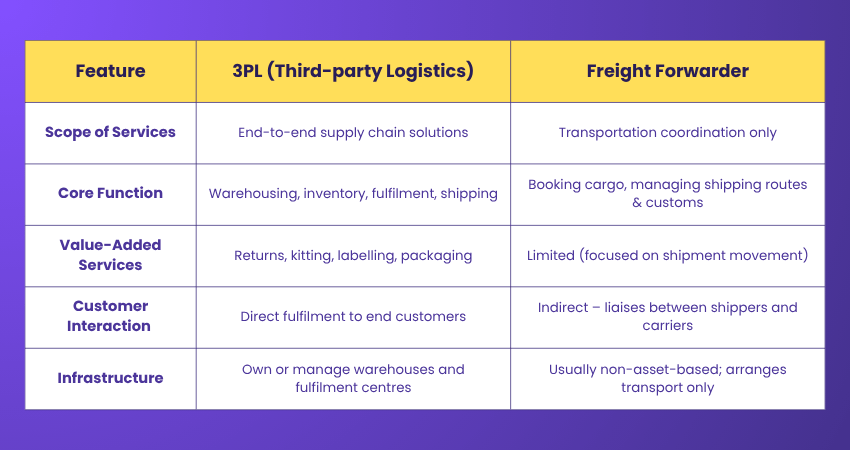
While both 3PL providers and freight forwarders play crucial roles in logistics, their functions differ significantly:
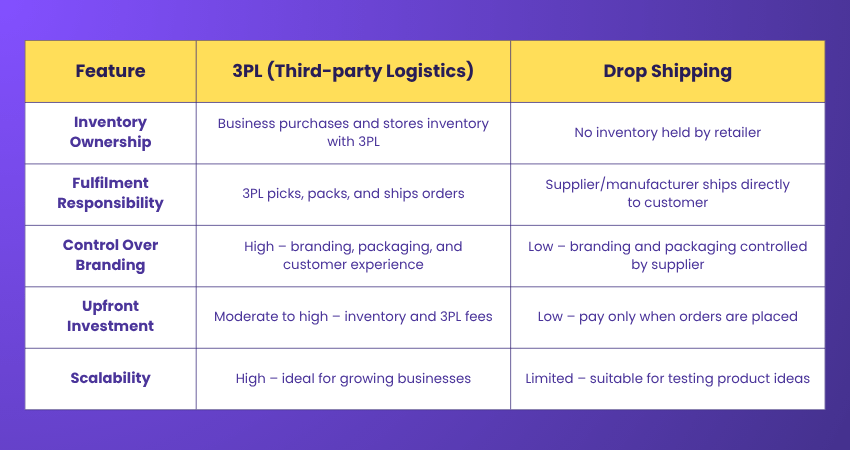
Difference Between 3PL and Drop Shipping
Both 3PL and drop shipping involve outsourcing logistics, but they cater to different business models and operational needs.
Conclusion
Understanding What is 3PL is the first step towards smarter, more scalable logistics. Whether you’re a startup or an established brand, Third-party Logistics can simplify operations, cut costs, and boost customer satisfaction. Choose the right partner, and let logistics work for you; not against you.
Kickstart your career in product Management with our Product Management Training, Sign up Now!
Frequently Asked Questions
Who Should use Third-party Logistics?

Businesses looking to streamline operations, reduce logistics costs, and scale efficiently should use third-party logistics. It’s ideal for eCommerce brands, retailers, and manufacturers that want to outsource warehousing, shipping, and fulfilment to specialised providers.
What’s the Difference Between 1PL, 2PL, and 3PL?
1PL handles logistics in-house, 2PL involves hiring a carrier for transportation, and 3PL outsources multiple supply chain functions like warehousing and shipping. Each level increases the degree of outsourcing and Supply Chain Management support.
What are the Other Resources and Offers Provided by The Knowledge Academy?
The Knowledge Academy takes global learning to new heights, offering over 3,000 online courses across 490+ locations in 190+ countries. This expansive reach ensures accessibility and convenience for learners worldwide.
Alongside our diverse Online Course Catalogue, encompassing 19 major categories, we go the extra mile by providing a plethora of free educational Online Resources like News updates, Blogs, videos, webinars, and interview questions. Tailoring learning experiences further, professionals can maximise value with customisable Course Bundles of TKA.
What is The Knowledge Pass, and How Does it Work?
The Knowledge Academy’s Knowledge Pass, a prepaid voucher, adds another layer of flexibility, allowing course bookings over a 12-month period. Join us on a journey where education knows no bounds.
What are the Related Courses and Blogs Provided by The Knowledge Academy?
The Knowledge Academy offers various Industry Trainings, including Facilitation Skills Training, Basic Barista Course and Floristry Introduction. These courses cater to different skill levels, providing comprehensive insights into What is NEFT.
Our Business Skills Blogs offer concise, practical insights on leadership, communication, and problem-solving to help professionals enhance performance and achieve success in dynamic work environments. Whether you are a beginner or looking to advance your Business Skills, The Knowledge Academy's diverse courses and informative blogs have got you covered.

The Knowledge Academy


Global Training Provider
The Knowledge Academy is a world-leading provider of professional training courses, offering globally recognised qualifications across a wide range of subjects. With expert trainers, up-to-date course material, and flexible learning options, we aim to empower professionals and organisations to achieve their goals through continuous learning.

Upcoming Business Skills Resources Batches & Dates
Date
 Logistics Management Training
Logistics Management Training
Fri 17th Jul 2026
Logistics Management Training
Fri 9th Oct 2026

 If you wish to make any changes to your course, please


