


 Top Rated Course

We may not have the course you’re looking for. If you enquire or give us a call on +353 12338944 and speak to our training experts, we may still be able to help with your training requirements.
Confidence vs Arrogance: Key Differences Explained
The Knowledge Academy 11 June 2026Confidence is quite self-belief that uplift others, while arrogance is a loud need to prove superiority. Confidence embraces growth; arrogance hides insecurity. Understanding the difference helps build stronger relationships, improve self-awareness, and develop a balanced mindset for personal and professional success.

Training Outcomes Within Your Budget!
We ensure quality, budget-alignment, and timely delivery by our expert instructors.
Table of Contents
Have you ever wondered why confidence attracts respect while arrogance pushes people away? Understanding the Confidence vs Arrogance dynamic is essential for building strong relationships and a positive personal image.
In this blog, we explore the Differences Between Arrogance and Confidence, helping you identify key traits, behaviours, and mindsets. You will gain clarity on how to develop genuine confidence while avoiding the pitfalls of arrogance in both personal and professional settings.
Table of Contents
1) What is Confidence?
2) What is Arrogance?
3) Differences Between Confidence and Arrogance
4) The Middle Ground Between Confidence and Arrogance
5) Conclusion
What is Confidence?
Confidence is a vital trait that fuels personal growth and success. It represents a balanced, self-assured belief in one’s abilities and is a sign of healthy self-esteem and self-respect. Unlike Arrogance, Confidence comes from a realistic understanding of one's strengths and limitations, promoting a positive and composed attitude. Confident individuals not only empower themselves but also positively influence those around them. Some of the characteristics of Confidence are as follows:
1) Clear Self-belief: Confidence is rooted in a self-assured belief in one’s abilities, qualities, and judgment.
2) Positive Demeanour: It reflects a positive mindset, visible in calmness, composure, and a poised attitude.
3) Distinction from Arrogance: Confidence, unlike Arrogance, is based on a realistic, honest assessment of one’s capabilities and limitations.
4) Resilience and Growth: This trait fosters resilience, encouraging a proactive, growth-oriented approach to challenges.
5) Comfort in Authenticity: Confident individuals are comfortable in their own skin, engaging assertively and respectfully with others.
6) Inner Validation: Their self-belief doesn’t rely on comparisons but stems from an inner conviction of worth and ability.
7) Inspiring and Uplifting: Confidence often inspires others, creating a supportive, positive environment.
8) Open to Learning: Confident people are receptive to feedback, seeing it as a chance for growth rather than criticism.
9) Effectiveness in Multiple Spectrum: This trait aids confident individuals in navigating personal and professional spheres effectively, making them well-regarded and influential.

What is Arrogance?
Arrogance is often mistaken for Confidence but represents a different, damaging trait. Unlike genuine Confidence, which is based on a realistic and positive view of one’s abilities, Arrogance is characterised by an inflated sense of self-importance and an unjustified feeling of superiority. This counterproductive quality can impact both personal relationships and professional success, creating barriers to genuine connection and growth. Some of the characteristics of Arrogance are as follows:
1) False Sense of Superiority: Arrogance stems from an inflated ego and a misguided belief in one’s importance and entitlement.
2) Dismissive Attitude: Arrogant individuals often exhibit a condescending or dismissive attitude, undermining or belittling others around them.
3) Masking Insecurities: Unlike genuine Confidence, Arrogance frequently serves as a cover for insecurities or personal shortcomings.
4) Disconnected from Others: This trait prevents genuine connection, as arrogant people focus on asserting dominance rather than fostering reciprocal relationships.
5) Inflexibility and Closed-mindedness: Arrogant individuals may refuse to acknowledge mistakes, feel the need to constantly prove superiority, and struggle to consider alternative viewpoints.
6) Negative Impact on Collaboration: In personal and professional settings, Arrogance can hinder teamwork, collaboration, and open dialogue, leading to a stifling atmosphere.
7) Isolation and Missed Opportunities: In contrast to Confidence, which inspires others, Arrogance alienates, leading to social isolation and missed opportunities for growth and meaningful interactions.
Ignite your personal growth journey with our Personal Development Courses – Sign up today!
Differences Between Confidence and Arrogance
While Confidence and Arrogance may seem like opposite expressions, they can often be difficult to distinguish. Understanding the difference is crucial to maintaining a positive, collaborative, and resourceful attitude at work. Here are some key distinctions:
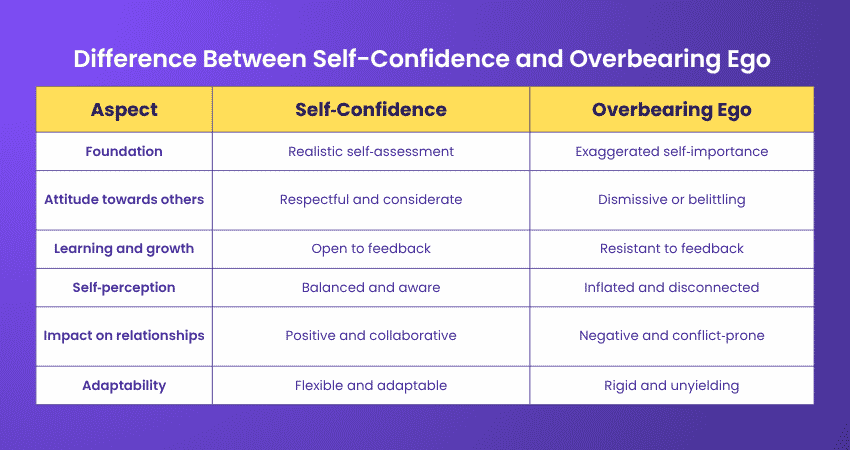
1) Self-Confidence Vs Overbearing Ego
Self-Confidence is rooted in reality that a genuine belief in one’s abilities shaped by experience and self-awareness. It’s marked by humility and an openness to life’s challenges. Confident individuals understand their strengths and weaknesses, always aiming for growth without putting others down. This balanced view supports positive relationships and personal development.
On the other hand, an overbearing ego, often seen as Arrogance, skews self-perception. Driven by an inflated self-image and a superiority complex, it leads to an unrealistic view of one’s abilities, often at others’ expense. Unlike true Confidence, an inflated ego lacks self-awareness and empathy, harming personal growth and social connections.
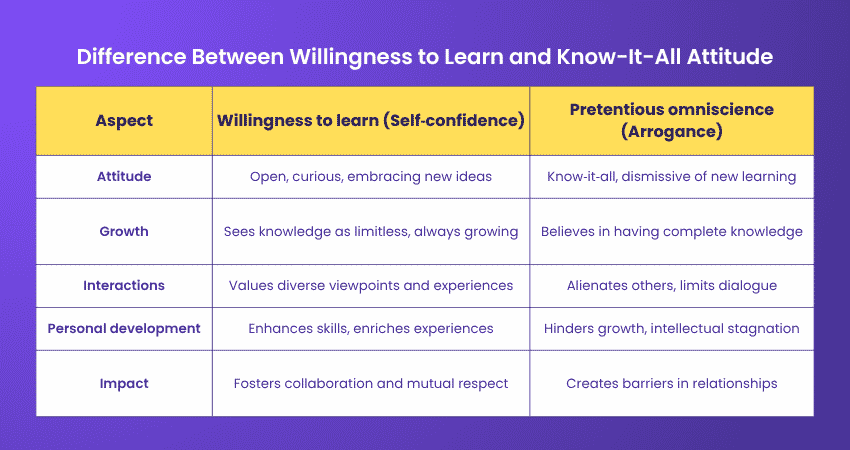
2) Willingness to Learn vs Know-It-All Attitude
A key trait of Self-Confidence is the willingness to learn, which reflects an open, curious mindset. Confident people recognise that learning is a lifelong journey and value new ideas and perspectives. They appreciate diverse viewpoints, knowing there is always more to understand, which enhances their skills and enriches their relationships.
In contrast, Arrogance often manifests as a pretentious “know-it-all” attitude, where individuals feel they have nothing more to learn. This mindset not only hinders personal growth but also alienates others, creating barriers to genuine conversation and collaboration. This difference highlights the importance of humility and openness in fostering personal development and positive interactions.
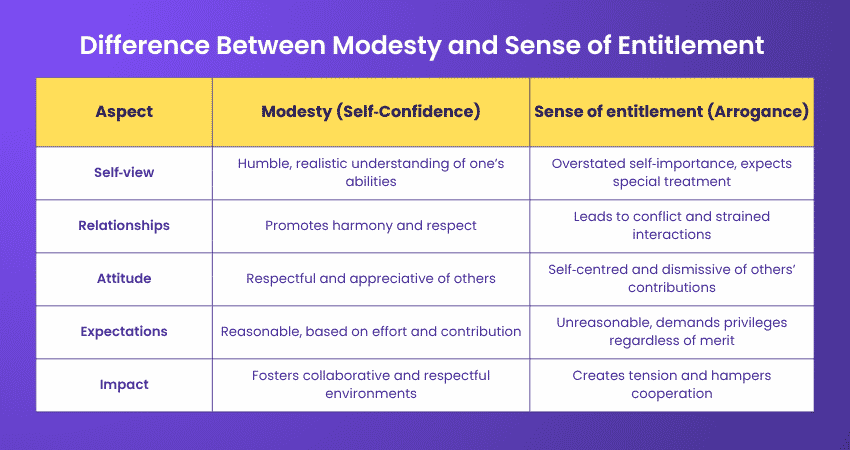
3) Modesty Vs Sense of Entitlement
Modesty, often linked with genuine Confidence, is marked by a humble and unassuming nature. It involves recognising one’s abilities without exaggeration and valuing others' contributions. Modest individuals are assured of their worth but feel no need to constantly assert or prove themselves. This quality fosters harmony and respect in relationships, creating a collaborative and balanced environment.
In contrast, entitlement, often tied to Arrogance, reflects an unrealistic expectation of special treatment and privileges. Entitled people believe they deserve more than others, regardless of effort. This attitude can lead to conflicts and strained relationships, stemming from self-centeredness and disregard for others’ feelings. Recognising these differences emphasises the value of humility over entitlement in both personal and professional life.
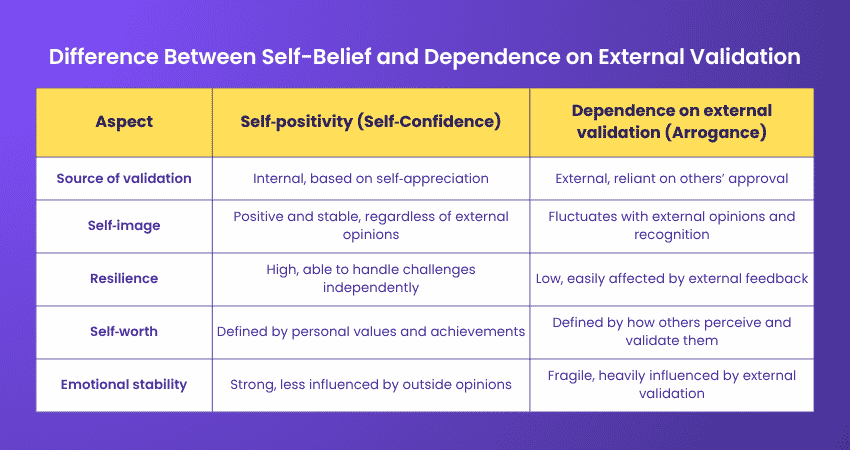
4) Self-Belief vs Dependence on External Validation
Self-positivity, a trait of true Confidence, means maintaining a positive self-image based on internal validation. Confident individuals recognise their own worth and achievements without needing constant approval from others. This inner positivity builds resilience, enabling them to face challenges without relying on external validation. While they value others’ opinions, their self-worth isn’t solely defined by them.
In contrast, Arrogance often involves a dependence on external validation, where individuals need constant affirmation to feel valued. This reliance reveals low self-esteem, making their self-worth fragile and heavily influenced by others’ opinions. This approach undermines genuine Confidence and hinders personal growth and emotional stability.
5) Collaboration vs Dominance
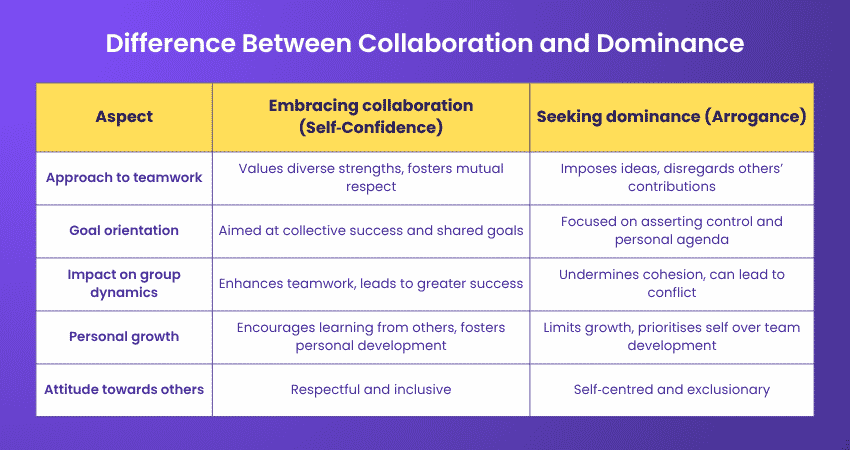
Embracing collaboration is a key aspect of true Confidence, where individuals recognise the value of teamwork, and the strengths others bring. Confident people, secure in their abilities, understand that working together often yields better results. They contribute positively, fostering an environment of respect and shared goals. This collaborative mindset not only promotes personal growth but also strengthens team dynamics and outcomes.
In contrast, Arrogance often involves a desire for dominance. Dominant individuals impose their ideas and dismiss others' contributions, focusing on control rather than team success. This attitude disrupts team harmony, leading to conflict and inefficiency, and reflects a self-centred outlook that undervalues collective effort.
6) Emotional Intelligence Vs Lack of Empathy
Emotional intelligence, a hallmark of true Confidence, involves understanding, using, and managing one’s emotions positively. It includes empathy, handling relationships effectively, and making considerate decisions. Confident individuals with strong emotional intelligence can read emotional cues, respond appropriately, and build healthy relationships. This emotional awareness enhances communication, conflict resolution, and empathy.
In contrast, Arrogance often lacks empathy, reflecting an inability or unwillingness to understand others’ emotions. Arrogant individuals may ignore or dismiss others' feelings, focusing solely on their own views. This lack of emotional depth harms communication and can lead to strained interactions, misunderstandings, and negative effects on personal and professional relationships.
7) Optimism vs Negative Mindset
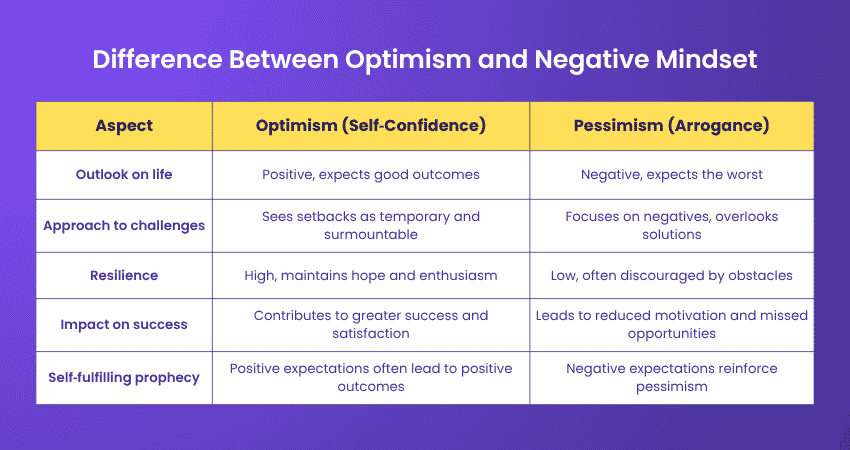
Optimism, common among self-confident individuals, reflects a positive outlook on life and its challenges. Optimists expect good outcomes and see setbacks as temporary hurdles. They maintain hope and enthusiasm even in tough situations, which boosts their resilience, problem-solving abilities, and well-being. With a “can-do” attitude, optimists often experience greater success and satisfaction.
In contrast, pessimism, sometimes linked to Arrogance, involves focusing on the negatives and expecting unfavourable outcomes. Pessimists often miss opportunities and lack motivation, which can create a self-fulfilling cycle where negative expectations lead to negative results. This outlook reduces effort and reinforces their pessimistic perspective.
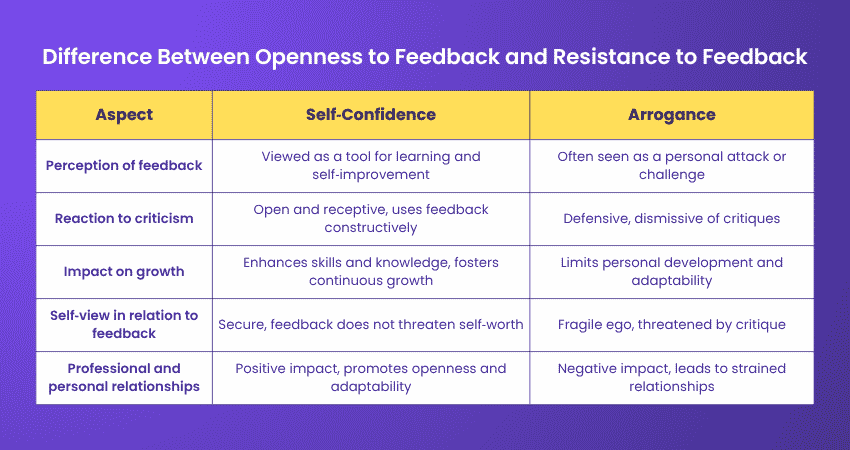
8) Openness to Feedback vs Resistance to Feedback
Receiving feedback constructively is a key trait of Self-Confidence. Confident individuals view feedback as a valuable tool for learning and growth, listening actively and distinguishing constructive criticism from negativity. This openness comes from a secure self-image and the understanding that personal development is ongoing. For them, feedback is not a threat but an opportunity to improve.
In contrast, Arrogance often hinders the ability to accept feedback. Arrogant individuals may see feedback as a personal attack or threat to their competence, reacting defensively due to a fragile ego. This attitude keeps them from valuable insights and limits personal and professional growth, as they prefer to stay within their comfort zone.
The Middle Ground Between Confidence and Arrogance
Understanding the balance between Confidence and Arrogance is essential for personal and professional growth. While Confidence is rooted in self-assurance and respect for oneself and others, Arrogance tends to reflect an inflated sense of self-importance that dismisses the contributions and feelings of those around us.
The middle ground is about embracing Confidence while avoiding the pitfalls of Arrogance. Here are a few points to help you understand better about the middle ground between Confidence and Arrogance:
1) Self-Awareness: Confident individuals are realistic about their strengths and weaknesses, embracing an accurate self-view.
2) Openness to Feedback: They welcome constructive feedback, using it as an opportunity for growth without feeling threatened.
3) Valuing Abilities Without Belittling Others: Confident people appreciate their own abilities without diminishing those of others.
4) Positive and Collaborative Engagement: Their balanced self-view enables positive, collaborative interactions, fostering a healthy environment.
5) Commitment to Growth: They see growth as a continuous journey and are willing to learn from both successes and setbacks.
6) Arrogance as a Barrier: Arrogant individuals often view themselves as superior, which can create a barrier to self-improvement.
7) Impact of Arrogance: This mindset can damage relationships, stall personal growth, and lead to isolation.
8) Core of True Confidence: True Confidence blends self-belief with humility and empathy, building trust, respect, and lasting connections.
Finding this middle ground means building a solid sense of self-worth while remaining humble and open. By focusing on growth, respecting others, and valuing diverse perspectives, we can embody genuine Confidence that inspires rather than alienates.
Enhance your Emotional Intelligence and thrive with our Emotional Intelligence Training – Sign up now!
Conclusion
Understanding the Confidence vs Arrogance dynamic is essential for developing a balanced and authentic personality. By recognising the Differences Between Arrogance and Confidence, individuals can build genuine self-belief while maintaining humility and respect for others. This awareness supports stronger relationships and better communication. Ultimately, choosing confidence over arrogance leads to long-term personal and professional growth.
Develop strong listening skills to enhance communication and build better relationships with our Active Listening Training- Join today!
Frequently Asked Questions
Can Confidence and Humility Exist Together?

Yes, confidence and humility can coexist effectively. Confidence reflects belief in your abilities, while humility keeps you open to learning and recognising others’ contributions. Together, they create a balanced mindset that supports growth and collaboration. This combination helps build trust, respect, and stronger personal and professional relationships.
Are There Any Strategies for Associating with Arrogant People in the Workplace or in Personal Relationships?
To handle Arrogance, set clear boundaries, stay calm, and don’t take their behaviour personally. Focus on open communication, assertively express your views, and, if needed, seek support from others to maintain a respectful environment.
What are the Other Resources and Offers Provided by The Knowledge Academy?
The Knowledge Academy takes global learning to new heights, offering over 3,000+ online courses across 490+ locations in 190+ countries. This expansive reach ensures accessibility and convenience for learners worldwide.
Alongside our diverse Online Course Catalogue, encompassing 17 major categories, we go the extra mile by providing a plethora of free educational Online Resources like Blogs, eBooks, Interview Questions and Videos. Tailoring learning experiences further, professionals can unlock greater value through a wide range of special discounts, seasonal deals, and Exclusive Offers.
What is The Knowledge Pass, and How Does it Work?
The Knowledge Academy’s Knowledge Pass, a prepaid voucher, adds another layer of flexibility, allowing course bookings over a 12-month period. Join us on a journey where education knows no bounds.
What are the Related Courses and Blogs Provided by The Knowledge Academy?
The Knowledge Academy offers various Personal Development Courses, including Confidence Building Training, Time Management Training, and Stress Management Course. These courses cater to different skill levels, providing comprehensive insights into How to Be More Confident.
Our Business Skills Blogs cover a range of topics related to Personal Development, offering valuable resources, best practices, and industry insights. Whether you are a beginner or looking to advance your Business Skills, The Knowledge Academy's diverse courses and informative blogs have got you covered.

The Knowledge Academy


Global Training Provider
The Knowledge Academy is a world-leading provider of professional training courses, offering globally recognised qualifications across a wide range of subjects. With expert trainers, up-to-date course material, and flexible learning options, we aim to empower professionals and organisations to achieve their goals through continuous learning.

Upcoming Business Skills Resources Batches & Dates
Date
 Confidence Building Training
Confidence Building Training
Fri 10th Jul 2026
Confidence Building Training
Fri 2nd Oct 2026

 If you wish to make any changes to your course, please


