


 Top Rated Course

We may not have the course you’re looking for. If you enquire or give us a call on +852 2592 5349 and speak to our training experts, we may still be able to help with your training requirements.
Software Architecture Patterns: An Overview and Comparison
William Brown 16 February 2026A Software Architecture Pattern is like a plan for building software. Each pattern has its unique characteristics and uses. It allows developers to choose a suitable pattern based on the requirements of the system. In this blog, we will explore various Software Architecture Patterns, their uses and comparison with Design Pattern.

Training Outcomes Within Your Budget!
We ensure quality, budget-alignment, and timely delivery by our expert instructors.
Table of Contents
Related Courses
- BCS Foundation Certificate in IS Project Management
- BCS Professional Certificate in Benefits Planning and Realisation
- BCS Foundation and Practitioner Certificate in Enterprise and Solution Architecture (Bundle Course)
- BCS Foundation Certificate in Digital Business Change Training
- BCS International Diploma in Business Analysis

In the world of software development, creating well-structured systems is crucial for success. A key element of achieving this is being aware of and making use of Software Architecture Patterns. These patterns provide solutions to common design challenges and direction on how to set up and construct software systems to satisfy needs and objectives. In this blog, we will explore different Software Architecture Patterns, their characteristics, and their applications in creating scalable software solutions.
Table of contents
1) What is Software Architecture?
2) Types of Software Architecture Pattern
a) Layered architecture pattern
b) Client-Server architecture pattern
c) Microkernel architecture pattern
d) Microservices architecture pattern
e) Space-Based architecture pattern
f) Pipe-Filter architecture pattern
g) Master-Slave architecture pattern
h) Event-driven architecture pattern
i) Broker architecture pattern
j) Peer-to-Peer architecture pattern
3) Difference Between Software Architecture Pattern and design pattern
4) Conclusion
What is Software Architecture?
Software Architecture is the blueprint of a software system. It is a plan that outlines how different parts of a software system will work together. It involves designing and organising the software components, including modules, layers, and interfaces. It helps to meet expectations and qualities such as scalability, reliability, and maintainability. Software Architecture serves as the skeleton for the entire software system, guiding its development and evolution.

Types of Software Architecture Pattern
Software Architecture Pattern is the reusable solution to a commonly occurring problem in Software Architecture design. These patterns offer guidelines and best practices for organising the structure and interactions of software components to achieve the required system qualities. Architecture Patterns help to design software systems that are adaptable and easier to understand. Here are some of the popular architectural patterns that have aided software companies in scaling up their businesses:
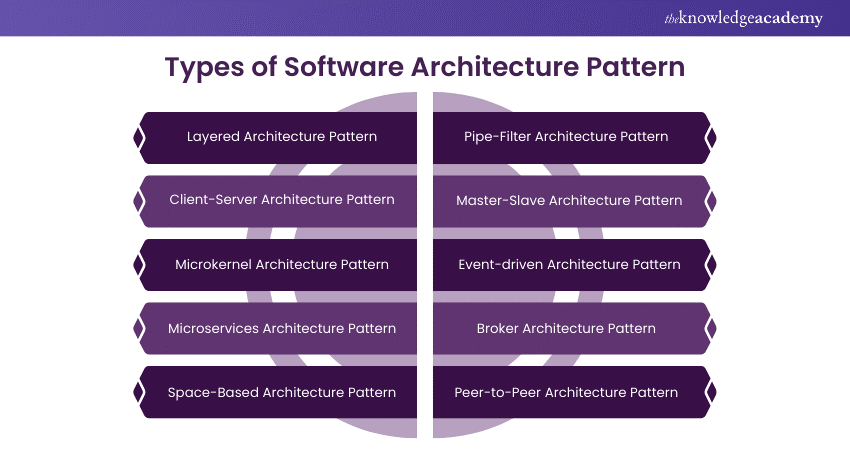
Layered architecture pattern
Layered Architecture is one of the most common types of Software Architecture Patterns. It organizes the software system into multiple layers, each responsible for a distinct functionality. The layers are typically arranged hierarchically and interact only with adjacent layers. These layers include the presentation layer, which handles user interaction; the business logic layer, which processes data; and the data storage layer, which connects with the database. This structure also addresses key Quality Attributes in Software Architecture, such as maintainability and separation of concerns, making it a widely adopted pattern.
Client-Server architecture pattern
In this pattern, clients interact with servers over a network to obtain services, following the Client-Server Architecture model. Clients can be any external entity outside the server, whether accessing it through a web browser, mobile application, or desktop application. The server hosts and delivers the expected facilities, including data storage and processing, application logic and presentation, business rules, and workflow management. This pattern ensures the optimal utilisation of centralised resources and enhances scalability, making it a widely adopted approach in distributed computing environments.
Microkernel architecture pattern
Microkernel Architecture keeps things simple by keeping the core system functionality (microkernel) minimal and allowing extra features through plug-ins or modules. The microkernel provides essential services such as memory management, process scheduling, and inter-process communication. Plug-ins extend the system's functionality to meet requirements without changing the core. This pattern improves flexibility and adaptation to changing requirements.
Ace Your Next Interview with our top Software Testing Interview Questions!
Microservices architecture pattern
Microservices Architecture Guide breaks down the application into small, separate services, each handling a single business function. It allows the teams to own, develop, deploy, and scale the services independently and without disrupting others. The services interact through lightweight protocols, like HTTP or messages. Each service can be made using different tools and languages. This pattern helps make the system flexible and able to handle big changes easily, making it ideal for complex and rapidly evolving systems. In the same way, Microservices enhances scalability and flexibility, allowing businesses to adapt swiftly to changing demands.
Space-Based architecture pattern
Space-Based Architecture Is a distributed computing Architecture that circulates data across multiple nodes in a space-based manner. This helps make the system bigger and more stable. This pattern is commonly used in distributed caching systems, real-time analytics platforms, and high-performance computing environments. This is useful for systems that need to handle lots of data quickly.
Understand the concept of Business Change with our Business Change Course - join today!
Pipe-Filter architecture pattern
Pipe-filter Architecture is a data processing Architecture pattern where data flows through a series of components (filters) connected by pipes. Each filter performs specific operations on the data. The data flows constantly through the pipeline, with each filter processing the data and passing it to the next filter until the expected result. This pattern is ideal for applications such as compilers, data transformation pipelines and multimedia processing systems.
Master-Slave architecture pattern
In the Master-Slave Architecture, there is a single master node that coordinates many slave nodes to perform tasks. The master node gives jobs to slave nodes, gathers the results, and oversees the whole process. This pattern is used in distributed computing environments, parallel processing systems, and networked applications. It is ideal in situations where tasks need to be divided and executed in parallel for improved performance and scalability.
Event-driven architecture pattern
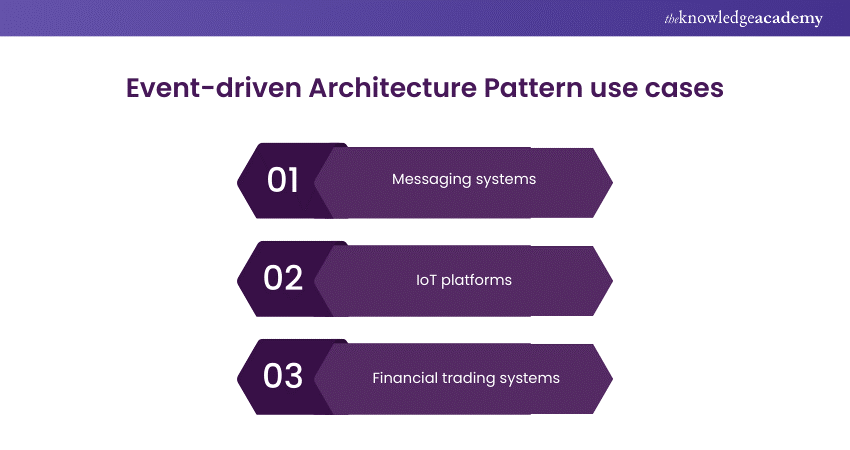
Event-driven Architecture is a pattern where components communicate and interact based on events. Events represent important changes or occurrences within the system that trigger responses from other components. It is used in messaging systems, IoT platforms, and financial trading systems.
Must-Know Automation Testing Interview Questions for Job Seekers!
Broker architecture pattern
Broker Architecture is a messaging Architecture pattern. It creates a central system that mediates communication between distributed systems or components. Producers send messages to the broker, which in turn sends them to the consuming unit. This pattern promotes loose coupling between producers and consumers. A broker-based system includes message queues, topics, and subscribers.
Peer-to-Peer architecture pattern
In Peer-to-Peer Architecture, all nodes within the network have the same capabilities and are equally responsible. Peers interact directly with one another, sharing resources like files or computing power, without the need for a mediator. The Importance of Software Architecture in this pattern lies in its ability to enable peer discovery, resource sharing, and collaboration. This architecture is particularly suitable for decentralized systems, file-sharing networks, and collaborative applications.
Boost your knowledge in in Architect roles with our Enterprise and Solution Architecture Course - sign up now!
Difference Between Software Architecture Pattern and design pattern
Software Architecture Pattern focuses on a software system's high-level organisation and structure. It covers defining its overall layout and major components. It addresses fundamental design decisions and gives guidelines for organising the system's components and interactions to achieve qualities.
On the other hand, Design Pattern is smaller-scale solutions to common design problems within individual components or modules of the system. It addresses recurring design issues at a lower level. It offers solutions and best practices for implementing components of a software system, such as algorithms, data structures, or object interactions. It further enhances code reusability, readability, and maintainability.
Explore our Demo Website for Automation Testing now!
Conclusion
Understanding Software Architecture Patterns, along with the related Software Architecture Interview Questions, is essential for designing robust and scalable software systems. By exploring various architecture patterns and their differences from design patterns, developers can make informed decisions to address challenges and requirements in software development.
Gain insights into the objectives of governance with our Architecture Concepts Course - Sign up now!
Frequently Asked Questions
What is the best Software Architecture Pattern?

The best Software Architecture Pattern depends on the needs and requirements of each project. However, the layered architecture pattern is the most used Architecture design pattern.
Why are Software Architecture Patterns important?
Software Architecture Patterns provide solutions to common design problems. It offers guidelines and best practices for structuring and organising software systems. It improves system quality characteristics such as scalability, maintainability, and performance.
What are the other resources and offers provided by The Knowledge Academy?
The Knowledge Academy takes global learning to new heights, offering over 3,000+ online courses across 490+ locations in 190+ countries. This expansive reach ensures accessibility and convenience for learners worldwide.
Alongside our diverse Online Course Catalogue, encompassing 19 major categories, we go the extra mile by providing a plethora of free educational Online Resources like Blogs, eBooks, Interview Questions and Videos. Tailoring learning experiences further, professionals can unlock greater value through a wide range of special discounts, seasonal deals, and Exclusive Offers.
What is the Knowledge Pass, and how does it work?
The Knowledge Academy’s Knowledge Pass, a prepaid voucher, adds another layer of flexibility, allowing course bookings over a 12-month period. Join us on a journey where education knows no bounds.
What are related courses and blogs provided by The Knowledge Academy?
The Knowledge Academy offers various Architecture Concepts and Domains Course including Business Analysis Course, Enterprise and Solution Architecture Course, Project Management Course and Agile Course. These courses cater to different skill levels, providing comprehensive insights into BCS Code of Conduct.
Our Business Analysis Blogs covers a range of topics related to Scrum, offering valuable resources, best practices, and industry insights. Whether you are a beginner or looking to advance your Business Improvement skills, The Knowledge Academy's diverse courses and informative blogs have you covered.

William Brown


Senior Business Analyst and Strategic Advisor
William Brown is a senior business analyst with over 15 years of experience driving process improvement and strategic transformation in complex business environments. He specialises in analysing operations, gathering requirements and delivering insights that support effective decision making. William’s practical approach helps bridge the gap between business goals and technical solutions.
View Detail
Upcoming Business Analysis Resources Batches & Dates
Date
 BCS Foundation Certificate in Architecture Concepts and Domains
BCS Foundation Certificate in Architecture Concepts and Domains
Mon 21st Sep 2026
BCS Foundation Certificate in Architecture Concepts and Domains
Mon 14th Dec 2026

 If you wish to make any changes to your course, please


