


 Top Rated Course

We may not have the course you’re looking for. If you enquire or give us a call on +358 942454206 and speak to our training experts, we may still be able to help with your training requirements.
What is Globalisation and How Does it Impact us?
The Knowledge Academy 27 April 2026Globalisation links economies, cultures, and trade across the world, powered by technology, communication, and international business exchange. It widens access to markets and encourages meaningful innovation. It also connects people more closely through shared ideas, global collaboration, and stronger international relationships.

Training Outcomes Within Your Budget!
We ensure quality, budget-alignment, and timely delivery by our expert instructors.
Table of Contents

In today’s connected world, borders matter less than ever before. Ideas, products, and services move across countries in seconds. Businesses and people interact globally every single day.
Many readers still ask, “What is Globalisation” and search for the globalisation meaning in simple terms. From online shopping to international job opportunities, its influence is everywhere. Now let’s break down how it actually works.
Table of Contents
1) What is Globalisation?
2) Reasons for Globalisation
3) Importance of Globalisation
4) What are the Different Types of Globalisations?
5) The Changing Global Economy
6) What are the Advantages and Disadvantages of Globalisation?
7) The Evolving Future of Globalisation
8) What is an Example of Globalisation?
9) What are the Three Pillars of Globalisation?
10) What are the Key Principles of Globalisation?
11) Conclusion
What is Globalisation?
Globalisation is the primary ideology that allows nations, institutions and individuals to connect with each other. It can be performed using the platforms of trade, technology and cultural exchange. It promotes innovation and acceptance of ideas and cultural elements.
It helps businesses to expand beyond their location, and it promotes diversity by allowing rapid flow of goods, services and information. This encourages cultural exchange and fosters global cooperation.

Reasons for Globalisation
Globalisation has grown quickly because of several important reasons that make it easier for countries and businesses to work together:
1) Better Transport: Bigger ships and faster travel have made it cheaper and quicker to move goods and people between countries.
2) Lower Costs with Bigger Scale: Companies can produce more items at once, which reduces the cost per item. This makes it easier to sell products in many countries.
3) Easier Trade Between Countries: Groups like the World Trade Organisation (WTO) help remove rules that make trade difficult, so countries can buy and sell more easily with each other.
4) Improved Communication: The internet and mobile phones allow people and businesses in different parts of the world to connect instantly.
5) Skilled Workers: Some countries have many skilled workers. Companies often move jobs there to save money, especially in industries like clothing and customer service.
All these reasons help bring the world closer together and make it easier for businesses and people to connect globally.
Importance of Globalisation
Globalisation has influenced societies in many ways, shaping cultures by creating both diversity and similarity. It brings a mix of positive and negative effects. Let us see the impacts of Globalisation for better understanding:
1) Heterogeneous Society
Globalisation has brought people from different backgrounds together. In many countries, there’s now a mix of cultures, languages, and beliefs. This diversity creates richer experiences in food, music, fashion and festivals. It also encourages new ideas and helps people understand different ways of life.
2) Homogeneous Society
Traditional customers can fade away when global brands, media and products spread everywhere. For example, high streets in many countries now look similar, with the same chain stores and fast-food outlets. This can lead to a loss of local identity.
3) Positive Impacts
1) More Trade and Jobs: Businesses can sell their products worldwide. It creates jobs and boosts economies.
2) Better Communication: The internet and phones help people stay connected, irrespective of their location.
3) Cultural Exchange: People learn from each other, share traditions and become more open-minded.
4) Access to New Products: Globalisation imports a wider range of goods to different countries.
5) Faster Spread of Ideas: International Collaboration favours the domains of science, health research and education.
Understand how your organisation can leave a positive impact globally with Corporate Social Responsibility CSR Training. Join now!
What are the Different Types of Globalisations?
Here are the most common types of Globalisation:
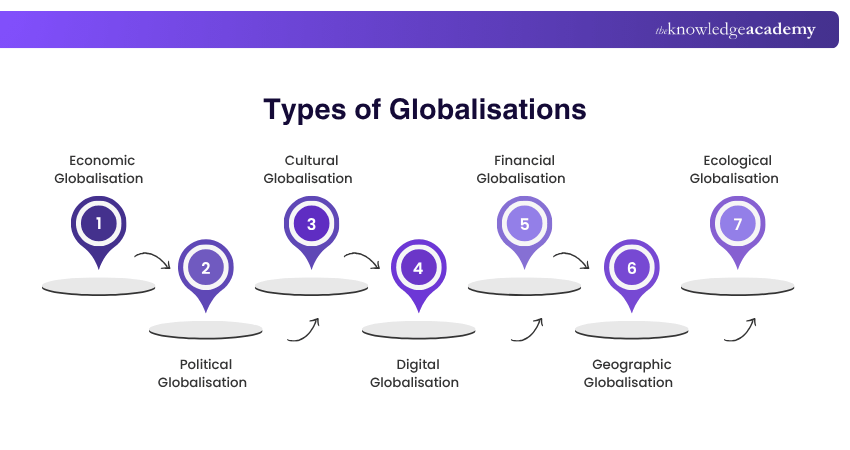
1) Economic Globalisation
Economic globalisation integrates national economies with global markets through freer trade and capital movement. It reduces restrictions on international business and increases economic interdependence worldwide.
2) Political Globalisation
Political globalisation strengthens cooperation between nations through shared rules, treaties, and global institutions. It promotes international coordination and common standards for governance and trade.
3) Cultural Globalisation
Cultural globalisation spreads ideas, values, and lifestyles across borders through communication and media. It increases cultural exchange and shapes shared global experiences.
4) Digital Globalisation
Digital Globalisation refers to the rapid exchange of information, services, and communication through technology and the Internet. It connects people worldwide, enabling innovation and collaboration. This type of Globalisation comes with a catch. It presents challenges like digital divides, data privacy concerns, and Cybersecurity Risks.
5) Financial Globalisation
Financial Institutions and businesses across the world, with a focus on Globalisation, are integrating financial markets across the world, enabling the free flow of capital, investments, and financial services. Financial Globalisation supports economic growth, connects investors globally, and opens opportunities. But this exposes weaker economies to economic instability, market volatility, currency fluctuations, inflation and many such financial crises.
6) Geographic Globalisation
Geographic Globalisation emphasises the interconnectedness of regions and countries through physical, economic, and social networks. It promotes global trade routes, international collaborations, and mobility. While it strengthens global ties and resource sharing, it also raises concerns about overpopulation, environmental strain, and unequal access to opportunities across different regions.
7) Ecological Globalisation
The world has been worked over four decades to focus and solve a host of environmental problems faced by the global community, such as climate change, deforestation, and biodiversity loss. While it promotes international cooperation to address these issues, it also highlights the disparities between nations in the lines of responsibility and resources, making global environmental solutions complex yet essential element for sustainable development.
Make effective supply chain decisions with our Introduction to Supplier Management Course – Register today!
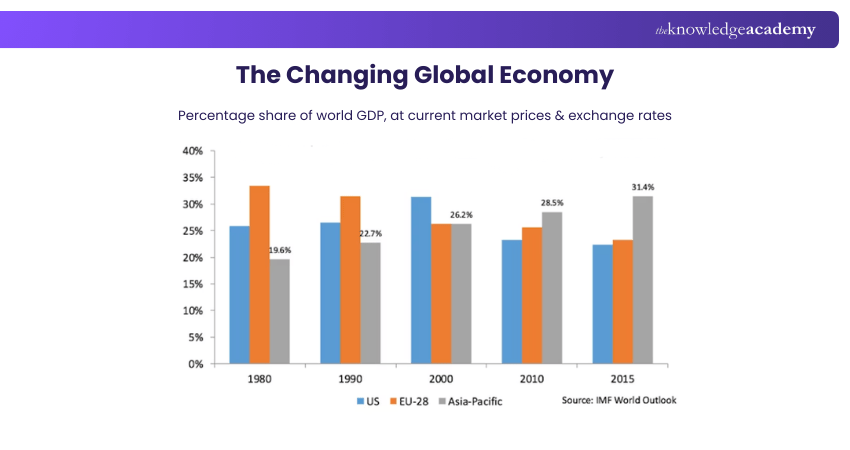
The Changing Global Economy
The global economy is undergoing rapid change, with economic power shifting steadily since 1980. Asian‑Pacific nations now command a significantly larger share of global output and play a leading role in world markets.
What are the Advantages and Disadvantages of Globalisation?
Globalisation has changed how countries, businesses, and people connect and operate. While it brings many benefits, it also comes with challenges. Let’s look at its key advantages and disadvantages.
Advantages of Globalisation
a) Employment Growth: Special Economic Zones (SEZs) and export-oriented industries create large numbers of new jobs. Multinational companies also hire workers from different regions due to lower labour costs.
b) Increase in Compensation: International companies often offer better salaries and skill-based roles than local firms. This improves employee earnings and modernises organisational structures.
c) Higher Standard of Living: Greater access to global goods, services, and income opportunities improves living conditions. People working in international sectors experience improved purchasing power and lifestyle.
d) Cultural Understanding: Globalisation promotes travel, communication, and interaction between societies. Exposure to diverse cultures encourages cooperation and mutual awareness worldwide.
e) Economic Growth: Developing countries gain foreign investment, capital, and advanced technology. This strengthens industries and helps raise national income levels.
Disadvantages of Globalisation
a) Market Instability: Removal of trade barriers and labour mobility can weaken national policies and local industries. Outsourcing and cross-border migration may disrupt domestic labour markets and employment stability.
b) Environmental Damage: Global transportation and large-scale production increase greenhouse gas emissions. Resource-based industries may shift locations, leading to deforestation, overfishing, and ecological harm.
c) Global Economic Recessions: Highly connected economies spread financial crises quickly across countries. Events like the 2007–2009 recession showed how problems in one region can affect the entire world.
Sharpen your managerial economics with our Economics for Managers Course - Join now!
The Evolving Future of Globalisation
The future of globalisation is evolving, and it will continue to shape the world we live in. Advances in technology, like Artificial Intelligence (AI) and digital connectivity, are driving deeper global integration, while environmental and social challenges demand sustainable solutions.
You may notice a shift towards regional partnerships and local empowerment as nations balance global cooperation with protecting their own interests. The focus is increasingly on creating a fairer, more inclusive form of globalisation that prioritises equality, sustainability, and resilience. Understanding this evolution helps you prepare for the opportunities and challenges that lie ahead.
What is an Example of Globalisation?
A strong example of Globalisation in action is Apple Inc., a company that reflects how modern businesses operate across borders to design, manufacture, and distribute their products worldwide. Here's how:
1) Global Supply Chain: Apple sources components like semiconductors from South Korea, touchscreens from Japan, and camera modules from Germany. This mix of global suppliers allows Apple to use the best technology from each region.
2) Manufacturing in China: Most Apple products, especially iPhones, are assembled in China through partners like Foxconn. China offers the infrastructure, skilled labour, and cost-advantages needed for large-scale production.
3) Design and Innovation in the US: While manufacturing happens abroad, Apple’s product design, software development, and key business decisions are handled at its California headquarters, showing how R&D and creativity remain centralised.
4) Global Distribution and Sales: Apple products are sold in over 175 countries. Whether you're in London, Tokyo, or Mumbai, you’ll find the same Apple devices, often with local support and language compatibility.
5) Cultural Impact: Apple's brand influences consumer habits worldwide. The popularity of iPhones and other Apple products reflects how Globalisation spreads not just goods, but culture, technology standards, and consumer trends.
What are the Three Pillars of Globalisation?
Globalisation mainly rests on three key pillars that help connect countries and markets around the world:
1) Trade Flow: The free movement of goods and services between nations, with reduced tariffs and fewer restrictions.
2) Capital Flow: The easy transfer of money for investment and business purposes across borders.
3) Technology Flow: The spread of technology, knowledge, and innovation from one country to another, helping businesses and economies grow faster.
What are the Key Principles of Globalisation?
Globalisation works through a few main ideas that help bring countries closer together:
1) Free Trade: Countries remove extra taxes and rules so they can easily buy and sell goods and services from each other.
2) Use of Technology: The internet and digital tools help people and businesses connect and work together from different parts of the world.
3) Movement of Money: Companies can invest and move money across countries, helping businesses grow and create jobs.
4) Sharing Cultures: People share their traditions, languages, food, and ideas, which helps others learn and understand different ways of life.
5) Working Together: Countries depend on each other for things like products, skills, and knowledge, making the world more connected.
These principles help the world become more open, linked, and cooperative.
Conclusion
Globalisation continues to shape how we live, work, and interact across borders. It brings valuable opportunities along with challenges that societies must manage carefully. Hopefully, this blog has helped you understand What is Globalisation and its real-world impact
Master essential management techniques and lead confidently - Start your Management Courses journey today.
Frequently Asked Questions
What is Globalisation in Sociology?

In Sociology, Globalisation is the growing interconnectedness of societies worldwide through social, cultural, and economic influences. It explores how technology, media, and migration shape behaviours, identities, and structures, blending cultures while examining the effects of global trends on local traditions and social dynamics.
Is Globalisation a Danger to Local Cultures?
Globalisation risks eroding local cultures through cultural homogenisation, where dominant global trends overshadow unique traditions, languages, and customs. Yet, it can also foster cultural exchange and understanding, promoting diversity and preserving heritage when managed thoughtfully and inclusively.
What are the Other Resources and Offers Provided by The Knowledge Academy?
The Knowledge Academy takes global learning to new heights, offering over 3,000+ online courses across 490+ locations in 190+ countries. This expansive reach ensures accessibility and convenience for learners worldwide.
Alongside our diverse Online Course Catalogue, encompassing 19 major categories, we go the extra mile by providing a plethora of free educational Online Resources like Blogs, eBooks, Interview Questions and Videos. Tailoring learning experiences further, professionals can unlock greater value through a wide range of special discounts, seasonal deals, and Exclusive Offers.
What is The Knowledge Pass, and How Does it Work?
The Knowledge Academy’s Knowledge Pass, a prepaid voucher, adds another layer of flexibility, allowing course bookings over a 12-month period. Join us on a journey where education knows no bounds.
What are the Related Courses and Blogs Provided by The Knowledge Academy?
The Knowledge Academy offers various Management Courses, including the Managing Remote Teams Training, Introduction to Management Course and Introduction to Managing People Course. These courses cater to different skill levels, providing comprehensive insights into Operational Efficiency.
Our Business Skills Blogs cover a range of topics related to Globalisation, offering valuable resources, best practices, and industry insights. Whether you are a beginner or looking to advance your Critical Thinking skills, The Knowledge Academy's diverse courses and informative blogs have got you covered.

The Knowledge Academy


Global Training Provider
The Knowledge Academy is a world-leading provider of professional training courses, offering globally recognised qualifications across a wide range of subjects. With expert trainers, up-to-date course material, and flexible learning options, we aim to empower professionals and organisations to achieve their goals through continuous learning.

Upcoming Business Skills Resources Batches & Dates
Date
 Management Training for New Managers
Management Training for New Managers
Fri 17th Jul 2026
Management Training for New Managers
Fri 18th Sep 2026
Management Training for New Managers
Fri 13th Nov 2026

 If you wish to make any changes to your course, please


