


 Top Rated Course

We may not have the course you’re looking for. If you enquire or give us a call on +358 942454206 and speak to our training experts, we may still be able to help with your training requirements.
Fire Marshal Responsibilities to Ensure Safety
Michael Jones 30 March 2026In this detailed blog, we discuss the primary functions of Fire Marshal Responsibilities in keeping people and property secure. From the scope of their responsibilities to the importance of training, we learn how fire safety marshals contribute to a fire-free setting. Together, we will explore and light up our knowledge of fire safety!

Training Outcomes Within Your Budget!
We ensure quality, budget-alignment, and timely delivery by our expert instructors.
Table of Contents
Whether it's a cat stuck in a tree, a building on fire, or even a forest fire, who are you going to call? Fire Marshals! Fire Marshals are the unsung heroes who stand between disaster and safety. They run into burning buildings to save lives; what could be braver? Let’s lift the curtain on their vital role and discuss some of the Fire Marshal Responsibilities.
Table of contents
1) What is a Fire Marshal?
2) The Significance of Fire Marshal Training
3) Essential Fire Marshal Responsibilities
4) Fire Marshal Duties During Emergencies
5) Difference Between a Marshal and Warden?
6) What is Included in Fire Marshal Training?
7) Conclusion
What is a Fire Marshal?
The Fire Marshal is more than the title; it is a dedication. They are the keepers of fire safety within buildings, organisations, and the community. Their main goal is to suppress and prevent fires, prepare for emergencies, and save lives. A Fire Marshal is the perfect blend of knowledge, authority, and compassion to prevent any flames.

The Significance of Fire Marshal Training
Fire marshal training isn’t a mere formality; it’s the crucible where knowledge transforms into action. Here’s why it matters:
a) Expertise: Training equips Fire Marshals with the know-how to identify risks, enforce regulations, and respond effectively.
b) Emergency Preparedness: When the alarm blares, Fire Marshals spring into action. Training ensures they’re ready to lead evacuations, handle fire suppression equipment, and coordinate with emergency services.
c) Legal Compliance: Fire codes evolve. Training keeps Fire Marshals up-to-date, ensuring compliance with safety standards.
Essential Fire Marshal Responsibilities
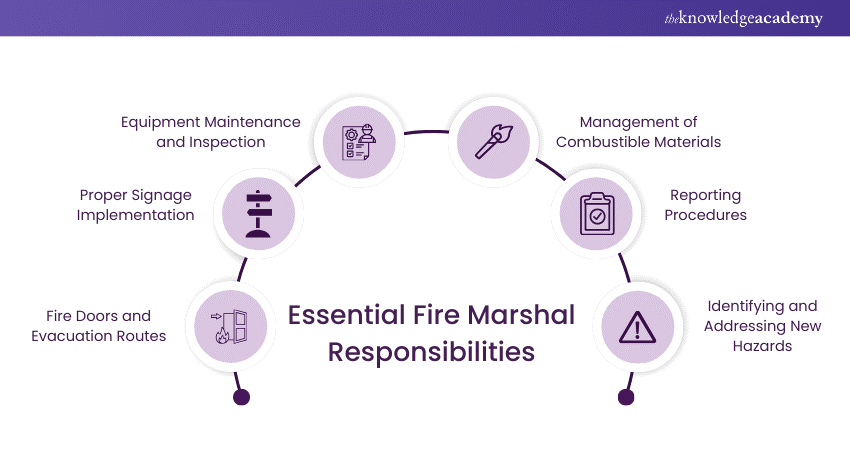
Fire Marshal's duties are different compared to Fire Warden Duties. Fire marshals generally have a broader scope of responsibilities, while fire wardens primarily assist with evacuations and may have more limited duties. It's hard to word the countless Fire Marshal Responsibilities in simple words so this blog has listed them down for you:
1) Fire Doors and Evacuation Routes
a) Inspect fire doors for proper functioning.
b) Ensure evacuation routes are clear and well-marked.
2) Proper Signage Implementation
a) Install and maintain fire safety signs (exit signs, fire extinguisher locations, etc.).
b) Communicate critical information to occupants.
3) Equipment Maintenance and Inspection
a) Regularly check fire alarms, sprinkler systems, and extinguishers.
b) Address any issues promptly.
4) Management of Combustible Materials
a) Monitor storage areas for flammable substances.
b) Educate staff on safe handling practices.
5) Reporting Procedures
a) Document safety violations, incidents, and corrective actions.
b) Collaborate with authorities during investigations.
6) Identifying and Addressing New Hazards
a) Stay vigilant for emerging risks (faulty wiring, blocked exits, etc.).
b) Implement preventive measures.
Fire Marshal Duties During Emergencies
When the flames dance, Fire Marshals lead:
a) Evacuation: Direct occupants to safety.
b) Fire Suppression: Operate extinguishers or guide firefighters.
c) Accountability: Ensure everyone is out of harm’s way.
Learn how to put out a fire, sign up for our Fire Extinguisher Training - Register now!
Difference Between a Marshal and Warden?
Fire Marshal: An official responsible for fire prevention, safety enforcement, and emergency response.
Fire Warden: Typically, an occupant within a building, trained to assist during evacuations and emergencies.
Become the local hero when it comes to dealing with Fire! Sign up for our Fire Warden Training- Register now!
What is Included in Fire Marshal Training?
Fire Marshal training equips these unsung heroes with the knowledge and skills needed to fulfil their critical responsibilities. Let’s dive into the essential components of Fire Marshal training:
1) Fire Behavior and Fire Dynamics:
a) Understanding Flames: Fire Marshals learn how fires start, spread, and behave under different conditions. This knowledge helps them anticipate fire behaviour during emergencies.
b) Heat Transfer: They explore the principles of heat transfer—conduction, convection, and radiation—essential for fire suppression strategies.
2) Emergency Protocols and Evacuation Procedures:
a) Evacuation Plans: Fire Marshals master evacuation procedures. They understand the importance of clear escape routes, assembly points, and crowd management.
b) Communication: Effective communication during emergencies is crucial. Fire Marshals learn how to convey instructions clearly and calmly.
3) Fire Safety Codes and Regulations:
a) Local Codes: Fire Marshals investigate local fire safety codes, building regulations, and occupancy requirements. They become familiar with specific rules governing different types of structures.
b) Updates: Regular training ensures they stay informed about any changes or amendments to fire codes.
4) Leadership and Decision-Making Skills:
a) Crisis Management: Fire Marshals practice decision-making under pressure. They learn to prioritise tasks, delegate responsibilities, and maintain composure during crises.
b) Leading Evacuations: They understand their role as leaders during evacuations, guiding occupants to safety.
5) Fire Safety Equipment Handling:
a) Fire Extinguishers: Fire Marshals receive hands-on training in using different types of fire extinguishers. They learn when and how to apply them effectively.
b) Fire Alarms and Sprinkler Systems: They understand the operation and maintenance of fire alarms and sprinkler systems.
6) Fire Investigation Techniques:
a) Cause Determination: Fire Marshals study investigative techniques to determine the cause of fires. Was it electrical, chemical, or human error?
b) Evidence Collection: They learn how to collect evidence without compromising its integrity.
7) Legal and Ethical Aspects:
a) Legal Authority: Fire Marshals explore their legal powers and limitations. When can they issue citations or close down a building?
b) Ethical Conduct: They understand the importance of integrity, confidentiality, and unbiased decision-making.
8) Incident Command System (ICS):
a) Coordination: Fire Marshals learn about ICS, a standardised approach to managing incidents. It ensures seamless coordination among emergency responders.
b) Roles and Responsibilities: They understand their role within the ICS structure during large-scale emergencies.
9) Hazardous Materials Awareness:
a) Chemical Hazards: Fire Marshals gain basic knowledge of hazardous materials commonly found in buildings. This helps them assess risks during emergencies.
10) Practical Drills and Scenarios:
a) Live Exercises: Fire Marshals participate in realistic drills—simulating fires, evacuations, and rescue scenarios.
b) Problem-Solving: These exercises enhance their problem-solving skills and adaptability.
Conclusion
As Fire Marshals graduate from training, they carry an unspoken oath to protect, serve, and ensure safety. Their commitment extends beyond duty hours; it’s a calling etched in flames. So next time you see a Fire Marshal or Fire Warden, remember the weight they bear for the safety of us all and all the responsibilities discussed in this blog.
Learn to assess potential fire risks in your environment, sign up for our Fire Risk Assessment Training - Register now!
Frequently Asked Questions
Can Fire Marshals issue fines for safety violations?

Yes, Fire Marshals have the authority to enforce safety regulations and impose fines if necessary.
How often is it recommended to have fire drills be conducted in a workplace?
Regular fire drills are essential. Conduct them at least once every six months to ensure preparedness.
What are the other resources and offers provided by The Knowledge Academy?
The Knowledge Academy takes global learning to new heights, offering over 3,000+ online courses across 490+ locations in 190+ countries. This expansive reach ensures accessibility and convenience for learners worldwide.
Alongside our diverse Online Course Catalogue, encompassing 19 major categories, we go the extra mile by providing a plethora of free educational Online Resources like Blogs, eBooks, Interview Questions and Videos. Tailoring learning experiences further, professionals can unlock greater value through a wide range of special discounts, seasonal deals, and Exclusive Offers.
What is Knowledge Pass, and how does it work?
The Knowledge Academy’s Knowledge Pass, a prepaid voucher, adds another layer of flexibility, allowing course bookings over a 12-month period. Join us on a journey where education knows no bounds.
What are related Health & Safety courses and blogs provided by The Knowledge Academy?
The Knowledge Academy offers various Fire Safety Training, including Fire Safety Training, Fire Warden Training, Fire Extinguisher Training and Fire Risk Assessment Training. These courses cater to different skill levels, providing comprehensive insights into Fire Safety.
Our Health & Safety Blogs cover a range of topics related to Fire Safety, offering valuable resources, best practices, and industry insights. Whether you are a beginner or looking to advance your Fire Safety skills, The Knowledge Academy's diverse courses and informative blogs have you covered.

Michael Jones


Health and Safety Consultant and Compliance Trainer
Michael Jones is a seasoned health and safety expert with more than 15 years of experience in workplace safety, risk management, and compliance training. He has worked across construction, manufacturing, and corporate sectors, helping organisations meet legal requirements and create safer working environments. Michael’s training and writing are known for being practical, clear, and aligned with UK regulations.
View Detail

Upcoming Health & Safety Resources Batches & Dates
Date
 Fire Safety Training
Fire Safety Training
Thu 23rd Jul 2026
Fire Safety Training
Fri 24th Jul 2026
Fire Safety Training
Thu 1st Oct 2026
Fire Safety Training
Fri 23rd Oct 2026

 If you wish to make any changes to your course, please


