


 Top Rated Course

We may not have the course you’re looking for. If you enquire or give us a call on +34 932716793 and speak to our training experts, we may still be able to help with your training requirements.
Green Supply Chain Management Practices for Sustainable Business
The Knowledge Academy 04 March 2026Green Supply Chain Management Practices involve integrating eco-friendly strategies into every stage of the supply chain to reduce environmental impact. These practices include sustainable sourcing, waste reduction, and recycling: helping businesses lower carbon footprints while enhancing reputation and regulatory compliance.

Training Outcomes Within Your Budget!
We ensure quality, budget-alignment, and timely delivery by our expert instructors.
Table of Contents

The modern world is experiencing a pressing need for sustainable business practices in response to increasing environmental concerns. A key component of these sustainable practices is Green Supply Chain Management (GSCM).
Green Supply Chain Management isn't just about painting business practices green; it's about completely transforming the way businesses operate to ensure environmental, economic, and societal sustainability. Therefore, it’s crucial to understand its best practices. In this blog, we will understand what is Green Supply Chain Management Practices and its contribution to environmental sustainability.
Table of Contents
1) What is Green Supply Chain Management?
2) Key principles of GSCM
3) Green Supply Chain Management Practices
4) Challenges of GSCM Practices
5) Benefits of Green Supply Chain Management Practices
6) What is the Difference Between Green and Sustainable Supply Chain Practices?
7) Importance of Green Supply Chain Mangement
8) How Does Reverse Logistics Support Green Supply Chain Goals?
9) Conclusion
What is Green Supply Chain Management?
Green Supply Chain Management is an innovative approach to traditional Supply Chain Management. It integrates environmental thinking right from sourcing raw materials, through product design and manufacturing processes, to the final product delivery to the consumer. The scope of GSCM also extends to post-consumer stages such as product disposal, recycling, and returns.
GSCM takes a comprehensive approach to the Supply Chain, urging businesses to evaluate the environmental impact at every stage of the process. This encompasses not only their own operations but also those of suppliers and customers. By integrating sustainability, the goal is to reduce the environmental footprint associated with the products or services delivered. Benefits of Green Supply Chain Management include this strategic incorporation of eco-friendly practices into the Supply Chain, which involves the following:
a) Reducing Energy Usage
b) Minimising Waste
c) Lowering Emissions
d) Using renewable Resources
e) Encouraging Recycling
These practices not only help protect the environment but also enhance operational efficiency.

Key Principles of GSCM
Sustainability in supply chains is no longer just a trend, it’s a necessity. Green Supply Chain Management focuses on making every link in the chain cleaner, smarter, and more responsible.
1) Eco-friendly Approach Across the Entire Lifecycle
GSCM involves applying sustainable practices at every stage of a product’s journey, from design and sourcing to manufacturing, packaging, distribution, and delivery.
2) Integration of Green Practices
Companies adopt environmentally responsible methods such as green purchasing, ethical sourcing, energy-efficient warehousing, eco-conscious distribution, and reverse logistics to reduce waste and environmental impact.
3) Reducing the Carbon Footprint
Deliberate efforts are made to minimise greenhouse gas emissions by optimising transport routes, using renewable energy, and choosing recyclable or biodegradable materials wherever possible.
4) Employee Awareness and Training
Educating staff about sustainable practices ensures that eco-friendly habits become part of daily operations, encouraging a culture of environmental responsibility throughout the organisation.
5) Sustainability as a Strategic Goal
Rather than treating sustainability as an afterthought, leading businesses embed it into their core strategy, building more resilient, responsible, and future-ready supply chains.
Green Supply Chain Management Practices
Implementing GSCM requires a detailed strategy that encompasses multiple important aspects:
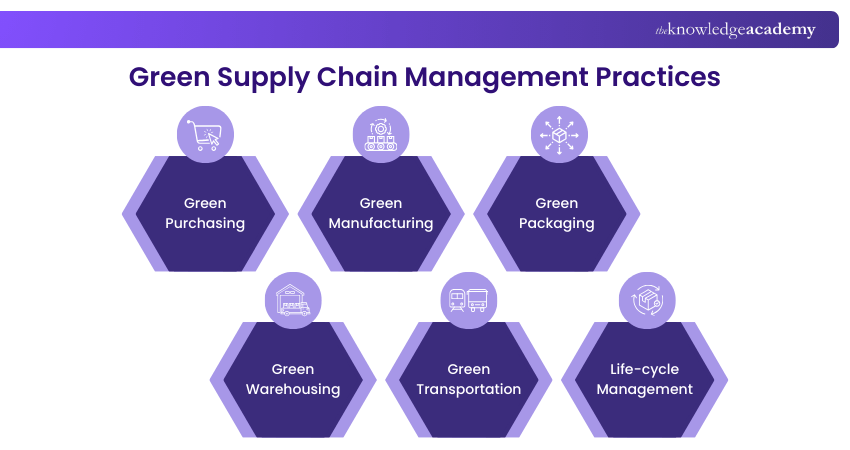
1) Green Purchasing
Green purchasing focuses on sourcing products and services that are environmentally friendly. This includes selecting suppliers who follow sustainable practices, use recyclable materials, and minimise energy use in their processes. It's about making informed decisions that prioritise the planet, not just the price tag.
2) Green Manufacturing
Green manufacturing is the practice of producing goods using processes that reduce pollution, energy use, and waste. The Importance of Waste Management is emphasised through practices such as renewable energy use, water-saving techniques, and low-emission technologies. The aim is to create quality products while keeping the environmental impact as low as possible.
3) Green Packaging
This involves designing packaging that is recyclable, biodegradable, or made from sustainable materials. Green packaging also means reducing excess packaging and using materials that are lighter and easier to recycle. It’s a win-win, better for the planet and often more cost-effective too.
4) Green Warehousing
Green warehousing includes energy-efficient lighting, climate control systems, and layout optimisation to reduce power consumption. Warehouses are also going paperless and using smart technologies to monitor energy usage, improve storage, and reduce waste.
5) Green Transportation
Green transportation focuses on cutting emissions by optimising delivery routes, consolidating shipments, and using fuel-efficient or electric vehicles. It also includes collaboration with logistics partners who share a commitment to sustainability.
6) Life-cycle Management
This practice ensures that environmental considerations are made at every stage of a product's life, from design and production to disposal and recycling. Life-cycle management helps businesses minimise waste and maximise resource efficiency.
Understand the Supply Chain structure with its planning and distribution process; sign up for our Supply Chain Management Training now!
Challenges of GSCM Practices
While many companies are eager to go green, several factors can influence how effectively these practices are implemented:

1) Leadership Commitment
Sustainability starts at the top. When leadership is truly committed to environmental goals, it sets the tone for the entire organisation. Their vision drives investment, strategy, and company-wide engagement in green initiatives.
2) Technology
Access to modern technologies plays a vital role. From automation and data analytics to AI and IoT, technology helps track environmental impact, optimise energy use, and improve transparency in supply chains.
3) Brand Image and Company Culture
Companies with a strong sustainability culture and a reputation for ethical practices are more likely to succeed in implementing green supply chain strategies. A positive brand image reinforces customer trust and supports long-term business growth.
4) Cost
Cost remains a major consideration. While green practices can lead to long-term savings, the initial investment can be high. However, businesses are increasingly seeing this as a smart investment rather than an expense.
5) Knowledge
Having the right knowledge and expertise within the team is crucial. Staff need to understand how their roles impact sustainability and how they can contribute to greener operations.
Keen on getting a deeper knowledge on supply chain management, refer to our blog on Objectives of Supply Chain Management.
Benefits of Green Supply Chains Management Practices
Adopting green supply chain practices is not just about being environmentally responsible. It also brings tangible advantages to businesses that are willing to think long term. From protecting natural resources to strengthening brand reputation, the benefits are both wide-ranging and impactful.

1) Environmental Benefits
Caring for the environment goes hand in hand with building smarter supply chains. Green practices help reduce harm while promoting long-term ecological balance.
a) Sustainability of Resources
One of the most important outcomes of a green supply chain is the conservation of natural resources. By using materials more efficiently, reusing where possible, and selecting sustainable alternatives, businesses reduce strain on the environment. This approach ensures that vital resources remain available for future generations while supporting long-term operational resilience.
b) Reduction of Carbon Footprint
Green supply chains help companies significantly lower their carbon emissions. Whether it's through cleaner manufacturing methods, smarter logistics, or energy-efficient storage, each improvement adds up. Reducing carbon output is not only good for the environment but also strengthens a company’s position as a responsible, forward-thinking organisation.
2) Business Benefits
The value of going green extends far beyond environmental impact. It leads to smarter operations, better relationships, and a stronger bottom line.
a) Cost Savings
Sustainability often leads to efficiency. Green practices such as energy-saving operations, optimised transport, and reduced packaging help cut unnecessary costs. Over time, these savings can be reinvested into innovation and growth, giving businesses a clear competitive edge.
b) Compliance with Regulation
As environmental laws grow stricter, businesses with green supply chains are already ahead of the curve. Staying compliant becomes easier when sustainable practices are already built into operations. This reduces the risk of fines, delays, and reputational damage, creating a more stable and secure business environment.
c) Improved Brand Value
Today’s consumers care deeply about how their products are made and where they come from. Businesses that actively adopt green practices are often seen as more trustworthy, ethical, and modern. This can lead to stronger customer loyalty, positive press, and increased market share.
d) Aligned with Employee Morale & Motivation
People want to work for companies that reflect their values. When a business takes sustainability seriously, it creates a sense of purpose and pride among employees. This can lead to higher morale, better performance, and a more motivated workforce that feels connected to something meaningful.
Boost your product management skills to new heights; sign up for our Product Management Training now!
What is the Difference Between Green and Sustainable Supply Chain Practices?
While the two terms are closely related, they aren’t quite the same. Green supply chain practices focus specifically on reducing environmental harm such as lowering emissions or using eco-friendly materials.
Sustainable supply chain practices, on the other hand, cover a broader spectrum, including economic, social, and environmental considerations. In other words, all green supply chains are sustainable, but not all sustainable supply chains are strictly green.

Importance of Green Supply Chain Management
People increasingly seek more than just a pay cheque from their workplace, they want to be part of something meaningful. When a company genuinely embraces sustainability, it signals that it values people and the planet, not just profits. This alignment with personal values builds a sense of connection and pride among staff.
In turn, employees become more engaged, motivated, and loyal. They’re proud to be part of something meaningful and are more likely to contribute their best. A green supply chain not only helps the environment but also fosters a positive, purpose-driven workplace culture.
How Does Reverse Logistics Support Green Supply Chain Goals?
Reverse logistics is a powerful enabler of green supply chains. It involves managing the return, recycling, refurbishing, or disposal of products in an eco-friendly manner. By extending the life of products and reducing landfill waste, reverse logistics helps minimise environmental impact and supports a circular economy.
Conclusion
Green Supply Chain Management Practices includes green purchasing, green manufacturing, and green distribution. It is instrumental in driving sustainable business practices while addressing the Challenges of Sustainability in Business. It significantly reduces negative environmental impact, enhances operational efficiency, and bolsters business reputation, creating a robust framework for long-term corporate sustainability.
Gain knowledge on how to maintain rules and regulations that govern export activities, sign up for our Export And Trade Compliance Training now!
Frequently Asked Questions
What are the Key Objectives of Green Supply Chain Management?

Green Supply Chain Management aims to reduce environmental harm, optimise resource use, minimise waste, and promote sustainable practices in sourcing, production, packaging, transport, and disposal, while ensuring long-term business and ecological benefits.
Are there Tools or Software for Tracking Supply Chain Sustainability?
Yes, tools like SAP, EcoVadis, Oracle SCM, and IBM Sterling help businesses track sustainability metrics such as carbon emissions, energy use, waste, and supplier practices. These platforms support better decision-making and continuous improvement in green initiatives.
What are the Other Resources and Offers Provided by The Knowledge Academy?
The Knowledge Academy takes global learning to new heights, offering over 3,000+ online courses across 490+ locations in 190+ countries. This expansive reach ensures accessibility and convenience for learners worldwide.
Alongside our diverse Online Course Catalogue, encompassing 17 major categories, we go the extra mile by providing a plethora of free educational Online Resources like Blogs, eBooks, Interview Questions and Videos. Tailoring learning experiences further, professionals can unlock greater value through a wide range of special discounts, seasonal deals, and Exclusive Offers.
What is The Knowledge Pass, and How Does it Work?
The Knowledge Academy’s Knowledge Pass, a prepaid voucher, adds another layer of flexibility, allowing course bookings over a 12-month period. Join us on a journey where education knows no bounds.
What are the Related Courses and Blogs Provided by The Knowledge Academy?
The Knowledge Academy offers various Industry Training including Facilitation Skills Training, SCADA Training, and Import and Export Masterclass. These courses cater to different skill levels, providing comprehensive insights into the Product Lifecycle.
Our Business Skills Blogs covers a range of topics related to online Businesses, offering valuable resources, best practices, and industry insights. Whether you are a beginner or looking to advance your Business skills, The Knowledge Academy's diverse courses and informative blogs have you covered.

The Knowledge Academy


Global Training Provider
The Knowledge Academy is a world-leading provider of professional training courses, offering globally recognised qualifications across a wide range of subjects. With expert trainers, up-to-date course material, and flexible learning options, we aim to empower professionals and organisations to achieve their goals through continuous learning.

Upcoming Business Skills Resources Batches & Dates
Date
 Supply Chain Management Training
Supply Chain Management Training
Fri 31st Jul 2026
Supply Chain Management Training
Fri 23rd Oct 2026

 If you wish to make any changes to your course, please


