


 Top Rated Course

We may not have the course you’re looking for. If you enquire or give us a call on +420 210012971 and speak to our training experts, we may still be able to help with your training requirements.
Ultimate Guide for the ArchiMate® Core Framework
James Smith 15 July 2026Discover the power of the ArchiMate® Framework in our latest blog. Dive into the world of enterprise architecture with the ArchiMate® Framework and learn how this comprehensive modelling language can streamline your business processes, enhance communication, and drive successful transformations. Unlock the key to effective architecture with the ArchiMate® Framework today!

Training Outcomes Within Your Budget!
We ensure quality, budget-alignment, and timely delivery by our expert instructors.
Table of Contents
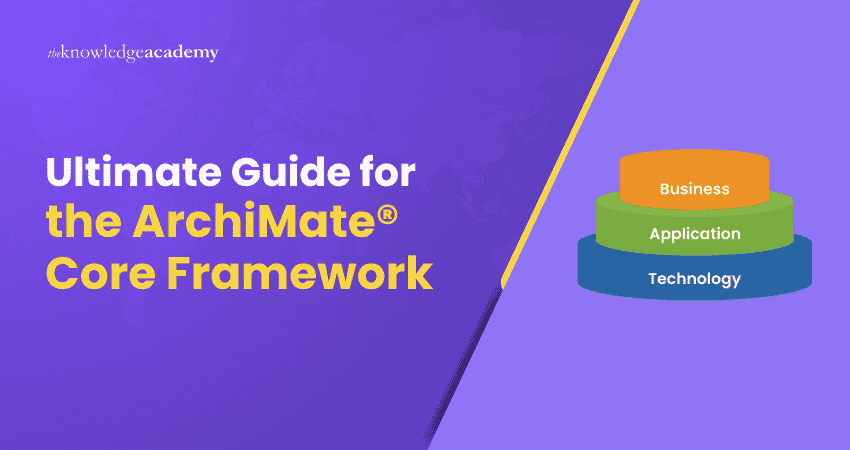
In enterprise architecture, having a comprehensive and standardised framework is crucial for effectively modelling and managing complex systems. The ArchiMate® Core Framework stands out as one of the prominent approaches in this field.
This blog aims to provide a concise explanation of the ArchiMate® Framework, its key concepts, and its significance in modern architecture practices.
Table of contents
1) What is the ArchiMate® Core Framework?
2) Benefits of using the ArchiMate® Core Framework
a) Enhanced Communication and consistency
b) Comprehensive Perspective
c) Alignment of Business and Technology
d) Change Management and Impact Analysis
e) Informed Decision-Making
f) Efficiency and optimisation
g) Catalyst for innovation
h) Governance and compliance
3) How to apply the ArchiMate® Core Framework?
a) Business Layer
b) Application Layer
c) Technology Layer
4) Conclusion
What is the ArchiMate® Core Framework?
The ArchiMate® Core Framework is a vital tool within modern enterprise architecture, offering a structured and standardised approach for comprehending complex systems and their interconnections. The use of the ArchiMate® Modelling Language can significantly enhance the effectiveness of enterprise architecture initiatives by facilitating the creation, visualisation, and analysis of complex models. We will explore the core of this framework, which shows a diverse array of concepts, layers, and advantages that all come together to define its significant impact:
a) Navigational Tool: The ArchiMate® 3 guides architects through complex organisational architecture, providing clarity and purpose in the intricate landscape.
b) Abstraction Language: It translates real-world complexities into a comprehensible language, mapping interactions between business processes, applications, and technology.
c) Stratified Layers: The ArchiMate® Modelling Language's layers - Business, Application, and Technology - offer a hierarchical canvas, encapsulating distinct facets of the organisation.
d) Connecting Threads: Relationships reveal dynamic interactions, dependencies, and collaborations, defining the architectural ecosystem.
e) Holistic Perspectives: Aspects - Behaviour, Structure, Motivation - enrich understanding by providing lenses to capture nuanced architectural components.
f) Strategic Decision Catalyst: The ArchiMate® empowers architects to simulate scenarios, forecast outcomes, and make informed choices, grounding decisions in foresight.
g) Transformation Enabler: It guides organisations in envisioning future states and aligning technology with business objectives to drive transformation.
h) Visual storytelling: The ArchiMate®'s visual language allows architects to communicate intricate architectural ideas across diverse stakeholders, fostering shared understanding.
Understanding the ArchiMate® Framework is akin to decoding an architectural symphony. Architects use its power to harmonise clarity, collaboration, and innovation, conducting a symphony that resonates across the organisation's technological landscape. When comparing the ArchiMate® vs UML, it becomes evident that ArchiMate® provides a dedicated framework for enterprise architecture, whereas UML is widely used for software and system modelling, catering to different but complementary aspects of design and development.

Benefits of using the ArchiMate® Core Framework
Adopting the ArchiMate® Framework in enterprise architecture yields many compelling advantages far beyond its role as a ArchiMate® Notation system. These benefits collectively underscore its vital role in shaping efficient and influential architectural practices:
1) Enhanced Communication and Consistency
The ArchiMate® introduces a standardised the ArchiMate® Language that transcends technical complexities, enabling architects and stakeholders to convey intricate architectural concepts effectively. This consistency in communication minimises misunderstandings and fosters alignment among diverse teams.
2) Comprehensive Perspective
Through its categorisation into Business, Application, and Technology layers, the ArchiMate® offers a panoramic view of an organisation's intricate ecosystem. This holistic understanding empowers architects to discern synergies, redundancies, and gaps, facilitating informed decision-making.
3) Alignment of Business and Technology
The ArchiMate® serves as a bridge between strategic business objectives and technological implementations. Architects can visually demonstrate how various components, from processes to applications and infrastructure, align with overarching organisational goals.
Explore our ArchiMate® 3 Training Course Outline and embark on a journey to master the art of strategic enterprise architecture.
4) Change Management and Impact Analysis
Architects leverage the framework to evaluate potential changes across layers and aspects, enabling seamless change management. This proactive approach enhances organisational agility and adaptability.
5) Informed Decision-Making
The ArchiMate® equips architects to model diverse scenarios, assess consequences, and make well-founded decisions. Architects can weigh trade-offs, anticipate risks, and optimise architectural choices in alignment with business needs.
6) Efficiency and Optimisation
Identification of inefficiencies, redundancies, and bottlenecks becomes attainable with the ArchiMate®. This insight-driven approach supports ongoing improvements, optimising processes, applications, and technology infrastructure for peak efficiency.
7) Catalyst for Innovation
The ArchiMate®'s visual framework is an innovation canvas for architects to brainstorm and design inventive solutions. It nurtures Creative Thinking, enabling architects to explore innovative avenues for addressing business challenges.
8) Governance and Compliance
The ArchiMate® aids in upholding consistency and conformity to architectural standards. Architects ensure technological implementations adhere to regulatory mandates and industry best practices, bolstering governance and compliance.
Grab the ArchiMate® Cheat Sheet and become an expert in no time!
How to Apply the ArchiMate® Core Framework?
Applying the ArchiMate® Framework to enterprise architecture involves a strategic approach that resonates across three pivotal layers: Business, Application, and Technology. Here is a detailed exploration of how to effectively utilise this framework within each layer:
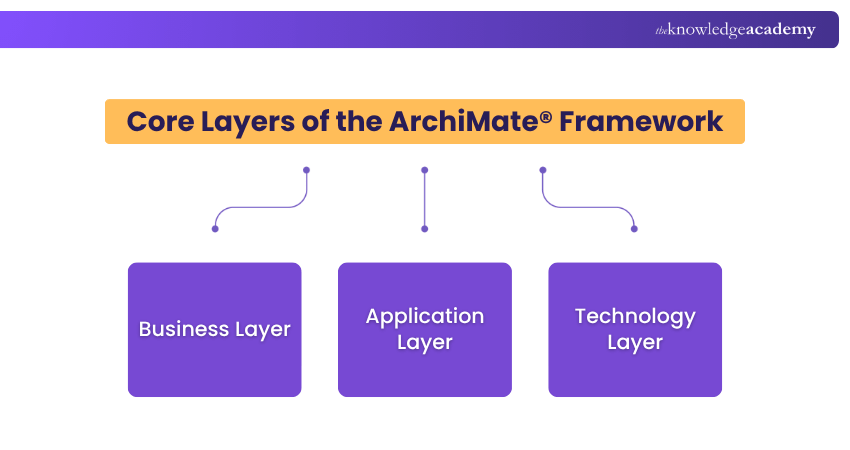
1) Business Layer
a) Model Organisational Structure: Utilise the ArchiMate® to depict the hierarchical arrangement of departments, teams, and administrative roles. It provides a visual understanding of reporting relationships and responsibilities.
b) Capture Business Processes: Diagram the flow of business processes using the ArchiMate®. Highlight interactions, inputs, outputs, and decision points to clearly represent how value is generated.
c) Define Goals and Objectives: Utilise the framework to outline the organisation's goals, objectives, and strategies. Link these goals to specific processes, highlighting their alignment and driving motivation.
Elevate your architectural process with the ArchiMate® 3.1 Training Course: Level 1 – chart your path to expertise today.
2) Application Layer
a) Visualise Software Applications: Leverage the ArchiMate® to create visual representations of software applications. Depict their functionalities, interfaces, and how they interact with users and other applications.
b) Illustrate Data Flow: Use the ArchiMate® to display the data flow between different applications. Highlight data transformations, storage, and the role of applications in data processing.
c) Model Application Dependencies: Depict the relationships and dependencies between various software applications. Illustrate how applications rely on one another to perform specific tasks.
3) Technology Layer
a) Map Technology Components: Apply the ArchiMate® to model the underlying technology infrastructure. Represent servers, networks, databases, and other features that support application deployment.
b) Depict Technology Platforms: Illustrate technology platforms and services that facilitate application deployment and operation. Highlight how applications interact with these platforms.
c) Highlight Security Measures: Utilise the framework to depict security measures and controls implemented within the technology layer. Display how technology safeguards data and mitigates risks.
Conclusion
The ArchiMate® Core Framework is an indispensable tool for harmonising intricate enterprise architecture. Its structured language, layered approach, and holistic insights empower architects to navigate complexity, align strategies, and foster innovation in the dynamic landscape of modern organisations.
Unlock the power of effective enterprise architecture with our comprehensive the ArchiMate® Training – elevate your skills and drive transformative success today.
Frequently Asked Questions
What is the Core Framework of the ArchiMate®?

The core framework of the ArchiMate® is based on three main layers: Business, Application, and Technology. These layers help describe how an organisation operates, how systems support processes, and how IT infrastructure is structured, ensuring clear and consistent enterprise architecture modelling.
What are the ArchiMate®'s Core Concepts?
The ArchiMate® core concepts include elements, relationships, and layers. Elements represent parts of the architecture such as business roles or applications, relationships show how these elements interact, and layers organise them into Business, Application, and Technology for clear structure and understanding.

James Smith


Digital Marketing Manager and Trainer
James Smith is a digital marketing professional with over a decade of experience in SEO, content strategy, paid media and analytics. He has supported both SMEs and global brands in transforming their digital presence. James’s writing and training are rooted in results-driven tactics and the latest marketing trends.
View Detail

 If you wish to make any changes to your course, please


