




We may not have the course you’re looking for. If you enquire or give us a call on 01344203999 and speak to our training experts, we may still be able to help with your training requirements.
Types of Internal Conflict: How to Use Them When Needed
ByVidhya NairLast updated on: 18 September 2026
Internal Conflict is the struggle within a person’s mind, involving choices, beliefs, values, or emotions that create tension and self-doubt. It often makes people feel torn between what they want and what they think is right. These inner struggles can guide personal growth and help in making better decisions.

We all face moments when our heart says one thing but our mind says another. That inner tug of war between feelings, beliefs, and choices is what we call Internal Conflict. It is the quiet voice that questions our actions, shapes our decisions, and sometimes keeps us awake at night with lingering thoughts.
In stories, it gives characters depth and makes them feel real. In life, it challenges us to grow, reflect, and understand ourselves better. In this blog, we will explore the different Types of Internal Conflict and learn how using them can turn struggles into strength. So, let’s get started!
What is Internal Conflict?
Internal Conflict is the struggle that happens inside a person’s mind. It is when thoughts, emotions, or values clash and make it hard to decide what to do. This kind of conflict creates stress and self-doubt but also plays an important role in helping people grow and make better choices in life.
Internal Conflict is often triggered when a person faces two strong but opposing feelings. It can appear in situations like choosing between telling the truth or protecting someone you care about. These moments may not be visible to others, but they influence how people behave and the decisions they make.

Main Types of Internal Conflict
To utilise your Internal Conflict to your advantage, you must understand the various Types of Internal Conflicts. So, here are different kinds of Internal Conflict:

1) Moral Conflict: Right vs Wrong Dilemma
When you face two choices and must decide which is right and which is wrong, it becomes a moral conflict. This type of Internal Conflict could be choosing not to reveal a fact to protect someone or telling the truth even if it hurts the people you love. Such a conflict places a person in a struggle between their moral values and the possible outcomes.
2) Identity Conflict: Struggles of Self-Discovery
The identity conflict arises when you struggle with your self-identity and question "Who am I?" or "What do I want to be?". It is most commonly exhibited during times of transition, such as when one is going through an adolescent phase, changing jobs, or facing a life crisis.
Between the competing versions of the self, you may experience conflict over cultural demands, personal interests, or within societal roles that shape self-definition.
3) Religious or Philosophical Conflict: Belief vs. Doubt
This type of conflict happens when your spiritual faith, beliefs, or worldviews are questioned. You might find yourself struggling with moral or philosophical doubts and facing uncertainty about what to believe. It can feel painful and confusing, but it can also lead to deeper understanding or meaningful change in your life.
4) Self-perception or Self-esteem Conflict
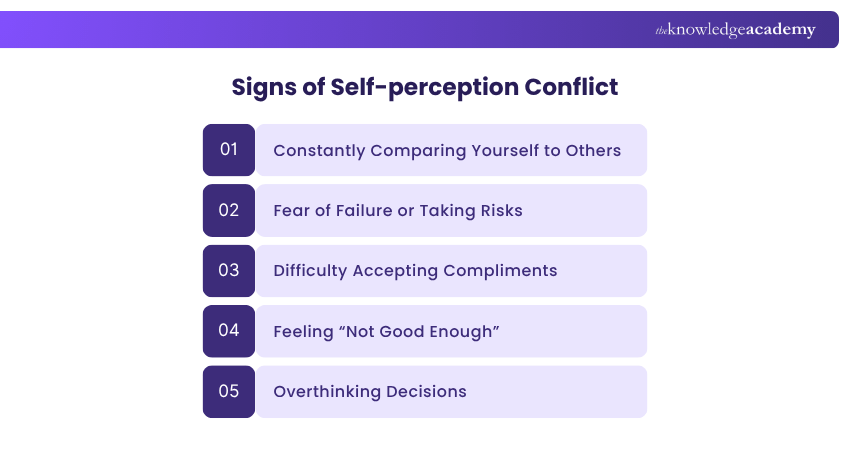
This conflict occurs when a person struggles with their self-image or confidence. You may start doubting your skills, abilities, or worth, which leads to feelings of insecurity. It often shows up as perfectionism, impostor syndrome, or constant comparisons with others, creating barriers to personal growth and success.
5) Relationship Conflict: Inner Tensions About Others
Relationship conflict happens when your feelings about another person clash with your own values or needs. For example, you may love someone but feel the relationship is not healthy, or want to help a friend but disagree with their choices. This type of conflict shows the struggle between love, loyalty, and self-preservation, making relationships more complex.
Connect and communicate confidently with our Social Skills Training. Sign up now!
6) Societal or Political Conflict: Individual vs. Society Norms
Societal or political conflict occurs when your personal beliefs or behaviour go against social norms or rules. It may involve resisting cultural traditions, political views, or workplace expectations. This kind of conflict can push a person to challenge authority, seek justice, or find their own place in the world.
7) Existential Conflict: Purpose and Meaning of Life
Existential conflict arises when a person questions the purpose of life, their role in the world, or the reality of death. It can create feelings of emptiness, despair, or deep longing. While often uncomfortable, this conflict can also inspire growth, creativity, and inner strength.
Reduce stress and take control of your everyday life by joining our Stress Management Course - Join today!
How to Use Internal Conflict?
Since you know the types of conflicts, now it’s time to see how they can be used effectively:
1) Build Relatable Characters
Internal Conflict makes characters feel real and human. By showing their doubts, fears, guilt, or desires, readers can understand why they make certain choices. This reflection also helps us connect with our own struggles and learn from them.
2) Introduce the Central Conflict
Growth often comes from facing a key inner struggle. Identifying a central conflict early, such as balancing work and personal life, dealing with procrastination, or choosing between risk and security, helps reveal what is truly at stake.
3) Strengthen the Conflict
Instead of avoiding Internal Conflict, allow yourself to sit with it. Clarity may come through journaling, mindfulness, or open reflection. By raising the stakes and seeing how decisions affect your goals, you create accountability and purpose.
4) Build a Turning Point
Every meaningful change requires a choice. You must face the conflict directly, whether by setting boundaries, making a bold decision, or changing your attitude. This turning point brings you closer to personal growth and transformation.
5) Move Toward Resolution
Resolution does not always mean removing the conflict. Sometimes it is about acceptance, compromise, or gradual improvement. The important part is finding a resolution that feels genuine and gives you strength to move forward with clarity.
Learn techniques to cultivate a positive mindset with our Motivation and Goal Setting Training - Join today!
Internal vs External Conflict
Here are the key differences between Internal Conflict and External Conflict:

Source of the Struggle
Internal Conflict happens within a person’s mind, shaped by emotions, beliefs, or values. In contrast, External Conflict comes from outside forces such as people, society, nature, or circumstances.
Visibility of Conflict
Internal Conflict is hidden and personal, often unseen by others. On the other hand, External Conflict is visible, involving disagreements, challenges, or obstacles that others can observe.
Impact on Decisions
Internal Conflict influences how someone thinks, feels, and makes personal choices. In contrast, External Conflict pushes individuals to react or adapt to pressures from the outside world.
Resolution Process
Internal Conflict is resolved through reflection, acceptance, or self-growth. On the other hand, External Conflict requires action, communication, or negotiation with others.

Vidhya Nair is a Senior Copywriter with 7+ years of experience across copywriting, content writing and communication. Her extensive research and editorial experience supports her ability to present topics across Business Skills and Human Resources with clarity and purpose.
View Detail

 If you wish to make any changes to your course, please


