


 Top Rated Course

We may not have the course you’re looking for. If you enquire or give us a call on +1 7204454674 and speak to our training experts, we may still be able to help with your training requirements.
How to Become a Film Director: Complete Career Guide
The Knowledge Academy 28 July 2026Learn How to Become a Film Director by learning storytelling, building a distinctive visual style, and creating a strong filmmaking portfolio. Success in this career needs strong leadership, creative vision, adaptability, and the ability to inspire teams while turning ideas into compelling cinematic experiences.

Training Outcomes Within Your Budget!
We ensure quality, budget-alignment, and timely delivery by our expert instructors.
Table of Contents

Have you ever watched a film and wondered who brings every scene, emotion, and story together? The answer lies in the vision of a director. If you have a passion for storytelling, creativity, and cinema, you may be curious about How to Become a Film Director and turn your ideas into powerful visual stories that inspire audiences.
Learning How to Become a Film Director involves not only understanding the technical side of filmmaking but also developing your creative voice. From experimenting with small projects to working with a variety of crews, every experience helps build your confidence and expertise. In this blog, you will learn about the right steps, their responsibilities, skills, and more!
Table of Contents
1) What is a Film Director?
2) What Does a Film Director Do?
3) How Do You Become a Film Director?
4) Essential Skills for Becoming a Film Director
5) How Much Does a Film Director Earn?
6) Conclusion
What is a Film Director?
A Film Director is the creative visionary behind a movie, responsible for translating a script into a visual and emotional experience. Directors guide the entire filmmaking process, from pre-production planning to post-production editing, making crucial decisions about the artistic and dramatic aspects of a film.
They work closely with actors, cinematographers, and editors to ensure the film meets their vision. More than just managing technicalities, a director must also breathe life into characters, shape the story’s tone, and engage the audience on an emotional level.

What Does a Film Director Do?
A Film Director is the creative leader of a film, responsible for turning a script into a compelling visual story. From pre-production to the final edit, they shape the film's overall vision, decide how scenes should look and feel, and ensure the story is presented effectively on screen.
Throughout production, Film Directors work with actors, cinematographers, production designers, costume teams, editors, and other crew members to bring the project to life. While filmmaking is a collaborative effort, the director oversees key creative decisions, maintains consistency in the film's style and tone, and ensures every element supports the vision.
How Do You Become a Film Director?
Learning How to Become a Film Director is a creative and practical journey. It requires passion for storytelling, technical knowledge, real-world experience, and strong industry connections. Let’s look at the key steps below.
Step 1: Watch Movies and Learn
Start by watching a wide variety of films and paying close attention to how stories are told, scenes are framed, and emotions are conveyed. Study the work of acclaimed Film Directors, observe audience reactions, and explore film analyses, interviews, and behind-the-scenes content online to understand different directing styles.
Step 2: Attend Film School
Film school offers a structured way to learn filmmaking. You gain technical skills in camera work, lighting, sound, and editing, along with theoretical knowledge of visual storytelling and narrative development. It also provides opportunities to create films, collaborate with peers, experiment with different styles, and build early connections within the industry.
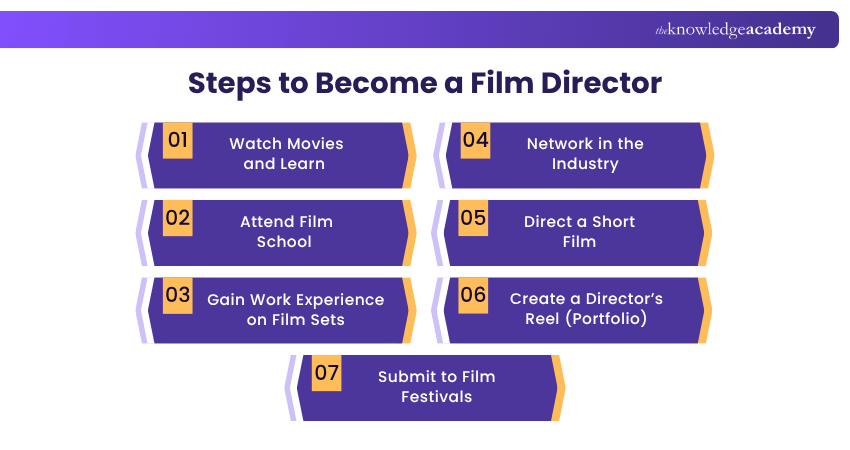
Step 3: Gain Work Experience on Film Sets
Practical experience on real sets is essential for aspiring directors. Working in entry-level crew roles allows you to observe how productions operate. This experience builds essential skills, confidence, and enhances your resume. Also, it helps you learn how directors, actors, and crew members collaborate during the production.
Step 4: Network in the Industry
Networking plays a core role in the film industry. Connecting with filmmakers, writers, producers, cinematographers, and editors can lead to job opportunities and collaboration. Also, attending film festivals, workshops, and industry events helps you meet professionals and expand your network.
Step 5: Direct a Short Film
Creating short films is one of the most effective ways to develop your directing skills. Short projects allow you to experiment with storytelling, refine your style, and express your creative vision. They also help build a portfolio that showcases your ability to manage projects, work with actors, and deliver compelling narratives.
Step 6: Create a Director’s Reel (Portfolio)
Create a director's reel that showcases your strongest work and demonstrates your storytelling, visual style, and creative abilities. Keep it focused, well-structured, and authentic, ensuring it reflects your unique approach to filmmaking while highlighting the skills and experience that make you a strong candidate for directing opportunities.
Step 7: Submit to Film Festivals
Film festivals provide a platform to present your work to a wider audience and industry professionals. Getting selected for festivals can boost your credibility and open doors for newer career opportunities. Also, festivals provide valuable feedback and insights into audience reactions, helping you improve your future projects and grow as a filmmaker.
Create soundtracks that inspire stories and shape emotions through sound with the Music Production Course – Join now!
Essential Skills for Becoming a Film Director
Directing a film requires a unique blend of creativity, leadership, and technical know-how. Some essential skills include:
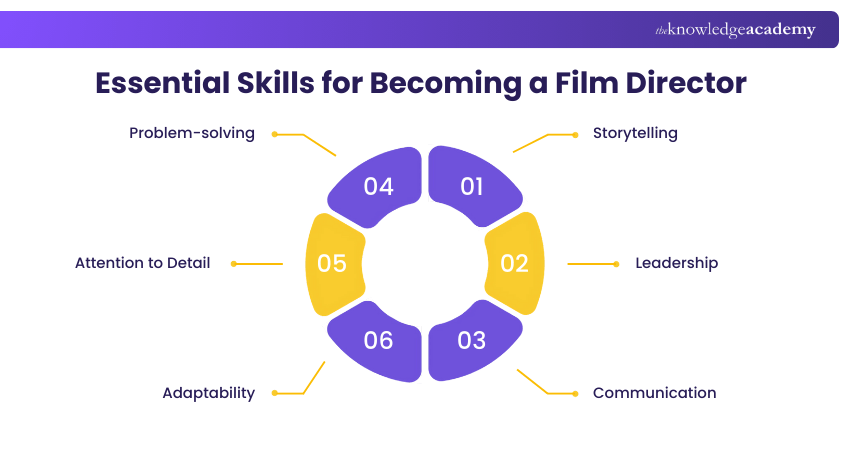
1) Storytelling: At its core, directing is about telling a story. A good director knows how to craft a compelling narrative and convey emotions through visuals. This skill helps to create meaningful films that connect deeply with audiences.
2) Leadership: Directors must lead a team of actors, crew members, and other professionals. Strong leadership skills help maintain cohesion on set and ensure that everyone works towards a common goal.
3) Communication: Clear communication is essential to communicate the vision across the entire team. One needs to ensurethat their ideas are clear and motivating the team to work along with those ideas in a project.
4) Problem-solving: Unforeseen technical problems and creative differences are common on film sets. Creativity in filmmaking requires the ability to think on one's feet and quickly develop effective solutions.
5) Attention to Detail: Every frame of a film is so significant; thus, it's crucial for a director to have a keen eye for detail to make sure that every shot contributes to the overall story. Attention to detail enhances the film’s quality and visual impact on the audience.
6) Adaptability: Adaptation to those unexpected circumstances and flexibility are most necessary. Directing requires a large number of changes in planning due to changes caused by weather, budget, and other unforeseen problems that may arise on set.
Create looks that tell stories and bring characters to life through fashion with Fashion Designing Training – Sign up now!
How Much Does a Film Director Earn?
A Film Director's salary varies significantly based on factors such as experience, location, and the scale of projects they work on. In the UK, the average salary for a Film Director can range from £27,000 to £54,000 per year, according to Glassdoor. However, directors working on high-budget projects, or those who have made a name for themselves, can earn much more.
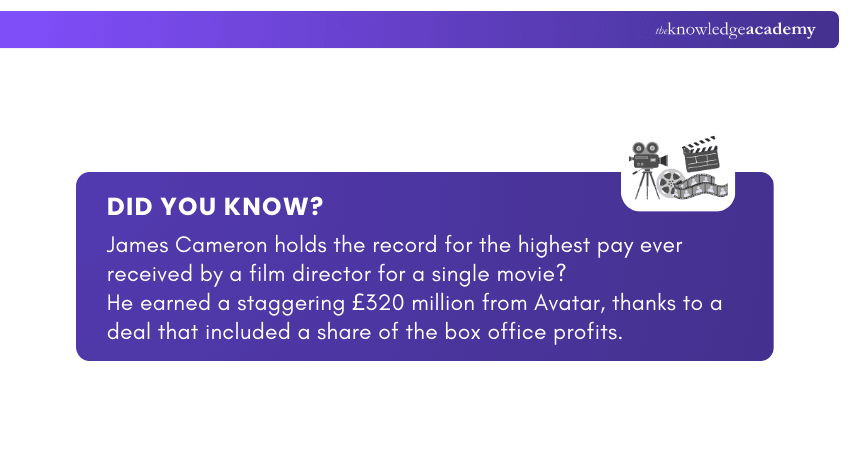
There are, of course, fees in the millions, especially when working on blockbuster films or long-running television series, for well-known directors. Money such as this received by a director can often be much lower by working on independent films or small projects but it still holds a great deal of growth potential.
Conclusion
If you are passionate about How to Become a Film Director, take action today. It is a journey built on creativity, learning, and real-world experience. From understanding storytelling and learning technical skills to networking and creating short films, every stage shapes your identity as a filmmaker. With passion, resilience, and the right guidance, you can turn your vision into impactful stories that inspire audiences.
Discover your creative side and explore creativity beyond the camera with Hobbies & Interests Courses now!
Frequently Asked Questions
Can I Become a Film Director After High School?

Yes, you can begin your journey to become a Film Director after high school. You can study in film studies or filmmaking, or any course related to it. Join any film institute or take online courses about directing, cinematography, or editing. These will help you build the most essential skills to become a good director.
What Qualifications do I Need to be a Film Director?
There is no qualification, but a degree or diploma in film studies, media production, or filmmaking is good. Practical experience, a good portfolio, and skills such as storytelling, leadership, and collaboration must be very important to be a director.

The Knowledge Academy


Global Training Provider
The Knowledge Academy is a world-leading provider of professional training courses, offering globally recognised qualifications across a wide range of subjects. With expert trainers, up-to-date course material, and flexible learning options, we aim to empower professionals and organisations to achieve their goals through continuous learning.


 If you wish to make any changes to your course, please


