


We may not have the course you’re looking for. If you enquire or give us a call on 01344203999 and speak to our training experts, we may still be able to help with your training requirements.
Top Benefits of Work Breakdown Structure (WBS)
ByThe Knowledge AcademyLast updated on: 10 November 2026
A work breakdown structure helps Project Managers organise project deliverables, clarify scope and improve planning. Explore the top benefits of work breakdown structure, including better risk identification, cost estimation, communication, accountability and progress monitoring.

At a Glance
1. Scope Clarity: WBS divides project scope into clearly defined deliverables and work packages.2. Better Planning: It supports resource allocation, cost estimation and scheduling.3. Risk Identification: Breaking down deliverables helps teams identify potential challenges early.4. Scope and Change Control: A defined WBS helps identify additional work and assess proposed changes to project scope.5. Project Control: Clearly defined work packages support accountability, progress monitoring and stakeholder communication.
The benefits of Work Breakdown Structure (WBS) extend beyond simply organising project work. With WBS, each team member can understand how their contributions fit into the bigger picture, supporting collaboration and reducing the risk of overlooking important work.
This organised breakdown brings clarity to complex projects, helping Project Managers anticipate challenges and plan more effectively. In this blog, we will explore the key benefits of a work breakdown structure, from clarifying project scope and improving cost estimation to supporting progress monitoring. Let's get started!
Top Benefits of Work Breakdown Structure
A WBS is a deliverable-oriented, hierarchical breakdown of the total project scope into smaller, manageable components, with work packages at the lowest level. Here's how it can benefit your project in tangible ways:
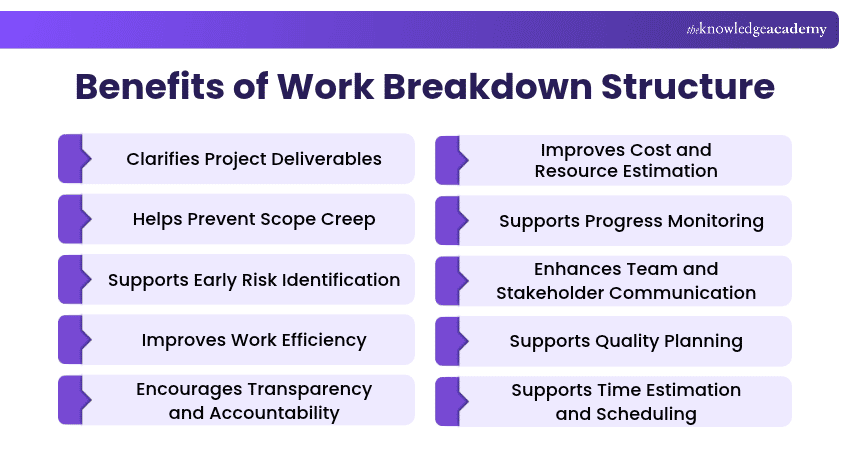
1) Clarifies Project Deliverables
One of the primary benefits of WBS is that it helps teams identify the deliverables and work required to complete a project. By dividing the project into smaller components, WBS reduces the risk of overlooking important work and provides a clear understanding of what needs to be accomplished.
WBS also helps teams define the boundaries of each deliverable, reducing unnecessary overlap and confusion. This clarity is particularly beneficial in complex projects with many moving parts.

2) Helps Prevent Scope Creep
A WBS helps establish the boundaries of the agreed project scope by identifying the deliverables and work packages required for completion. This makes it easier to recognise additional work that falls outside the approved scope.
When new requirements arise, Project Managers can compare them against the approved scope baseline, including the WBS, and determine whether they require formal approval. This supports scope control and helps reduce the risk of unplanned work affecting project costs, resources and timelines.
3) Supports Early Risk Identification
In any project, risk identification is crucial for anticipating potential challenges before they become issues. WBS provides a detailed view of project components, making it simpler to identify risks associated with deliverables or work packages.
When the work is organised into smaller components, Project Managers and team members can examine potential resource constraints, technical challenges and areas of uncertainty. This proactive approach supports early risk identification and response planning, helping teams prepare for potential disruptions during project execution.
Trainer Insight
A WBS can reveal overlooked project requirements before they cause problems. For example, a website project may include design and development deliverables but overlook accessibility testing. Identifying this missing work during planning gives the team an opportunity to address the gap before it affects project delivery.
4) Improves Work Efficiency
By breaking down project work into manageable components, WBS helps teams understand the expected deliverables and avoid unnecessary or duplicated effort. Clearly defined work packages can reduce confusion and help team members concentrate on their assigned outcomes.
A well-structured WBS also helps teams recognise areas where coordination is needed. This organised approach supports smoother collaboration and helps teams complete their work more efficiently.
5) Encourages Transparency and Accountability
A well-defined WBS supports transparency and accountability within the project team. When responsibilities are clearly assigned to individual work packages, team members can better understand what they are expected to deliver and how their work contributes to the project's success.
This transparency also allows Project Managers to review responsibilities and identify areas where additional support may be needed. Clear ownership helps reduce confusion and encourages team members to take responsibility for their assigned work.
6) Improves Cost and Resource Estimation
A WBS provides a structured foundation for estimating project costs and resource requirements. By dividing the project into smaller work packages, teams can assess the effort, materials and resources needed for each component.
These individual estimates can then be combined to support the overall project budget and resource plan. This structured approach helps Project Managers identify potential cost pressures and make informed decisions about resource allocation.
7) Supports Progress Monitoring
WBS provides a clear framework for monitoring progress against project deliverables. With each work package defined, Project Managers can track deliverable completion against agreed criteria and identify areas that may require additional attention.
By reviewing progress at the work-package level and combining it with schedule and performance information, teams can gain a better understanding of overall project performance.
8) Enhances Team and Stakeholder Communication
Communication is essential to successful project management, and WBS provides a shared view of the project's scope and deliverables. This clarity helps team members understand what needs to be achieved and reduces misunderstandings about the work involved.
WBS also supports communication with stakeholders by presenting complex project requirements in an organised format. Stakeholders can better understand the expected outcomes, review scope boundaries and provide feedback before important work is overlooked.
9) Supports Quality Planning
A WBS helps teams define the deliverables that need to meet project quality requirements. By breaking the project into smaller work packages, Project Managers can identify where quality checks and acceptance criteria need to be considered during planning.
When supported by a WBS dictionary, these details provide a clearer reference for reviewing completed deliverables. This helps teams plan appropriate quality checks and reduce misunderstandings about the expected results.
10) Supports Time Estimation and Scheduling
Time management is critical in any project, and WBS supports it by providing a clear breakdown of the work that needs to be completed. Project Managers can use work packages to identify activities and estimate the time required to deliver each component.
These estimates then support the development of a project schedule, including activity sequences, dependencies and deadlines. Although WBS does not directly establish timelines, it provides the foundation for more realistic scheduling and better planning.
Learn how to build an effective project plan and always confidently deliver by joining the Project Planning and Control™ (PPC) Foundation Training today!

The Knowledge Academy develops accessible learning content across Project Management, IT, Cybersecurity, Data Science, Business Analysis, HR, Accounting and Finance, Leadership and Health and Safety. Its resources combine subject research with clear explanations to help professionals build practical knowledge across a wide range of disciplines.
View Detail

 If you wish to make any changes to your course, please


