


 Top Rated Course

We may not have the course you’re looking for. If you enquire or give us a call on + 1-866 272 8822 and speak to our training experts, we may still be able to help with your training requirements.
Types of Directors: A Complete Guide
James Smith 03 April 2026Types of Directors include executive and non-executive directors, along with managing, nominee, alternate and shadow directors in company governance. Each type plays a specific and vital role in decision-making. Together, they collectively support accountability, transparency, and effective organisational leadership across all levels.

Training Outcomes Within Your Budget!
We ensure quality, budget-alignment, and timely delivery by our expert instructors.
Table of Contents

Understanding the structure of leadership within an organisation is key to effective governance and strategic decision-making. Businesses rely on a well-defined board to guide operations, ensure compliance, and drive long-term success.
From overseeing daily management to safeguarding stakeholder interests, the Types of Directors each bring unique responsibilities and perspectives. Let’s explore how these roles shape the way organisations function and grow.
Table of Contents
1) Different Types of Directors
2) Importance of Directors in Company Governance
3) Roles and Duties of Directors in a Company
4) How can a Start-up or Fast-growing Business Pick the Right Types of Directors?
5) What are the Two Basic Types of Directors?
6) Who are the Class A Directors?
7) Conclusion
Different Types of Directors
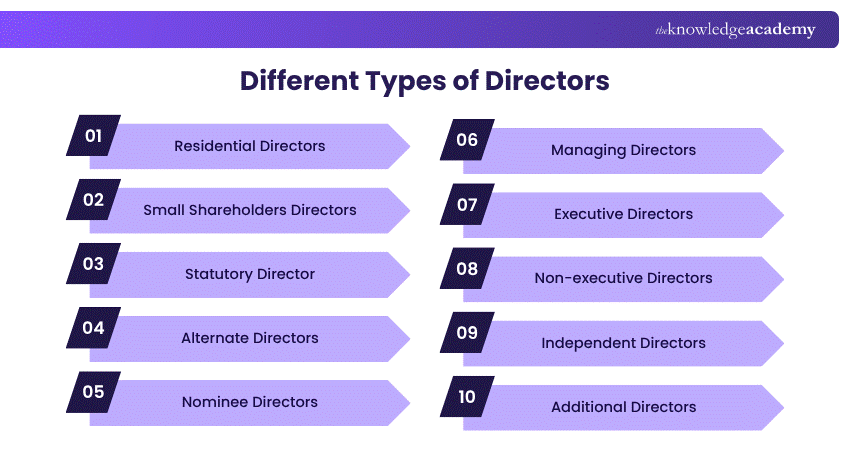
The roles and responsibilities of Directors are not unique; each Type of Director serves a different function. These are the different types of company Directors:
1) Alternate Directors
An alternate director is a temporary stand‑in appointed to act on behalf of another director when that director is unable to fulfil their duties (e.g., due to illness, leave, or long‑term unavailability). Alternate directors:
a) Step in only when the original director is unavailable.
b) Hold the same powers and legal responsibilities as the director they are replacing while acting.
c) Can only be appointed if the company’s articles of association explicitly allow it.

2) Nominee Directors
A nominee director is appointed at the request of a shareholder or investor, often in scenarios such as investment rounds or joint ventures. Key points:
a) They may be executive or non-executive and are properly appointed and registered like any statutory director.
b) Although nominated by a shareholder, their duties are owed to the company, not the appointing party.
c) They provide oversight for investors and participate in board decisions, helping monitor the investment.
3) Managing Directors
A Managing Director (MD) is a type of executive director responsible for overseeing the organisation’s day-to-day operations and executing the strategies set by the board of directors. They play a key role in decision-making, managing business activities, and ensuring overall organisational performance.
Key points about Managing Directors:
a) Responsible for overseeing daily business operations and execution
b) Acts as a link between the board and operational teams
c) Drives strategic implementation and organisational performance
4) Executive Directors
Executive directors are typically employees of the company as well as board members, with hands‑on roles in daily operations. Common examples include the CEO, Finance Director, and Operations Director. They balance their statutory director duties with operational responsibilities.
Key points about Executive Directors:
a) Involved both in strategic decisions and day‑to‑day management
b) Have employment contracts, a salary, and defined job roles
c) Held to all standard director duties under the Companies Act 2006
5) Non-executive Directors
Non‑executive directors (NEDs) play an oversight and advisory role rather than taking part in daily operations. They provide independent judgment on strategy, governance, and high‑level decision‑making, and are appointed for their experience and objectivity. Although not employees, they still hold full statutory director responsibilities.
Key points about Non‑executive Directors:
a) Provide independent oversight and strategic advice
b) Not involved in day‑to‑day operational management and not employees
c) Expected to challenge and support executive directors constructively in the boardroom
6) Shadow Directors
A Shadow Director is an individual who is not formally appointed to the board but whose instructions or directions the company’s actual directors are accustomed to follow. They operate behind the scenes, influencing decisions without being publicly registered as directors.
Key points about Shadow Directors:
a) Influence the company’s direction from behind the scenes
b) The board is “accustomed to” following their instructions
c) Subject to statutory director duties for matters they influence or control
7) De Facto Directors
A De Facto Director is someone who acts as a director without being formally appointed. They may attend board meetings, make strategic decisions, or represent the company in ways that imply board‑level authority.
Key points about De Facto Directors:
a) Not officially appointed but function as directors in practice
b) Make decisions and take actions normally carried out by directors
Legally treated as directors, carrying the same responsibilities and liabilities
Get familiarised with Business Process Improvement and its objectives. Join our Business Process Improvement Training today!
Importance of Directors in Company Governance
Directors are indispensable to a company’s governance framework, ensuring that it operates in line with its ethical, legal, and strategic mandates. They bring accountability to the decision-making process and foster trust among shareholders, Employees, and the public. The process to Become a Film Director involves mastering leadership and storytelling, much like corporate Directors who guide organisations toward success.
Directors guide the organisation through complex regulatory environments, balancing risk with potential growth opportunities. They provide a system of checks and balances, ensuring that the management’s actions align with the company’s mission and long-term objectives. Their work significantly influences a company’s reputation, Risk Management, and operational transparency.
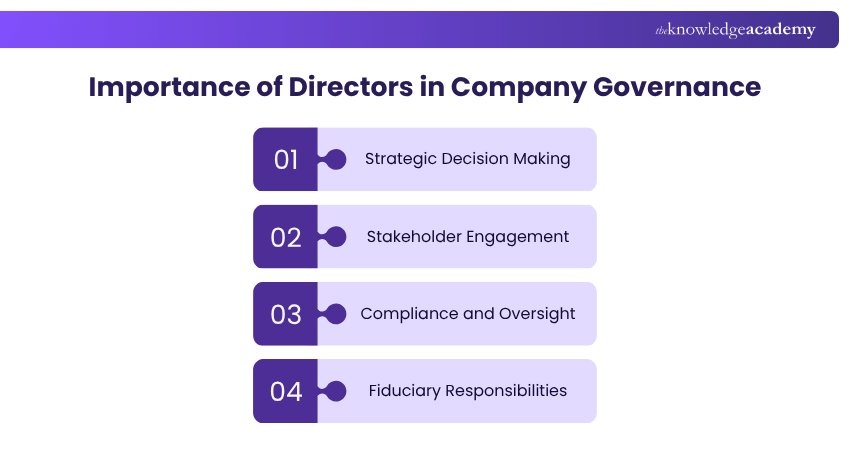
1) Strategic Decision Making
Directors help decide the company’s long-term direction. They work together to set goals, plan growth, and guide major decisions like entering new markets or launching products. They study market trends, competitors, and risks to make smart choices that support the company’s future.
2) Stakeholder Engagement
Directors represent the interests of people connected to the company, including investors, employees, customers, and the community. They make sure the business runs responsibly and ethically. Good engagement builds trust, protects the company’s reputation, and supports long-term success.
3) Compliance and Oversight
Directors ensure the company follows laws, rules, and ethical standards. They put proper policies in place and check that all departments follow them. They review performance and processes to reduce risks and keep the company safe from legal or compliance issues.
4) Fiduciary Responsibilities
Directors must act in the company’s best interests. They protect shareholders’ money and make decisions that help the company grow. They do this by making informed choices, managing risks, and promoting honest and fair business practices.
Roles and Duties of Directors in a Company
Directors carry major responsibilities and can be personally held accountable if they act carelessly or break the law. Their key duties and potential liabilities include the following:
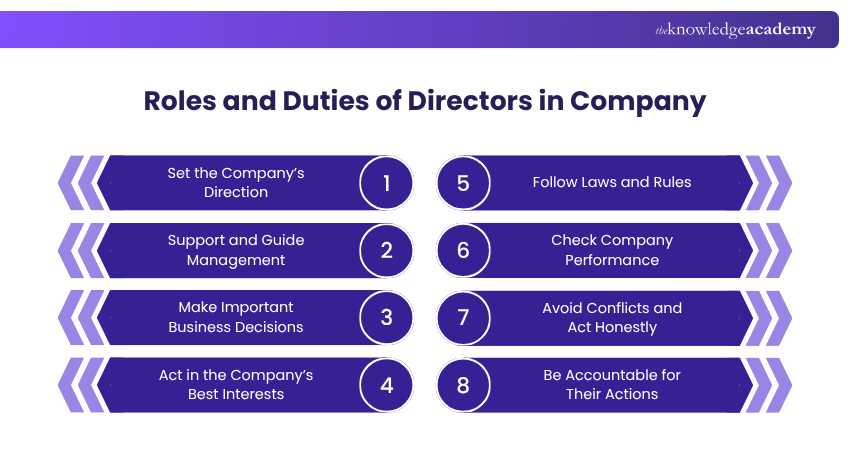
1) Set the Company’s Direction: Directors help plan the company’s future, set goals, and make big decisions like new projects or expansion.
2) Support and Guide Management: They work with Senior Managers, offer advice, and make sure the company is being run properly, even though they don’t handle daily tasks.
3) Make Important Business Decisions: They approve major matters like budgets, investments, and key hires to help the company grow safely.
4) Act in the Company’s Best Interests: Directors must always think about what is good for the company and its shareholders, not their personal benefit.
5) Follow Laws and Rules: They must ensure the company follows legal and ethical standards. They also help create policies for safe and honest business operations.
6) Check Company Performance: Directors review company results, understand risks, and make sure the business stays on track.
7) Avoid Conflicts and Act Honestly: They should avoid situations where personal interest clashes with company interest and must act truthfully and responsibly.
8) Be Accountable for Their Actions: Directors can be held personally responsible if they act carelessly, misuse company funds, or break the law.
Understand key responsibilities in financial oversight and risk compliance frameworks. Join our Chief Operating Officer Training now!
How can a Start-up or Fast-growing Business Pick the Right Types of Directors?
Choosing the right Directors is very important for new and growing businesses. The right people can guide the company, help avoid mistakes, and support future success. Here is how a start-up can pick the right Types of Directors:
1) Look for Real Experience: Choose people who have experience in business, finance, marketing, or your industry. They should understand how companies grow and handle challenges.
2) Choose People with Strong Judgment: Pick Directors who can make good decisions, stay calm under pressure, and give honest advice, even when it is difficult.
3) Find People Who Share Your Vision: Directors should believe in your business idea and understand your goals. They should support your growth plans, not push the company in a different direction.
4) Focus on Skills You Don’t Have: A start-up founder may not know everything. Look for Directors who can fill skill gaps; for example, in finance, legal matters, or strategy.
5) Pick People Who Care About Ethics: Choose Directors who act with honesty and follow rules. This helps build trust and keeps the business safe from legal trouble.
6) Balance of Backgrounds: A mix of executive, non-executive, and independent Directors can give better guidance. Different viewpoints lead to better decisions.
7) Check Reputation and Trust: Directors should be trustworthy and respected. Always do a background check before appointing them.
What are the Two Basic Types of Directors?
There are two main Types of Directors in a company:
1) Executive Directors: These Directors work inside the company every day. They manage teams, make daily decisions, and help run the business. Examples include the CEO or the finance head.
2) Non-executive Directors: These Directors do not work in the company every day. They give advice, ask questions, and check if the company is being run properly. They help with planning and big decisions but do not handle daily work.
Who are the Class A Directors?
Class A Directors are board members who represent the shareholders or owners of a company. They are usually chosen by the shareholders and their main role is to protect the owners’ interests. They help make decisions that support the company’s financial growth and long-term success.
Conclusion
Directors are essential to strong corporate governance, offering strategic insight, accountability, and ethical leadership. Understanding the Types of Directors helps build a balanced board that supports growth and protects stakeholder interests, enabling organisations to navigate challenges and achieve long-term success.
Make smart, high-impact decisions in dynamic business environments with our Management Courses – Join now!
Frequently Asked Questions
What are the Rights of a Director?

Directors have the right to participate in board meetings, vote on company matters, access financial records, inspect books and documents, receive fair remuneration, make strategic decisions for the company, and be indemnified against liabilities incurred while performing their duties, provided they act within the law.
What are the Seven duties of a Director?
The seven key duties include: acting in good faith for the company's best interests, using powers for proper purposes, avoiding conflicts of interest, exercising care and diligence, not misusing information or position, maintaining company confidence, and ensuring compliance with legal and regulatory obligations.
What are the Other Resources and Offers Provided by The Knowledge Academy?
The Knowledge Academy takes global learning to new heights, offering over 3,000+ online courses across 490+ locations in 190+ countries. This expansive reach ensures accessibility and convenience for learners worldwide.
Alongside our diverse Online Course Catalogue, encompassing 17 major categories, we go the extra mile by providing a plethora of free educational Online Resources like Blogs, eBooks, Interview Questions and Videos. Tailoring learning experiences further, professionals can unlock greater value through a wide range of special discounts, seasonal deals, and Exclusive Offers.
What is The Knowledge Pass, and How Does it Work?
The Knowledge Academy’s Knowledge Pass, a prepaid voucher, adds another layer of flexibility, allowing course bookings over a 12-month period. Join us on a journey where education knows no bounds.
What are the Related Courses and Blogs Provided by The Knowledge Academy?
The Knowledge Academy offers various Management Courses, including the Management Training for New Managers Course, Introduction to Managing People Course, and Category Management Fundamentals Course. These courses cater to different skill levels, providing comprehensive insights into the Characteristics of an Effective Team.
Our Business Skills Blogs cover a range of topics related to Types of Directors, offering valuable resources, best practices, and industry insights. Whether you are a beginner or looking to advance your Communication skills, The Knowledge Academy's diverse courses and informative blogs have got you covered.

James Smith


Digital Marketing Manager and Trainer
James Smith is a digital marketing professional with over a decade of experience in SEO, content strategy, paid media and analytics. He has supported both SMEs and global brands in transforming their digital presence. James’s writing and training are rooted in results-driven tactics and the latest marketing trends.
View Detail
Upcoming Business Skills Resources Batches & Dates
Date
 Directors Development Training Course
Directors Development Training Course
Thu 20th Aug 2026
Directors Development Training Course
Thu 19th Nov 2026

 If you wish to make any changes to your course, please


