


 Top Rated Course

We may not have the course you’re looking for. If you enquire or give us a call on +27 800 780004 and speak to our training experts, we may still be able to help with your training requirements.
What is Omnichannel Orchestration? A Complete Guide for 2026
Lily Turner 13 June 2026Omnichannel Orchestration connects channels and data to deliver seamless, personalised customer experiences, improving engagement across all touchpoints. This approach ensures that every interaction feels connected and consistent. It helps increase customer satisfaction, conversion rates, loyalty, and overall business growth.

Training Outcomes Within Your Budget!
We ensure quality, budget-alignment, and timely delivery by our expert instructors.
Table of Contents
Customers no longer follow a simple buying journey. It is now a mix of clicks, swipes, and in-store visits. A person might discover a product on Social Media, explore it further on a website, and finally make the purchase in a physical store. For businesses, this creates a big challenge.
If these interactions are not connected, the experience can feel broken and frustrating. To address this, you need a united approach and it is possible with Omnichannel Orchestration. It solves this problem by bringing all channels and customer data together. In this blog, you will learn what it is, why it is important, and how it can help businesses deliver better customer experiences. Let's dive in!
Table of Contents
1) What is Omnichannel Orchestration?
2) Why is Omnichannel Orchestration Important?
3) Key Elements of Omnichannel Orchestration
4) Pillars of Successful Omnichannel Orchestration
5) How to Implement an Effective Omnichannel Orchestration Strategy?
6) Omnichannel vs Multichannel vs Journey Orchestration
7) Omnichannel Orchestration Examples for Retailers
8) Omnichannel Orchestration Trends
9) Conclusion
What is Omnichannel Orchestration?
Omnichannel Orchestration is the process of coordinating and managing customer interactions across different channels in a seamless and connected way. These channels can include websites, mobile apps, emails, social media, customer support, and physical stores.
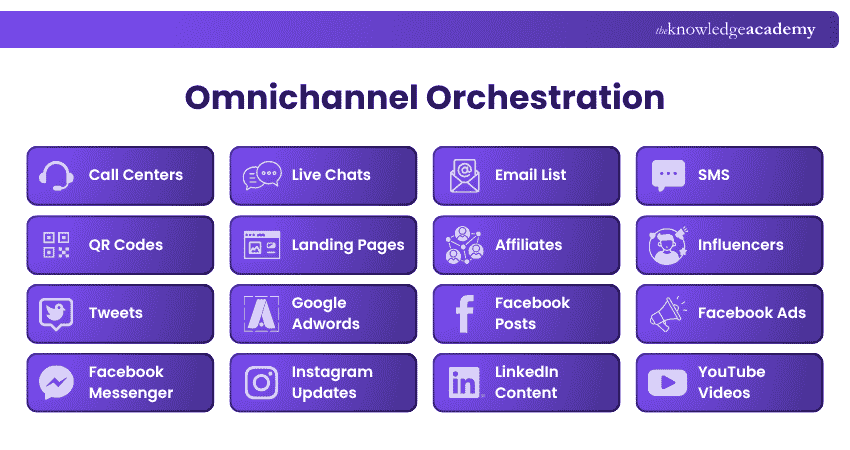
For example, if a customer adds a product to their cart on a website but does not complete the purchase, they might later receive a reminder email or see a relevant ad on social media. This happens because all channels are working together with the help of Omnichannel Orchestration.
Why is Omnichannel Orchestration Important?
Customers today expect fast, simple, and personalised experiences across every interaction. If a business fails to meet these expectations, customers may quickly move to another brand. Omnichannel Orchestration helps businesses meet customer needs while improving their performance. Here are some of the reasons why it is important:
1) Improved Customer Retention and Loyalty
When customers have a good experience with a brand, they are more likely to stay loyal to that brand. Omnichannel Orchestration helps businesses remember customer preferences, past purchases, and behaviour patterns.
For example, if a customer regularly buys certain products, the business can suggest similar items or offer special discounts. This level of personalisation makes customers feel recognised and valued, strengthening long-term relationships and brand loyalty over time.
2) Enhanced Customer Experience
Omnichannel Orchestration makes the customer experience smooth and easy across all channels. It means customers do not have to repeat the same information again and again. Their details and preferences are already saved, which saves time and effort.
For example, a customer may contact a brand on Instagram about a delivery issue and later follow up via email. With Omnichannel Orchestration, the team can see the full conversation and respond without asking the customer to repeat details.
3) Greater Operational Efficiency
Handling different platforms separately can be difficult and time-consuming. Omnichannel Orchestration makes this easier by bringing everything together in one system. This also helps businesses save time and reduce costs.
For example, a retail company managing orders, inventory, and customer queries across different platforms can bring everything into one system. This allows teams to track orders, respond to customers, and update stock in one place with less manual work.
4) Increased Sales and Revenue
When customers receive the personalised message at the right time, they are more likely to make a purchase. Omnichannel Orchestration helps businesses send such messages on time and increase their sales and revenue.
For example, if a customer buys a smartphone, the business can later suggest related products such as mobile cases or earphones through email or app notifications, encouraging additional purchases.
Key Elements of Omnichannel Orchestration
To successfully implement Omnichannel Orchestration, businesses need to focus on a few key elements. These components ensure that customer interactions are connected, consistent, and data-driven across all channels. Below are the required elements:
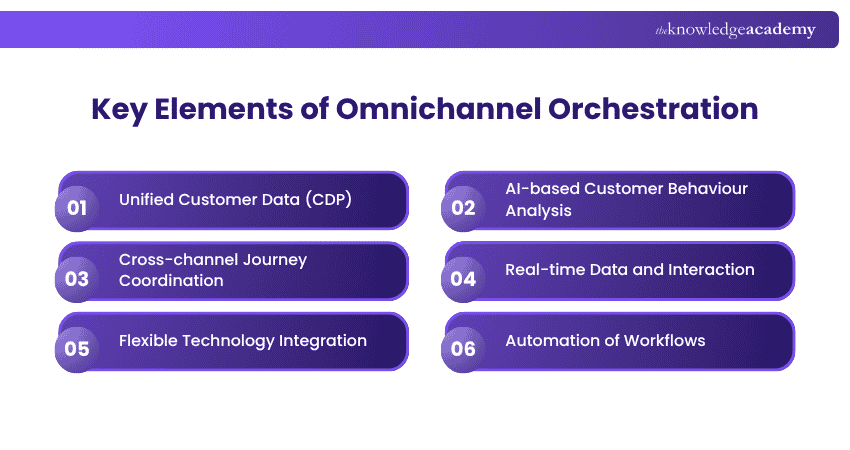
1) Unified Customer Data (CDP)
All customer data from different channels like websites, apps, stores, and social media is collected in one place. This gives a complete view of each customer and helps businesses understand their behaviour better. A unified data platform ensures consistency, improves targeting, and enables more personalised customer interactions.
2) AI-based Customer Behaviour Analysis
Artificial intelligence (AI) and analytics help businesses understand customer needs, predict behaviour, and deliver personalised experiences. It allows companies to send the right message at the right time.
3) Cross-channel Journey Coordination
This ensures that all customer interactions across marketing, sales, and support are connected. It helps create a smooth journey where every step feels linked and consistent. Consistent coordination across channels ensures customers receive a unified and uninterrupted experience.
4) Real-time Data and Interaction
Businesses can respond instantly to customer actions, such as sending offers or resolving queries quickly. Real-time data ensures faster and more relevant communication. This responsiveness improves customer satisfaction and allows businesses to act on opportunities immediately.
5) Flexible Technology Integration
A flexible system connects tools like Customer Relationship Management (CRM), Order Management System (OMS), and communication platforms. This allows smooth data flow and easy adoption of new technologies.
6) Automation of Workflows
Tasks like sending emails, notifications, or support responses are automated based on customer actions. This saves time, reduces manual work, and improves efficiency.
Discover how AI can improve product decisions with the AI Automation Course for Product Management – Register today!
Pillars of Successful Omnichannel Orchestration
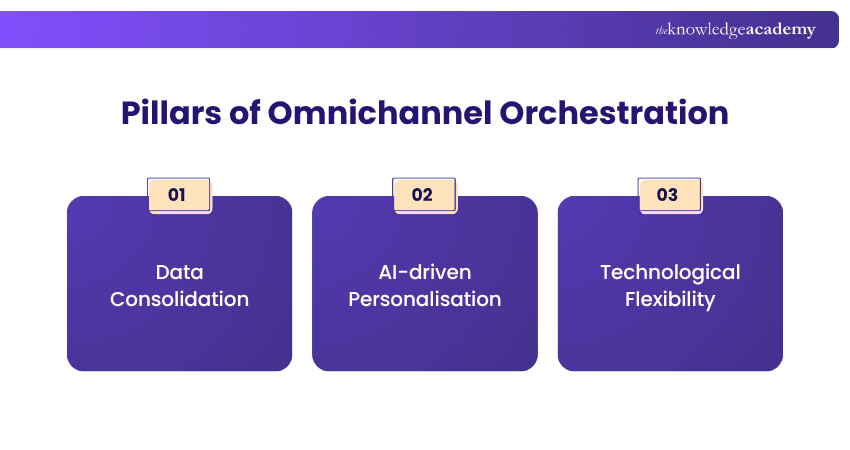
To build a strong Omnichannel Orchestration strategy, businesses need more than just multiple connected channels. They need a solid foundation that supports smooth communication, data flow, and customer engagement. Here are the pillars that are essential in this process:
1) Data Consolidation
Data consolidation means collecting all customer data in one place. This includes data from websites, apps, emails, and offline interactions. When data is scattered, it becomes hard to understand customer behaviour. Bringing it together helps create a complete customer profile.
2) AI-driven Personalisation
AI helps businesses understand customer behaviour by analysing large amounts of data. With this, businesses can suggest products, predict what customers might do next, and automate communication. This makes the experience more relevant and engaging for customers.
3) Technological Flexibility
Technology keeps changing, so businesses need systems that can adapt easily. A flexible system allows companies to integrate new tools and platforms without major disruptions. This helps businesses keep up with customer expectations and market trends.
How to Implement an Effective Omnichannel Orchestration Strategy?
Implementing Omnichannel Orchestration requires a clear plan and the right approach. They must understand their customers, choose the right channels, and use technology effectively. So, here are the steps you can follow while implementing it:
Step 1: Define a Data-driven Strategy
The first step is to understand your customers properly with all the available information. By analysing their data, businesses can learn about customer preferences, buying behaviour, and common needs.
Once you have these details, you can set clear goals for your strategy. Instead of guessing what customers want, you rely on real insights. This makes your strategy more effective and reduces the chances of mistakes.
Step 2: Select the Right Channels
Not every platform is equally important for your business. Some customers may prefer social media, while others may use websites or mobile apps. So, it is important to identify where your customers are most active.
Instead of trying to manage too many channels, focus on the ones that matter the most. Providing a strong and smooth experience on a few channels is better than offering a poor experience across many.
Step 3: Apply Intelligent Automation
Automation helps businesses save time and improve efficiency. It allows companies to send messages and respond to customer actions without manual effort. This also reduces human errors and ensures consistent communication across all channels.
When automation is combined with AI, it becomes more powerful. AI can analyse customer behaviour and send personalised messages at the right time. This improves communication, increases engagement, and helps businesses achieve better results.
Simplify your customer support processes using AI with our AI Automation Training for Customer Services – Join now!
Omnichannel vs Multichannel vs Journey Orchestration
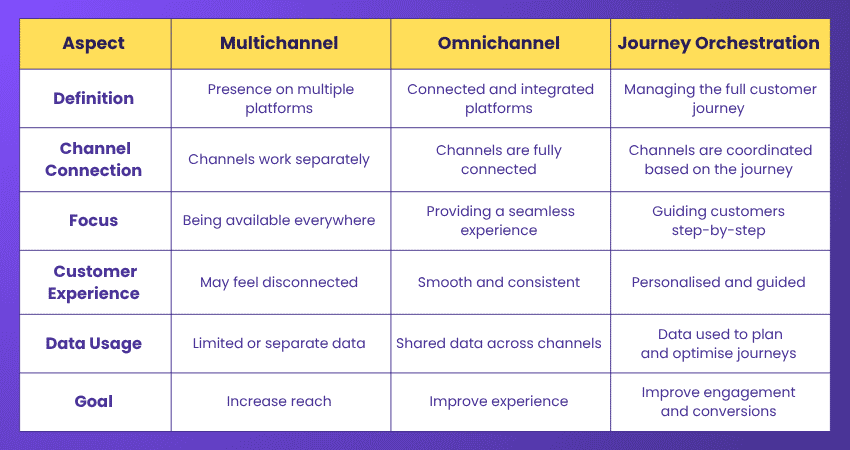
These three terms are often used together, but they mean different things. Understanding the difference helps businesses choose the right approach for managing customer interactions.
Multichannel Orchestration
Multichannel orchestration means a business is present on multiple platforms such as websites, mobile apps, email, and social media. Each channel works on its own, and there is little or no connection between them.
Omnichannel Orchestration
Omnichannel Orchestration goes a step further by connecting all these channels. It ensures that customers get a consistent and smooth experience across every platform.
Journey Orchestration
Journey orchestration focuses on managing the entire customer journey from start to finish. It is about guiding customers through different stages, such as awareness, consideration, purchase, and post-purchase support.
Now, let’s check their differences with the help of the table below:
Omnichannel Orchestration Examples for Retailers
Understanding Omnichannel Orchestration becomes easier when we look at real-world examples. Let's check some of the examples of how retailers use it to their advantage:
1) Beauty Retailer: Loyalty-driven Orchestration
Before Omnichannel Orchestration:
A brand sends the same generic offers to all customers without considering their preferences. Store staff have no access to a customer’s past purchases, so recommendations are random and less relevant.
With Omnichannel Orchestration:
The brand tracks customer purchase history and preferences. When a customer buys skincare products, they receive personalised recommendations and reminders. If they visit a store, staff can access their profile and suggest relevant products, creating a consistent and personalised experience.
2) Home and Lifestyle Retailer: Linking Inspiration to In-store Sales
Before Omnichannel Orchestration:
Customers browse furniture online, but their activity is not tracked across channels. When they visit the store, staff are unaware of their interests, leading to a disconnected experience.
With Omnichannel Orchestration:
Customers can browse and save items online, then receive emails with related ideas. When they visit the store, staff can see their saved items and guide them accordingly, making the experience smooth and increasing the chances of a purchase.
3) Fashion Retailer: From Batch Promotions to Mission-based Journeys
Before Omnichannel Orchestration:
A retailer runs separate campaigns on different channels, but they are not connected. A customer might browse products online but receive unrelated offers through email or in-store.
With Omnichannel Orchestration:
The retailer uses customer data to send targeted campaigns. For example, customers interested in fitness clothing receive updates about sportswear collections. This makes communication more relevant, improves engagement, and increases conversions.
Automate your sales tasks and focus on winning deals with AI Automation Training for Sales – Sign up soon!
Omnichannel Orchestration Trends
As technology evolves, Omnichannel Orchestration continues to grow and improve. Here are some of the recent trends:
1) Hyper-personalisation via AI: Businesses use AI to understand customer behaviour, location, and past actions. This helps them send more relevant messages and offers to customers.
2) Real-time Customer Experience (CX): Brands now respond to customers instantly instead of making them wait. This helps them connect with customers at the right time.
3) Mobile-first Focus: More people use mobile phones, so businesses focus on mobile-friendly websites, apps, and easy checkout processes.
4) Privacy-first Data Management: Companies take customer data security seriously and follow regulatory rules. This helps build trust with customers.
5) Proactive Communication: Businesses send updates like order status or delivery alerts without customers asking, making the experience easier.
Conclusion
Omnichannel Orchestration is becoming mandatory for businesses that want to meet modern customer expectations. As customers use different platforms to interact with brands, it is important to make sure every experience feels connected and consistent. As trends continue to evolve, companies with this technology will be better prepared to stay competitive and grow in the long run.
Learn how to automate tasks with the help of AI with our AI Automation Training – Start now!
Frequently Asked Questions
What is Cross Channel Orchestration?

Cross channel orchestration is similar to Omnichannel Orchestration but focuses on coordinating interactions across a limited set of selected channels. It ensures communication between those channels is consistent, connected, and aligned along the customer journey.
What are the Four C's of Omnichannel?
The four C's of Omnichannel are Customer Experience, Consistency, Context, and Convenience. Together, they help customers get a smooth and connected experience across all channels, with relevant messages and easy interactions.
What are the Other Resources and Offers Provided by The Knowledge Academy?
The Knowledge Academy takes global learning to new heights, offering over 3,000+ online courses across 490+ locations in 190+ countries. This expansive reach ensures accessibility and convenience for learners worldwide.
Alongside our diverse Online Course Catalogue, encompassing 17 major categories, we go the extra mile by providing a plethora of free educational Online Resources like Blogs, eBooks, Interview Questions and Videos. Tailoring learning experiences further, professionals can unlock greater value through a wide range of special discounts, seasonal deals, and Exclusive Offers.
What is The Knowledge Pass, and How Does it Work?
The Knowledge Academy’s Knowledge Pass, a prepaid voucher, adds another layer of flexibility, allowing course bookings over a 12-month period. Join us on a journey where education knows no bounds.
What are the Related Courses and Blogs Provided by The Knowledge Academy?
The Knowledge Academy offers various AI Automation Training, including AI Automation Course for Marketing, AI Automation Course for Product Management and AI Automation Training for Customer Services. These courses cater to different skill levels, providing comprehensive insights into Artificial Intelligence in Business.
Our Data Analytics & AI Blogs cover a range of topics related to Omnichannel Orchestration, offering valuable resources, best practices, and industry insights. Whether you are a beginner or looking to advance your Data Analytics & AI skills, The Knowledge Academy's diverse courses and informative blogs have got you covered.

Lily Turner


Senior AI/ML Engineer and Data Science Author
Lily Turner is a data science professional with over 10 years of experience in artificial intelligence, machine learning, and big data analytics. Her work bridges academic research and industry innovation, with a focus on solving real-world problems using data-driven approaches. Lily’s content empowers aspiring data scientists to build practical, scalable models using the latest tools and techniques.
View Detail
Upcoming Data, Analytics & AI Resources Batches & Dates
Date
 AI Automation Course for Marketing
AI Automation Course for Marketing
Fri 17th Jul 2026
AI Automation Course for Marketing
Fri 16th Oct 2026

 If you wish to make any changes to your course, please


