


 Top Rated Course

We may not have the course you’re looking for. If you enquire or give us a call on +27 800 780004 and speak to our training experts, we may still be able to help with your training requirements.
Key Benefits of Stress Management for a Better Life
The Knowledge Academy 14 April 2026Benefits of Stress Management include improved health, better focus, emotional balance, reduced illness risk, improved sleep, and a balanced lifestyle. It helps individuals stay calm under pressure, think clearly, manage responsibilities, and build resilience to cope with challenges in both personal and professional life.

Training Outcomes Within Your Budget!
We ensure quality, budget-alignment, and timely delivery by our expert instructors.
Table of Contents
Stress is a common part of modern life. Work deadlines, personal responsibilities and daily pressures can easily build up and affect wellbeing. This is where understanding the Benefits of Stress Management becomes essential. Learning to manage stress can help individuals stay calm, think clearly and maintain balance even during challenging situations.
It can help people take control of their emotions, improve focus, and handle everyday challenges confidently. With the right techniques and habits, stress can be managed in a healthy way, allowing individuals to maintain a balanced lifestyle. In this blog, you will learn about Stress, the Benefits of Stress Management, how it impacts lives, and ways to manage it. Let’s begin!
Table of Contents
1) What is Stress?
2) How Does Stress Impact Lives?
3) Key Benefits of Stress Management
4) Simple Ways to Manage Stress Effectively
5) Conclusion
What is Stress?
Stress is the body’s natural response to pressure from situations such as work, relationships, or financial challenges. When stress occurs, the body unleashes hormones, like cortisol, triggering the “fight or flight” response that prepares the body to react quickly to challenges.
If stress becomes long-term, it can affect both physical and Mental Health. This may lead to issues, such as anxiety, depression, high blood pressure and heart disease, while also making it harder to focus and make decisions. This is what makes learning the Benefits of Stress Management so important.
How Does Stress Impact Lives?
When left unmanaged or experienced chronically, stress can cause negative impact on various aspects of our lives. Before we delve into the Benefits of Stress Management, let’s explore some of the key adverse effects of stress:
a) Physical Health Issues: Increased risk of heart disease, high blood pressure, and gastrointestinal problems. Furthermore, chronic stress weakens the immune system.
b) Mental Health Challenges: Includes anxiety disorders and depression. It can also exacerbate existing conditions or trigger the onset of new ones. Persistent stress can lead to feelings of overwhelm, restlessness, irritability, and difficulty concentrating.
c) Emotional Imbalance: It leads to mood swings, heightened emotional sensitivity, and a general sense of unhappiness. It can also make managing and regulating emotions challenging, potentially straining relationships with loved ones.
d) Impaired Cognitive Function: Excessive stress impacts our memory, concentration, and decision-making abilities. It can make it difficult to focus on tasks, solve problems, and think clearly, hindering overall productivity.
e) Sleep Disturbances: Stress can also cause difficulties in maintaining a restful sleep or falling asleep throughout the night. Lack of quality sleep further exacerbates stress levels, creating a vicious cycle.
f) Increased Risk-taking Behaviour: Some individuals fall into destructive coping mechanisms in response to stress, such as substance abuse or excessive risk-taking behaviour.
g) Strained Relationships: Stress can strain relationships, both personal and professional. Heightened stress levels can result in increased conflicts, reduced communication, and a lack of understanding or empathy towards others.
h) Decreased Quality of Life: Ultimately, the negative impact of stress can significantly diminish our overall quality of life. It can hinder our ability to enjoy activities, affect our motivation and enthusiasm, and create a constant state of tension and unease.
Take control of your goals, health, and productivity with Self-management Training now!
Key Benefits of Stress Management
Understanding the Benefits of Stress Management helps individuals stay calm, improve focus, and handle daily pressures effectively. Let’s look at the Benefits of Stress Management below:
1) Physical Benefits of Stress Management
Effectively managing stress not only promotes our mental and emotional well-being but also offers a multitude of physical benefits. So, let’s find out some of the key physical Benefits of Stress Management:
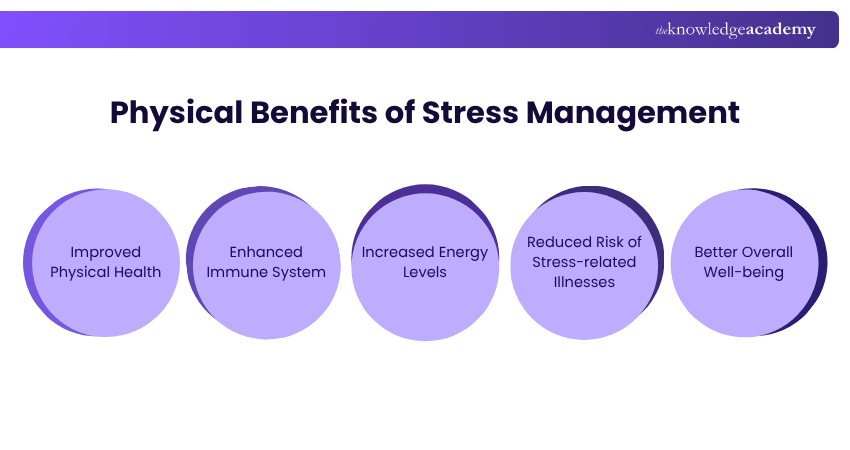
a) Improved Physical Health: Effective Stress Management techniques contribute to lower blood pressure, better cardiovascular health and improved sleep quality.
b) Enhanced Immune System: Managing stress boosts the functionality of the immune system, leading to a stronger defence against illnesses and faster recovery.
c) Increased Energy Levels: Engaging in Stress Management activities revitalises energy levels, resulting in increased productivity, focus, and motivation.
d) Reduced Risk of Stress-related Illnesses: By taking care of our bodies through Stress Management, we can eliminate the risk of developing health problems related to stress, like heart disease and obesity.
e) Better Overall Well-being: Stress Management promotes a healthier lifestyle, contributing to a sense of well-being and improved physical functioning.
Want to overcome stress? Download the Types of Stress PDF and explore the various types of stress along with strategies for reducing their impact!
2) Social Benefits of Stress Management
When it comes to Stress Management, the benefits extend beyond our individual well-being and permeate into our social lives and relationships.
By effectively managing stress, we can experience a multitude of social benefits that contribute to healthier connections. The social Benefits of Stress Management can be listed as follows:
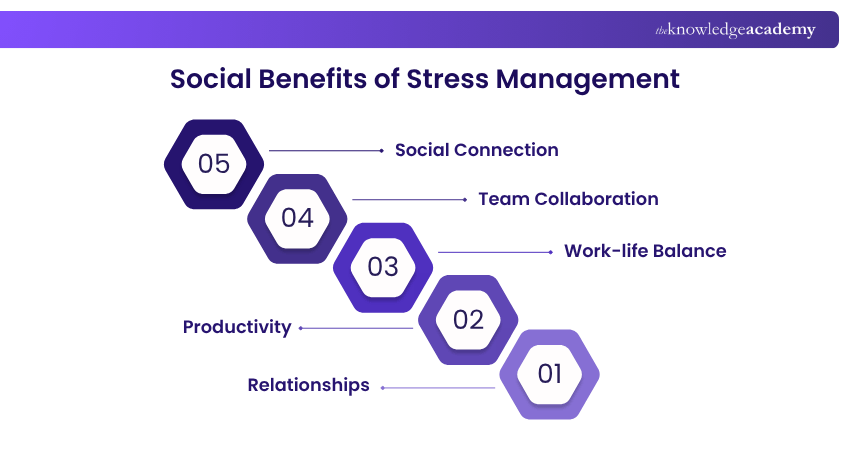
a) Relationships: Stress Management helps you build stronger and more meaningful relationships by enhancing your communication, empathy, and resilience skills.
b) Productivity: Stress Management boosts your productivity by improving your focus, concentration, and efficiency in your work and personal goals.
c) Work-life Balance: Stress Management allows you to achieve a better work-life balance by establishing boundaries, prioritising self-care, and maintaining a healthy lifestyle.
d) Team Collaboration: Stress Management improves your team collaboration by creating a positive and supportive team environment, where you can cooperate and collaborate with others.
e) Social Connection: Stress Management enriches your social connections by increasing your social engagement and participation, expanding your social network and cultivating a sense of belonging.
Learn how to deliver your message during a difficult conversation with our Managing Difficult Conversations Training – Join now!
3) Mental and Emotional Benefits of Managing Stress
In today's fast-paced and demanding world, it is becoming increasingly important to adopt effective strategies that help us cope with stress and promote a balanced state of mind.
Managing stress not only has a profound impact on physical well-being but also plays a big role in nurturing our mental and emotional health. So, let’s understand the mental and emotional Benefits of Stress Management:
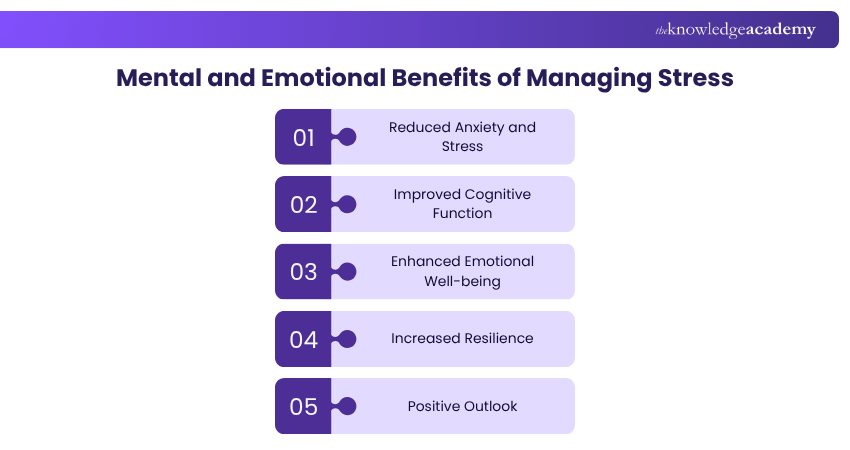
a) Reduced Anxiety and Stress: Effective Stress Management techniques help reduce anxiety and alleviate stress, promoting a sense of calmness and relaxation.
b) Improved Cognitive Function: Managing stress enhances cognitive function, leading to improved memory, concentration, and decision-making abilities.
c) Enhanced Emotional Well-being: Stress Management empowers individuals to regulate their emotions effectively, resulting in better emotional stability and overall well-being.
d) Increased Resilience: By practising Stress Management, individuals develop resilience to cope with challenges and bounce back from adversity.
e) Positive Outlook: Managing stress cultivates a more positive outlook on life, fostering optimism and a greater sense of happiness.
Get started on your personal development journey today! Register for our Personal Development Courses now!
Simple Ways to Manage Stress Effectively
Simple daily habits can help restore calm and improve emotional balance. By adopting small lifestyle changes, individuals can reduce tension and maintain better wellbeing. To understand the Benefits of Stress Management better, let’s look at some of the practical ways below:
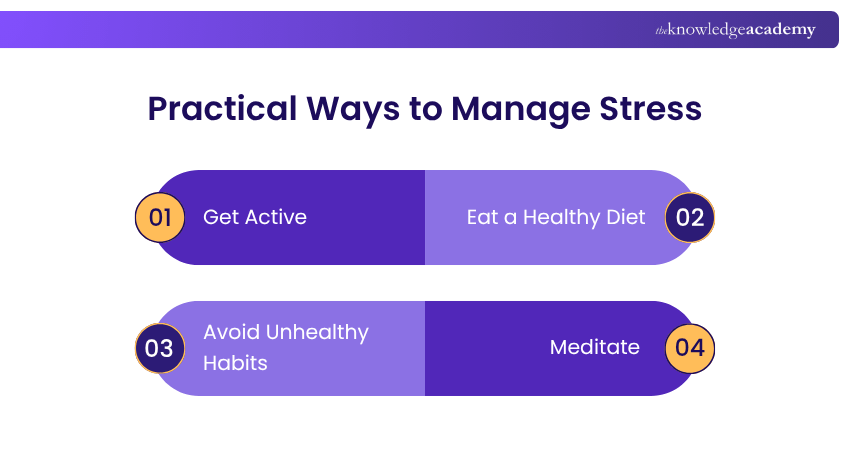
1) Get Active
Physical activity is a proven way to mitigate stress. Activities such as walking, jogging, gardening, or cycling can improve mood by releasing endorphins that promote a sense of wellbeing. Also, exercise helps to shift attention away from daily worries and improves mental clarity.
2) Eat a Healthy Diet
Balanced diet plays a crucial role in supporting both physical and Mental Health. Ensure you are eating fruits, vegetables, and whole grains since they provide essential nutrients that help the body handle stress and maintain energy levels. Also, good nutrition supports brain function, which helps improve mood and concentration.
3) Avoid Unhealthy Habits
Some people respond to stress through unhealthy behaviours, such as excessive caffeine, smoking, or overeating. These habits may provide short-term relief but can increase stress and negatively affect overall health over time. Replacing these habits with healthier routines can support long-term wellbeing and better stress control.
4) Meditate
Meditation helps calm the mind and mitigate the constant flow of stressful thoughts. Techniques such as mindfulness, guided meditation, and deep breathing can promote relaxation and foster emotional balance. These practices can be done almost anywhere, helping individuals manage stress whenever it arises.
Conclusion
Managing stress is the vital key to maintaining a healthy and balanced life. Understanding the Benefits of Stress Management helps individuals stay calm, improve wellbeing, and handle everyday challenges with greater confidence. Practising simple Stress Management techniques it can help you build a more positive and stable lifestyle.
Strengthen emotional awareness for facilitating healthy relationships with Emotional Intelligence Training now!
Frequently Asked Questions
How Does Stress Management Support Work-life Balance?

Stress Management supports work-life balance by reducing burnout, improving Mental Health, and enhancing productivity. Techniques like setting boundaries, managing time effectively, and taking regular breaks help individuals balance professional duties with personal life. This leads to a healthier and more balanced lifestyle.
How Often Should You Practice Stress Management Techniques?
Stress Management techniques should be practised regularly as part of a daily routine to truly harness. Simple habits like exercise, healthy eating, relaxation activities, and proper sleep can harness the true Benefits of Stress Management and help build resilience to stress.
What are the Other Resources and Offers Provided by The Knowledge Academy?
The Knowledge Academy takes global learning to new heights, offering over 3,000+ online courses across 490+ locations in 190+ countries. This expansive reach ensures accessibility and convenience for learners worldwide.
Alongside our diverse Online Course Catalogue, encompassing 17 major categories, we go the extra mile by providing a plethora of free educational Online Resources like Blogs, eBooks, Interview Questions and Videos. Tailoring learning experiences further, professionals can unlock greater value through a wide range of special discounts, seasonal deals, and Exclusive Offers.
What is The Knowledge Pass, and How Does it Work?
The Knowledge Academy’s Knowledge Pass, a prepaid voucher, adds another layer of flexibility, allowing course bookings over a 12-month period. Join us on a journey where education knows no bounds.
What are the Related Courses and Blogs Provided by The Knowledge Academy?
The Knowledge Academy offers various Personal Development courses, including Stress Management, Time Management Training and Attention Management Training. These courses cater to different skill levels, providing comprehensive insights into Stress Management.
Our Business Skills Blogs covers a range of topics related to the Benefits of Stress Management, offering valuable resources, best practices, and industry insights. Whether you are a beginner or looking to advance your Stress Management skills, The Knowledge Academy's diverse courses and informative blogs have you covered.

The Knowledge Academy


Global Training Provider
The Knowledge Academy is a world-leading provider of professional training courses, offering globally recognised qualifications across a wide range of subjects. With expert trainers, up-to-date course material, and flexible learning options, we aim to empower professionals and organisations to achieve their goals through continuous learning.

Upcoming Business Skills Resources Batches & Dates
Date
 Stress Management Course
Stress Management Course
Fri 10th Jul 2026
Stress Management Course
Fri 2nd Oct 2026

 If you wish to make any changes to your course, please


